
As COVID-19 has spread around the world, the World Health Organization (WHO) set a goal for each country to have at least 10% of its population vaccinated by September 2021. However, more than 50 low-income countries, mainly in Africa, have not met the 10% target, and the African region as a whole remains at an inoculation rate of only 4.4%, less than half the goal. Meanwhile, high-income countries have reached high coverage levels: the UK about 66%, Japan about 59%, and the United States about 56%, according to high-level data.
As the gap in vaccination rates widens, the world is increasingly split between countries returning to normal life and those suffering prolonged outbreaks, a reality that has been called “vaccine apartheid.” What determines whether someone can get vaccinated? Is it where they live? Or the income of the country or the individual?
Inequality in access to medicines is a major global issue not limited to COVID-19 vaccines. What problems underlie this? This article examines the background of why disparities arise and analyzes how the Japanese media have reported on this global issue.
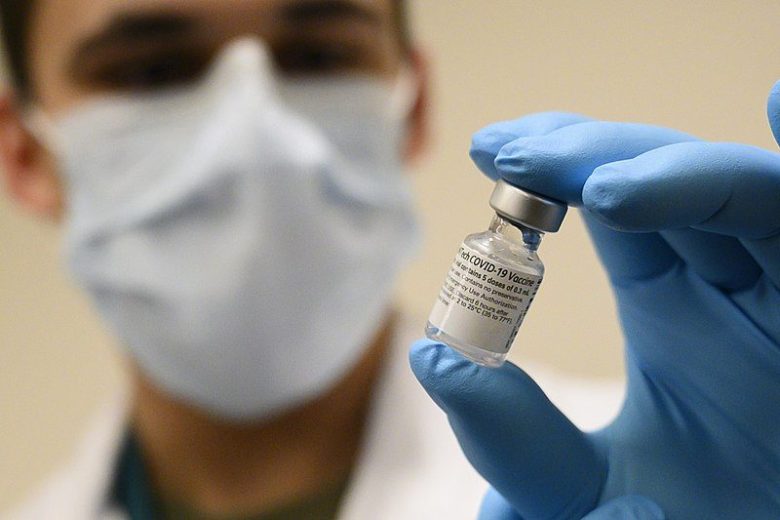
A healthcare worker holding a COVID-19 vaccine (Photo: U.S. Secretary of Defense / Wikimedia Commons [CC BY 2.0] )
目次
The realities surrounding pharmaceuticals worldwide
Globally, very many people die from diseases that should be preventable. For example, in 2019, tuberculosis caused about 1.4 million deaths, and malaria caused about 400,000 deaths. Although these infectious diseases can be prevented or treated, various factors contribute to such large numbers of deaths. Pollution affecting living environments and lack of wastewater infrastructure are key issues. In addition, limited access to medical facilities and medicines is another factor.
Among these, this article focuses on the difficulty of accessing medicines. There are several reasons for poor access to medicines. Despite the enormous funds required for development, some cannot secure financing due to insufficient credit from banks; others cannot manufacture medicines domestically because of inadequate infrastructure and other reasons. Such countries must import medicines from abroad. Yet that process also has many problems. In some cases, countries lack the regulatory frameworks for drug approvals and other measures to establish an effective system for importing necessary medicines, making imports difficult. Even if medicines can be imported, distribution may stall in the supply process to nearby medical facilities, or facilities may be far away. For example, many medicines require a controlled temperature for transport from origin to healthcare facility, and often must be kept refrigerated. This is commonly called the cold chain; when refrigeration infrastructure is lacking or power outages occur, the stable supply of medicines can be disrupted.
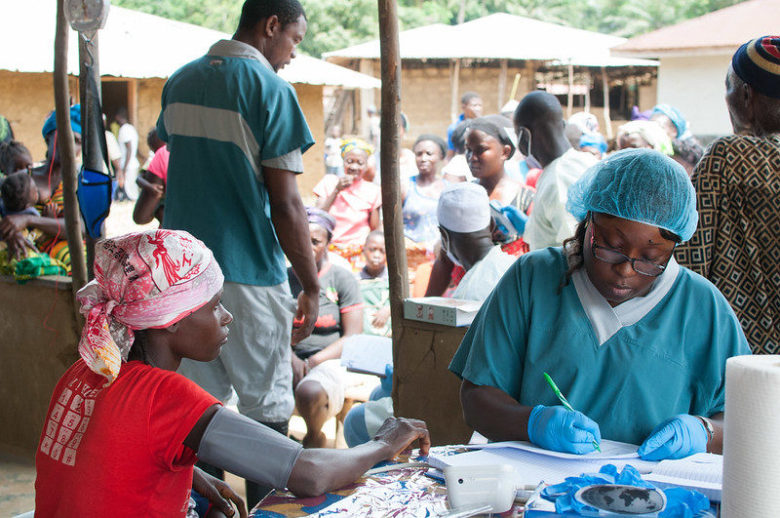
Liberia: A hospital for migrants (Photo: UNMEER / Flickr [CC BY-ND 2.0])
High drug prices are also a major barrier to people obtaining medicines. Given differences in income and price levels, many drugs are relatively expensive. For example, data show that for a child in Uganda to receive malaria treatment costs the equivalent of 11 days of household income in many cases. This illustrates how difficult it is for low-income people to obtain treatment. However, the issue of drug prices is not limited to low-income countries. Many medicines that treat life-threatening diseases tend to be extremely expensive. For example, a bone cancer drug in the UK costs about US$3,200 per dose, and US$155,000 for the 48 doses required over the full course of treatment. One study even predicts that more than 1.1 million people in the United States could die by 2030 due to high drug costs.
Some countries have introduced systems to ease the burden of costly medicines through national social security or private health insurance, or to adjust out-of-pocket medical costs based on income. However, even where insurance exists, in some countries such as Nigeria only a small fraction of the population uses it, while in others the system is not in place and people must pay medical costs entirely out of pocket. In any case, high drug prices are one factor that hinders treatment.
The pharmaceutical business
What lies behind high drug prices? We should note that many companies producing medicines today are profit-seeking private firms. Because this is an industry involving people’s lives and health, the market is large and profit margins are high. According to data on global pharmaceutical revenues, the market grew from about US$390 billion in 2001 to about US$1,265 billion in 2020, roughly tripling in 20 years. By country, the United States accounts for about 40% of industry revenues, followed by Japan and China. By company, the 2020 sales ranking puts Johnson & Johnson (US) first at US$56.1 billion, Pfizer (US) second at US$51.7 billion, and Roche Diagnostics (Switzerland) third at US$49.2 billion.
Looking not only at revenues but also at profit margins, the pharmaceutical industry outperforms many others. One analysis shows that from 2000 to 2018 pharma had an average profit margin above 13%, nearly double the average of 7% for other industries. In the past, Pfizer achieved margins as high as 42%. One reason margins can be so high is that some medicines are sold at prices 100 to 1,000 times the manufacturing cost. In the US, the EpiPen, an injection used for allergic reactions, saw prices increased by 500% by leveraging exclusive sales rights.

Pfizer’s headquarters building in Finland (Photo: Lauri Silvennoinen / Wikimedia Commons [CC BY-SA 3.0])
With many people dying because they cannot afford expensive drugs, are the profits of giant pharma companies balanced against people’s access to medicines? There are claims that pharma, as profit-driven companies, has raised prices, made huge profits, and distributed them to a small group such as shareholders and executives. In fact, in connection with COVID-19 vaccine development, there were reports that 9 new billionaires (those with assets of at least US$1 billion) have emerged recently. Among them were the CEOs of Moderna (US) and BioNTech (Germany). Together, these 9 individuals’ assets total US$19.3 billion, which could vaccinate more than 700 million people in low-income countries.
However, these profits are not necessarily derived solely from sales of medicines. Many pharma companies receive large subsidies from national governments. For example, in developing COVID-19 vaccines, AstraZeneca received US$1.2 billion from the US and the equivalent of US$110 million from the UK in substantial subsidies. In other words, for the public, part of the taxes they pay first go to pharma in the form of subsidies; then they must buy the medicines developed and manufactured with those subsidies at high prices; and the resulting profits are returned to a very small group. Is this flow of money desirable?
We should also note that pharma tends to develop medicines based on profitability considerations. As GNV has reported in the past, many companies have withdrawn from antibiotic development because it is less profitable. In vaccines, the tuberculosis vaccine developed about 100 years ago is still in use, and in the case of malaria, research and development was stalled for about 30 years because the malaria parasite, the cause of the disease, is far more complex than viruses. Only in October 2021 was the first malaria vaccine finally completed and its use recommended by WHO. For medicines targeting diseases prevalent in low-income countries, development is particularly delayed because high profits are not expected. Compared to these vaccines, COVID-19 vaccines were brought into practical use in less than a year, suggesting that pharma selects which medicines to develop from the perspective of profitability.
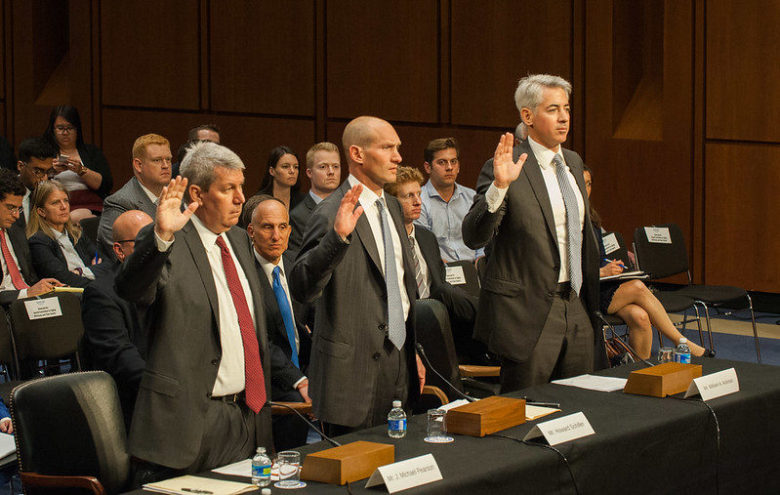
Executives of pharmaceutical companies testifying in the U.S. Senate on high drug prices (Photo: Senate Democrats / Flickr [CC BY 2.0 ])
Exploring the background of the problem
Thus far, we have pointed out that pharma is making huge profits behind high drug prices. One background factor enabling high prices is the patent system. The global rules for patents are set by the Agreement on Trade-Related Aspects of Intellectual Property Rights (TRIPS), established at the World Trade Organization (WTO) in 1995. Companies selling medicines hold patents on their unique formulations that allow them to maintain exclusive rights for a set period, preventing others from making the same products. Taking advantage of this exclusivity, they can set prices freely, leading to a tendency toward high prices. After the patent exclusivity expires, other companies can manufacture cheaper generics. However, many companies engage in so-called “evergreening,” extending patent rights by redefining dosage or form for already patented medicines, thereby continuing to retain pricing power.
One stated purpose of obtaining patents is “to encourage research and development.” The idea is that money earned through patents on new medicines funds research, which in turn leads to new medicines. In reality, this may not be the case. That is because few of the medicines sold by pharma are actually developed in-house. Many of the medicines they sell originate from research and development at universities and government agencies. Those efforts receive large amounts of public funding. For example, the U.S. National Institutes of Health spends about US$39.2 billion annually on universities and research institutions. Given that pharma ultimately relies on others for R&D and that much of the funding is governmental, the legitimacy of pharma holding patents and profiting from new drugs is open to question.
Is it possible to waive patents so that people who need medicines can obtain them at affordable prices? From 2003 to 2005, discussions at the WTO raised the issue of access to medicines, and rules for patent waivers were adopted. However, there has been significant opposition from pharma and member states. Moreover, the patent waiver has been used only once, when Canada supplied generic medicines to Rwanda in 2007. Those involved have complained that procedures were complex, indicating practical challenges.
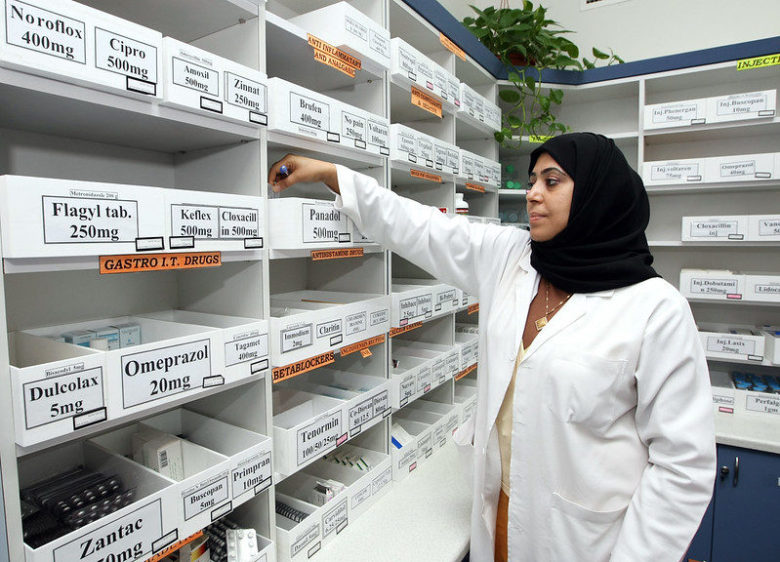
A nurse in a hospital in Bahrain holding medicine (Photo: International Labour Organization ILO / Flickr [CC BY-NC-ND 2.0])
Even if patents expire or are waived and generic production is encouraged, there are challenges in manufacturing. One is that although information needed to make the drug—such as ingredients—is published, the sharing of practical techniques and know-how for actual production is insufficient. Know-how and technical sharing includes, for example, sharing experimental data and joint technical training to achieve more efficient production. There are also concerns that companies without experience producing similar drugs will face higher costs due to securing raw materials and safety measures. On the other hand, major pharma often contracts manufacturing to facilities in other countries rather than doing all production in-house, suggesting that the barriers for others to make similar medicines may not be so high.
Consider the case of COVID-19 vaccines. Large pharma companies opposing temporary patent waivers argue, among other reasons, that they need funds to cover development costs. However, in COVID-19 vaccine R&D, Moderna’s development funding was 100% covered by US taxpayer money, and AstraZeneca’s development funding was 97% publicly funded, mainly by the UK government and US research institutions. The patents for these vaccines are held by the companies. Yet given the substantial public funding, it is difficult to find a convincing reason for them to continue holding those patent rights. Furthermore, while large pharma claims that even a temporary patent waiver would not enable others to manufacture vaccines immediately, companies in India and Canada have announced they are “ready to produce vaccines if patents are waived and know-how is sufficiently shared.” If such prepared companies and manufacturers can be mobilized, global vaccine supply would increase, bringing us closer to ending the pandemic.
Toward solutions
While reform of pharmaceutical patents has stalled, other improvements are underway. One example is the public–private partnership “Gavi, the Vaccine Alliance” (GAVI), established in 2000. GAVI implements immunization support programs to improve equity in vaccination opportunities worldwide for more than 10 vaccines, including those against hepatitis B, polio, pneumococcal disease, and measles among others. It is a large platform involving low-income countries with many unvaccinated people, donor countries, funds and charities, other UN agencies, and the pharmaceutical industry. To enable low-income countries to procure vaccines at lower prices, high- and middle-income donor countries provide subsidies through GAVI. GAVI then aggregates demand for immunization across countries and uses that scale to negotiate prices with manufacturers and arrange equitable supply.
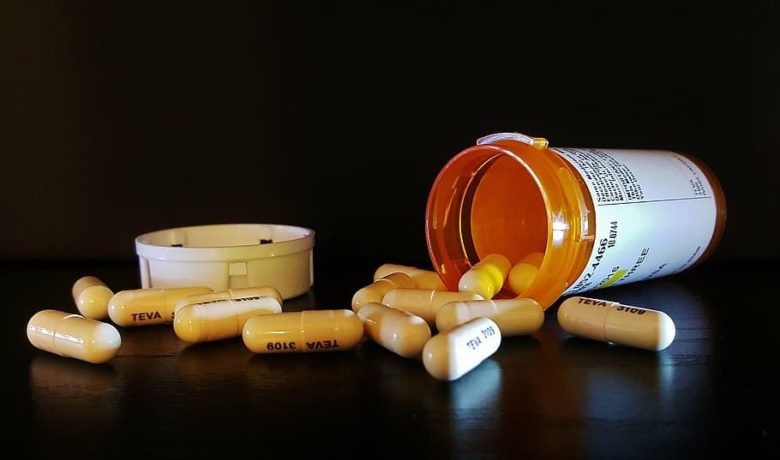
Capsules of an antibiotic
For COVID-19 vaccine provision, the COVAX (COVAX) platform was established in April 2020. Working in tandem with GAVI, it similarly aims for equitable distribution to low-income countries by leveraging subsidies from high- and middle-income countries to reduce prices. However, from the outset, there were problems: few manufacturers were producing vaccines, and purchase agreements between COVAX and manufacturers were difficult to conclude. Moreover, manufacturers prioritized wealthier clients able to pay higher prices, undermining equitable supply.
In addition, many question the very premise that people cannot receive treatment unless they can pay high medical costs in the first place. To save lives, the necessary medicines should be provided to those who need them. One idea is to move away from pharma holding patents and, instead, to manufacture medicines in public facilities and openly share research data and know-how so they can be widely utilized, enabling all people to benefit from medicines. If such a public platform for drug development and distribution were established, data suggest that treatments for hepatitis C (HCV) could be provided at 2% of the current price in the US today. There are also precedents in which the developers of the polio vaccine and insulin, used to treat diabetes, declined to hold patents, suggesting that a number of researchers prioritize the public good—something that could help realize such a public platform.
Analysis of coverage over the past 30 years
To what extent are these problems, their background, and potential solutions being conveyed to the public? Here we analyze data from the Asahi Shimbun. Based on the above issues, we extracted all 91 articles from Asahi’s reporting between October 1992 and September 2021 that met two criteria: ① related to pharmaceuticals and patents; ② international reporting (※1). The trend is shown in the following graph.
First, it is noteworthy that about half of the articles appeared in 2001 and 2021. There were 8 years with no coverage at all; excluding 2001 and 2021, there were on average only about 1.8 articles per year. This suggests low attention to the issue. Why, then, did coverage spike in 2001 and 2021?
In 2001, reporting increased around patents for HIV/AIDS treatments. Triggered by legal reforms in South Africa and Kenya that prioritized human life and allowed the production of new generics regardless of existing patents, the topic of AIDS treatments and patents drew media attention. As GNV’s report notes, South Africa and Kenya are not countries that are regularly in the Japanese news spotlight, so why did this issue receive so much attention in Japan? One reason is its prominence in the US. A survey (※2) of the New York Times in the first half of 2001 found 45 articles over six months addressing AIDS and patents. The United States is consistently the most covered country in Japan’s international news coverage, and this pattern is also visible in reporting on drug patents.
In 2021, the surge in reporting was driven by debates over whether to waive patents for COVID-19 vaccines. The Asahi Shimbun did highlight the problem of low-income countries being unable to obtain vaccines. For example, the editorial on July 20, 2020, “(Jiji-Kokkoku) Vaccines and the disease of putting your own country first: fears of leaving developing countries behind—COVID-19,” addressed disparities in vaccine supply by country. However, for about 10 months thereafter, until May 2021, there were no articles related to vaccine access for low-income countries. It is fair to say there was no sustained coverage probing the essence of the issue.
Moreover, the first article after those 10 months, in May 2021, “Biden agrees to waiving IP protections for COVID-19 vaccines,” appears to have been prompted by a shift by the US government. Subsequent articles on patents and vaccines mostly focused on announcements and decisions by governments and international organizations rather than delving into the core issues. Among these, developments in the US stood out in particular: of the 21 vaccine-related articles published in 2021 as coverage increased, 7 had “America (US)” in the headline. As above, this reflects a tendency in Japanese media to focus on the US, not limited to drug patent issues.
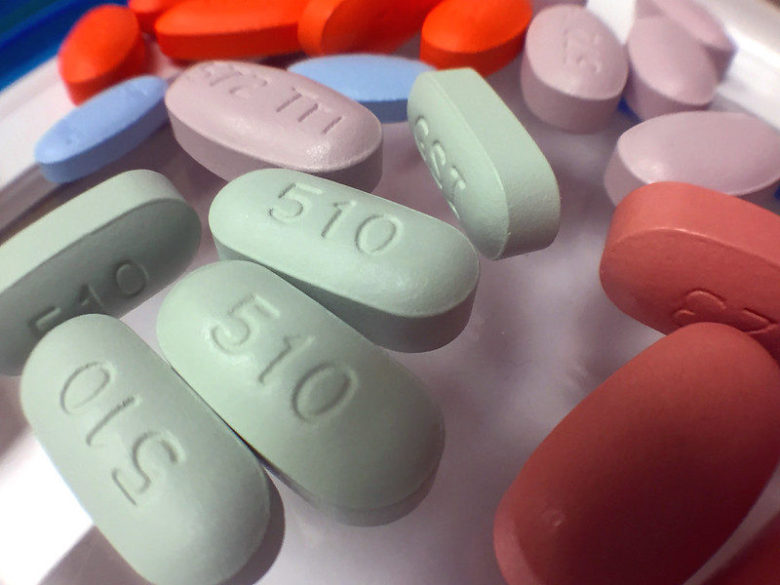
HIV/AIDS medications (Photo: NIAID / Flickr [CC BY 2.0])
Next, what was the Asahi Shimbun’s stance on drug patents? Of the 91 articles, analysis shows that in 10 pieces—mainly columns and editorials—the paper supported “waiving patents to improve drug distribution in low-income countries” in the context of HIV/AIDS. On the other hand, there were no articles discussing the sole patent waiver case in 2007 involving Canada and Rwanda, nor articles containing opinions on the public ownership of drug patents. When Japanese pharma and the government expressed opposition to patent waivers, the coverage appeared in the form of straight reporting (※3) that conveyed only the facts, without reflecting reporters’ views on drug patents.
Conclusion
Given that people around the world are losing their lives due to difficulty accessing medicines, the issue of high drug prices and the role of pharma is a critical one. How many people recognize the gravity of this matter? In the Asahi Shimbun coverage we examined, reporting largely remained factual, based on statements by major powers and international organizations, while criticism of pharma’s current business models and the inequities in access faced by low-income countries and people were marginalized. At the same time, the volume of coverage itself was small, making it hard even to gain awareness of the problem. Notably, the Asahi Shimbun did not mention WHO’s global vaccination rate targets and progress for COVID-19 in September 2021 at all. Without public recognition of such global goals, the path to solutions will remain dark. As the spread of COVID-19 shows, infectious diseases know no borders. Without a global perspective, we cannot confront global problems. We hope to see more sustained reporting that fosters awareness and a sense of urgency.
※1 Using the Tokyo edition’s morning and evening papers, we searched headlines, body text, and supplementary keywords for (特許+知的財産+TRIPS)&(薬+ワクチン+接種+医療機器). We extracted articles that met two conditions: ① international reporting: countries other than Japan appear in the content; ② includes both keywords “medicine/drug” and “patent.” Genome-related and TPP-related articles were excluded.
※2 Based on a search of the Nexis Uni database. Regardless of title, includes all articles whose content mentions AIDS and patents.
※3 Straight reporting: reporting events and announcements in line with the facts.
Writer: Naru Kanai















医療報道にこんなにも年ごとに違いがあると知り、驚きました。
最初から最後まで読みやすい記事でした。
やっと自治体のワクチン接種ができたと思ったら、国内では3回目の話になっており……
医療従事者など優先すべき方々は別として、
リスクが低めの私のような一般人が3回目の接種を進めるよりも
まだ1回目の接種もできていない国にまわせないものだろうか……と考えてしまいます。
私ひとりがそう悩んだところで、
製薬会社としてはお金をたくさん出してくれる国の方が大事でしょうし
どうにもならないのかなぁと諦めていますが…
世界全体、各国それぞれのワクチン接種を満遍なく広めた方が
結果的に終息が早いのではないかと思うのですが、そう単純でもないのかな…