
In sub-Saharan Africa today, there are several infectious diseases that claim more lives than COVID-19 exist. One of them is malaria. Although this disease can be both prevented and treated, it still claims many lives. That said, various malaria control measures have been implemented, and from 2000 to 2015 there was considerable improvement, representing unprecedented success. However, the World Health Organization (WHO), in its World Malaria Report 2020, indicates that progress has stalled in recent years and that the effectiveness of malaria treatment and prevention measures may be further undermined going forward.
What kind of disease is malaria, which poses a threat in sub-Saharan Africa? How does it affect people, society, and the economy? And why has progress against malaria slowed in recent years? In this article, we take a closer look at malaria with a focus on sub-Saharan Africa (hereafter, Africa).
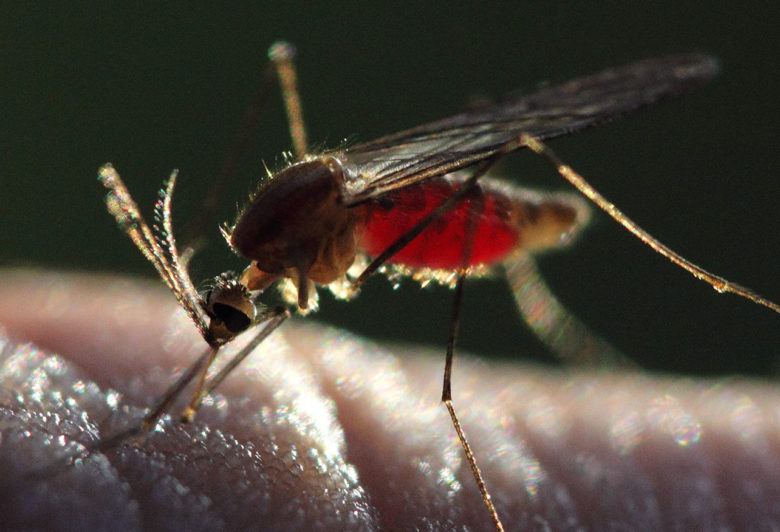
Anopheles mosquito feeding on blood (Photo: Dunpharlain / Wikimedia Commons [CC-BY-SA-4.0])
目次
What kind of disease is malaria?
Let us first explain malaria from a medical perspective. Malaria is a disease caused by parasites called Plasmodium (※1), and humans become infected when bitten by female Anopheles mosquitoes that carry the parasite.
Symptoms typically appear 10 to 15 days after infection, with early signs such as fever, headache, and chills, followed by recurrent fevers. Symptoms vary by parasite species, and fever cycles are classified as occurring daily, every 3 days, or every 4 days. Symptoms may also relapse months or years after the initial onset. Some parasite species can cause severe disease. In particular, when complications occur, the illness can more easily become severe, potentially leading to impaired consciousness and severe anemia.
In countries where malaria is endemic, people may acquire partial immunity. This immunity develops after years of exposure and can result in asymptomatic infections or reduce the risk of severe disease. Infants who have not acquired immunity are more likely to develop severe illness, but once people reach a certain age, immunity often develops, reducing the number of infections and severe cases. In contrast, in areas with low malaria transmission, few people have acquired immunity, so all age groups are exposed to risk.
Among those infected, infants and children under 5, pregnant women, people living with HIV/AIDS, and migrants or travelers from countries or regions with low transmission are at higher risk of severe illness, and delays in treatment can be fatal. In 2019, the global case fatality ratio for malaria was about 0.17%. However, the probability of death varies greatly by age, and children under 5, who are particularly prone to severe illness, are especially likely to die more often.
A serious infection situation
Let us look at data on the regions where malaria is spreading. As of 2019, about half of the world’s population was at risk of malaria, with an estimated 229 million cases annually. There were 409,000 deaths per year, of which 274,000 (67%) were children under 5. This means that nearly 750 children die every day on average.
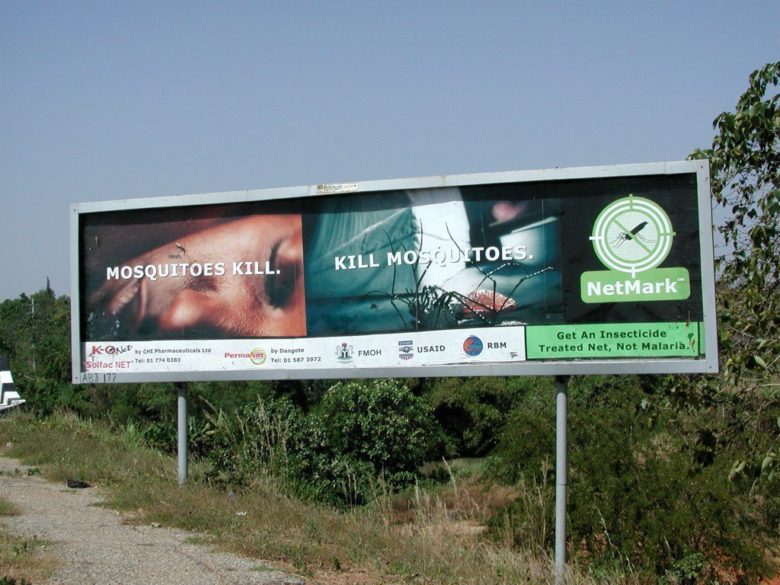
A sign showing the dangers of malaria and the importance of mosquito nets (Photo: Jeff Attaway / Flickr [CC BY 2.0])
By region, the African continent accounted for 93% of global malaria cases, and 94% of all cases and deaths worldwide. More specifically, about half of global deaths were concentrated in six African countries: Nigeria (23%), the Democratic Republic of the Congo (11%), the United Republic of Tanzania (5%), and Burkina Faso, Mozambique, and Niger (each 4%). Children are particularly likely to die, and in sub-Saharan Africa malaria is the 4th leading cause of death among children. Outside Africa, the proportion of malaria patients is also high in Papua New Guinea, the Solomon Islands, Venezuela, Yemen, and Guyana.
We should also touch on the relationship between malaria and climate/environment. Malaria is considered a tropical disease, and transmission is influenced by climatic conditions such as rainfall patterns, temperature, and humidity, which can affect the number and survival of mosquitoes that transmit the parasites. In many regions, transmission is seasonal, peaking during and just after the rainy season. In tropical areas such as Africa, where it is warm year-round and rainfall is relatively high, conditions are optimal for the mosquitoes that carry the parasites. As a result, tropical regions, including Africa, face a constant risk of malaria transmission. Anopheles mosquitoes primarily prefer dark places and are often found in rural areas with forests, woods, and thickets, which is why there are more malaria cases in rural than urban areas. Mosquitoes breed in a variety of aquatic habitats such as ponds, puddles, and irrigated fields. Urban areas are brighter, and standing water there is often polluted, so there tend to be fewer mosquitoes that transmit malaria.
While malaria is a major threat, measures to reduce it have advanced, and globally both cases and deaths are on the decline. The number of cases per 1,000 people at risk fell from 80 in 2000 to about 57 in 2019, decreasing. Over the same period, deaths fell by 44%. Some countries are moving toward elimination. Countries that have had zero indigenous cases for three consecutive years can apply for WHO’s malaria elimination certification. In the past 20 years, from 2000 to 2020, 11 countries (※2) have been certified as malaria-free by WHO. However, none of these countries are in sub-Saharan Africa.
Impacts on society and the economy
In regions with high malaria transmission, the disease has major impacts beyond people’s health, affecting society and the economy as well. Once infected, patients and their families spend significant sums on treatment and prevention. Specific costs include transportation to medical facilities for both the patient and any caregiver, consultation and testing fees, and antimalarials if the test is positive. For households in poverty, these expenses place a heavy burden on daily life. At the national level, the costs required for malaria treatment and control are substantial. As of 2000, in some high-burden countries, malaria treatment and control accounted for 40% of public health expenditure.
Next, consider impacts on the education system. Education is affected because many malaria cases occur among children, who cannot attend school when they fall ill. As of 2013, in some parts of Africa, malaria accounted for about 50% of illness-related absences. In 2000 in Kenya, the estimated number of school days lost annually due to malaria (※3) was 4 million to 10,000,000. Furthermore, children who experience severe malaria can suffer long-term sequelae. Research has shown that this can affect learning ability.
Work absences are also a concern. For public servants or company employees who can take paid sick leave, absences due to malaria may have little direct impact on income. However, if many staff take sick leave due to a preventable infectious disease, organizational operations and work practices are affected. In contrast, for those in agriculture or day labor without paid sick leave, infection leads to a more direct loss of income. In sub-Saharan Africa, the cost of malaria control, converted into economic productivity, was estimated at the equivalent of US$12 billion per year as of 2017.
Thus, people do not just lose their lives or suffer from malaria; they also spend large sums on it, with major social and economic repercussions.
How far have countermeasures progressed?
As noted above, the world made great strides in controlling malaria over the past 20 years. Behind this progress are diverse measures taken in affected countries. Here we look in detail at case detection and treatment, mosquito nets, insecticides, vaccine development, and infrastructure.
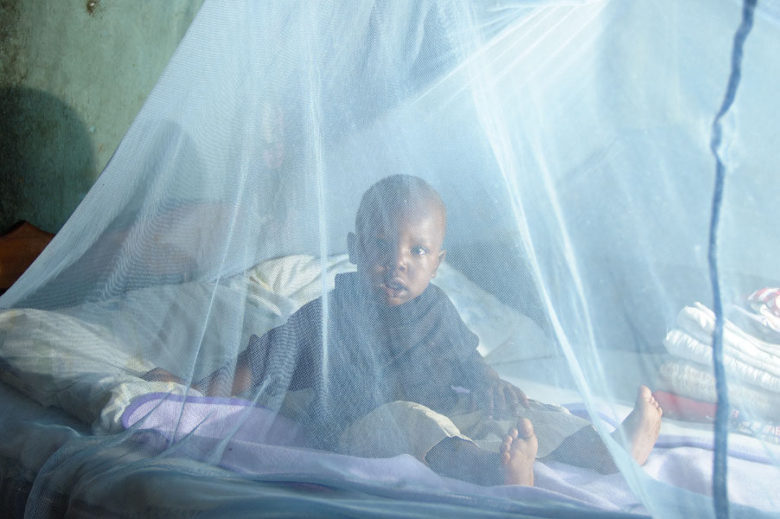
A child under a mosquito net (Photo: DFID – UK Department for International Development / Flickr [CC BY-NC-ND 2.0])
First, detection and treatment. Malaria is curable if symptoms are recognized early and treated with medication, and the likelihood of death is low. Many countries have expanded the use of diagnostic tests so that people who test positive can be promptly treated with appropriate antimalarials. The development and spread of rapid diagnostic tests have made it possible to confirm infection without a microscope. Moreover, non-blood tests have been developed in Africa from a hygiene perspective. As a result, in 2005 only 34% of patients suspected of having malaria worldwide were tested, but by 2014 this had increased to 65%.
Antimalarials play a crucial role in treating detected cases. Different Plasmodium species respond to different antimalarials; for example, for Plasmodium falciparum, which more readily causes severe disease, artemisinin-based therapy (ATC)—composed of fast-acting compounds that quickly clear parasites—is considered effective. In 2001, WHO began recommending this approach as the global standard. By 2014, most African countries had introduced ATC as a national policy, and although usage rates remain low, they are gradually increasing. It is also used for malaria prevention.
Next, the role of mosquito nets. Because mosquitoes that transmit malaria are most active at night, sleeping under a net physically reduces contact between mosquitoes and humans. In recent years, the use of mosquito nets has increased in many parts of Africa. The share of people at risk in Africa who are protected by nets rose dramatically from 2% in 2000 to an estimated 46% in 2019. The use of insecticide-treated nets has also increased, offering greater effectiveness by killing mosquitoes that touch the mesh.
Now, a closer look at insecticides. Indoor residual spraying (IRS) is a powerful way to reduce transmission: mosquitoes die when they rest on walls or ceilings treated with insecticide. In 1997, 26% of sub-Saharan African countries used IRS; by 2017, this had risen to 64%. Paints that kill mosquitoes when applied to ceilings and walls have also been developed. On the other hand, these measures raise concerns about adverse health effects on humans. For example, organochlorine insecticides (DDT) have long been used for malaria control. They are inexpensive to produce and effective in small quantities, but in recent years there have been widespread concerns about their effects on the human body, and their production and use have been globally restricted.
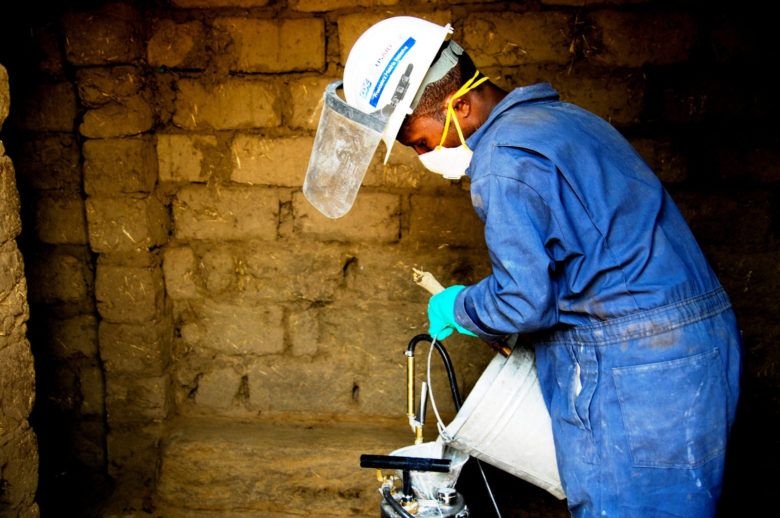
A person preparing indoor residual spraying against mosquitoes carrying the malaria parasite (Photo: USAID Ethiopia / Flickr [CC BY 2.0])
Next, the status of vaccine development. Although malaria control is multifaceted, vaccine development—though important—had long lagged behind. A vaccine candidate that had been in development for many years was first shown to be safe and effective in humans in 2019 by a U.S. pharmaceutical company trial. In areas where people are likely to be infected six or more times per year, vaccination prevented about 4,500 malaria cases per 1,000 vaccinated children. Since 2019, through a WHO-supported immunization program, more than 650,000 children in Ghana, Kenya, and Malawi have begun receiving doses of RTS,S, the most extensively tested and safest malaria vaccine candidate to date. Around the same time, a more effective vaccine called R21 was developed at the University of Oxford, and it was decided to produce it formally in collaboration with the Serum Institute of India. Given the substantial reductions in malaria incidence observed in these trials, wider adoption in other countries is expected.
Finally, consider infrastructure. By improving environmental conditions, transmission can be reduced. Investments in water-related infrastructure such as dams, water supply, and irrigation can limit mosquito habitats and prevent breeding. For example, there are cases where large-scale environmental improvements were made to enhance water flow in breeding sites and eliminate stagnant water. Short-term measures such as managing vegetation around water bodies and rivers, and maintaining canals and riverbanks can also prevent breeding. Additionally, placing homes in areas with fewer mosquitoes and installing window glass can reduce contact between mosquitoes and people.
There are other malaria control measures as well. In December 2020, researchers at a London graduate school developed a new gene-editing technique for mosquitoes and began experiments to control mosquito populations. Such measures have helped reduce malaria worldwide over the past 20 years.
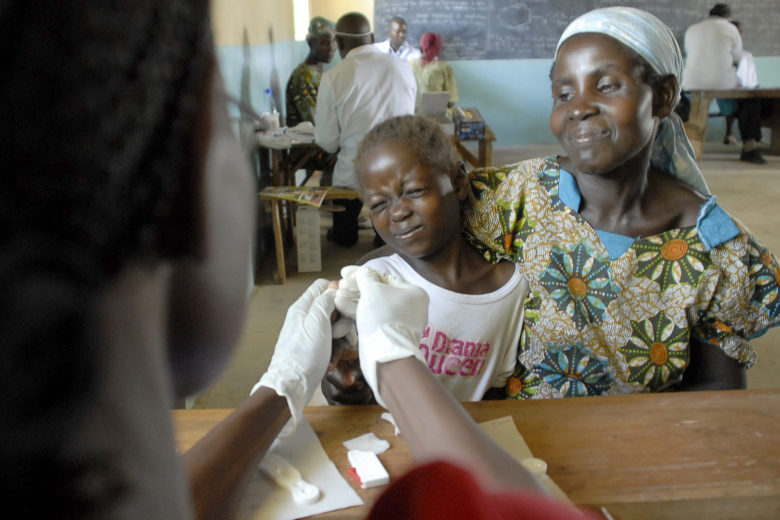
A child receiving an experimental malaria vaccine (Photo: U.S. Army Southern European Task Force, Africa / Flickr [CC BY 2.0])
Threats to progress
Although malaria control efforts are being implemented in diverse ways in many regions, there are signs of stagnation in recent years. Globally, cases per 1,000 people at risk stood at 57.5 in 2015 and 56.8 in 2019, essentially flat. Despite the effectiveness of control measures from 2000 to 2015, what factors are behind the recent slowdown? Here are five that hinder malaria control.
First is the issue of funding. Considering the unimaginable number of people at risk in Africa, funding for malaria has long been insufficient relative to the scale of the problem, and has stagnated in recent years. Since 2010, annual funding for malaria control has not increased beyond about US$3 billion. This is far below what is needed for elimination. According to WHO’s 2020 targets, US$6.6 billion per year would be required, but the actual amount spent is less than half of that. Why is funding so lacking? One reason is that most malaria deaths occur in low-income African countries, whereas high-income countries with resources for countermeasures face little malaria and therefore assign it lower priority. The same reasoning applies to the lack of funding for vaccine development. While the United States alone invested more than US$9 billion in one year for COVID-19 vaccines, global investment in malaria research totaled only US$7.3 billion over the 11 years from 2007 to 2018.
Second is parasite resistance to antimalarials. It has become clear that in Africa, Plasmodium parasites have developed resistance to several antimalarials used to date. In other words, in areas where antimalarials are widely used, the parasites have mutated to evade the drugs. WHO has warned that malaria deaths could return to levels seen 20 years ago.
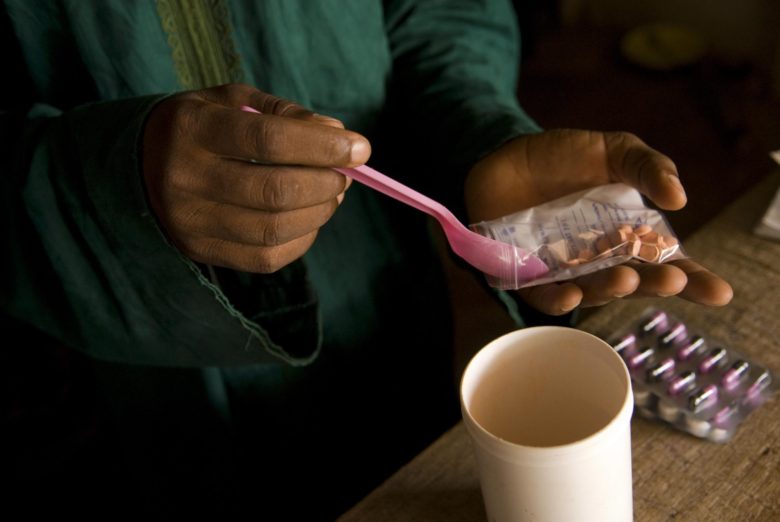
Antimalarial drugs (Photo: World Bank Photo Collection / Flickr [CC BY-NC-ND 2.0])
Third is the problem of invasive mosquito species. Anopheles stephensi, a mosquito native to parts of Southeast Asia and the Arabian Peninsula that transmits malaria, has invaded East Africa and could increase malaria transmission. The concern is that unlike other mosquitoes, this species breeds in urban areas. It is necessary to monitor the spread and growth of this invasive species and suppress its proliferation before it becomes established in African countries.
The fourth factor hindering control is climate change. As noted above, malaria is influenced by climate, and mosquitoes that carry the parasites thrive in warm, high-rainfall areas. It has long been hypothesized that warming would expand mosquito habitats, and recent research has demonstrated this, showing that malaria transmission correlates with rising temperatures. As warming progresses due to climate change, areas that previously had little transmission may see malaria spread.
Finally, there is the issue of COVID-19. The pandemic has disrupted the allocation of health workers and funding for malaria worldwide, raising concerns that malaria could resurge. Reasons include the global diversion of personnel and funds to COVID-19 measures and the overall reduction in resources allocated to health due to the worldwide economic downturn.
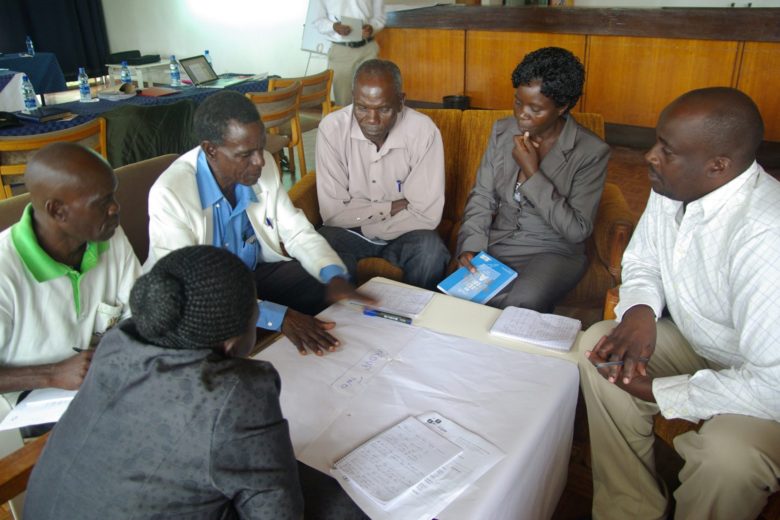
People discussing malaria control at a workshop (Photo: ICIPE – International Centre of Insect Physiology and Ecology / Flickr [CC BY-NC 2.0])
Summary
As we have seen, malaria continues to claim many lives worldwide, especially in Africa. It has major impacts not only on human health but also on society and the economy. In recent years, measures that had previously produced results have stalled, and there are concerns that the number of cases—once declining—may start to rise.
In recent years, efforts toward the Sustainable Development Goals (SDGs) have been underway worldwide. Under Goal 3—to ensure healthy lives and promote well-being for all at all ages—malaria elimination by 2030 is targeted. However, if the current stagnation in malaria control continues, the goal will not be met. Worse, if the slowdown persists, the situation could deteriorate and more lives could be lost.
As the COVID-19 pandemic has made clear, infectious diseases know no borders. Due to climate change, countries that once viewed malaria as someone else’s problem may themselves face malaria-related challenges. To curb and mitigate the impact of infectious diseases, it is urgent to increase efforts and funding for malaria and to refocus on measures that reduce transmission. Even as COVID-19 dominates attention worldwide, we must broaden our perspective and work to deepen understanding of neglected infectious diseases like malaria and efforts to eliminate them.
※1 There are five Plasmodium species that infect humans: Plasmodium falciparum, Plasmodium vivax, Plasmodium ovale, Plasmodium malariae, and Plasmodium knowlesi.
※2 The 11 countries are: United Arab Emirates (2007), Morocco (2010), Turkmenistan (2010), Armenia (2011), Sri Lanka (2016), Kyrgyzstan (2016), Paraguay (2018), Uzbekistan (2018), Algeria (2019), Argentina (2019), and El Salvador (2021).
※3 The total number of days children missed school
Writer: Mei Hatanaka
Graphics: Yosif Ayanski






幼い子供たちの命を奪うマラリア。
その危険性と予防性について非常にわかりやすい記事でした!
困ラリア♡
マラリアという言葉は聞いたことがあるものの、実情について初めて詳しく知りました。世界ではコロナばかりが騒がれていますが、他にも目を向けるべきところがあると思わされました。