
In February 2021, 5 member states of the Pacific Islands Forum (PIF) (Palau, the Marshall Islands, the Federated States of Micronesia, Kiribati, and Nauru) announced their withdrawal from the Forum. The Forum marked its 50th anniversary in 2021 and had become the region’s largest grouping, encompassing about 8.5 million square kilometers and roughly 39 million people. What history have the Pacific nations followed up to now? What kind of institution is the Forum, and what role has it played? What lies behind the decision by 5 countries to withdraw from the Forum? Furthermore, is it possible that the 5 countries that announced their withdrawal might return to the Forum in the future?
Logo of the Pacific Islands Forum (Photo: Germenfer / Wikimedia Commons [CC0 1.0])
目次
History of the Pacific Islands
The settlement of the Pacific islands is characterized by two waves. In the first wave, which goes back about 40,000 to 60,000 years, settlers reached New Guinea and Australia. After a considerable lapse of time, the second wave began about 5,000 years ago, as migrants from Southeast Asia who had developed seafaring technology, together with descendants of the first wave, moved eastward to the remote islands of the Pacific. Over a long period thereafter, the development of new islands and the expansion of trade continued, and by around 1200 settlers had reached present-day New Zealand and Easter Island, and most of the islands in the Pacific region had been settled. The peoples of the second wave shared the same roots, and thus most languages in the region belong to the Austronesian language family, branching off into diverse languages and cultures in their respective areas.
Subsequently, beginning with Portuguese explorers’ visit to the Mariana Islands in the 16th century, the Pacific region came under colonial rule mainly by Britain, France, Germany, and Spain. European countries regarded the Pacific as a place inhabited by “primitive natives,” established plantations to exploit resources, and brought laborers from other colonies such as South Asia, subjecting local people to harsh treatment. By the late 19th century, the United States also began expanding into the Pacific. As a result of war with Spain, Guam became a U.S. colony, and at the same time Hawaii and eastern Samoa became U.S. territories, where exploitation of local resources and labor followed.
After World War I, many territories that had been occupied by Germany, including New Guinea, Nauru, and Western Samoa, became League of Nations mandates. In effect, however, this merely shifted colonial rule to the mandatory powers, Australia and Japan. When World War II broke out, many islands were occupied by Japan and became sites of large-scale battles with the Allied forces. After the war, as many islands came under U.S. trusteeship, moves toward decolonization gradually progressed. Beginning with the independence of Western Samoa (※1) in 1962, independent states emerged in the order of Nauru, Tonga, Fiji, and Papua New Guinea, and Palau achieved independence in 1994. However, even today, French Polynesia and New Caledonia remain parts of France, and Guam is a U.S. unincorporated territory, among other examples—meaning not all territories have achieved independence. Moreover, as seen in the Compacts of Free Association between the United States and the Federated States of Micronesia, the Marshall Islands, and Palau, and in the cases of the Cook Islands, Niue, and Tokelau, which have free association agreements with New Zealand, the influence of former colonial powers remains substantial. In addition, countries that did gain independence are small in land area with limited resources, leaving tourism, fisheries, and official development assistance (ODA) from other countries as their main sources of revenue.
The Pacific countries are conventionally divided into Melanesia, Polynesia, and Micronesia (※2). This classification was proposed 200 years ago by a French explorer based on physical geography and the cultures of the inhabitants. It is now understood that this division is no longer a precise classification, but it remains widely used and holds important meaning for the Pacific Islands Forum as well. For historical and economic reasons, Australia has aligned with Melanesia and New Zealand with Polynesia.
What is the Pacific Islands Forum?
In 1971, the South Pacific Forum (SPF) was established to discuss issues of common concern among the countries of the South Pacific. At the time, many of the islands were not yet independent, so political topics such as movements toward independence were the primary agenda items, but the scope of topics gradually broadened.
In April 1973, a permanent agency to address economic issues, the South Pacific Bureau for Economic Cooperation (SPEC), was established, promoting cooperation among members across a wide range of fields including trade, tourism, and economic development. In response to repeated nuclear tests at Mururoa Atoll in French Polynesia, the South Pacific Nuclear Free Zone Treaty (Treaty of Rarotonga) was established in 1985. The treaty prohibits the use, testing, and storage of nuclear weapons in the South Pacific and contributed to the expansion of nuclear-weapon-free zones in the Southern Hemisphere.
In 1988, the South Pacific Bureau for Economic Cooperation was renamed the “South Pacific Forum Secretariat.” It set up its secretariat in Suva, the capital of Fiji, as the body implementing the Forum’s decisions and was given authority to put those decisions into practice. By the 1990s, as North Pacific countries also began participating in the Forum, in 2000 the name was changed from the South Pacific Forum to the Pacific Islands Forum (PIF). While the annual leaders’ meeting is chaired by the presiding country, a distinctive feature is that the Secretary-General, the head of the Secretariat charged with implementing Forum decisions, has been selected in a personal capacity rather than as a state representative.
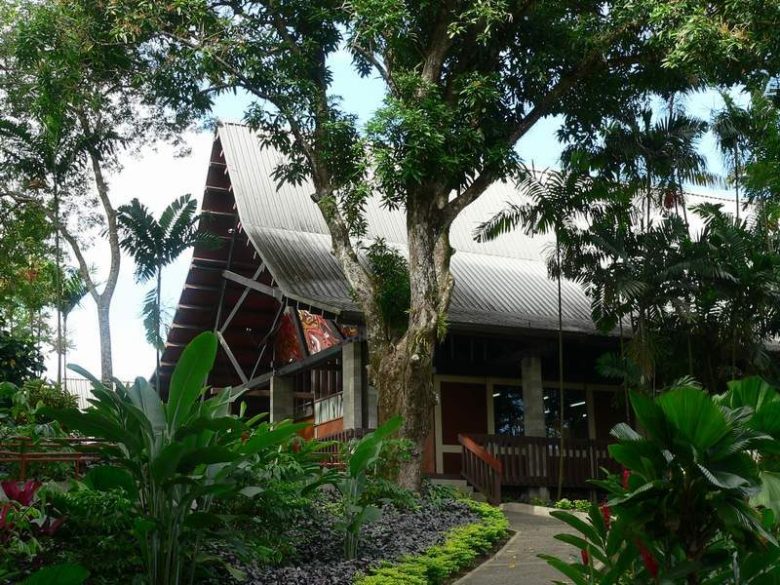
The Forum’s offices in Suva, the capital of Fiji (Photo: Henning Blatt / Wikimedia Commons [CC BY-SA 3.0])
The Forum has a partnership with the United Nations and has voiced regional concerns in international politics on trade, fisheries, environmental issues, and more. As one of the regions most vulnerable to the impacts of climate change such as sea-level rise, and with their very existence at stake, Pacific countries—particularly the Micronesian states—have repeatedly sought to advance action on climate change at the UN and within the Forum.
Within the Forum, debates have arisen over which governments or countries can participate. For example, in Fiji, when interim Prime Minister Frank Bainimarama, who had come to power in a coup, failed to hold elections within the timeframe pledged at the Forum in 2009, Fiji became the first country to be suspended. That same year, after the domestic courts ruled the interim government illegal and unconstitutional, Bainimarama declared that elections would be held by 2014. A new constitution was promulgated in 2013, and a general election was held in 2014, with Bainimarama reappointed as prime minister. Having undergone a democratization process, Fiji was reinstated in the Forum that year.
The Forum has increasingly allowed participation by territories that are not independent states. In 2016, after long being under French control, New Caledonia and French Polynesia newly joined the Forum with the support of Australia and New Zealand. However, Guam and the Northern Mariana Islands, which are categorized in the Micronesia subregion and are U.S. territories, still remain observers in the Forum.
Background to the withdrawal
The announcement at the outset that 5 countries would withdraw in 2021 triggered the greatest crisis in the Forum’s history. The roots of the issue go back to the selection of a new Secretary-General from February 2021, following the end of the previous Secretary-General’s six-year term. There was an unwritten understanding that the Secretary-Generalship would rotate among Melanesia, Polynesia, and Micronesia, and this time the selection was supposed to prioritize Micronesia’s preference. Accordingly, the 5 Micronesian countries expected the Micronesian nominee to become Secretary-General, and from May 2019 they unanimously rallied behind Gerald Zackios, the Marshall Islands’ ambassador to the United States.
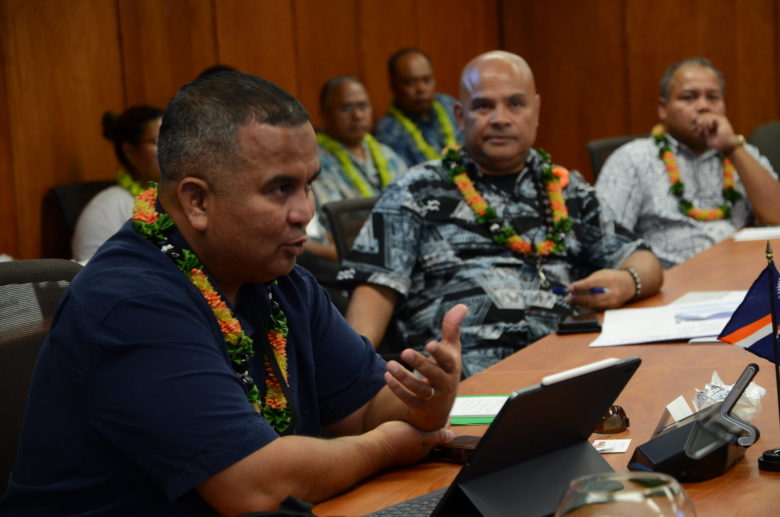
Leaders of Micronesia (Photo: East-West Center / Flickr [CC BY-NC-ND 2.0])
Before the vote, the Micronesian countries warned that if the unwritten understanding were not honored in the selection of the Secretary-General this time, they would not hesitate to withdraw from the Forum. Behind this was the fact that Micronesia, with a smaller share of the Forum’s population, had long felt overlooked by Polynesia and Melanesia. They have argued that Micronesia has been treated like second-class citizens within the Pacific community. Indeed, the fact that a Secretary-General has only once been chosen from Micronesia suggests the unwritten rule has not been sufficiently observed and Micronesian views have not been respected.
Other Forum members, including Australia and New Zealand, took a lukewarm stance toward the Micronesian nominee, and efforts intensified to field new candidates from outside Micronesia. Tuvalu, which was chairing the selection process, extended the nomination deadline despite criticism from Micronesian countries, and ultimately 4 candidates from Melanesia and Polynesia ran. In response, in September 2020 the governments of the Micronesian countries adopted and issued the “Mekreos Communiqué,” emphasizing that the Micronesian nominee should be respected by the Forum as a whole in this selection.
The election of the Secretary-General was postponed multiple times, and the selection process was changed from consensus to a secret ballot. As a result, former Cook Islands (Polynesia) Prime Minister Henry Puna was appointed the new Secretary-General by a vote of 9-8 (with 1 abstention), defeating Zackios. The unwritten understanding repeatedly asserted by Micronesia was not upheld, and the candidate backed by Micronesia lost. Disappointed, the 5 countries then followed through on their warning and announced their withdrawal from the Forum. Palau first decided to withdraw immediately, and the other 4 countries followed with statements announcing the same. Should the Micronesian countries withdraw, not only would interference by countries keenly interested in the Forum increase, but the Pacific region’s unity would be undermined and efforts to address issues currently confronting Forum members could be impeded.
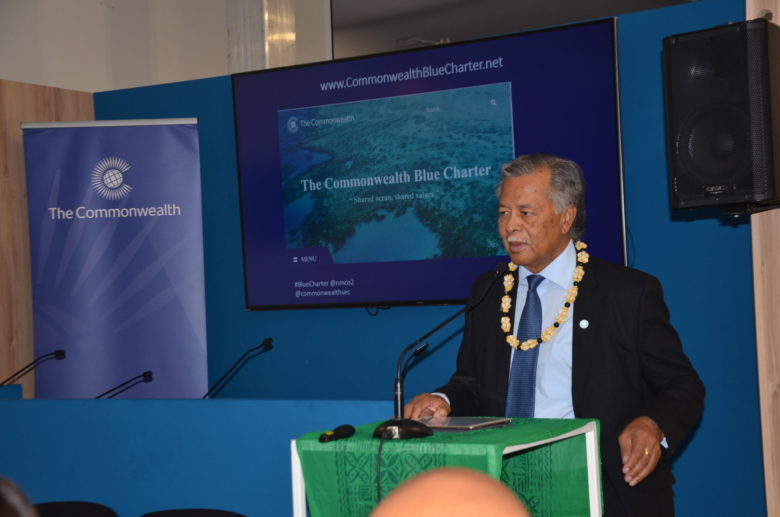
Henry Puna, the newly appointed Secretary-General of the Forum (Photo: The Commonwealth / Flickr [CC BY-NC 2.0])
What has long been emphasized in the Forum are the values of “Talanoa,” a Samoan term emphasizing dialogue and consensus, and mutual respect. The Forum declared that the appointment of the new Secretary-General followed these principles, but can it truly be said that the outcome reflected dialogue, consensus, and mutual respect that took Micronesia’s voice into account? Given Micronesia’s smaller population and economy, and the fact that Melanesia has close ties with the regional power Australia and Polynesia with New Zealand, Micronesia’s claims have long been less likely to be reflected. In particular, Australia, the most influential player in the Forum, provides substantial support to Forum members but has shown little interest in the climate change issues raised by Micronesia—indeed, it has prioritized protecting its domestic coal industry, breaking ranks.
Relations with other countries
So far we have focused mainly on the Forum’s internal affairs, but the presence of states closely tied to the Forum is also crucial to the Forum’s overall functioning. Since the late 20th century, after the annual summit, Forum countries have held leaders’ meetings with other countries, developing discussions across diverse fields such as free trade and the movement of people. Behind this are considerations including spheres-of-influence security issues vis-à-vis other states, disputes over fishing rights, and promoting trade in ways favorable to themselves. Here, we focus on the United States, France, China, and India as countries with deep connections to the Forum and analyze their roles.
The United States possesses many territories far from the mainland—such as Hawaii, Guam, American Samoa, and the Northern Mariana Islands—as well as vast exclusive economic zones. It is also closely linked to Palau, the Federated States of Micronesia, and the Marshall Islands through Compacts of Free Association. Since World War II, the United States has actively provided support and conducted military exercises in these areas, exerting greater influence in Micronesia than Australia and New Zealand. In addition, U.S. President Joe Biden, who took office in 2020, has pledged to reduce global carbon emissions, and Micronesia has high expectations for the Biden administration as a partner on climate change issues.
French Polynesia’s exclusive economic zone is also vast, and France wields significant influence, having long opposed the independence movement in New Caledonia. France has strengthened relations with Australia in recent years, and both countries have elevated each other to the status of important strategic partners. In 2017, an agreement on sharing classified information was also adopted. France has actively participated in the South Pacific Defence Ministers’ Meeting (SPDMM) and the Shangri-La Dialogue, strengthening ties with other major powers.
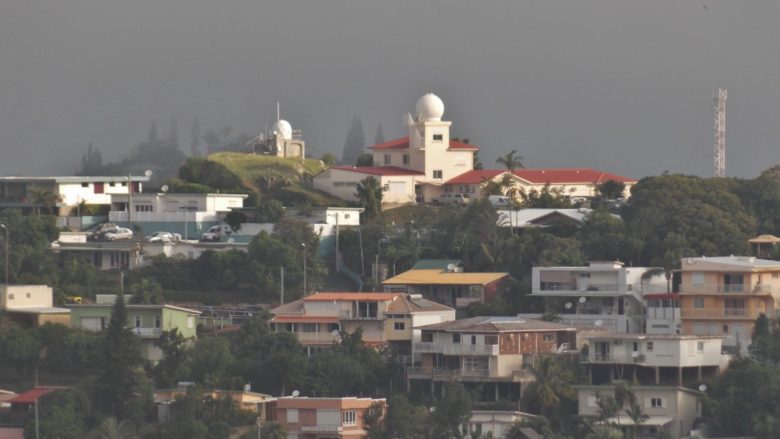
New Caledonia, where independence referendums were held in 2018 and 2020 (Photo: gérard / Flickr [CC BY-SA 2.0])
As China’s large-scale maritime expansion advances, Chinese companies and individuals have launched businesses one after another in Pacific countries. With the government promoting the Belt and Road Initiative announced in 2013, the value of trade with Pacific countries and the amount of aid from China have been increasing. China’s presence in the Pacific has thus grown, prompting countermoves by other countries. In a situation where tourism revenue has fallen due to COVID-19, Chinese funding is attractive to Pacific countries. Kiribati switched its diplomatic recognition from Taiwan to China (※3), Fiji has welcomed China’s Belt and Road Initiative, and the Melanesian Spearhead Group Secretariat (MSG Secretariat), a regional organization of Melanesia, received funding support for its establishment.
Although geographically distant from the Pacific, India—China’s geopolitical rival—has provided substantial financial support to the Forum. In 2019, as the Forum’s chair country, Tuvalu received funding from India to build a venue for the leaders’ meeting; India has also opened consulates in Samoa and Tonga, both to strengthen its influence within the Forum and to garner support for its bid for a permanent seat on the UN Security Council. In addition, Australia, Japan, the United States, and India—the 4 countries of the Quad—are engaging in strategic dialogue, increasing their presence in the Indo-Pacific region.
Beyond these, Indonesia has shown growing interest in the Pacific region, seeking to raise its profile while countering interference by other countries in the West Papua independence movement. Japan, mindful of China’s expansion, fishing rights, and gaining support for a permanent seat on the UN Security Council, remains attentive to the Pacific and has strengthened engagement with Forum countries in coordination with the United States and Australia.
Thus, in addition to the regional powers Australia and New Zealand, multiple major powers are deepening relations with and exerting influence over Pacific countries.
What is the future of the Forum?
So, what should be done to persuade Micronesia to reconsider its intention to withdraw from the Forum? One proposal is for the new Secretary-General, Puna, to step down. Palauan President Surangel S. Whipps Jr. said that a solution would be for the South Pacific countries to persuade Puna to cede the Secretary-Generalship to Zackios. In this way, strictly observing the unwritten rule regarding leadership rotation is one possible scenario.
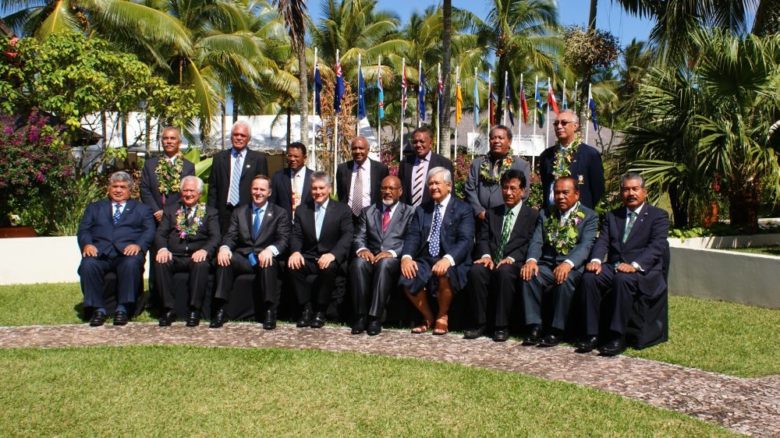
Official photo at the Forum (Photo: nznationalparty / Flickr [CC BY-NC-ND 2.0])
There may also be a trump card for a resolution in Fiji. The country has taken over as Forum chair and could lead efforts to place Micronesia’s return as a main agenda item at the next meeting scheduled for August 2021. Moves toward reconciliation are also happening at the prime ministerial level. After the Micronesian countries announced their intention to withdraw, Papua New Guinea’s Prime Minister James Marape stated that the Forum’s structure regarding regional balance would be reviewed, and Samoa’s then-Prime Minister also proposed reviewing the current selection process.
Beyond regional imbalances, another issue the Forum faces is insufficient political will within member countries to implement Forum decisions. In fact, fewer than half of the decisions adopted at the Forum’s economic ministers’ meetings in the early 2000s were confirmed to have been implemented in the Pacific countries. The Forum as a whole needs to discuss how to implement decisions made at leaders’ meetings.
However, because the interests of major powers are entangled in the Pacific, it will be difficult to resolve the situation with just Forum members. There is even a suspicion that the current crisis of Micronesian withdrawal was in part triggered by Australia and New Zealand to curb U.S. influence. If major-power interests are at issue, it may be necessary to have the matter coordinated or resolved within another organization, the Pacific Community (SPC) (※4). SPC includes regions not participating in the Pacific Islands Forum, and the United States—which has territories in Micronesia—has a strong presence there. That said, if SPC’s influence grows, small states that have held speaking power and played important roles within the Pacific Islands Forum may be more likely to be sidelined within the SPC framework and see their interests overlooked.
If we prioritize the concept of “Talanoa” mentioned earlier, rather than rushing to a conclusion, it will be essential to create opportunities for face-to-face dialogue to foster mutual understanding. It is true that Micronesian countries have benefited from being part of a large mechanism like the Forum, but at the same time they have felt a sense of alienation. In light of the longstanding marginalization of Micronesia and the Forum’s serious crisis, what solutions will Melanesia and Polynesia propose? We will be watching developments closely.
※1 It became independent as the Independent State of Western Samoa on January 1, 1962, but in 1997 the country name was changed to “Independent State of Samoa.”
※2 Representative examples of Melanesia include Fiji, Vanuatu, New Caledonia, the Solomon Islands, and Papua New Guinea; of Polynesia include Kiribati, Samoa, Tonga, and Tuvalu; and of Micronesia include the Federated States of Micronesia, Kiribati, the Marshall Islands, Nauru, and Palau.
※3 As of May 2021, among Pacific countries those maintaining diplomatic relations with Taiwan are 4 countries: the Marshall Islands, Nauru, Palau, and Tuvalu.
※4 The Pacific Community (SPC) is the largest scientific and technical organization in the Pacific region, operated by 26 countries and territories. It focuses on solving cross-cutting issues such as climate change, gender equality, and youth employment. As of May 2021, in addition to its 4 founding members—Australia, France, New Zealand, and the United States—22 island entities have joined the Pacific Community. These countries and territories are: the Cook Islands, Fiji, Kiribati, the Northern Mariana Islands, New Caledonia, Palau, Papua New Guinea, Pitcairn Islands, French Polynesia, Tokelau, Tonga, Tuvalu, Niue, the Marshall Islands, the Federated States of Micronesia, Wallis and Futuna, Nauru, the Solomon Islands, American Samoa, Vanuatu, and Samoa.
Writer: Koki Morita
Graphics: Koki Morita, Mayuko Hanafusa





5千人弱の人間はこの事をナウルのツイッターで知ったようだ。
https://twitter.com/nauru_japan/status/1359165476627238920
紳士協定を破って北太平洋諸国の脱退させてまで局長にこだわるかね。よくわからんね。
ちなみに6月は島サミットがあるぞ。
不文律を成文化するのも一手かも
追ってないし、経緯も深刻さもわからんけど、ゴネたら通るってのも良くないだろうし
This is a very well-informed article! Congratulations!
あまり取り上げられない太平洋諸国のことが詳しく書かれていて面白かったです。最後の加盟国や、太平洋諸国の地図がすごいなと思いました。読みやすい記事でした!★