
“We cannot afford to sign the Paris Agreement.” This was a 2016 remark by Kai Holst-Andersen, Greenland’s Deputy Foreign Minister. The Paris Agreement, concluded in 2015 by 196 countries and regions, is an accord on addressing climate change. Although most countries and regions have ratified it, Greenland, which is not an independent state, cannot sign as one. Moreover, even if Greenland were to achieve independence, it says it could not afford to sign. Behind this statement lies not only the difficulty of tackling climate change but also problems related to Greenland’s path to independence. This article looks at Greenland as it stands at a major turning point.
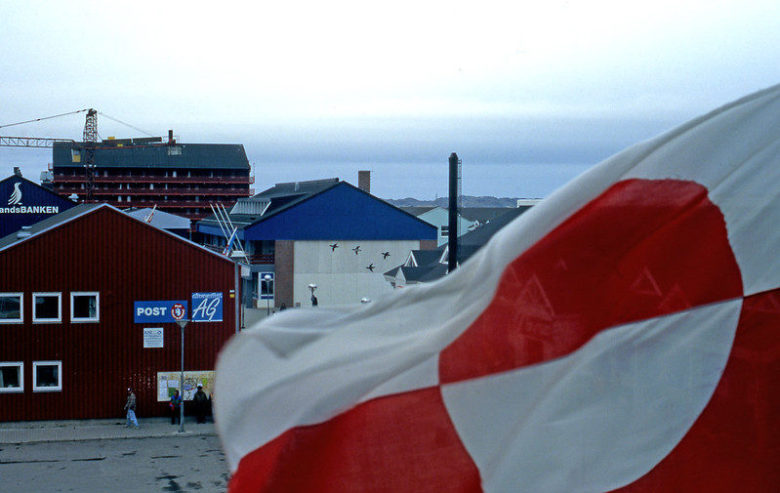
Flag of Greenland (Photo: GRID-Arendal/Flickr[CC BY-NC-SA 2.0])
目次
History of Greenland
Greenland is the world’s largest island, located between the Americas and Northern Europe, with an area of about 2.16 million square kilometers, roughly 3 times the size of New Guinea, the world’s second-largest island. Despite its vast size, about 80% is covered by thick ice more than 4 kilometers thick, so the national population numbers only about 57,000 people. Another major feature is that Greenland is not an independent state but a territory of Denmark. About 2/3 of the national budget is financed by subsidies from Denmark, and apart from subsidies the main source of revenue is fisheries.
Looking back at Greenland’s history, people who migrated from North America had already settled there around 2500 BCE. However, European settlement that began about 1,000 years ago had a major impact on Greenland. Erik the Red, who is said to have been banished in 982 for murder from the region that is now Iceland and to have reached Greenland, left the island once to publicize it and returned with settlers from Iceland. However, migrants did not remain there long. Later, in 1721, when settlers from Denmark built a settlement near present-day Nuuk, the capital, ties with Denmark grew stronger, and in 1775 it became a Danish colony. After the experience of coming under U.S. protection during World War II, in 1953 it became part of the Kingdom of Denmark.
Although Greenland became part of Denmark, in 1979 it enacted a Home Rule Act by referendum. As a result, while foreign affairs and defense remained under Denmark, Greenland created its own government and legislature and gained self-determination in areas such as education and social welfare, enabling limited self-rule. Subsequently, led mainly by government officials, the independence movement expanded, and in a referendum held again in 2008 with Denmark’s support, over 70% of voters expressed support for independence. The referendum was not legally binding, so independence could not be achieved immediately on that basis. Greenland still has many issues to resolve on the road to independence, and among them the fiscal situation—in which subsidies from Denmark account for 2/3 of the budget—is a major drag. A ray of hope has emerged in a phenomenon occurring in and around Greenland.
A turning point for Greenland
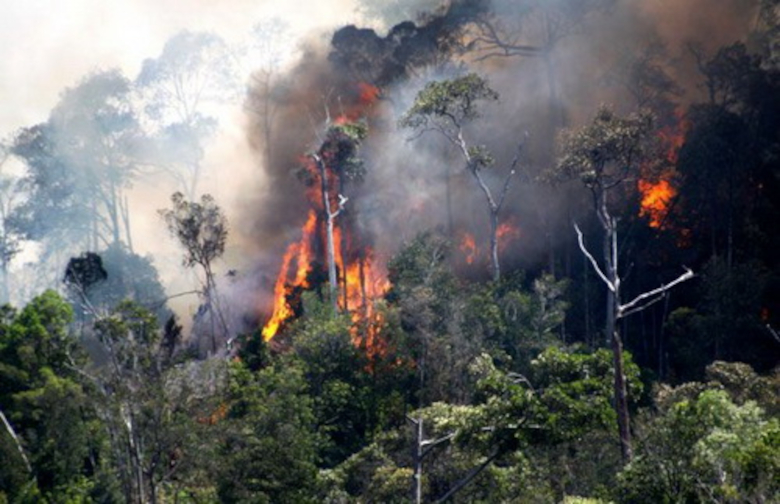
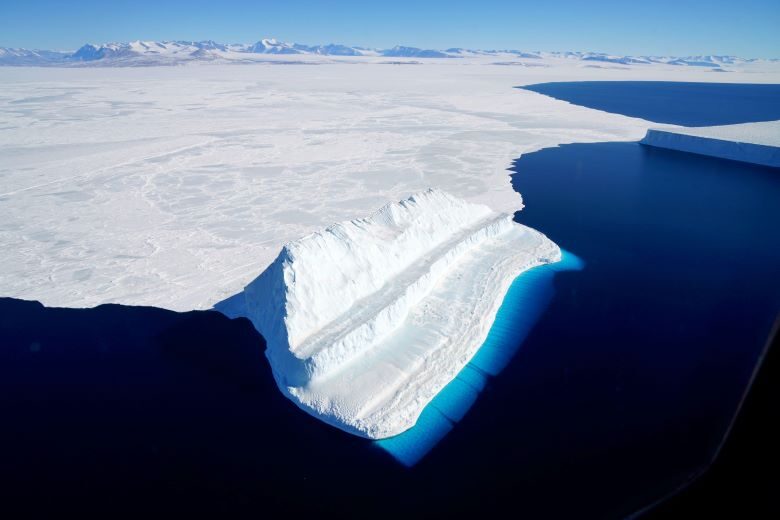
Like other countries around the globe—if not more so—Greenland has been profoundly affected by climate change. While climate change has worsened environmental problems in Greenland, it has also begun to present the possibility of independence from Denmark. As noted above, 80% of Greenland’s land area is covered by thick ice. That ice sheet is melting at a tremendous pace due to rising temperatures from climate change. The pace is said to be the fastest in 12,000 years. The melting has been so rapid that snowfall to replenish the ice cannot keep up; at this rate the ice sheet will decrease year by year and will not return to its previous state. This is not just Greenland’s problem. Because the melting ice sheet is driving sea-level rise worldwide, if the current situation continues, by the end of the 21st century sea level is projected to rise by 10 centimeters, exposing about 400 million people to flooding.
This is a serious issue for Greenlandic society. Greenland’s sheep farmers are concerned about the rapid advance of climate change. At first glance, as the ice sheet melts and more ground is exposed, it might seem that the area available for grazing sheep would expand. They initially benefited, but because climate change has progressed too far, summers have become drier and the grass sheep eat is now harder to grow. One farmer says the amount of grass grown over the 10 years from 2008 to 2018 has been cut in half.
While climate change has harmed Greenland and the planet, Greenland has also come to enjoy two benefits from it. The first concerns fisheries, which account for 90% of Greenland’s exports. As temperatures have risen and ice along Greenland’s coasts has melted, new fishing grounds have opened up in areas previously blocked by ice, increasing catches significantly. In addition, another benefit that has fallen into the laps of Greenlanders as the ice sheet has melted is the mineral resources lying beneath Greenland.
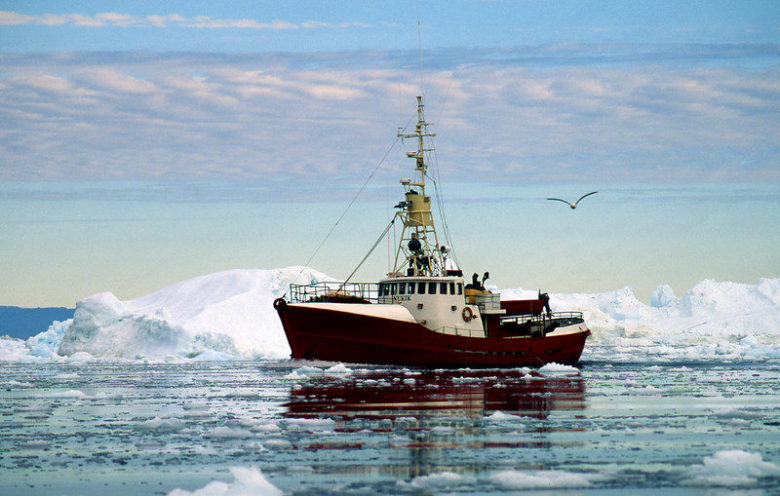
A fishing boat sailing along Greenland’s coast (Photo: GRID-Arendal/Flickr[CC BY-NC-SA 2.0])
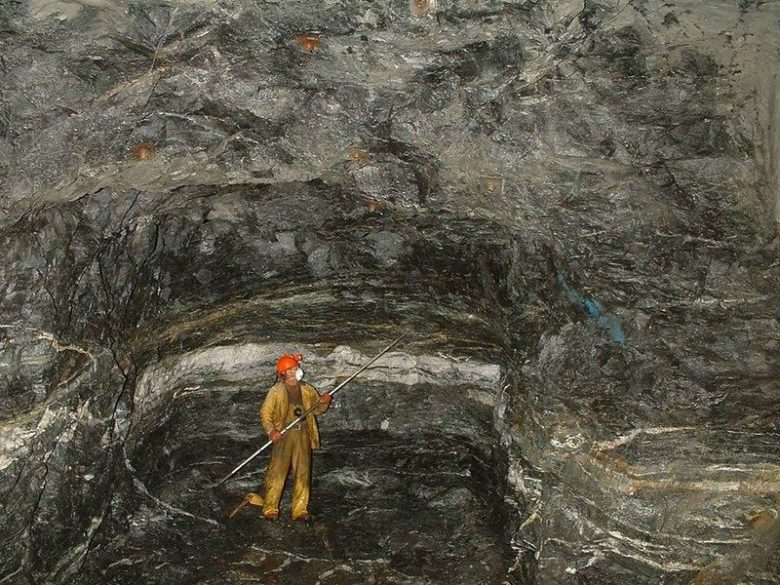
Amid IT adoption and the transition to clean energy, one resource in growing demand is rare earths. Also called rare-earth elements, these are used in the motors of electric vehicles and in the display components of mobile phones and are indispensable to the manufacture of electronic products central to our lives. They are also needed to produce solar panels, wind turbines, and other equipment essential for a clean-energy transition. In particular, the four rare earths neodymium, praseodymium, terbium, and dysprosium have become important resources, including for electronic devices. In addition to mineral resources such as oil, natural gas, and uranium, Greenland is believed to hold large deposits of these rare earths, and especially Kuannersuit Mountain near Narsaq in southern Greenland is said to have one of the world’s largest rare-earth deposits. As the ice sheet has melted, access to these vast resources has become easier, and Greenland is moving to promote businesses that make use of them. If Greenland can make this huge business a success, it could be a key to resolving the fiscal issues on the road to independence, and the Greenlandic government sees a chance here.
An Australian company called Greenland Minerals and others have been working energetically since 2007, beginning studies to develop the mining industry in Greenland to make this business succeed, among other activities. Greenlandic law requires companies wishing to mine to submit an environmental impact assessment. The assessment submitted by Greenland Minerals in 2020 passed review as meeting all legal requirements. As a result, Greenland Minerals has been allowed to move to the stage of holding public hearings to solicit public opinion regarding mining, marking a major step forward for Greenland’s mining industry. The steadily developing mining sector holds the potential to become the backbone supporting Greenland’s finances.
Shifts in the international relations surrounding Greenland
Greenland is also greatly influenced by international relations. Because it lies on the sea between North America and Russia, it has long been noted as an important land from a geopolitical perspective. In addition, because climate change may open new sea routes in the Arctic and the melting ice makes seabed resources easier to access, its importance is increasing. Together with the move to develop the mining industry, the changes climate change has brought to Greenland have greatly affected the actions of related countries and regions. Here we look at Greenland’s relations with 5 countries and regions.
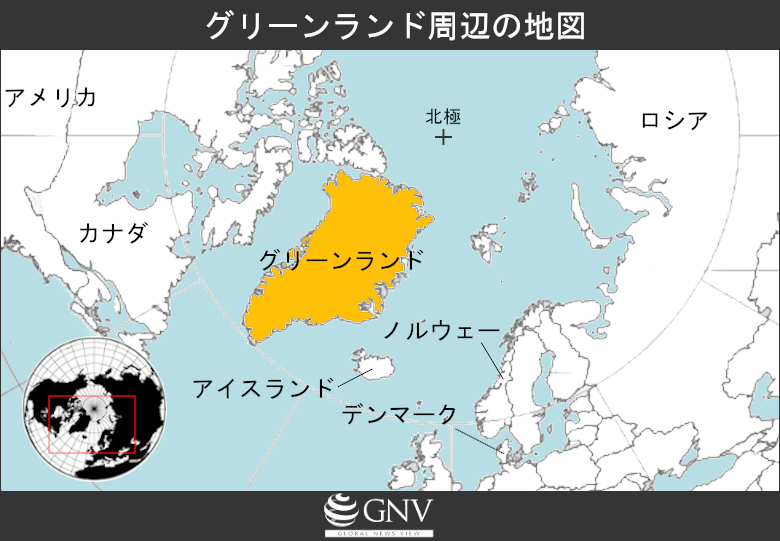
The first is Denmark, which has long been deeply connected with Greenland. Since colonizing Greenland in 1775, Denmark has treated Greenland as part of Denmark to this day. However, the relationship is not necessarily as oppressive as that between a colony and its metropole has often been in history; when Greenland held a referendum and enacted the Home Rule Act, Denmark recognized Greenland’s domestic authority excluding military and foreign affairs, and it has maintained a relatively calm relationship, including providing about 210 billion dollars a year in subsidies. Denmark has not openly opposed Greenland’s moves toward independence, but statements such as “Can Greenland maintain its society without subsidies from Denmark?” have also been heard. Regarding the mining industry, even though Denmark had a chance to intervene legally under the Mineral Resources Act—enacted in December 2009 to set a framework for exploitation and research in the mineral industry—it missed that chance, which can be read as a lack of strong attachment; still, Denmark is wary of Greenland developing deep relationships with other countries.
Among European countries other than Denmark, attention to Greenland is also growing. Because Greenland is part of Denmark, it automatically joined the European Economic Community (EEC), the predecessor to the European Union (EU), when Denmark joined, but Greenland was dissatisfied with the EEC’s fisheries regulations. Denmark therefore allowed a referendum in Greenland, an autonomous territory, to decide whether Greenland should leave the EEC. As a result of the referendum, Greenland left the EEC in 1984, and after the EEC became the EU in 1993, relations between Greenland and the EU remained limited to partnerships in certain fields (mainly fisheries). However, in light of climate change and the development of the mining industry, the EU is seeking to strengthen ties with Greenland for two reasons and has begun large-scale investment. First, from a geopolitical perspective, Greenland plays an important role for the EU in increasing its influence in the Arctic. Second, from the perspective of the EU-wide push for clean energy, it wants to strengthen relations with Greenland, which possesses abundant mineral resources.
Russia, which has maintained significant influence in the Arctic due to its size, is also paying attention to Greenland. Natural resources in the Arctic account for a significant share of the planet’s remaining resources, and for Russia, whose economy relies heavily on resource exports, maintaining power in the Arctic and obtaining natural resources are crucial. From a military perspective, Russia also has the aim of controlling the sea area between Greenland and Iceland, so it is keeping a close eye on Greenland’s situation as a player able to affect the Arctic and is seeking to expand its influence there in cooperation with China, discussed below.
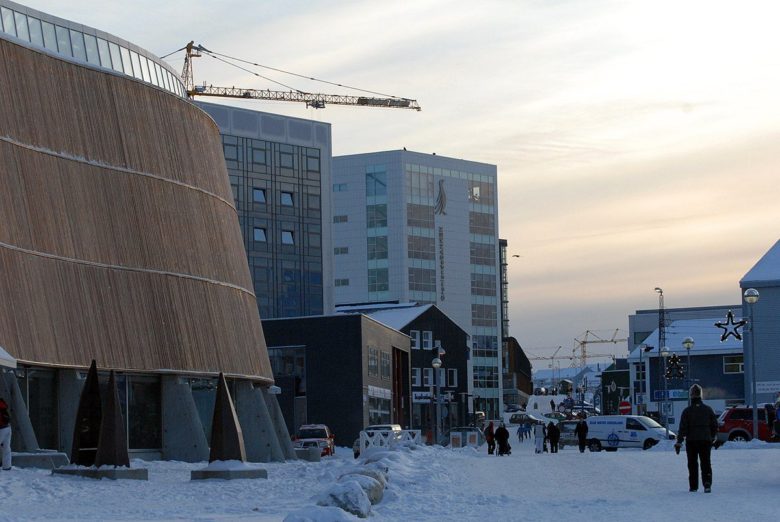
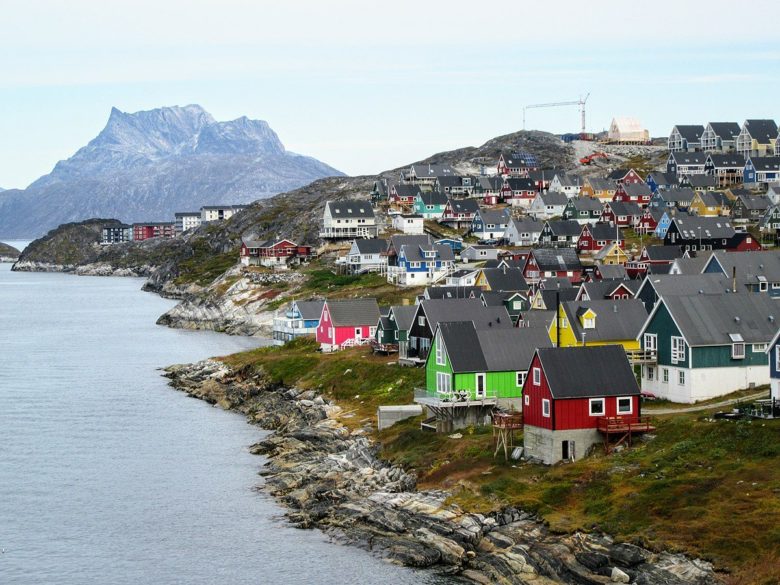
View of Nuuk, Greenland (Photo: Visit Greenland/Wikimedia Commons [CC BY 2.0])
It is no exaggeration to say that China is the country paying the most attention to Greenland’s mining industry this time. China has so far accounted for about 90% of global rare-earth production, and progress in Greenland’s mining sector could significantly affect China’s share. Moreover, to succeed with China’s Polar Silk Road plan(※1), it needs to strengthen its influence in the Arctic. Leveraging its accumulated know-how, China has been providing technology to Greenland for the highly demanding production of rare earths and making investments such as expanding Greenland’s airports. At the same time, the Chinese conglomerate Shenghe became the largest shareholder by purchasing 12.5% of Greenland Minerals’ stock, steadily increasing its influence over Greenland’s mining industry.
The United States stationed troops in Greenland during World War II—when Denmark was occupied by Germany—under the pretext of protection, and since then has maintained an air base there. During World War II and the Cold War, however, the U.S. placed bases primarily to project American influence in the Arctic and contain the Soviet Union from a geopolitical perspective. In recent years, in response to the more active moves by China and Russia regarding Greenland, former President Donald Trump in 2019 floated a plan to purchase Greenland. The plan was, of course, rejected by Greenland and Denmark and went nowhere. The U.S., however, has raised spending caps under the Defense Production Act to secure rare earths worldwide and has reported that it can continue to invest up to $1.75 billion in defense-related rare-earth elements. This shows that the U.S. remains focused on rare-earth industries worldwide, including Greenland. The U.S. aims to strengthen ties with Greenland while emphasizing that it supports cooperation through democratic approaches and by sharing know-how on its own sustainable tourism industry.
Toward independence
As we have seen, the mining industry has given Greenland a means to address the fiscal issue that has been the biggest obstacle to independence. With other countries beginning to invest in this business, the fiscal situation should improve further. In 2020, the long-dominant ruling Siumut party held a leadership election, and Erik Jensen won. He also takes a proactive stance toward Greenlandic independence. He has indicated his intention to assume foreign affairs and defense authority that have been Denmark’s responsibility, and moves toward independence are likely to accelerate.
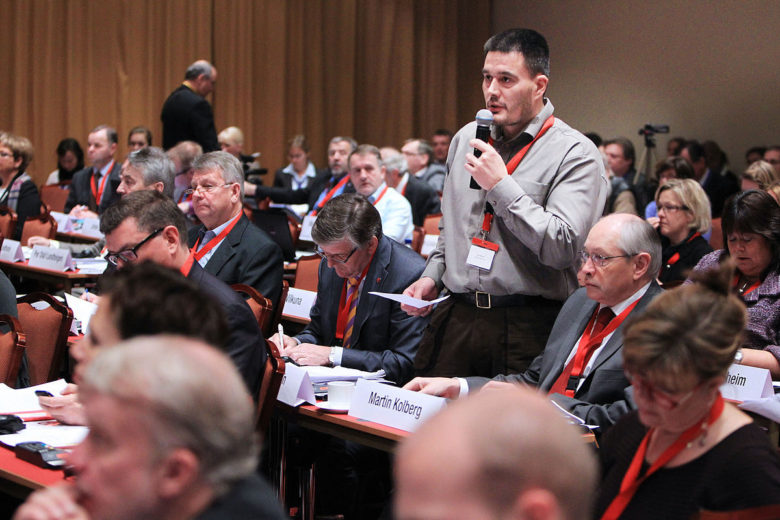
Siumut Party – Erik Jensen (Photo: Magnus Fröderberg /Wikimedia Commons[CC BY 2.5 DK])
However, several issues still need to be considered on the path to independence. A major challenge related to the mining industry is environmental issues. When mining rare earths, it is necessary to remove uranium. Uranium is hazardous, and if released into the air it could harm nearby residents. Greenland Minerals also plans to dispose of industrial waste in a lake near Kuannersuit Mountain, which could pollute water quality.
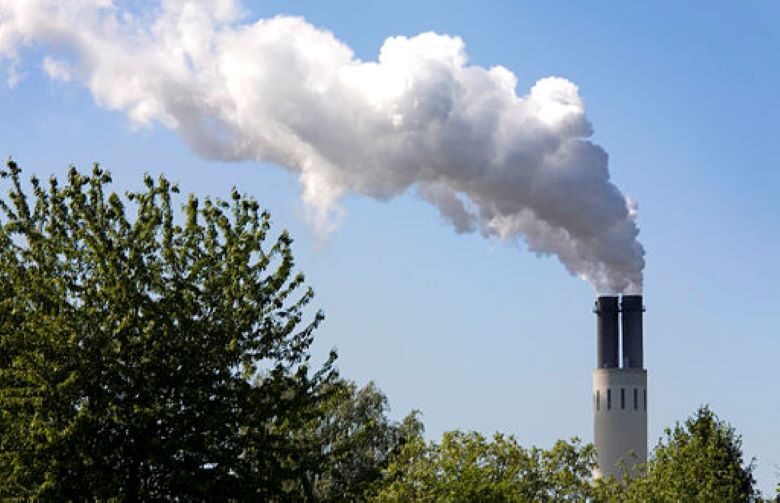
Another fundamental issue is that large amounts of carbon dioxide are emitted during rare-earth extraction. In Greenland, 1 year of carbon dioxide emissions from 1990, when it participated in the Kyoto Protocol for about 20 years were extremely low. However, as Greenland’s mining industry develops, it is clear that carbon dioxide emissions will increase rapidly. As a result, emissions would exceed the Paris Agreement’s limits, and measures to address this would require enormous costs. Behind the 2016 remark by Greenland’s Deputy Foreign Minister mentioned at the beginning lies this structure: unable to cover those huge costs, Greenland cannot sign the Paris Agreement.
In closing
Climate change is bringing major shifts that are pushing Greenland toward independence. The mining industry is drawing attention from the clean-energy sector as a way to address climate change, yet the industry itself could worsen climate change. As a result, despite suffering the adverse effects of climate change, Greenland faces the contradiction that even if it becomes independent, it would not be able to join the Paris Agreement. Perhaps the world needs to consider climate issues from a multifaceted perspective.
(※1)Part of China’s Belt and Road Initiative, which seeks to spur economic growth by connecting Asia and Europe over sea and land; it is a plan to use Arctic sea routes opened by climate change.
Writer: Yoshinao Araki
Graphics: Mayuko Hanafusa







めったに報道されることのないグリーンランドについて取り上げていただきありがとうございました。大変興味深かったです。今後は自国の利益と気候変動の間に挟まれて難しい舵取りを迫られそうですが、行方を見守っていきたいと思います。