
In September 2021, Uzbekistan marks the 30th anniversary of its independence. Yet since independence to the present day, the country has had only two presidents: Islam Karimov and Shavkat Mirziyoyev. Karimov, the first president, reigned for a quarter century, presiding over an authoritarian dictatorship. After Karimov’s death, Mirziyoyev—now the incumbent president—assumed office as the new president in 2016. As soon as he took power, he pledged to break away from strongman rule and was expected to reform Uzbekistan. So how has the country actually changed? We explore that question.
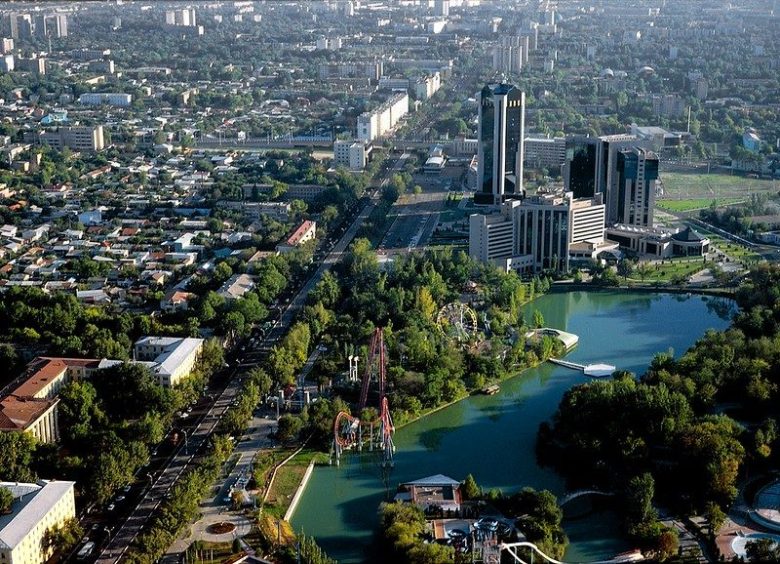
Streetscape of Tashkent (Photo: Woweezowee / Flickr [CC BY-NC-ND 2.0])
目次
History of Uzbekistan
Uzbekistan is a country located in Central Asia. Its population is 32.8 million, the largest among the five Central Asian countries (Uzbekistan, Kazakhstan, Kyrgyzstan, Tajikistan, Turkmenistan). The capital, Tashkent, is one of the oldest cities in the world and, with a population of over 2 million, the largest city in Central Asia. The vast majority of Uzbekistan’s population is Muslim, most of them Sunni, who make up 93% of the total. Economically, cotton, gold, oil, and natural gas are the main industries.
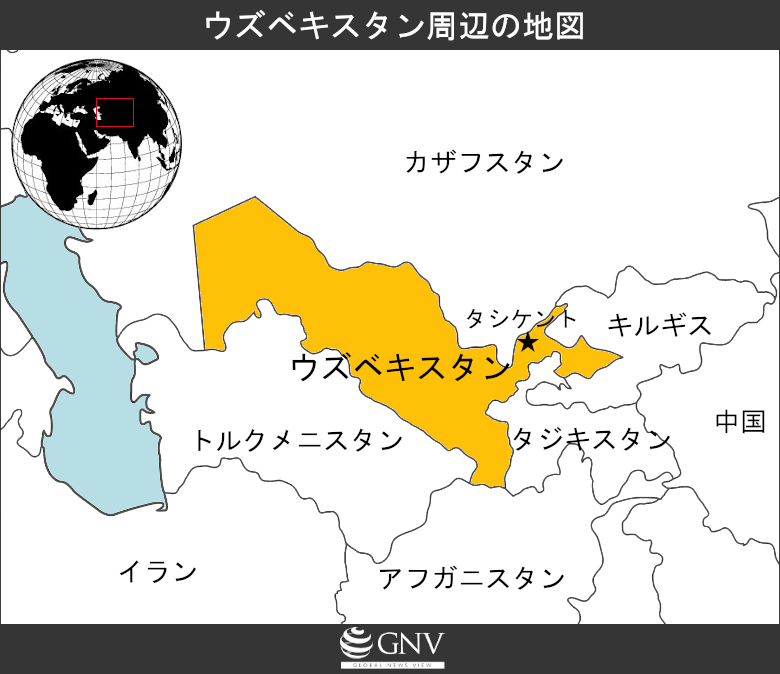
Let us briefly review the history of Uzbekistan. In present-day Uzbekistan and surrounding regions, repeated conquests and divisions by various invaders led to the establishment of a great many dynasties and empires (※1). In the 16th and 17th centuries, Central Asia—including the territory of what is now Uzbekistan—was home to multiple powers such as the Khanate of Khiva, and those dynasties and empires traded with the Russian Empire. In the 1860s, the increasingly powerful Russian Empire stepped up its southward expansion into Central Asia. After seizing Tashkent in 1865, it established a military administration two years later, and Tashkent became the hub of Russian imperial rule in Central Asia. The Russian Empire went on to conquer all of Central Asia by the end of the 19th century, but following the Russian Revolution, national and republic borders were delineated in 1924, creating the Uzbek Soviet Socialist Republic. The country remained under Soviet control for more than 60 years until the collapse of the Soviet Union in 1991, when it gained independence and Uzbekistan was born.
Dictatorship in the Karimov era
In the direct election held shortly after independence in December 1991, Karimov, who had served as president since the Uzbek Soviet Socialist Republic era, won the presidency and went on to serve as Uzbekistan’s president for about 27 years until 2016. The constitution of the Republic of Uzbekistan originally stipulated that a presidential term was five years and limited to two consecutive terms. However, Karimov amended the constitution several times regarding presidential terms, and each time applied his own interpretation that previous terms did not count, resulting in his being elected four times. The elections themselves were largely formalities, in effect undemocratic and designed to ensure his victory. As these constitutional interpretations and electoral manipulations suggest, the Karimov regime centralized power in the hands of a few, maintained an authoritarian system that allowed no political freedoms, and carried out dictatorship for many years.
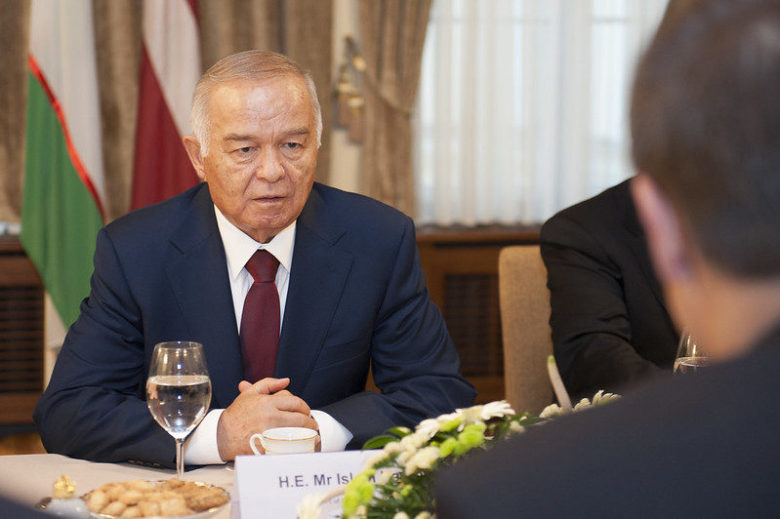
Former President Karimov (Photo: Saeima / Flickr [CC BY-SA 2.0])
The impact of authoritarianism manifested not only politically but also as human rights abuses. Although the Constitution of the Republic of Uzbekistan guarantees freedom of religion (Article 31), Karimov suppressed religious groups he perceived as potential threats. Religious groups were required to obtain authorization from government authorities in order to operate, but Muslim organizations were frequently and unjustly denied permission under that system, severely restricting their activities.
Under the authoritarian system, freedom of the press was also suppressed. Although the constitution’s Article 67 bans censorship and guarantees freedom of the press, it became a dead letter under Karimov, and the media were tightly controlled by the government. Journalists faced threats, arrests, and torture, and criticism of the government gradually became taboo.
Among the human rights abuses committed under Karimov, the most tragic was the Andijan incident of 2005. In Andijan in eastern Uzbekistan, an armed group attacked a prison and freed about 500 inmates, including political prisoners. In response, thousands of people took to the streets to protest poverty and government repression, calling for Karimov’s resignation. During the crackdown, security forces opened fire indiscriminately even though many demonstrators were unarmed, killing hundreds, including children. Western countries, the European Union (EU), and other international organizations harshly criticized Karimov over the incident, but he continued to deny that security forces had fired on protesters. He also rejected demands by many countries and international bodies for an independent investigation, restricted journalists’ access to Andijan, and pressured witnesses and demonstrators, consigning the truth to darkness.
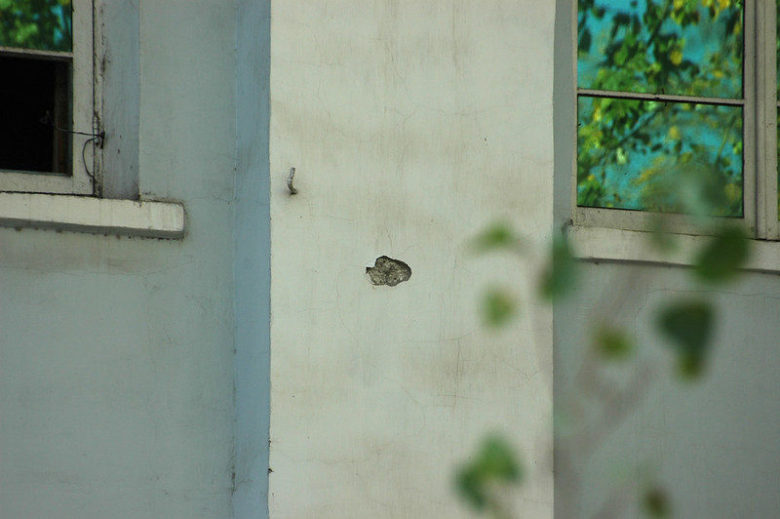
A school building bearing bullet marks from the Andijan incident (Photo: Tienshan / Flickr [CC BY-NC-ND 2.0])
Karimov’s hardline stance was also evident in economic policy. He rejected the International Monetary Fund’s (IMF) proposal for a rapid shift to a market economy and instead adopted a gradualist policy known as the “Uzbek model,” charting an independent course. This sought to stabilize the economy by strictly controlling the money supply and keeping dependence on foreign economies limited. In the sense that Uzbekistan was little affected by the 2008 Lehman shock and the 2010 European debt crisis, the Uzbek model can be said to have had some success. However, trade barriers such as strict foreign exchange controls meant that Uzbekistan attracted little foreign direct investment (FDI). Other former Soviet states such as Kazakhstan and Kyrgyzstan rapidly transformed their economic systems in line with IMF recommendations, but Uzbekistan remained isolationist. Structural reforms were not carried out in the export sector, and a system in which a small elite controlled the production of major exports like cotton and gold persisted. As a result, producers of these export goods did not enjoy the economic benefits. Moreover, the expansion of the private sector—which is said to promote economic growth by providing goods and services without government intervention and by developing socioeconomic infrastructure—was not permitted under Uzbekistan’s tight state control and regulation.
We must also not forget the serious social problems of forced labor and child labor under Karimov. Uzbekistan is one of the world’s largest cotton exporters, and each year the government forcibly mobilized millions of citizens to plant and harvest cotton. More than two million of them were children, and many schools, except in some major cities, were forced to close for about two months each year to send children to the harvest.
After having ruled as a dictator for so long, Karimov died in September 2016. The nearly 27 years of dictatorial rule finally came to an end.
Reforms in a new era
Replacing Karimov as the new president was the current head of state, Mirziyoyev. Having served as prime minister since 2003, he was designated acting president immediately after Karimov’s death. He then officially assumed the presidency following the December 2016 election. Upon taking power, Mirziyoyev announced a series of sweeping reforms and declared an end to the strongman politics of the Karimov era.
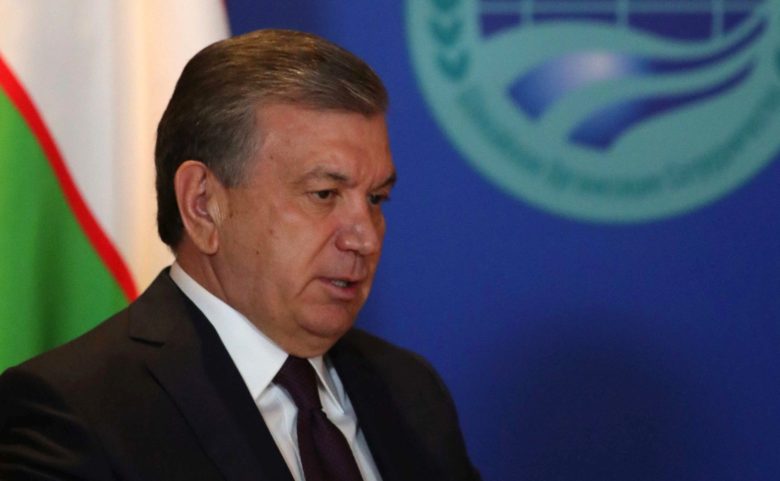
President Mirziyoyev (Photo: Presidential Press and Information Office / Wikimedia Commons [CC BY-SA 3.0])
In the political sphere, steps were taken to improve the transparency and openness of elections. The Election Code adopted in June 2019 incorporated some of the OSCE Office for Democratic Institutions and Human Rights (OSCE/ODIHR) recommendations. During parliamentary elections, televised debates among candidates and party leaders were held for the first time. Under Karimov, where press freedom was repressed, election coverage was highly biased; the fairness of elections can be said to have improved. Mirziyoyev also proposed that governors and mayors be selected not by presidential appointment but by direct popular election, and after amending the law, this was implemented—albeit only in some areas such as Tashkent.
Mirziyoyev also sought to increase transparency in legislation and administration, allowing the media to cover and report on parliamentary activities. He pursued administrative reforms to eradicate corruption by improving the institutional, organizational, and legal frameworks of the authorities’ activities, including establishing an anti-corruption agency.
Nor did Mirziyoyev’s reforms stop there. Human rights abuses—among the most criticized aspects of the Karimov administration—also began to ease. The government softened its repression of religious groups and ended crackdowns on unregistered organizations. In 2017, most political prisoners who had been arrested on political grounds such as criticism of the government were released from prison. In 2019, the Jaslyk prison, notorious for torture of inmates, was also closed.
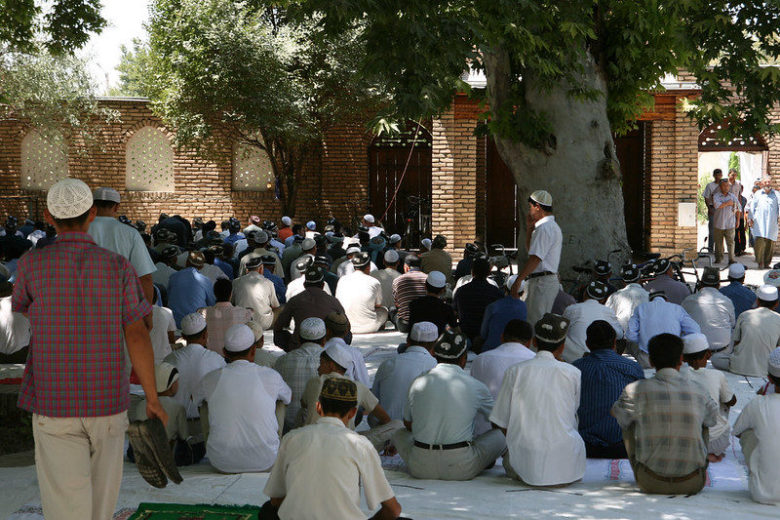
A scene of prayer (Photo: Giorgio Montersino / Flickr [CC BY-SA 2.0])
The release of political prisoners signaled recognition of the right to criticize the government. Mirziyoyev also moved to ease pressure on the media. Journalists have been able to report on corruption, human rights abuses, and political events, and not only print media but also news sites have proliferated in recent years. In particular, the news site “Kun” (Kun.uz) has actively carried critical reporting on the government, scooping stories on corruption by governors, insults to citizens, and violence against subordinates, and running special features on forced labor, garnering public support. Furthermore, in 2016 Mirziyoyev ordered the creation of an online portal to submit petitions and comment on draft laws.
In addition to permitting communication by citizens and journalists, Mirziyoyev promoted communication from the authorities themselves. He promised accountability, and officials have gradually begun to grant interviews, including to foreign media. Breaking more than a decade of silence on the Andijan incident—in which the government had long denied that shots were fired and refused investigations by international bodies—the authorities for the first time acknowledged that security forces fired on peaceful protesters. However, they avoided explaining the reasons; because the government had cut off communications with Andijan at the time, they stated that the shootings were not ordered by the government. The truth of the incident thus remains unknown.
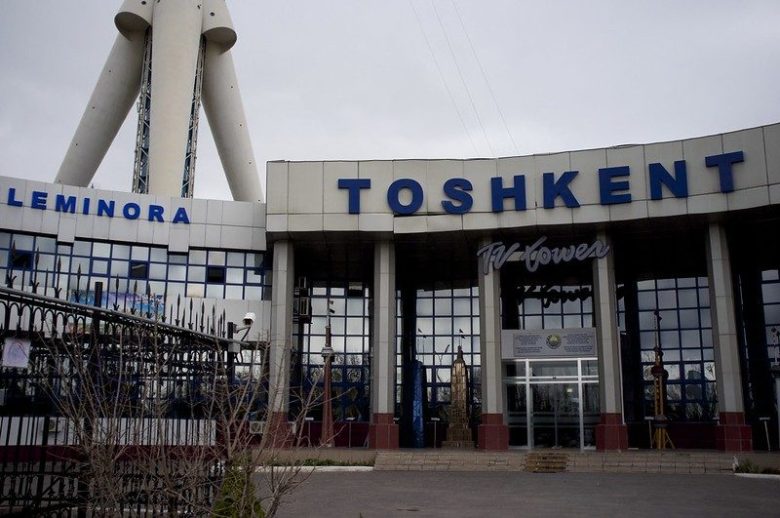
Tashkent TV Tower (Photo: Aleksandr Zykov / Flickr [CC BY-SA 2.0] )
Mirziyoyev also worked to address economic and social problems. In the economic field, various policies such as unifying multiple exchange rates (※2), liberalizing foreign currency exchange and the visa regime, and reducing import tariffs removed trade barriers and gradually laid the groundwork for economic liberalization. To abolish forced labor in cotton fields, he scrapped the production quota system that had assigned cotton output targets to each region—the root cause of the problem. He also reviewed school textbooks to eliminate gender stereotypes, actively tackling many of Uzbekistan’s challenges.
Results of reform and remaining challenges
We have looked at Mirziyoyev’s many reforms. The shadow of Karimov-era dictatorship appears to have lifted, and Uzbekistan seems reborn. However, things are not so simple.
It is true that electoral and administrative reforms under Mirziyoyev have gradually democratized Uzbekistan. In the Economist Intelligence Unit’s (EIU) annual Democracy Index ranking of 167 countries, Uzbekistan rose from 160th in 2007 to 157th in 2019. That said, the change is marginal. In Freedom House’s annual assessment of political rights and civil liberties, Uzbekistan scored just 10 out of 100 in 2020. Considering that the score was 3 in 2017, 7 in 2018, and 9 in 2019, there is an improving trend; yet by global standards it remains a “non-democratic” and socially “unfree” state.
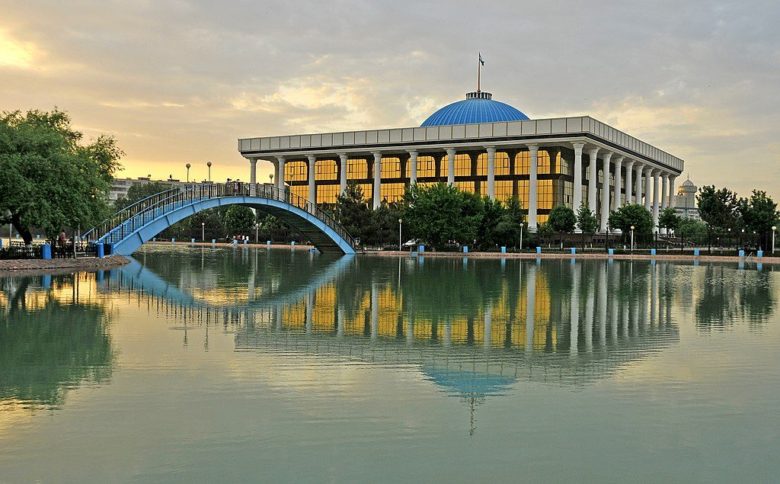
Building of Uzbekistan’s National Parliament (Photo: LBM1948 / Wikipedia Commons [CC BY-SA 3.0])
Behind this lies the failure to dismantle the authoritarian system of the Karimov era. Although parliamentary transparency has improved, the legislature remains reluctant to involve external experts when considering important matters, and votes on resolutions are still not public. Hence, some view the parliament not as a venue for open debate reflecting the public voice and informing policy, but as little more than a stage for show debates. Due to political constraints, a strong opposition has not emerged, and power remains concentrated in the hands of a few. Unless this fundamental problem of authoritarianism is eliminated, Mirziyoyev’s reforms cannot realize their full potential.
Progress on press freedom has been slow, much like democratization. In Reporters Without Borders’ (RSF) annual World Press Freedom Index of 180 countries, Uzbekistan rose steadily from 165th in 2018 to 160th in 2019 and 156th in 2020, yet RSF still rates the country at the second-worst level, “Bad.” Although reporting on some issues such as corruption and forced labor has become possible, it remains forbidden to directly criticize the president, top officials, and their families, and surveillance and censorship still persist. The internet is also subject to filtering and blocking (restricting or preventing access to specific websites), limiting access to online content related to political and social topics, especially sites and platforms that discuss human rights abuses in Uzbekistan. While authorities have become more willing to give interviews, they are not yet fully meeting standards of accountability.
As noted above, although the long silence over the Andijan incident was broken under Mirziyoyev, the government still has not admitted involvement in the killing of unarmed civilians. Conducting an investigation and uncovering the truth would serve as a kind of indicator that Uzbekistan has begun to move toward eradicating human rights abuses. Judging by developments so far, however, the road to that goal remains long.
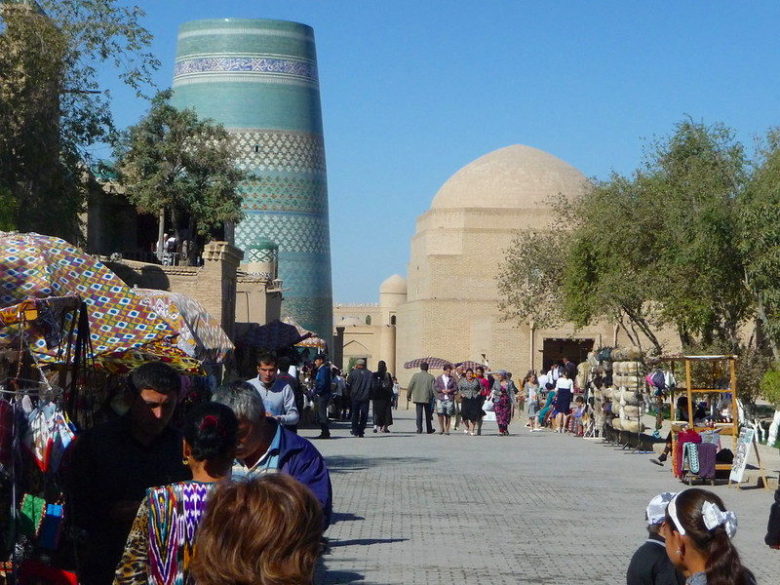
Itchan Kala, a World Heritage site in Uzbekistan (Photo: Luciano / Flickr [CC BY 2.0])
Uzbekistan is scheduled to hold a presidential election in 2021. Mirziyoyev enjoys a degree of support as a reform-oriented leader. Moreover, perhaps because political freedoms remain insufficient, there are no other strong candidates, making his re-election to a second term almost certain. As the constitution of the Republic of Uzbekistan generally limits the presidency to two terms, this marks the halfway point for Mirziyoyev. In 2019, Uzbekistan was selected as “Country of the Year” by The Economist for the most progress made, confirming that Mirziyoyev’s reforms have ushered in a new era. Yet entrenched political practices from the Karimov era and a small elite with immense power still exert significant influence over the state, and many challenges remain before Uzbekistan can become a truly “democratic” and “free” nation. What move will Mirziyoyev make next? His leadership is being tested. We look forward to further progress.
※1 Various dynasties and empires were established in Central Asia, including the Abbasids in the 8th century, Turkic states in the 12th century, the Mongol Empire in the 13th century, and the Timurid Empire in the 14th century; the area that is now Uzbekistan formed part of their territories.
※2 At the time, Uzbekistan had multiple foreign exchange rates in addition to the official rate announced by the central bank, including commercial and black-market rates. The official rate and the black-market rate diverged widely, fueling the black market. The government therefore devalued the official rate—which had been around 4,000 soms to the dollar—to the then-prevailing market rate of 8,000 soms to the dollar, unifying the rates.
Writer: Kyoka Maeda
Graphics: Yumi Ariyoshi





ウズベキスタンが権威主義体制から少しずつ改革を進めているものの、未だ課題も多く抱えていることがよくわかりました。今後の動向にも注目したいです。
風向きが変わってきたからこそ、着目をし続ける必要があると思いました、
ウズベキスタンについて詳しく知ることは今までなかったので興味深かった
ウズベキスタンという、あまり焦点が当たらない国に着目した点が良い。
テレビや新聞などでは決して知ることの出来ないウズベキスタンの内情をとても興味深く読んだ。あまりにも長く一人の人間がトップにいることがいかに弊害を伴うか、よく理解出来た。今のの大統領がそうならないことを心から願う。