
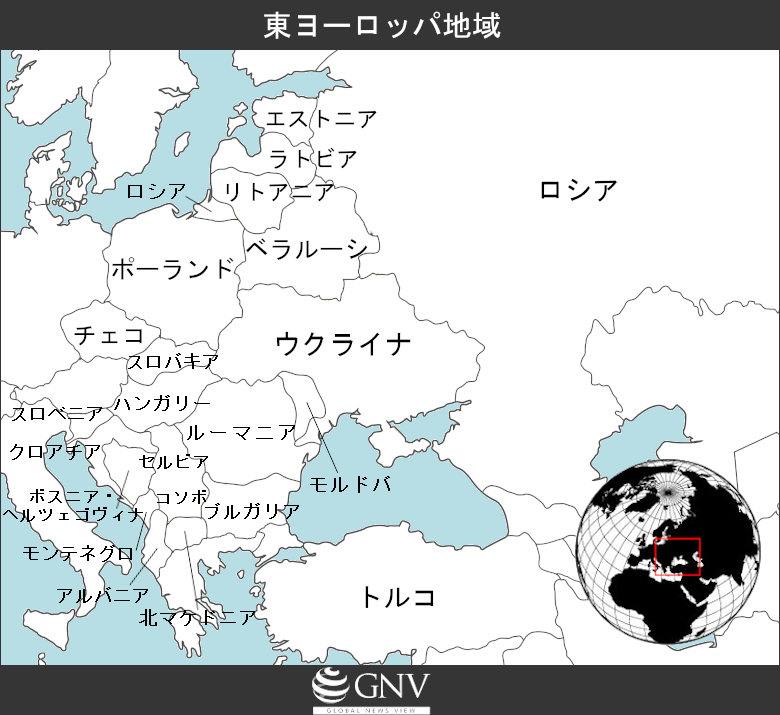
It is estimated that more than half of the timber produced in Romania comes from illegal logging. Such illegal logging poses a threat, bringing serious impacts to the habitats of flora and fauna and to biodiversity. Furthermore, in Romania, for the profits generated by illegal logging, there have been many incidents of violence and even murders targeting staff of conservation groups who try to protect forests. The problem is not limited to Romania. Illegal logging of forests is being criticized across Eastern Europe, from Albania to Russia. Timber produced through this illegal logging is also exported to Western Europe, Asia, and the United States, and global measures with a global perspective are required to address this globally spreading problem. This article explores the problem of illegal logging in Eastern Europe.
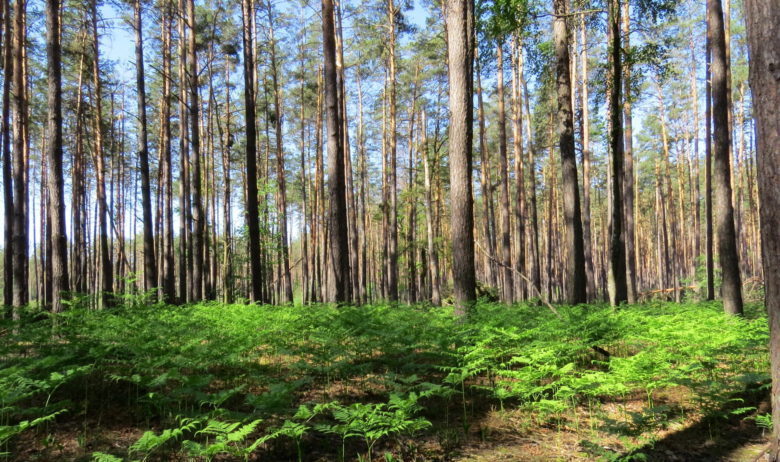
Klavdiievo Forest, Ukraine (Photo: Аимаина хикари / Wikimedia Commons [CC0 1.0])
目次
The current state of illegal logging in Eastern Europe
What does illegal logging refer to? Each country has laws regarding where and how much forest can be logged, and the world’s forests are divided by these laws into areas where logging is permitted (legal logging areas) and areas where it is not (illegal logging areas). Even in legal logging areas, permits are required and upper limits are set on the amount that can be harvested. Logging that does not comply with these laws—carried out outside legal logging areas or without respecting volume limits—can be called illegal logging. In the case of member states of the European Union (EU), forests are protected by an environmental protection network called “Natura 2000” (Natura 2000). For example, regions such as the Danube Delta (a delta located mainly in Romania) and the Białowieża Forest (a forest straddling the border of Poland and Belarus) are included in this network. However, inadequate monitoring and a lack of enforcement by local authorities have become issues, and illegal logging is now being carried out even in these areas.
So how is illegal logging carried out? In many cases, illegal operators or mafia groups first hire people near forests to fell trees. These operators haul logs out of the forests and either process them into timber or sell them to sawmills. If used domestically, the timber is then sold to builders and furniture makers, among others. If used abroad, it is exported through methods such as forging documents to make it appear legally harvested or bribing the civil servants in charge of export procedures. Trading companies that export wood may also knowingly purchase timber from illegal logging, and sometimes mix it with legally harvested wood for export.
Let’s look at examples from several countries where illegal logging is taking place. As introduced at the beginning, Romania is arguably one of the countries in Eastern Europe where the illegal logging problem is particularly serious. According to Global Forest Watch, from 2001 to 2019, about350,000 hectares of forest in Romania were logged by legal or illegal means. Against this background, over about 20 years, Romania’s forest cover decreased by 4.4%. On the other hand, another study has reported data indicating that forest cover has changed little since 2008, but in any case Romania’s forest cover is about 30%, which is 15% lower than the forest coverage potential estimated by experts.
In Romania, several companies are alleged to be involved in illegal logging. The state-owned company Romsilva, which is responsible for about half of Romania’s forestry, has been suspected of involvement in illegal logging. HS Timber (HS Timber, formerly Holzindustrie Schweighofer), Romania’s largest sawmilling company headquartered in Austria, is said to purchase both legally and illegally harvested logs, mix them at its sawmills, and then export them. Suppliers and mafia groups use bribes to block crackdowns by local authorities, and those who oppose them are suppressed through threats and violence.
Large-scale illegal logging is also said to be taking place in Russia, which has the world’s largest forest area. Among the actors drawing particular attention is BM Group, which both logs and processes timber. In 2001, the Russian central government decided to relax oversight of state forests, and together with widespread corruption in local governments, this has led to an expansion of illegal logging. The civic group Earthsite points out that half of all timber produced in Russia’s Far East is illegally logged. In Ukraine as well, commercial logging companies are said to be engaging in illegal logging. According to investigations by Earthsite, about 40% of the timber produced in Ukraine is illegally harvested. In addition to these cases, large-scale illegal logging has also been reported in the past in Bulgaria, North Macedonia, Albania, and the Baltic states.
Government-sanctioned illegal logging
The cases discussed so far clearly constitute illegal logging, such as felling in areas where logging is prohibited or intentionally concealing harvests that exceed legally defined limits. On the other hand, there are also cases in which governments approve logging in national parks, which are legally designated protected areas.
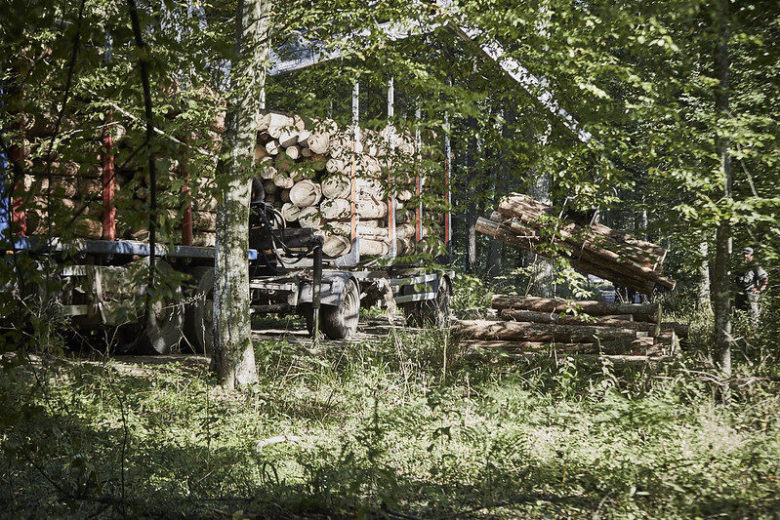
Białowieża Forest, Poland (Photo: Greenpeace Polska / Flickr [CC BY-ND 2.0])
State-backed logging that could be considered illegal occurred in Poland’s Białowieża Forest, the largest forest in Eastern Europe. The forest was inscribed as a World Natural Heritage site in 1979, and parts of it are protected under Natura 2000. However, in 2016, Poland’s Ministry of the Environment claimed it was necessary to log the forest due to an outbreak of bark beetles, and the government approved large-scale logging. In response, many experts expressed their opposition, and numerous protests broke out. Because the areas logged were within Natura 2000 protected zones—i.e., areas covered by EU law—in 2018 the Court of Justice of the European Union issued a ruling that the logging was illegal and ordered it to stop.
A similar case occurred in Bulgaria, where the government nearly approved logging in a national park that should have been legally protected. In 2017, Bulgaria’s Ministry of Environment drafted a new development plan for Pirin National Park. The plan included carrying out development works across 66% of the park and permitting logging in 48% of the area. Environmental groups opposed the plan and filed suit against the government, and Bulgaria’s Supreme Administrative Court issued a ruling halting the development plan.
Demand for illegally logged timber
It is clear that large amounts of illegal logging are taking place in Eastern Europe. However, the problem is not only the logging itself. The timber is exported from Eastern Europe and purchased by wood-related companies in other countries—in other words, there is demand for illegally logged timber. The destinations are diverse, with Western Europe, East Asia, and North America at the center. So which countries and companies are actually importing illegally logged timber from Eastern Europe? Because such timber is often mixed with legally harvested wood and smuggling leaves no paper trail, it is difficult to identify and quantify, but several investigations have been published.
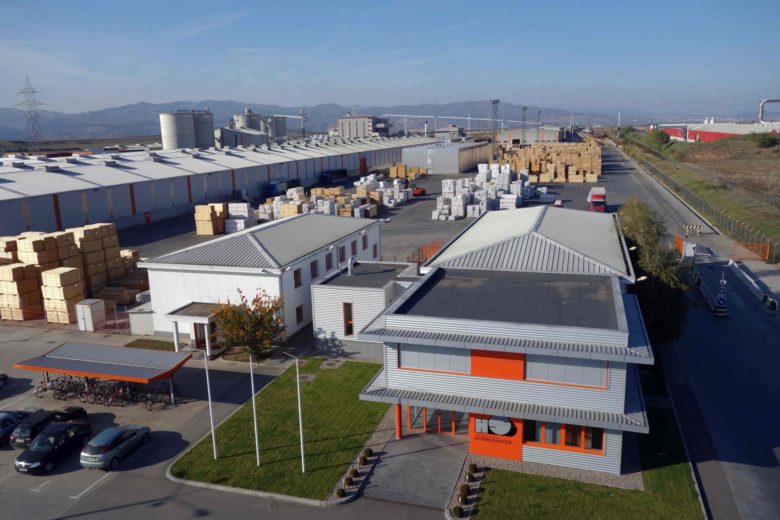
HS Timber’s sawmill (Photo: Holzindustrie Schweighofer / Wikimedia Commons [CC BY-SA 4.0])
Much of the wood from Eastern Europe is exported to other EU countries such as those in Western Europe. For example, according to a 2020 investigation by Earthsite into the logging operations of Russia’s BM Group, 69% of the timber BM Group exports to the EU enters the EU through German companies such as Jacob Jürgensen, Ost-West Holzhandels, and Ludwig Holz and Co. An analysis under the EU’s logging guidelines pointed out that 80% of logs from the Far East region where BM Group operates are illegally harvested, making it highly likely that logs imported into the EU include illegally logged timber.
As noted above, even though 40% of the timber exported from Ukraine is estimated to have been illegally harvested, Western companies still purchase timber from Ukraine that is illegal or under suspicion. Among them, IKEA, the world’s largest wood purchaser, plays a major role. In 2019, IKEA about€2 million worth of timber from Ukraine, including wood suspected of being illegal. In 2015, the company was also reported to have purchased wood in Romania from HS Timber, which is suspected of involvement in illegal logging, as well.
Eastern European countries export large amounts of timber outside the EU as well. For example, BM Group, which has been implicated in large-scale illegal logging in Russia, counts China and Japan as its biggest trading partners. China from 2015 to 2020 purchased about€111 million worth of timber from BM Group. In addition, a Chinese company called Heilongjiang Songlin Group is conducting joint logging operations with BM Group. Japanese companies from 2015 to 2020 purchased from BM Group about €39 million worth of timber.
China and Japan are also major destinations for timber exports from Romania, much of which is purchased from HS Timber, a company alleged to be involved in illegal logging. According to research by the Environmental Investigation Agency (EIA), in 2015, major Japanese importers such as Hanwa Co., Ltd., Sumitomo Forestry, and ITOCHU Corporation purchased about50% of HS Timber’s total wood exports for use in housing materials. It is unclear what portion of the total exports consisted of illegally logged timber, but serious doubts remain.
Measures against illegal logging
As seen above, the illegal logging problem in Eastern Europe involves many actors, from logging and milling companies to criminal organizations, and even local governments, trading companies, manufacturers of wood products, and other governments. To solve this problem, measures are needed at every level. Finally, here are some of the efforts being made.
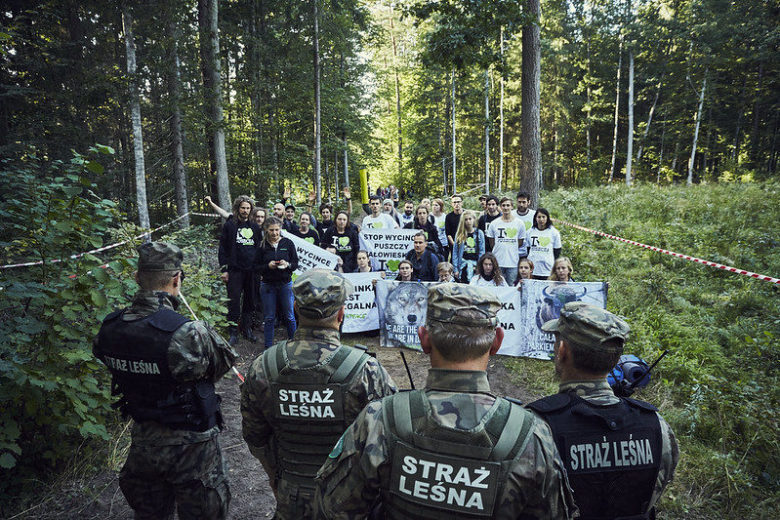
Poland, a protest against logging (Photo: Greenpeace Polska / Flickr [CC BY-ND 2.0])
At the civic level, various initiatives are being undertaken against illegal logging. For example, when illegal logging comes to light, it is not uncommon for citizens to launch opposition movements through protests. In recent years, protests to protect forests from illegal logging have been held in Romania, Poland, and Bulgaria.
Civic groups also monitor the actions of commercial logging companies, gather evidence of illegal activities, and report violations to government agencies. Organizations such as the World Wildlife Fund and Earthsite carry out independent investigations to collect data and disseminate information. The media can also draw attention to the issue by conducting investigations and reporting incorporating the findings of civic groups. In addition, there are organizations that trace the origin of timber and certify whether the wood used in products consumers intend to purchase was legally harvested. The Forest Stewardship Council (FSC) is one such example. While various weaknesses of this certification system have been pointed out and it is far from perfect, it can still be considered a partial measure.
Among the Eastern European countries facing illegal logging problems, some governments are taking countermeasures. For example, in 2016, Bulgaria adopted a law banning logging in old-growth forests within Natura 2000, and in Belarus many exports suspected of being illegally logged were banned. In response to protests, the Romanian government also strengthened penalties for illegal logging. In North Macedonia, after various civic groups, including the Macedonian Ecological Society, advocated for protection of the Šar Mountains, the government designated them as a national park, thereby protecting its forests.
As already noted, in the case of EU member states, the EU plays a role in preventing illegal logging. For example, within the EU, the Natura 2000 network of protected areas plays a significant role. Attention should also be paid to rulings by the Court of Justice of the European Union (ECJ), such as the decision that halted government logging in protected areas of Białowieża Forest carried out under the pretext of bark beetle damage.
There are also moves by governments outside the EU. In China and Japan, which import large amounts of timber from Eastern Europe, laws have been enacted to halt imports of illegally logged wood. For example, in Japan in 2016, the Clean Wood Act (CWA) was enacted. The CWA requires Japanese importers to take measures to promote the use of legally harvested timber. Currently, multiple importers are implementing appropriate due diligence and in-house measures based on the CWA. The Chinese government, the world’s largest importer of timber, in July 2020 enacted a law to reduce imports of illegally logged timber.
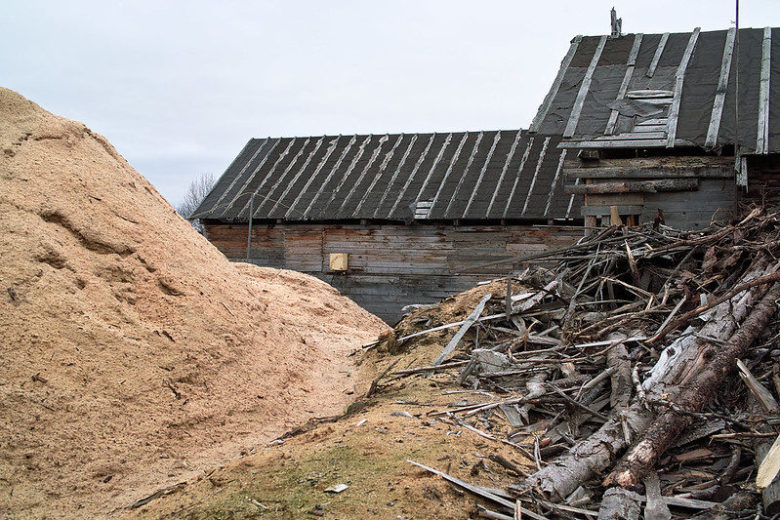
A sawmill in Russia (Photo: carlfbagge / Flickr [CC BY 2.0])
Conclusion
The problem of illegal logging is complex, with multiple layers of diverse actors. Solving these issues requires international environmental protection frameworks, national laws, proper monitoring of logging by local authorities, and effective enforcement. Illegal logging benefits not only large corporations and governments but also those who carry out the felling itself. In other words, the illegal logging problem in Eastern Europe is just one small part of a worldwide issue embedded in the global economic structure. As attention to climate change and global warming grows, the proper use—and, at times, protection—of the planet’s resources has become indispensable to building a sustainable world. To resolve the problem, the realization and implementation of more concrete and effective measures by international organizations and governments, starting with multilateral agreements, are urgently needed.
Writer: Adriana Nicolaie
Graphics: Mayuko Hanafusa


















その国だけの問題ではなく、輸出入にかかわるすべてのアクターが関連している問題だと改めて認識させられた。遠い国のことだ、ではなく当事者意識を持つことの難しさがあるだろうと思う。
イケアなど自分にも身近なところから違法伐採の話が出てくるとは思わなくて驚きました。自分の家にある棚とかももしかしたら違法伐採の木なのかなと思ったらとても身近に感じました。
森林伐採の問題については前からメディアでも少し見ていましたが、東欧の現状については全然知りませんでした。日本にも関係のない話ではないことを認識できました。他の問題とも複雑に関わっているからこそ、もっと多くの人に問題意識を持って欲しいと思いました。