
As 2021 begins, 10 years have passed since the “Arab Spring.” Centered in North Africa and the Middle East, the “Arab Spring” was a wave of pro-democracy movements driven largely by anti-government protests against authoritarian regimes, and its outcomes have varied by country. Some countries continue to experience conflict despite the overthrow of long-standing dictatorships, while others remain unstable due to foreign intervention. In some places, similar revolutions occurred years after the initial “Arab Spring,” and the consequences continue to shape many regions today. This article looks at the impact the “Arab Spring” has had over the past 10 years, with a particular focus on Tunisia, where the events first began.
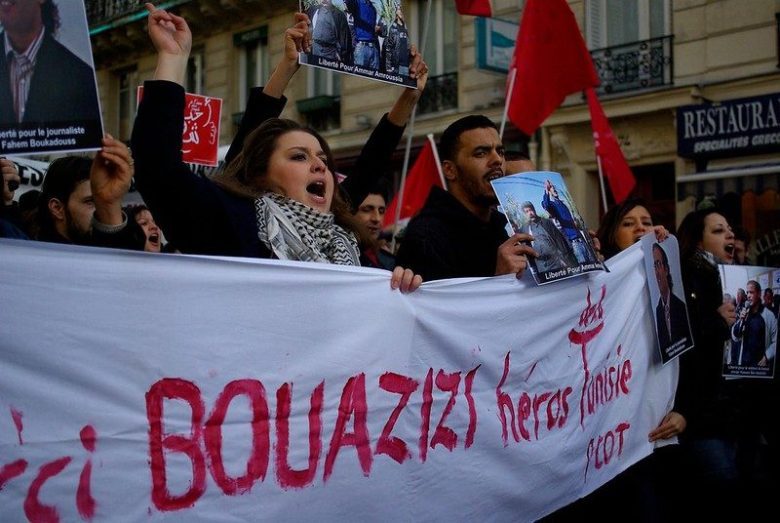
Scenes from protest demonstrations in Tunisia (Photo: anw / Flickr [CC BY-SA 2.0] )
目次
The “Arab Spring” and its aftermath
The “Arab Spring” refers to the pro-democracy movement, centered on large-scale anti-government protests, that unfolded primarily in North Africa and the Middle East from 2010 to 2012. Many of the affected countries are those with large populations identifying as Arab. The term “Arab Spring” was coined to liken regime change to the changing of seasons: the long years of dictatorship as the “winter,” and the democratization movement as the arrival of “spring.” It began in December 2010 when a young man in Tunisia attempted self-immolation in protest against the police corruption he faced daily. People, long oppressed by dictatorship, political corruption, rising prices, and high unemployment, began to raise their voices. Massive demonstrations broke out across the country, and the regime collapsed in January 2011.
Inspired by this revolution, people in neighboring countries facing similar problems also began anti-government movements of their own. In Egypt, President Hosni Mubarak’s 30-year rule fell. The regimes of Muammar al-Gaddafi in Libya and Ali Abdullah Saleh in Yemen were also toppled. Although regime change did not occur everywhere, large anti-government protests erupted in Syria, Bahrain, Algeria, Morocco, and elsewhere. Moreover, these waves spread beyond Arab-majority countries, sparking anti-government movements in sub-Saharan Africa in Zimbabwe and Angola, and contributing to subsequent electoral regime changes in Senegal and Zambia.
As seen above, the “Arab Spring” triggered changes in many countries, but subsequent trajectories have differed greatly. In Syria, when the pro-democracy movement spread nationwide, Bashar al-Assad’s authoritarian regime cracked down violently using the military and security forces. Since then, actors including Kurdish forces from neighboring Turkey, Iran, and Iraq, as well as the United States, Russia, and Israel intervened, and multiple extremist groups, including IS (Islamic State), emerged. Even after 10 years, conflict continues and the long-standing dictatorship remains in place. In Yemen, amid the upheaval following the regime’s collapse, Vice President Abdrabbuh Mansour Hadi became president and, in 2014, initiated a transition from a centralized system to a federal one and drafted a new constitution. However, conflict subsequently erupted and continues to this day, with a coalition led by Saudi Arabia intervening and numerous domestic and foreign parties joining the fray, leading to ongoing hostilities. In Libya, although steps toward democratization were taken, including enfranchising 2.7 million voters in July 2012, the government split into two. As in Yemen, there has been military intervention by multiple countries and factions, and instability fueled by rivalries continues today.
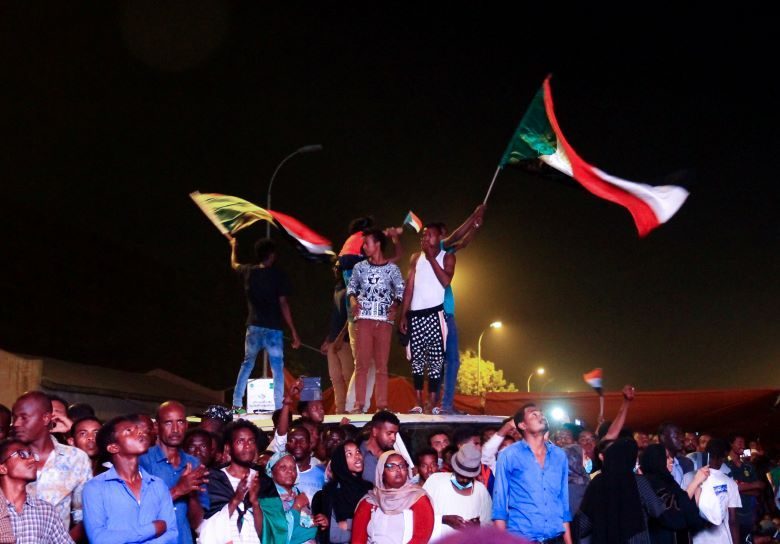
In 2019, there was also a chain of events that could be called a “second Arab Spring”. In Sudan, from late 2018 a series of demonstrations demanded the resignation of President Omar al-Bashir, who had ruled for 30 years. As a result, in April 2019 he was deposed in a coup and detained on multiple corruption charges. In Algeria as well, large demonstrations forced the president to resign in 2019. President Abdelaziz Bouteflika, elected in 1999, had focused on restoring security and enjoyed high popularity, but after suffering a stroke in 2013, he largely disappeared from public view. Despite this, he announced his intention to run for a fifth term in 2019, sparking public anger and mass protests. He ultimately withdrew his candidacy. Even after that, young people continued to demonstrate, demanding fundamental change in Algeria. Around the same time, large anti-government movements also broke out in other countries such as Lebanon and Iraq. In this way, movements driven by discontent with governments intensified in recent years, and one could say the impact of the “Arab Spring” still continues.
“Success” or “failure”
As noted above, even in countries where long-term regimes were toppled, some fell into instability and conflict afterward. This has led to ongoing debate over whether the “Arab Spring” ultimately produced entrenched democracy or led to conflict and instability—framed almost as a contest of “success” versus “failure.” On the other hand, some argue that such binary judgments are overly simplistic. If a revolution occurs but is followed by prolonged conflict, the issue may precede any evaluation of the democratization movement itself as a “success” or “failure.” While it is true that conflicts emerged in the wake of the Arab Spring, that does not necessarily mean democratization “failed.” In many cases, conflict can be seen as arising from a period when the locus of power became ambiguous. Consequently, it is difficult to analyze whether the democratization movements “succeeded.”
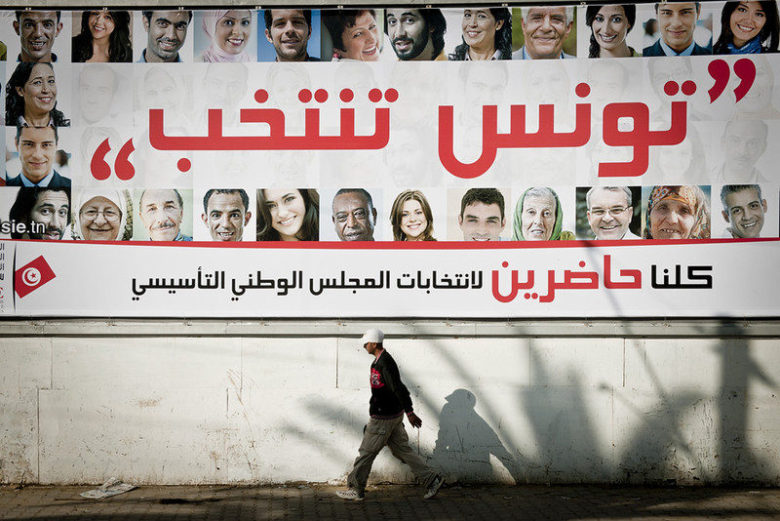
Election posters in Tunisia (Photo: European Parliament / Flickr [CC BY-NC-ND 2.0] )
In this sense, among the countries where regimes fell during the initial “Arab Spring,” only two—Egypt and Tunisia—avoided sliding into open conflict. In addition, the 2019 changes of power in Sudan and Algeria, often called a “second Arab Spring,” did not descend into war. In Egypt, President Mubarak, who had ruled as a dictator for many years, resigned in February 2011. A presidential election was held, and in 2012 Mohammed Morsi of the Muslim Brotherhood won the presidency, but the following year, in 2013, his government collapsed in a military coup. Subsequently, Abdel Fattah el-Sisi was elected president in 2014. However, this was not a democratic “election.” In fact, Sisi won over 93% of the vote, far from a fair process. He also amended the constitution to allow himself to remain in office until 2030, and under the pretext of cracking down on extremist groups, even ordinary citizens have been arrested. The regime has strong authoritarian characteristics, and some assessments say the situation is worse than under Mubarak. So what happened in Tunisia, the cradle of the “Arab Spring,” in the years that followed?
Tunisia’s “Arab Spring” and what followed
Let us revisit the “Arab Spring” with a focus on Tunisia. In December 2010, a young man’s attempted self-immolation triggered nationwide anti-government protests by citizens frustrated with soaring food prices, rising unemployment, political corruption, and dictatorship. This became known as the “Jasmine Revolution,” named after Tunisia’s national flower. President Zine El Abidine Ben Ali, who had assumed office in 1987 following a coup, focused on economic recovery. However, he clung to power for 23 years, while his family monopolized profits—signs of entrenched authoritarianism. Despite seeming stability, poverty and unemployment were never resolved. Against this backdrop, the “Jasmine Revolution” spread across Tunisia, forcefully demanding Ben Ali’s resignation. The momentum was so great that on January 14, 2011, only a few weeks later, Ben Ali fled to Saudi Arabia with his family, bringing his dictatorship to an end. In October 2011, the moderate Islamist party Ennahda won national elections, and a coalition government with secular (non-religious) parties was formed.
However, from 2013 to 2014, events arose that brought the country to the brink of crisis. Although Ennahda incorporated Islamic thought, secularists feared it would lead to a religious constitution and launched massive protests. After two politicians were assassinated and protests continued unabated, the Ennahda-led government handed over power to an interim administration. The Tunisia National Dialogue Quartet is widely credited with brokering a way out of the crisis. This was a temporary alliance representing civil society, bringing together four actors: business, labor, human rights groups, and the bar association. In neighboring Egypt and Syria, labor unions were fully integrated with the state, whereas Tunisia’s unions and civic groups remained independent from the government and closer to the public, providing a platform to voice opinions. These civil society organizations enabled broad coordination among Tunisians to realize the revolution and later played an important role in mitigating turmoil, proving crucial. Under the Quartet’s mediation, Ennahda accepted compromises to reconcile religion and democracy, culminating in the adoption of a new constitution in 2014. This constitution, which guarantees freedoms such as expression and religion, marked a major step forward toward democratization.
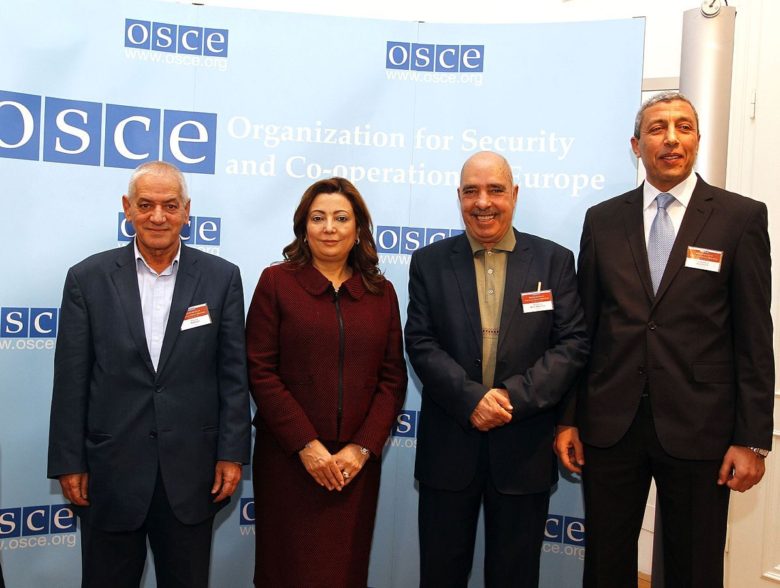
Gathering of the Quartet’s representatives (Photo: wikimediacommons)This coalition framework continued until 2019, but Ennahda’s vote share fell from 27% (2014) to 19% (2019), reflecting a decline in support, according to reports. In September 2020, Hichem Mechichi was nominated as the new prime minister ((※1)), and a new government was formed.
Remaining challenge 1: The economy
Although Tunisia has remained relatively stable since the revolution, what challenges still need to be addressed? First is the poor economic situation—the very trigger of the uprising. Tunisia had several factors conducive to economic development, such as a relatively large, educated middle class compared to neighboring countries and proximity to the large European Union (EU) market. However, political corruption under Ben Ali’s long dictatorship meant those opportunities were not fully leveraged, and the economy deteriorated. Even after the 2011 revolution, there was little sign of recovery. In fact, the country’s debt swelled from 40% of GDP (2010) to 73% (2019), leaving Tunisia burdened by interest payments, accelerating inflation, and a likely decline in living standards. Persistently high unemployment is another problem. One reason is a mismatch between labor supply and demand. While population growth has slowed, the number of educated, skilled young people has surged, increasing the supply of high-quality labor. Meanwhile, job creation requiring relatively higher skills has lagged. Public-sector jobs typically demand higher skills, but public-sector hiring has not progressed, contributing to the gap. As a result, there is a view that the unemployment rate is high due to the large mismatch between market demand and the skills of the young labor force, particularly among the well-educated, as argued.
[caption id="attachment_13748" align="alignleft" width="780"]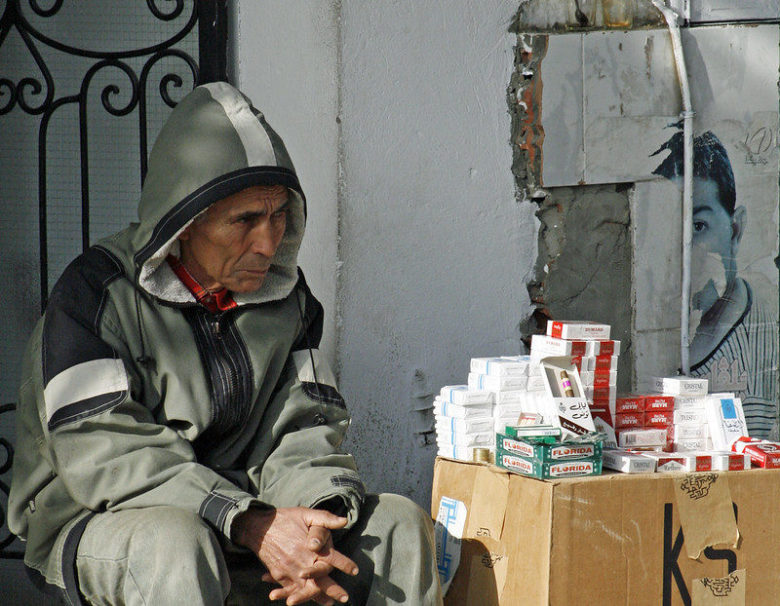 A man selling cigarettes near a train station in the capital, Tunis (Photo: Carsten ten Brink / Flickr [CC BY-NC-ND 2.0] )
To make matters worse, the impact of the coronavirus in 2020 severely hit the tourism industry—the country’s second-largest sector after agriculture—and Tunisia is now planning to take on additional loans from the International Monetary Fund (IMF). Monthly tourism revenues fell by about 30% compared to 2019, with no signs of recovery, and approximately 165,000 people working in tourism lost their jobs.
Remaining challenge 2: Politics and security
Politically, the difficulty of coalition governance is a major issue. In the 2019 elections, Ennahda (18%), the new party “Heart of Tunisia” (16%), and several smaller parties each won 5–6% of the vote, according to results, meaning no single party secured a large majority. Although Ennahda and Heart of Tunisia initially refused to form a coalition, negotiations continued, reflecting a difficult situation. A coalition government did eventually form, but the balance among parties has been precarious, raising concerns about instability.
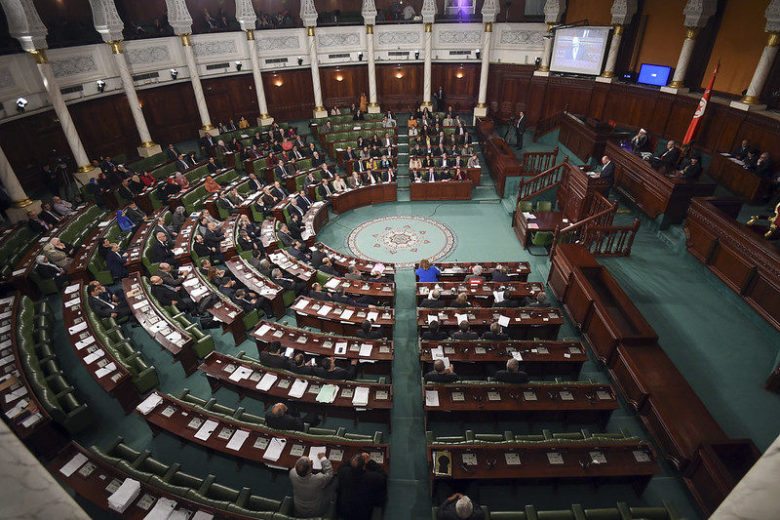
Inside the Tunisian parliament (Photo: Martin Schulz / Flickr [CC BY-NC-ND 2.0] )
Another challenge is that Tunisia has become a fertile recruiting ground for extremist groups. From 2015 to 2016, the number of people leaving Tunisia to join IS, based in Syria and Iraq, was extremely high compared to other countries—an estimated 6,000–7,000. This figure is several times higher than in Egypt or Algeria, both more populous than Tunisia, underscoring the scale. As noted above, the unstable economy has produced very high youth unemployment and widespread frustration, which is cited as the primary reason many have left. In addition, instability in neighboring Libya, mired in conflict, is a major security concern for Tunisia. The government has responded by strengthening security along the border areas. In 2015, a large-scale shooting occurred near a museum in the capital, Tunis, killing 22 people and injuring many tourists. Five years on, the government has become quicker to respond to terrorism. However, responding only to incidents after they occur is not enough; addressing the frustrations of young people is essential to a fundamental solution.
Finally, we should touch on foreign interference in Tunisia. There are suspicions that the neighboring United Arab Emirates (UAE) has interfered in Tunisian domestic affairs and even been involved in coup plots. Crown Prince Mohammed bin Zayed of the UAE views movements such as extremist armed groups and the Muslim Brotherhood as threats to his regime. From the perspective of preserving his own authoritarian system, he may not want Tunisia to become a precedent for democratization arising from the “Arab Spring.” The 2017 Qatar crisis may also be relevant. The Qatar crisis refers to the announcement by four countries—Saudi Arabia, Egypt, the UAE, and Bahrain—that they would sever diplomatic ties with Qatar. The reasons included Qatar’s friendly relations with Iran, with whom those four were at odds, and its support for the Muslim Brotherhood. At the time in 2017, Qatar expressed support for Tunisia’s democratization and Ennahda’s victory, bringing the two countries closer. Conversely, relations with the UAE and Saudi Arabia, which oppose Qatar, cooled, raising concerns that Tunisia might be drawn into the complex dynamics of the Qatar crisis. Alongside Qatar, Turkey—also friendly with Qatar—has shown keen interest in Tunisia’s internal affairs, subjecting Tunisia to considerable external pressure.
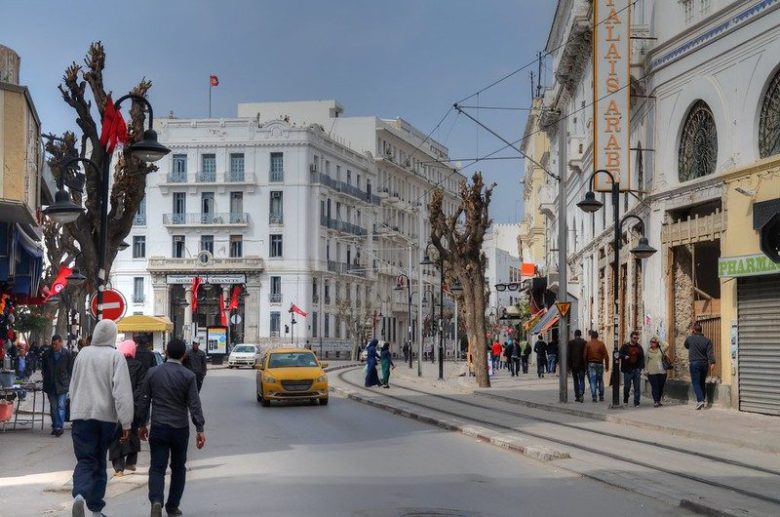
A view of the capital, Tunis (Photo: Stephen Downes / Flickr [CC BY-NC 2.0] )
Conclusion
Reviewing the developments since the “Arab Spring,” it is clear that escaping long dictatorships and achieving democratization is far from easy. Multiple problems—including economic stagnation and external interference—have made the realization of democracy even more difficult. Even so, Tunisia has achieved relatively positive results in terms of democratization. The key will be how the new government addresses the multiple challenges ahead. We also hope that other countries touched by the “Arab Spring” can maintain stable conditions. Now that 10 years have passed since the “Arab Spring,” it is all the more important to pay close attention to the future of the Middle East and North Africa.
Footnotes
※1 Tunisia has both a prime minister and a president, and the prime minister is appointed by the president.
Writer: Naru Kanai
Graphics: Yumi Ariyoshi










チュニジアはアラブの春の発端となった場所というイメージしかありませんでしたが、今回の記事で新たな側面を知ることができました。
アラブの春についてもなんとなく知っているだけだったが詳しく解説が読めて理解が深まった。
チュニジアに焦点を当てたこともなかったので大変勉強になった