
Jordan in the Middle East has overtaken Indonesia, long said to have the highest smoking rate in the world. Following a survey conducted in 2019 by the World Health Organization (WHO) and the Jordanian government, the UK media outlet the Guardian reported it (※1). Tobacco is said to be “all harm and no benefit.” Its strong addictiveness produces many dependents; beyond health problems such as various cancers and respiratory diseases, it is also associated with issues including extreme poverty among producers and child labor. In Jordan, not only is the smoking rate the highest in the world, but adult smokers are said to smoke an average of 21.3 cigarettes per day, indicating that many people are nicotine-dependent. This article examines the changing global smoking situation and explains in detail why Jordan faces such a severe tobacco problem, including countermeasures.
目次
The global status of smoking
As of 2020, it is estimated that there are about 1.1 billion smokers (※2) worldwide. Up to half of smokers are said to die due to tobacco, and including non-smokers, as many as 8 million people worldwide die each year because of tobacco. As the harmful effects on the health of those around smokers through secondhand smoke have become clear, more countries have strengthened rules such as raising tobacco taxes, banning smoking in workplaces and public places, and restricting advertising. Perhaps as a result, the global smoking rate in the 21st century has been declining, albeit slowly. In 2000, 26.9% of the world’s population were smokers; according to 2019 estimates, the smoking rate in 2020 was projected to be 19.8% (men: 31.5%, women: 5.2%). Even so, that still means that, on simple calculation, roughly 1 in 5 people are smokers.
However, although the smoking rate is on a slight downward trend, the pace is slow. The WHO’s 2013 “Global Strategy for the Prevention and Control of Noncommunicable Diseases” set a goal of reducing smoking prevalence by 30% by 2025 compared with 2013, but it has already become clear that, at this point, the target is far from being achieved outside the Americas. In addition, when the WHO estimated the number of smokers by classifying countries by income, it projected that the number of smokers would increase in low-income and lower-middle-income countries, partly due to expected population growth in those countries. The spread of smoking in low-income countries—where health status and sanitation are relatively poor compared to high-income countries—raises concerns that it will further harm the health of people living there.
Looking at long-term trends in smoking rates, differences are seen by region. As the graph above shows, the decline has been particularly sluggish in the Eastern Mediterranean (Middle East). Moreover, one factor behind the newly identified high smoking rate in Jordan is said to be that the country had sufficient stability to measure it; there is also the view that in Middle Eastern countries such as Iraq, Syria, and Yemen, smoking rates may actually be high but cannot be measured accurately. Furthermore, a survey of Arab countries revealed a correlation in which the lower the level of education, the higher the smoking rate. In the Middle East, especially among those who are not educated, awareness of the dangers of smoking is low, and smoking rates tend to be high. This suggests that in some countries and regions there may be many smoking-related problems that have not yet been identified.
The smoking environment in the Middle East has been changing, and not only cigarettes but also waterpipes have become a problem. A survey of university students in Egypt, Jordan, Palestine, Oman, and the United Arab Emirates (UAE) found that the use of waterpipes (shisha) in the Middle East is very high and that users often mistakenly believe that waterpipes are not dangerous, indicating problematic perceptions about smoking in the region.
The situation of tobacco in Jordan
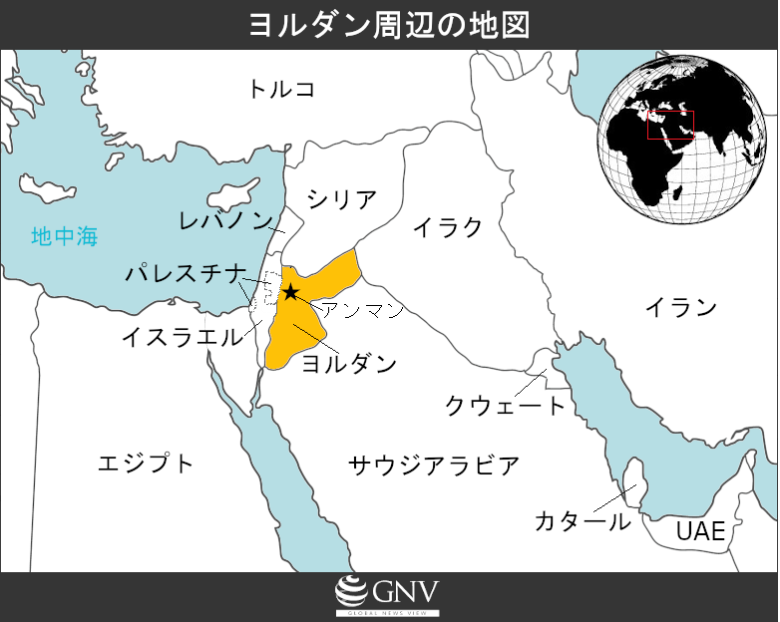
Before explaining the current state of smoking in Jordan, let’s review some basic information about the country. Jordan is a kingdom located in the Eastern Mediterranean region, bordering Israel, Palestine, Saudi Arabia, Iraq, and Syria. Of its roughly 10 million people, more than half are refugees from Palestine and their descendants. Politically, the Hashemite royal family has provided the monarch by heredity for generations. Although it is not blessed with natural resources, tourism—featuring attractions such as the Dead Sea on the border with Israel and many archaeological sites—is one of its main industries. As for the tobacco industry, a small amount of tobacco is grown domestically as a crop, but most is imported, and the import value of tobacco-related products in 2018 reportedly totaled about US$180 million.
As noted at the beginning, a 2019 survey conducted in Jordan revealed the spread of tobacco use. 66% of men aged 15 and over and more than 17% of women are smokers, and if nicotine products including e-cigarettes are added, it has become clear that more than 80% of men consume nicotine on a daily basis. A 2012 survey found that among those aged 15 and over, 43.4% of men and 8.5% of women were smokers, indicating that smoking has expanded.
The spread of smoking is not limited to adults. It has also taken hold among younger generations: it was found that 32.2% of Jordanians aged 13 to 15 smoke some form of tobacco, including waterpipes. For adolescents, whose bodies are smaller and whose decision-making abilities are not fully developed, the physical damage from smoking is greater than for adults, and they may smoke without recognizing its harmful effects; the situation is serious.
In Jordan, not only is the proportion of people who smoke high, but the amount of tobacco consumed by smokers is also extremely large. People who smoke 1 pack a day are considered light smokers, and there are said to be heavy smokers who consume 5 or even 7 packs per day, according to reports. Assuming a pack contains 20 cigarettes, that means smoking more than 100 cigarettes a day—an astonishing amount. According to Jordan’s anti-smoking association, about US$650 million worth of tobacco is consumed annually in the country, exceeding household spending on vegetables and dairy products.
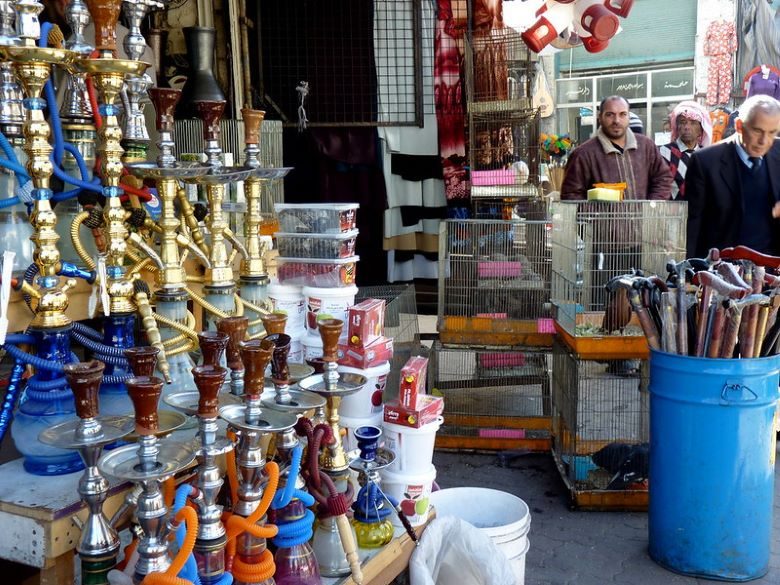
Photo: Waterpipe apparatus sold in Amman, the capital of Jordan (Photo: Maya-Anaïs Y./Flickr [CC BY 2.0])
Of course, the adverse health effects of tobacco are unavoidable. In some countries, smoking is said to cause more than 90% of lung cancers in men and about 70% in women, but the impact is not limited to smokers. With so many smokers and such high consumption, it is said to be almost impossible for people living in Jordan to avoid tobacco smoke in daily life. The effects extend even to children: when adults begin quitting at cessation clinics, their children exhibit withdrawal symptoms of nicotine dependence. Even non-smokers are becoming addicted to nicotine through secondhand smoke at home, in the workplace, and outdoors. The tobacco problem—said to account for 80% of deaths from noncommunicable diseases in Jordan—cannot be ignored.
The high smoking rate and massive tobacco consumption are inseparable from Jordan’s economy. In fact, the proportion of GDP related to tobacco is estimated to be three times the world average, and 18% of Jordanian government tax revenues are covered by tobacco. Through wages, fees, and taxes, tobacco-related industries generate more than US$1.3 billion in economic effects annually. However, the losses are said to be even greater. According to a UK research firm, the economic losses caused by increased medical costs and reduced productivity due to smoking amount to over US$2.4 billion per year, with the per-capita loss the largest in the world.
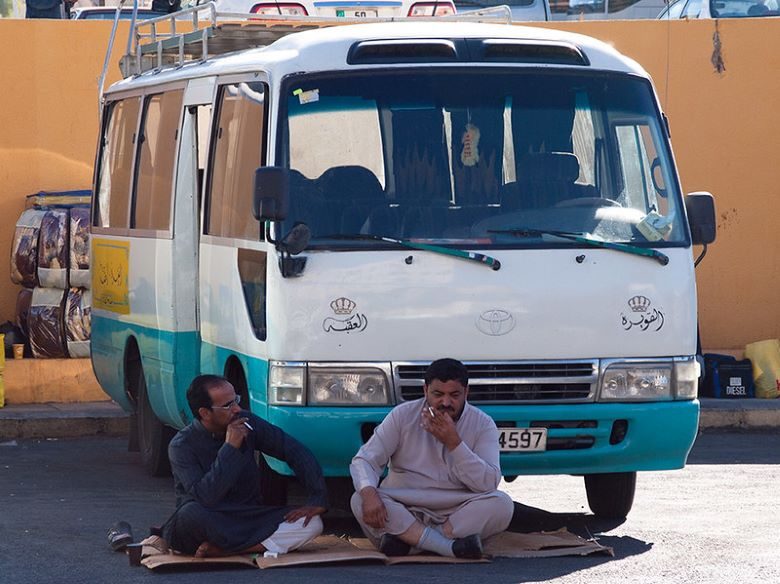
A person taking a smoking break at a bus stop in Aqaba, a city in southern Jordan (Photo: Evgeni Zotov/Flickr [CC BY-NC-ND 2.0])
The influence of tobacco companies
One factor behind the widespread prevalence of smoking, particularly in parts of the Middle East including Jordan, is the influence of tobacco companies. Multinational tobacco companies are actively investing in promotional activities. Among the world’s largest multinationals are Philip Morris International (PMI, U.S.), British American Tobacco (BAT, UK), Japan Tobacco International (JTI, the overseas subsidiary of Japan Tobacco (JT)), and Imperial Brands (UK). Historically, tobacco was popular in wealthy countries such as the United States, Japan, Australia, and many European nations. However, decades of tax increases, proactive public health campaigns, and stronger limits on advertising and lobbying led to declining smoking rates, and tobacco companies faced stagnant markets. As a new strategy, they targeted low-income countries—where regulation is relatively lax, governments are weaker, and population growth is expected—pouring effort into marketing and government outreach to spread tobacco use. There have even been reports that they have engaged in illegal activity. For example, to avoid costs such as tariffs and other trade-related expenses, JTI was said to have been involved in smuggling into 12 countries, including Jordan.
In fact, tobacco companies appear to be actively seeking to expand sales in Jordan. According to the Guardian, lobbyists (※2) for BAT, PMI, and JTI somehow participated in government meetings to discuss standards for e-cigarettes and heated tobacco products and intervened in decisions on standards such as nicotine content, the size and composition of health warnings, and packaging; records of these meetings indicate they opposed regulation. Moreover, a report by organizations advocating stronger tobacco regulation presents numerous facts showing tobacco company involvement with the Jordanian government. In 2019, a report ranking levels of tobacco industry interference with governments in 33 countries was published. Based on criteria such as government favoritism toward tobacco companies, stock holdings, agreements, and lack of transparency in meetings with the industry, Jordan ranked second—after Japan, home to JT—quantitatively demonstrating a very high degree of industry interference.
Measures
In Jordan, beyond interference by tobacco companies, smoking has spread even among doctors and politicians—people who should consider public health—which has hindered progress on countermeasures. Data show that one in 3 doctors smokes, and some politicians reportedly cast their votes in favor of a bill banning smoking in public places while smoking in parliament, itself a public place. In public places such as hospitals and parliament where smoking is prohibited, those who should be raising awareness of tobacco’s harms have been smoking, and as a result measures have hardly progressed. Even under such circumstances, some steps have been taken, and we introduce a few of them here.
First are the efforts of civil society. Jordanian anti-smoking civic organizations and local activist groups give talks in schools and create books about the harms of smoking. In addition to preventing children from smoking, one aim is to have them ask their parents to quit when they return home. These grassroots efforts seek to change society as it currently is.
While such campaigns led by civil society have been conducted, their effectiveness still depends greatly on domestic policy. Even if awareness-raising activities are carried out, leaving tobacco promotion unchecked or lacking enforcement power over marketing and smoking regulations means the increase in smokers—and the accompanying deterioration in public health—cannot be avoided.
There have also been mass media campaigns led by Jordan’s Ministry of Health. Since November 2001, Jordan has instituted “No Tobacco Day,” promoted the establishment of cessation clinics, and cooperated with UNICEF and the WHO, carrying out campaigns through television, radio, newspapers, billboards, and publications to publicize the issue of secondhand smoke and smoking-related legislation. While these activities have contributed to public health to some extent, their effects are said to have been limited. Amid civil society campaigns, only in recent years has the government, alarmed by the large losses, begun in earnest to pursue tobacco regulation to curb the rising smoking rate.
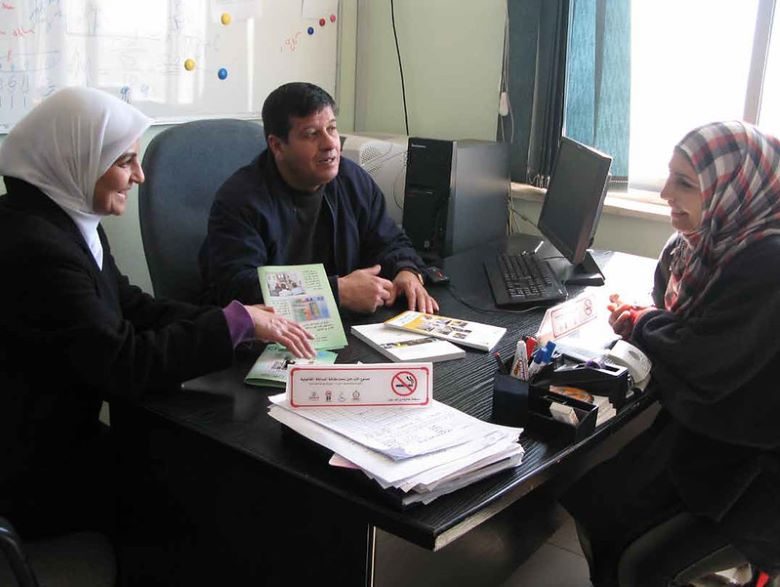
A patient receiving counseling at a smoking cessation clinic in Jordan (Photo: CDC Global[CC BY 2.0])
In Jordan, rules on smoking in public places were set by the Public Health Law enacted in 2008, but they were largely ignored. People smoked in hospitals, in parliament, even in places marked with no-smoking signs, and this was overlooked. However, in 2019, declaring a “health emergency,” the government strengthened the penalties and regulations under the law and launched a tobacco-control campaign based on the law. Specifically, it raised fines and toughened prison terms for violators and established a hotline to report violations to the Ministry of Health. Arguing that violations will not decrease unless offenders are actually policed even if penalties are toughened, the prime minister has taken the lead and shown a strong stance, saying that “the strictest possible measures” will be taken against smoking in public places. However, in many countries in the past, when governments strengthened regulation, tobacco companies took full-fledged legal action, including lawsuits, claiming business obstruction; a case in point suggests that conflicts with tobacco companies may intensify.
As Jordan’s tobacco-control reforms progressed, the country faced the spread of COVID-19 in 2020. The WHO issued a statement that “COVID-19 is more likely to become severe in smokers,” and in response the Jordanian government announced that it would add waterpipes and e-cigarettes to the scope of regulation and ban smoking entirely in enclosed public facilities to protect lives. However, COVID-19 has also affected Jordan’s tourism industry. As the economy’s dependence on tobacco rises, the share of tobacco-related taxes—which account for 18% of government tax revenues—is expected to increase further. The government will likely be forced to both strengthen regulation and secure revenue sources.
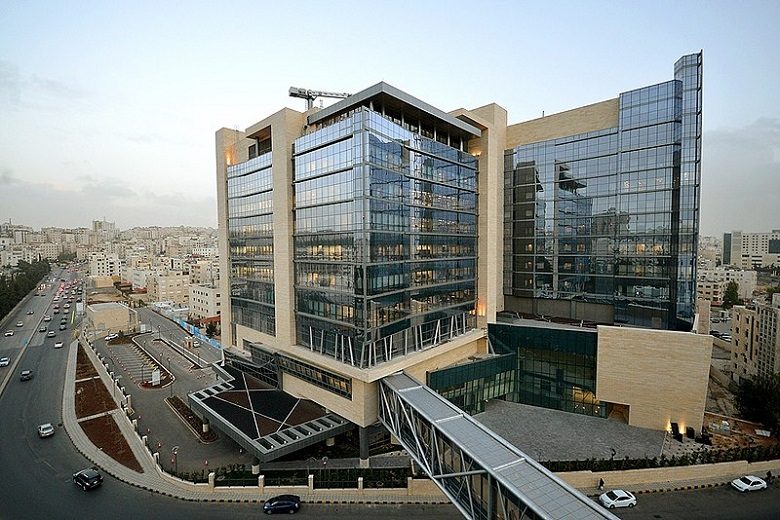
Al-Hussain Cancer Center, whose operations also involve Princess Dina Mired of Jordan (Photo: Mervat Salman/Wikimedia Commons [CC BY-SA 4.0])
Conclusion
As noted earlier, both the public and private sectors in Jordan have begun taking various measures aimed at regulating smoking. However, as Princess Dina Mired of Jordan’s royal family—who also serves as president of the Union for International Cancer Control—has said, tobacco companies “are feeding on our country and have succeeded in getting our youths’ lungs,” demonstrating their immense and formidable influence. Reducing consumption of tobacco, a highly addictive and dependence-forming product, is no easy task. Whether the health of the population can be protected depends on how fundamentally the country can change people’s lifestyles and the structural systems of public finance.
※1 Another survey by the WHO suggests that there are countries with higher smoking rates than Indonesia, including Pacific nations such as Nauru and Kiribati.
※2 Here, “smokers” refers to people who use cigarettes or waterpipes that involve inhaling smoke from tobacco-derived products. It does not include smokeless tobacco such as snuff or chewing tobacco, or the use of e-cigarettes and heated tobacco that vaporize nicotine.
※3 Lobbying refers to activities undertaken by individuals or groups with vested interests to influence policy, and a lobbyist is an individual who specializes in lobbying.
Writer: Taku Okada
Graphics: Yumi Ariyoshi / Taku Okada














受動喫煙で子供たちまでもがニコチン中毒に陥っているという事実に驚きました。もうすでに喫煙者が多すぎて経済的にも大きな影響力を持つ産業になってしまった以上、さまざまなキャンペーンをし状況をよりよくするのも難しくなってしまったのが悲しいです。できるだけ早く手を打つことが大切だと認識させられました。
ヨルダンの喫煙率の高さに驚きました。さらに喫煙者ではない周りの子どもなどにも大きな影響を与えていることもわかり、社会全体を通じて対策が必要だと実感しました。