
In October 2020, a renewable energy company became, for the first time, the world’s largest energy company by market capitalization. Although brief, NextEra Energy (US), which focuses on wind and solar power, overtook the world’s largest oil companies such as ExxonMobil (US) and Saudi Aramco (Saudi Arabia). NextEra Energy taking the lead among energy companies suggests the oil industry’s decline over the past 15 years. Behind this are the significant environmental damages caused by the oil industry, as well as the fact that it is no longer a sector expected to deliver strong profits.
So, are Japanese media capturing this shift and the current state and future of the oil industry? This article explores the current state of the oil sector, analyzes reporting on these trends, and considers the way forward.
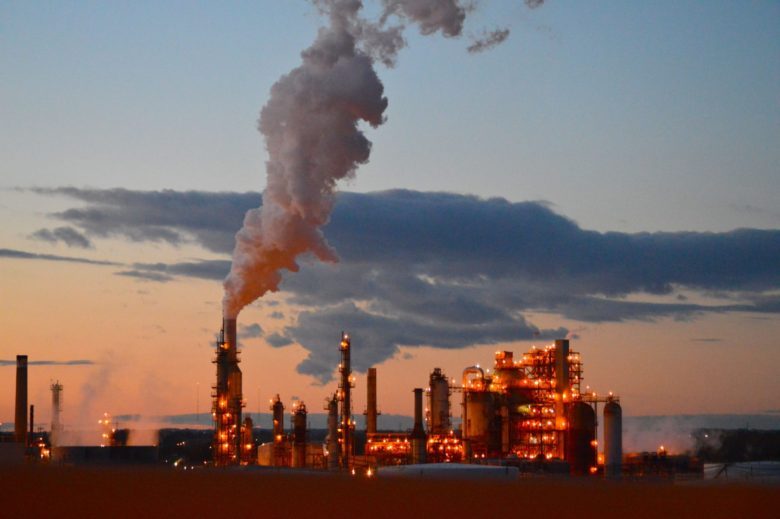
Setting sun at an oil refinery (Photo: Pontla/Flickr [CC BY-NC-ND 2.0])
目次
Oil and the world
First, let’s look at the current state of oil globally. The oil industry began in the mid-19th century with the discovery of the world’s first commercial oil well in the United States. As a result, demand for kerosene as a substitute for whale oil surged. Through the Industrial Revolution and two world wars, oil started to be used for gasoline and weapons production, and demand for oil increased even further. Today, it permeates every corner of our lives and is used as fuel and as a raw material for a wide range of products. Fuel examples include transportation fuels such as gasoline, diesel, jet fuel, and heavy oil, as well as fuels for power generation. It is also used in rubber products like tires, in all kinds of plastics and clothing, and as a raw material for synthetic fibers and everyday products such as detergents and shampoos.
Which countries and companies influence global oil supply and demand? As of 2019, the five largest oil-producing countries are the United States (19%), Saudi Arabia (12%), Russia (11%), Canada (5%), and China (5%). Together, these five account for just over half of the world’s oil production. Meanwhile, the five largest consumers are the United States (20%), China (14%), India (5%), Japan (4%), and Saudi Arabia (4%). Oil extraction, production, and refining are carried out by international oil companies (the oil majors). From after World War II until the 1970s, seven giant companies (the so-called Seven Sisters (Note 1)) almost monopolized global oil production. In the 1970s, however, the Organization of the Petroleum Exporting Countries (OPEC) (Note 2), formed mainly by Middle Eastern states, asserted its power and, following the 1973 oil crisis, came to hold pricing power. As of 2019, OPEC accounts for about 40% of global production. Even today, OPEC continues to have a major impact on oil prices through production adjustments. Including OPEC members, state-owned oil companies in producer countries such as Sinopec (China) and Saudi Aramco hold 65.7% of the world’s total oil reserves. In contrast, privately owned oil companies, including the oil majors, hold only 34.3% of total reserves.
Gas station (Photo: Tony Webster/Flickr [CC BY-SA 2.0])
Challenges for the oil industry
What challenges does the oil industry, on which we have long relied, now face? First, as a fossil fuel, oil will eventually be depleted. Fossil fuels also include coal and natural gas. Based on known reserves and annual production, if we continue using oil at the current pace, it is expected to run out in about 50 years. New discoveries increase reserves, and technologies such as offshore drilling and hydraulic fracturing (fracking) have made it possible to extract oil from the seabed and shale formations, but oil remains a natural resource that cannot be replenished at the speed humans consume it. To compensate for insufficient oil supply and to support global economic development, alternative fuels are needed.
Another major issue is the heavy burden oil use places on the environment. Burning oil produces large amounts of carbon dioxide. The carbon dioxide currently accumulating in the atmosphere is primarily from fossil fuels such as oil and accounts for about 80% of greenhouse gas emissions. Carbon dioxide traps heat and raises the average temperature at the Earth’s surface. As a result, sea levels are rising and the climate is changing. According to the Intergovernmental Panel on Climate Change (IPCC), the global average temperature could rise by 1.5°C above pre-industrial levels as early as 2030, causing catastrophic conditions for flora and fauna, and a further 100 million people are projected to fall into extreme poverty.
Beyond worsening climate change through carbon dioxide emissions, the use of oil and the processes of extraction and production also harm the environment. Oil leaks during use are not uncommon. For example, in 2020 a fuel oil spill from a cargo ship in the island nation of Mauritius was deemed a major environmental disaster expected to destroy rare coral reefs and diverse marine life. Spills also occur constantly during extraction. For instance, Nigeria’s Niger Delta has suffered severe pollution due to repeated crude oil leaks caused by negligence on the part of oil majors such as Royal Dutch Shell and Eni. In just the eight months from January to August 2020, oil and gas companies operating in the Niger Delta spilled 3,347 barrels of crude oil (equivalent to 532,078 liters). As awareness of the gravity of these environmental issues grows, the movement to “move away from oil” is gaining momentum.
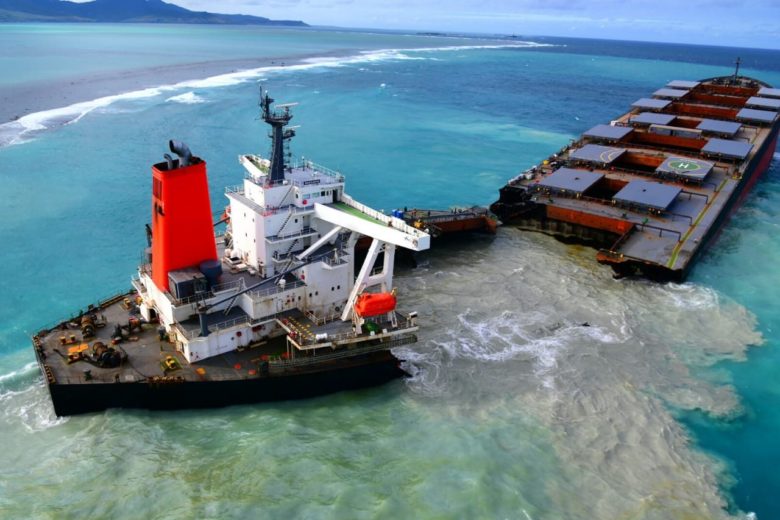
Fuel oil spill off the coast of Mauritius (Photo: IMO/Flickr [CC BY 2.0])
An oil industry being supported
Despite the many issues surrounding oil, the industry is still supported by governments, banks, and investors. This is partly due to ties between the oil industry and politics, but oil is also deeply intertwined with current society. Whether in the energy sector or transportation, we remain dependent on oil. However, the oil industry has not necessarily generated profits solely on its own; governments have poured vast subsidies into it from tax revenues. Governments provide at least USD 775 billion to USD 1 trillion per year in fossil fuel subsidies. The OECD and IEA reported that government support for the production and use of fossil fuels declined from 2013 to 2016, but rose again in 2017. The oil industry also receives financing from investment banks. Although the Paris Agreement, an international effort to reduce greenhouse gases, was adopted, overall bank financing for fossil fuel industries has increased every year since then. Thirty-three major global banks lent USD 1.9 trillion to fossil fuels between 2016 and 2018. Of this, USD 600 billion went to 100 companies actively expanding fossil fuels.
The end of the oil era?
Nevertheless, despite government subsidies and bank financing, the decline of the oil industry is steadily progressing due to shrinking profit prospects and greater awareness of environmental issues. Since 2005, oil stocks have underperformed the broader market; in the US Standard & Poor’s index, average annual returns are about 9%, while oil has delivered only around 2%. For investors, the oil sector is no longer one where strong returns can be expected. At the same time, investment is shifting toward the renewable energy sector, which is performing well and expected to grow. According to the IEA’s 2020 World Energy Outlook, solar power has already become the cheapest source of electricity in history. This trend began more than a decade ago but has strengthened in recent years. In 2020, the COVID-19 crisis further accelerated it.
As a result, in recent years, investment banks that once lent heavily to the oil industry, major investment funds and pension funds managing vast sums, and large religious organizations have one after another decided to pull their money out of fossil fuel–related companies. This is the rise of divestment from fossil fuels worldwide. Divestment is the opposite of investment and means withdrawing investments. The Rockefeller family, which amassed a massive fortune in oil, carried out divestment from fossil fuels and announced it would sell its shares in oil giant ExxonMobil. Similarly, BlackRock (US), the world’s largest investment firm, and major institutional investor Storebrand (Norway) declared in 2020 that they would divest from fossil fuels.
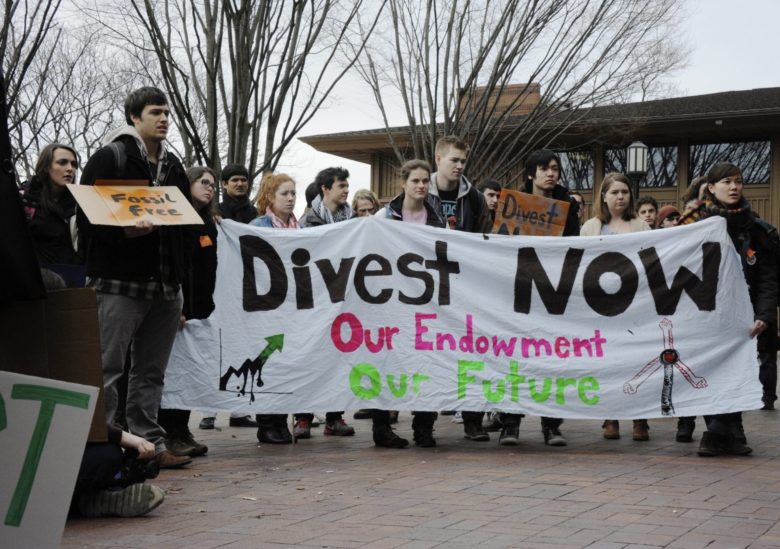
Demonstration at Tufts University in support of divestment from fossil fuels (Photo: James Ennis/Wikimedia Commons [CC BY 2.0])
Beyond investment funds, in 2020, 12 major cities in the C40 Cities Climate Leadership Group (C40) (Note 3) announced they would divest from fossil fuels and finance climate action such as renewable energy that supports a sustainable economy. Even Pope Francis in 2020 called on Catholics around the world to divest from fossil fuels, and funds managed by the Catholic Church have already begun to do so. In addition, some major insurance companies have decided not to underwrite policies for oil companies. These examples show the growing momentum of divestment from oil.
On the other hand, divestment from oil does not produce only positive results. Some argue that divestment could actually increase carbon dioxide emissions. While divestment can put pressure on the oil majors, privately owned oil companies currently hold only 34% of the world’s oil reserves. Meanwhile, state-owned oil companies in non-democratic oil-producing countries, which are less affected by divestment, account for much of global oil production. These state-owned firms could take market share from the majors and expand their businesses. Already volatile crude prices could also become even more unstable due to divestment from oil, as large outflows of speculative capital can lead to significant swings in crude prices.
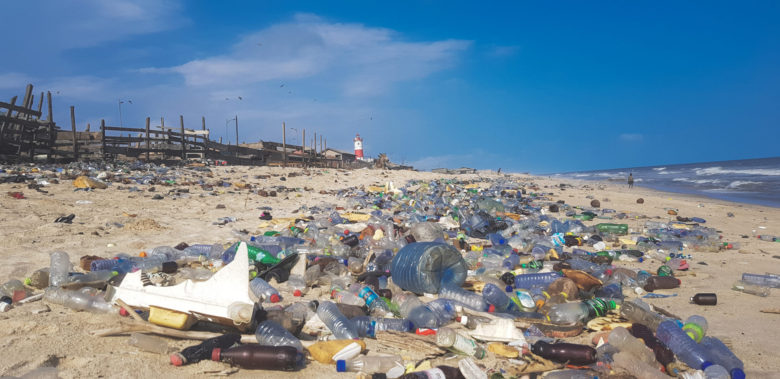
Plastic pollution at Accra Beach, Barbados (Photo: Muntaka Chasant/Wikimedia Commons [CC BY-SA 4.0])
Finally, as demand for oil weakens, it is said that oil majors are seeking to shift toward increased production of plastics and chemicals made from oil in order to survive. If plastic supply becomes excessive and prices fall, the incentive to recycle plastics could diminish, potentially harming the environment.
The reality of reporting
We have looked at various developments in the oil industry. Are Japanese media conveying these changes? What trends can be seen in Japan’s international reporting on oil? We tallied all articles published on the international pages of the Mainichi Shimbun over the three years from October 1, 2017, to September 30, 2020, that included the terms “oil,” “crude oil,” or “heavy oil.” The total came to 492 articles—a relatively small number. Based on these, we first analyzed the countries/regions that appeared and the content of the articles. We began by examining country-level reporting trends. The graph below shows the top 10 countries by number of mentions across all 492 articles.
The United States had the most coverage, with 108 articles (22.0%). It is unsurprising that the US—routinely a focus of Japanese reporting and the world’s top oil producer—ranks first. There was also relatively more coverage about major oil producers such as Iran (12.1%), Saudi Arabia (8.2%), Venezuela (4.5%), Russia (4.0%), and China (2.7%). Although Japan is not a major producer and we limited the scope to international pages, many articles concerned Japan, as an importing country affected by fluctuations in oil and crude prices. Mauritius (2.2%) appears in this ranking because a cargo ship owned and operated by a Japanese company caused a heavy oil spill off its coast in 2020.
Next, let’s look at content. Of the 492 articles that mentioned oil, we narrowed the list to those in which oil was the central topic. We categorized the resulting 149 articles as follows.
Much of the reporting focused on conflicts over oil, such as the attacks on Saudi oil facilities, and political frictions such as US embargoes on crude oil involving Iran and North Korea. Articles about conflicts/frictions over oil numbered 59, accounting for 39.6%. The next most common topic was oil prices (24.2%), including crude futures and balance of payments. The “oil-related accidents” category accounted for 11.4%; of the 17 articles, 13 covered the aforementioned heavy oil spill in Mauritius. In the “oil production” category, many articles covered discussions about production cuts in response to supply exceeding demand in recent years. Articles about oil companies mainly reported on the merger of oil majors Idemitsu Kosan (Japan) and Showa Shell Sekiyu (Japan), though there was also coverage of Saudi Aramco’s stock price and corporate value.
Trends in the oil industry that go unreported
Finally, let’s consider what’s missing from coverage of the oil industry. Among the 149 articles (Note 4) in which oil was the central theme, not a single one discussed oil’s impact on climate change. Furthermore, as the earlier analysis shows, there was very little reporting on other environmental destruction caused by the oil industry. On oil spills, only the Mauritius heavy oil spill was covered. Even that coverage did not fully reflect the situation: of the 3 articles on the accident, only one focused on environmental damage and cleanup efforts. The other 12 articles discussed compensation claims and processing related to the spill.
There was also no information on the current state, merits, and demerits of divestment from oil—a major trend that has accelerated in recent years (Note 5). Only seven articles covered renewable energy in relation to oil, and their content was not particularly substantial. For example, the February 21, 2018 article “Oil: World demand to peak in the 2030s; renewables and EVs slow growth—BP forecast” merely quoted a BP executive saying “renewable energy is growing rapidly,” without discussing the reasons and background including divestment from the oil industry. In the October 2020 coverage, a significant development in the energy sector—that a renewable energy company became the largest energy company by market capitalization for the first time—was not reported.
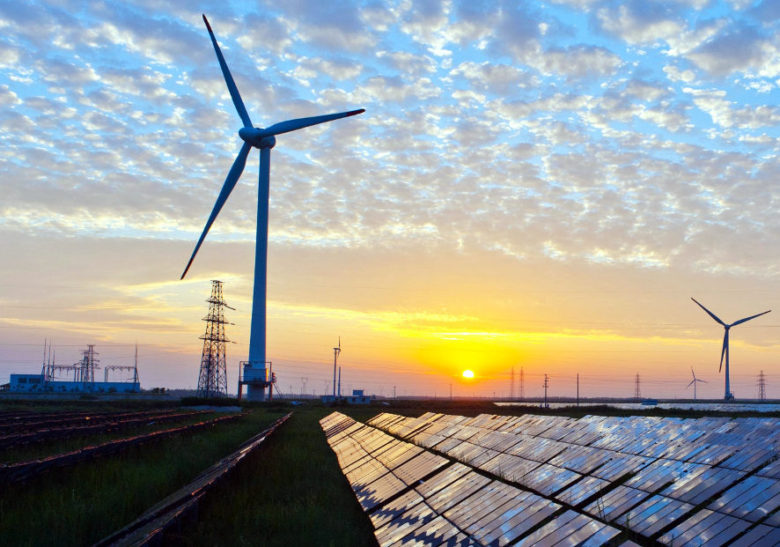
Renewable energy power plant (Photo: Kenueone/Wikimedia Commons [CC0 1.0])
As discussed, reporting on oil is limited, and even within that limited coverage the content is skewed, failing to capture the oil industry’s current state and trends. Many countries appear to have begun international efforts to regulate greenhouse gas emissions such as carbon dioxide and to move toward decarbonization. Although Japan announced a decarbonization target in October 2020 and signaled a shift from conventional fossil fuel–based power generation to renewable energy, it is lagging behind other countries, and a plan to achieve it has not been made clear. Judging from the Mainichi Shimbun’s international coverage, reporting tends to follow the statements and actions of Japan’s own government. In this state, can Japan take a step toward decarbonization? Improvements in reporting on fossil fuels, including oil, are needed.
Note 1: Seven Sisters: A term for the consortium of seven giant oil companies that oligopolized most of the oil market share. The seven are Exxon (US), Mobil (US), Socal (US), Texaco (US), Gulf (US), Royal Dutch Shell (UK/Netherlands), and BP (UK).
Note 2: Organization of the Petroleum Exporting Countries (OPEC): An organization established on September 14, 1960, to protect the interests of oil-producing countries from international oil capital. As of November 2020, it has 13 member countries: the Islamic Republic of Iran, Iraq, Kuwait, Saudi Arabia, Venezuela, Libya, the United Arab Emirates, Algeria, Nigeria, Gabon, Angola, Equatorial Guinea, and the Republic of the Congo.
Note 3: C40 (Cities 40) Cities Climate Leadership Group: A network of major cities around the world working on climate change measures.
Note 4: While not in the context of oil, the Mainichi Shimbun does cover climate change fairly often.
Note 5: Although some past articles mentioned divestment when it was not the central theme, such instances were extremely few.
Writer: Yow Shuning
Graphics: Yow Shuning


















石油からのダイベストメントがここまで進んでいるとは知りませんでした。また、再生可能エネルギー会社が世界最大のエネルギー会社になったことについては驚きました。石油依存はまだまだ続くと思っていたので、少しだけ嬉しく思いました。
しかし、石油と環境の関係の報道は少なすぎですね。これからも人々の環境問題についての意識を高めないといけないなと改めて感じました。
ダイベストメントという言葉を初めて耳にしました。世界的に見れば大きなムーブメントになってるにも関わらず、これまで知らなかったので、今後さらに世界の動向に目を向けていかなければと感じました。
石油関連の環境問題を日本の報道機関がとりあげていないというのは驚きでした。今後脱炭素化を考える上で重要であるエネルギー関連の課題を解決するためにも、しっかり情報を入手できる状態を整えるべきだと感じます。
確かに環境問題に対して、日本は先進国であるにも関わらず遅れている印象を受けます。しかし、震災後原子力発電のリスクが強調されるようになった今、石油に頼らずに、逆にどうすればいいのだろうかと思っている人が多いと思います。石油よりクリーンなエネルギーは、石油程受け入れられていないのが現状です。
この記事の作者が仰るように、もっとみんなの目がクリーンエネルギーにも向くように、報道は変わらねばなりません。地球全体で取り組まないといけない課題だと思います。
石油業界の歴史がわかりやすくまとまっていて、何故石油がこれほどメジャーなものとなったのか理解できました。また、日本における報道の実態に目を向けたのは非常に面白いと思いました。日本にとって、石油関連事項はCO2排出量削減や再生可能エネルギーへの移行というよりも、政治的に考えられている現状を知ることができて興味深かったです。
石油からのダイベストメントがこれほど大きな動きになっているとは知りませんでしたし、ローマ教皇がダイベストメントを世界中のカトリック教徒に呼びかけたという事例もあるとも驚きでした。もっと包括的な報道が行われていくことを期待します。
非常に興味深い記事でした。記事で言及されているように、確かに日本人は環境問題に対して関心が薄く、諸外国に比べて対策に後れを取っていると言わざるを得ません。ただ、教育関係の仕事に従事し高校生を指導して約20年経ちますが、大学では環境問題を学びたい、将来は環境問題改善に貢献できるような職に就きたいという子が以前に比べて明らかに増えてきています。小さな芽かもしれませんが、日本も少しずつ変わってきていると信じたいです。今年も環境問題に関心がある生徒がいるので、この記事を紹介したいと思います。