
Right now, Africa’s cosmetics-related market is experiencing rapid growth. While the global annual growth rate is 4%, in recent years Africa has been posting an average growth rate of 8–10%. Why is it growing now? Conversely, what factors have held back the growth of the cosmetics market in Africa until now? Skin color appears to be part of the background. Due to historical discrimination and inequality, at every stage—development, production, and distribution—the standard was skin tones close to “white,” and skin tones close to “black” were not included as a target segment. Recently, however, the situation has finally begun to change. This article explores the relationship between skin color and the cosmetics market in Africa.
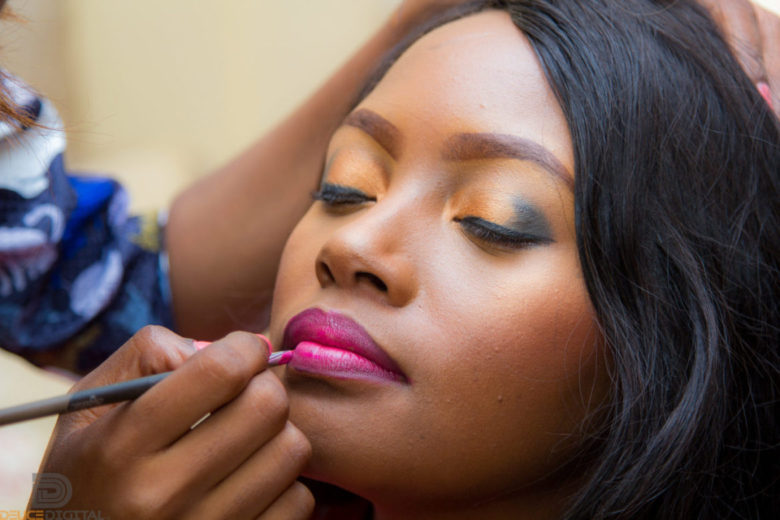
A woman having makeup applied (Photo: PxHere [Public Domain])
目次
Gradations of skin color
When it comes to race, the categories “Black” and “White” are often used, and skin color is likewise split into black and white. In reality, however, skin color is far from simple. From dark brown to light brown, and even beige or pale cream, there are countless variations. This relates to the origins of humankind and subsequent migration and intermixing.
Our ancestors originated and evolved in Africa. Around the equator, ultraviolet (UV) radiation is strong, so it was necessary to prevent the destruction of folate by UV, a nutrient essential to humans. People who remained near the equator therefore developed skin with higher melanin content—i.e., darker brown skin. Meanwhile, people who moved to regions with less sunlight needed to synthesize vitamin D, another nutrient essential to humans, in low-UV environments. To absorb a certain amount of UV and generate vitamin D, their skin evolved to have less melanin, resulting in lighter skin tones. In this way, skin color changed as an adaptation to UV environments, leading to slight differences in skin tone by region. Moreover, history shows people did not remain in the same environments. Migration and children born to parents with different skin tones have complicated the relationship between people and place and diversified skin color to the present day.
For these reasons, it is impossible to polarize skin color and divide people into the races “White” and “Black.” In the first place, the concept of “race” has no scientific basis. Despite being impossible to define clearly, societies have forced classifications to suit their purposes, fabricating the concept. History offers many examples where hierarchical relations were formed through this artificial concept of “race,” in which groups with military or economic power differentiated, discriminated against, and in some cases refused to treat others as human. The slave trade and slavery, which persisted into the 19th century, are examples. Globally, people with beige or pinkish cream skin came to occupy a socially privileged position, creating a social structure that favored the Western countries where many such people lived. Institutions and policies that helped build this structure persisted for many years: in the United States until the Civil Rights Acts of the 1960s, and in South Africa until the end of apartheid in the 1990s, political systems that officially discriminated against brown skin were maintained.

Entrance to the Apartheid Museum (Photo: Paul Seligman /Flickr [CC BY-NC-ND 2.0])
The problem of “skin color”
Although systems and policies that discriminated against brown skin have been publicly abolished, discrimination based on skin color remains deeply rooted in many countries and regions. It affects not only people’s actions and words, but also the everyday products they use. For example, some countries still market and sell items such as crayons, paints, and stockings labeled as “skin color.” While the specific shade varies by region—light orange in parts of Asia, yellowish pink in the West—“skin color” is generally represented by a cream or beige-like tone, and dark brown is not treated as “skin color.”
Even when a product is not explicitly labeled “skin color,” a default “skin tone” is often built into it. Adhesive bandages are one example. Their color is intended to blend into the skin, yet in Western markets only shades that match cream or beige skin tones were sold for many years. Recently, however, various manufacturers have begun offering bandages suited to darker brown skin, and a major U.S.-based pharmaceutical company announced in 2020 that it would sell bandages for a range of skin tones. Beyond daily necessities, products such as prosthetic arms and legs are also most often made in beige or cream. In this context, a Nigerian artist began producing prosthetics that match dark brown skin in 2017, drawing attention. Although product development for diverse skin tones has finally begun in recent years, it is hard to say it has become standard.
New “skin color” issues have also emerged in today’s digital society. Consider emoji used for messaging online. On Apple devices, from the year emoji were officially introduced 2011 until 2015, only faces with a cream-like skin tone were offered.
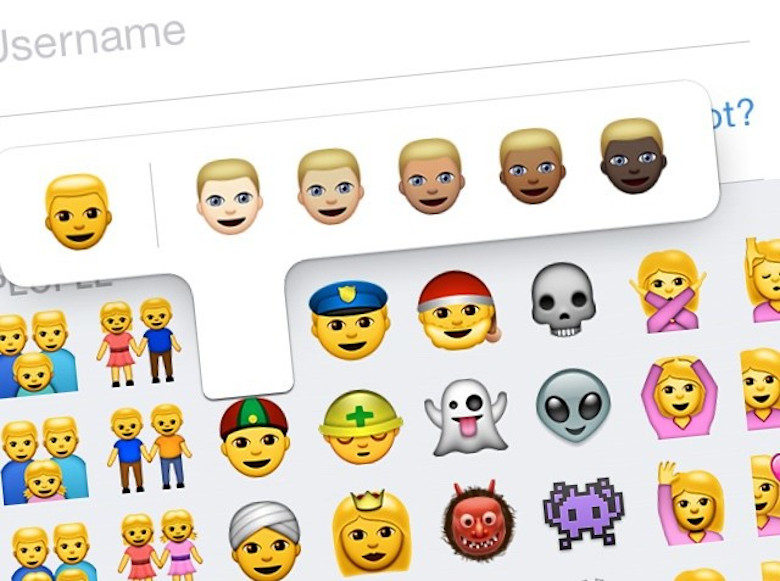
Face emojis with expanded skin tone variations (Photo: RSNY /Flickr [CC BY-NC-ND 2.0])
Beyond consumer goods, “skin color” is influencing cutting-edge technologies and could even threaten people’s safety. The facial recognition software IDEMIA, used by police in the United States, Australia, and France, makes the most errors when recognizing women with brown skin—10 times more often than with so-called “white women.” As a result, women with brown skin face the highest risk of being misidentified as suspects. Although facial recognition systems are used to protect public safety, it is said their performance is affected by having been developed primarily with data centered on so-called “white men.” In this way, the concept of “skin color” can cause serious problems.
“Skin color” issues also appear in contexts that have a major impact on people’s health. In dermatology training at medical schools in Europe and the U.S., darker brown skin is seldom used except to illustrate special conditions. Even the Fitzpatrick scale, a method for classifying skin used in dermatological research and treatment, has shortcomings. Devised by Dr. Thomas Fitzpatrick, a physician who made major contributions to dermatology, it categorizes skin into six types based on their response to UV exposure. Of these six, three describe light cream or beige-like skin tones, while the variations of dark brown skin are extremely limited. Because of such “skin color” issues in medicine, physicians often lack knowledge about darker brown skin and may make inaccurate diagnoses of conditions such as skin cancer. As a result, treatment is sometimes delayed, and there have been numerous cases where patients have died.
Beauty and “skin color”
Not only in clinical settings but also in beauty products, people with darker brown skin are seeing adverse health effects. From ancient Egypt and Mesopotamia through the modern era, cosmetics have been used to make skin look whiter. Layered on top of this is the historical discrimination discussed earlier, which has led to a global tendency to regard “white skin” as a marker of higher status and privilege and even a symbol of beauty, a tendency leveraged in marketing. Consequently, many women around the world aspire to “white skin” and use products that promise to bleach the skin and achieve “whitening.”
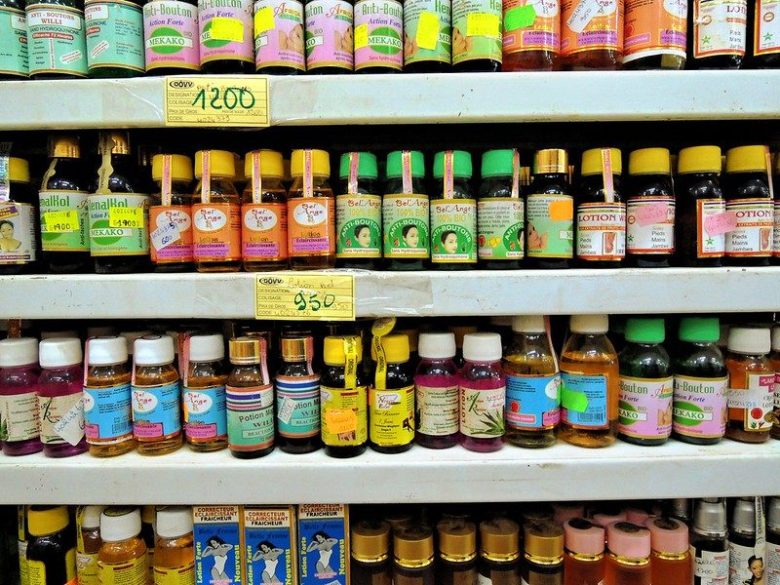
“Whitening” products that bleach the skin sold in Cameroon (Photo: Jasmine Halki /Flickr [CC BY 2.0])
In fact, reports indicate that 40% of women in Africa use such products. However, many of these products contain mercury; the World Health Organization (WHO) warns that it can harm internal organs. Skin “whitening care” products containing mercury had long been sold even on Amazon, a major online marketplace, but after anti-racism activists campaigned against them, the company finally decided to halt sales in 2020.
Thus, skin whiteness has long been a beauty standard in many parts of the world. Moreover, because the people developing cosmetics and the targeted consumers were largely those with “white” skin, products that suited darker brown skin were not developed for many years. In the 1960s, however, many African countries became independent and movements seeking equal societies without skin-color-based discrimination gained strength in countries such as the United States, changing attitudes toward brown skin. In 1962, a fashion show in New York based on the concept of freeing oneself from Western beauty standards helped spur the “Black is Beautiful” movement. This fashion show likely helped create a moment where models with brown skin walked the runway. Continued efforts by activists across industries such as fashion and music brought shifts in perceptions of brown skin in many countries. In addition, with the development of media such as social networks, consumers’ voices have more easily reached suppliers, and changing perceptions of brown skin have become visible in the form of new products.
Amid these trends, major global cosmetics brands have begun to offer wider shade ranges in foundations (Note 1), releasing products that include darker brown skin within their target users. As a result, their sales regions have expanded, entering African markets such as Kenya and Uganda.
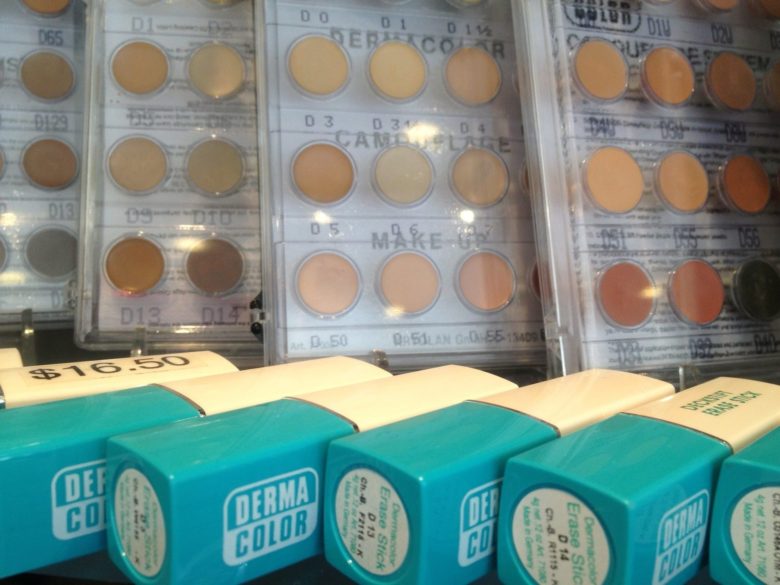
Foundation samples (Photo: Lynn Friedman /Flickr [CC BY-NC-ND 2.0])
Africa’s cosmetics market
It is not only that major global brands have developed cosmetics suitable for darker brown skin that has enabled their entry into Africa. Africa itself now represents a market large enough to attract these brands’ attention. Of the US$400 billion in profits generated annually by the global beauty industry, 3% currently comes from Africa. As noted at the outset, however, beauty markets across African countries are experiencing significant growth, so this share is expected to increase. South Africa, which shows remarkable growth in Sub-Saharan Africa, had a beauty market size of US$4.5 billion in 2018.
Behind this rapid expansion of Africa’s beauty market is the growth of the continent’s population, which has increased consumption of beauty-related goods. Young people in particular tend to spend more on beauty and personal care products, so cosmetics markets in Sub-Saharan Africa—where 70% of the population is under 30—are expanding rapidly. Additionally, ongoing urbanization across Africa and the growth of the middle-income class have also played a role. More than 300 million people in Africa now have the purchasing power to spend US$2–20 a day. Many in the urban middle-income class are engaged with contemporary trends and spend a certain amount on fashion and beauty.
Cosmetics brands originating in Africa
In addition to the expanding cosmetics market in Africa, advances in manufacturing technology and the use of social media for product dissemination and advertising have made starting a business easier. Against this backdrop, a surge of entrepreneurs have launched brands in Africa and successfully entered the cosmetics and skincare markets. Some have grown into major brands, such as Kenya’s Suzie Beauty and South Africa’s Africology, which offers natural beauty products. One advantage of these local brands is that many owners are women with brown skin living in Africa; they understand users’ needs and the characteristics of brown skin, enabling them to offer products that feel familiar to local consumers. Moreover, because both demand and distribution channels differ by country and region, local brands must tailor their sales methods to local market conditions.
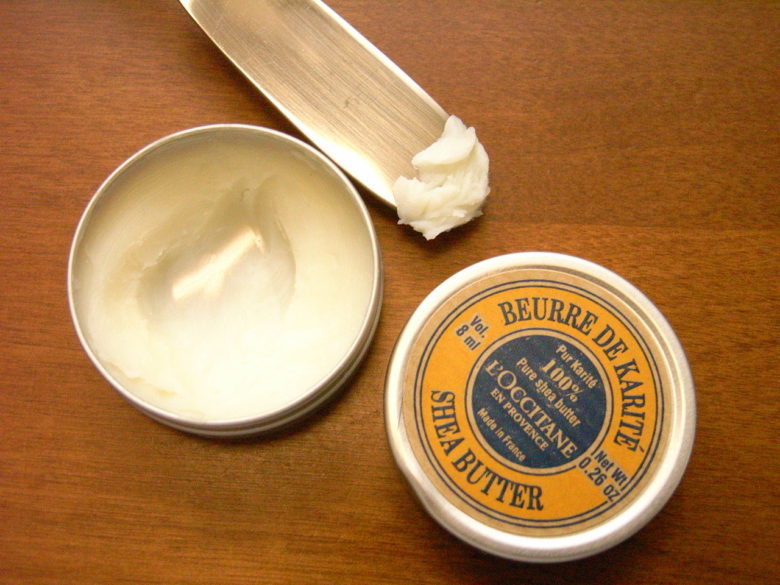
Shea butter body care products (Cathkidston /Wikimedia Commons [CC BY-SA 3.0])
It is also important to keep up with local trends. Recently, organic cosmetics have been gaining popularity in Africa. Common ingredients in organic products include shea butter, baobab, and marula fruit. Because these products are free of harsh chemicals and often use plants and fruits grown in Africa as raw materials, they feel familiar to people living on the continent. For example, Kenya’s Suzie Beauty began with the concept of offering high-quality products suited to brown skin at affordable prices, and sells organic cosmetics. The ability to quickly sense such local trends and reflect them in products will be key to the success of local brands.
Some governments have begun supporting these local brands. The Tanzanian government, noting growth in the domestic cosmetics industry, has introduced economic support measures. The aim is to create more jobs and generate economic benefits.
Knowledge and techniques unique to Africa are influencing not only domestic and intra-African cosmetics sectors but the world as well. In fact, there are cases where global cosmetics brands have partnered with African researchers to develop products for people with darker brown skin. Such initiatives can help more people use products that suit them and provide African scientists with the funding they need for research—a mutual benefit.
Brands that have succeeded in Africa are expanding beyond the continent as well. Liberia’s Angel’s Lips and Nigeria’s BMPRO, for example, have gone global, moving into the UK, the US, and Canada.

Women talking at a festival (Katy Blackwood/ Wikimedia Commons/ [CC BY-SA 4.0])
As described above, discrimination against “black skin” and the aspiration to “white skin” remain deeply rooted today, harming both health and society. Skin-color issues lurk even in contexts that profoundly affect people’s safety, such as criminal investigations and clinical settings. Thus, skin color is not merely a matter of appearance; it intersects with many social issues. At the same time, as social attitudes change and the cosmetics and skincare market in Africa grows, the beauty industry has begun to pay attention to brown skin, with various brands creating diverse products. In cosmetics and beyond, we must continue to ask what diversity and equality of skin color mean in every context.
Note 1: Foundation is often chosen in a shade close to the skin of the user’s face or neck.
Writer: Ayano Shiotsuki




















アフリカの化粧品市場肌の広がり、全然知りませんでした!日本にも 美白 という言葉がありますが、色の多様性が広がっていってほしいと思いました。
私も無意識に「白くなりたい」と思い、「美白」化粧品を使用しています。
「白くなりたい」と思うことは悪いことではありませんが、自身の根底にある意識を見直そうと思いました。また、「白が美しい」と意味する「美白」という言葉の危険性も感じました。
珍しくポジティブな内容で非常に興味深い記事でした。
肌の色の言葉選びに配慮されていて、とても良い文章だなと思いました。
自分にとって、全く知らないトピックだったのでとても勉強になりました。
化粧品の製品紹介で「美白」を謳っているものも、肌が濃い人々の目線からしたら良い気はしないと思うので、無意識に使っている言葉にも気をつけるべきだと気付かされました。