
In 2020, in July, the famous museum Hagia Sophia in Istanbul, Turkey, was reconverted into an Islamic mosque. On hearing this news, many likely worried they might no longer be able to visit this beautiful tourist site. However, Turkish President Recep Tayyip Erdoğan did not make this decision—turning the secularized, museum-status Hagia Sophia back into a place of Islamic worship—suddenly. Behind it lies the significant role of the changing relationship between Islam and politics in Turkey in recent years.
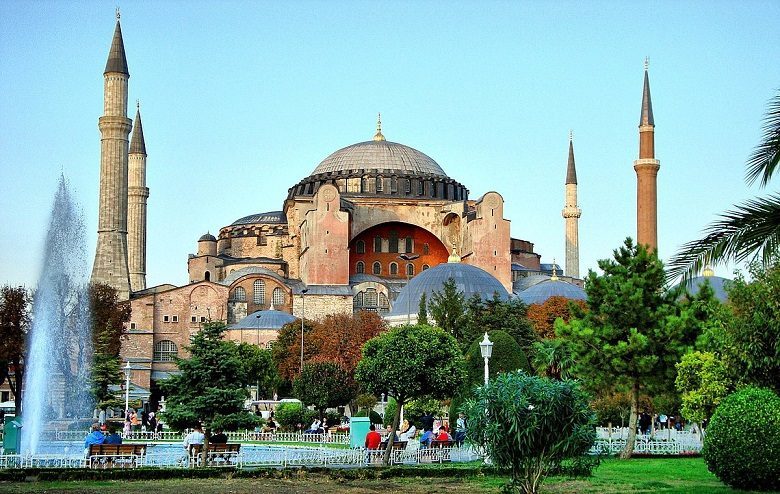
Istanbul, Hagia Sophia (Photo: Haluk Comertel / Wikimedia [CC BY 3.0])
Religion relates to many aspects of society and in various countries can have a strong presence both in people’s private lives and in politics. To broadly understand world affairs, it is important to look at religion from multiple angles. So how do Japanese media actually report on Islam and on the societies and politics connected to it? This article analyzes how topics related to Islam are covered by Japanese news organizations and explores what that coverage looks like.
目次
What is Islam?
So what is Islam in the first place? “Islam” in Arabic means “peace” and “submission,” and religiously signifies “devotion to God alone.” Muslims believe in Allah, the one God and creator of the world. Islam originated in the 7th century in Mecca, Arabia, founded by Muhammad. Muhammad is believed to have received revelation from Allah and is regarded as the final prophet following Adam, Moses, and Jesus; Islam thus shares several commonalities with Judaism and Christianity. It is said that Allah’s words were conveyed to people through Muhammad in the book known as the Qur’an.
The Qur’an is said to record Allah’s words verbatim, and its text of 114 chapters forms the foundation of Islamic teaching. These teachings are deeply rooted in Muslims’ daily lives; for example, Muslims practice injunctions such as not eating pork, blood, or meat offered to anyone other than Allah, and not taking interest. In addition, Muslims are obligated to observe the Five Pillars: ① Shahada: professing faith in Allah, ② Salah: praying 5 times a day, ③ Zakat: paying alms/tax and giving to the poor, ④ Sawm: fasting during Ramadan, and ⑤ Hajj: making a pilgrimage to the holy city of Mecca.
Based on teachings described in the Qur’an, regions, countries, and sects add their own interpretations, forming social rules closely tied to people’s lives. For example, the Qur’an includes a passage that women should not display their adornments; different societies have interpreted this variously, resulting in some women wearing the niqab, which covers everything except the hands and eyes, while others wear the hijab, which covers only the head.
Islam spread to Africa and Europe through military conquest, trade, and migration, and later reached China and Southeast Asia via the Silk Road. As of 2010, Muslims were estimated to number about 1.6 billion, roughly 23% of the world’s population at that time. The largest number of Muslims live in Indonesia—about 200 million—followed by India, Pakistan, Bangladesh, and Nigeria. Looking at the share of the population, countries in North Africa and the Middle East such as Morocco, Somalia, Afghanistan, and Iran have especially high proportions. Although India has the world’s 2nd-largest Muslim population, Muslims make up only 14.4% of its total population.
Islam has sects, broadly divided into three: the Sunni, Shia, and Kharijite, with numerous branches within each. There is also Sufism, a mystical current that seeks to deepen faith in God through spiritual practice beyond textbook doctrine; it holds great influence in the world of Islamic literature and beyond (※1).
Trends in media coverage of Islam by country
What tendencies appear in Japan’s coverage related to Islam? GNV previously conducted an analysis of Japan’s international reporting on religion; here we focus solely on Islam. Over the one-year period from 2019/1/1 to 2019/12/31, we tallied articles on the international pages of the Asahi Shimbun that contained the words “Islam” or “Muslim (i.e., a follower of Islam).” The total came to 322 articles, a relatively small number. Based on these, we first analyzed the countries/regions mentioned and the articles’ content. We began by looking at trends by country covered. The graph below lists the top 10 countries by number of mentions within all 322 articles.
The most covered country was the United States, with a total of 35.8 articles (11.1%) (※2). Only 0.2% of the world’s Muslims live in the U.S., so why were there so many articles? The reason is that the coverage focuses less on “Muslims living in the U.S.” and more on “U.S. political and diplomatic policy toward the Islamic world.” In addition, Japanese media in general pay outsized attention to the U.S., making it especially likely to be covered in international news. The content includes U.S. involvement in conflicts (Syria, Afghanistan, etc.), operations against IS (Islamic State), and tensions with Iran—many political and policy actions. Syria (2nd) and Iran (3rd) were covered in similar contexts: Syria largely in relation to fighting with IS, and Iran in relation to its confrontation and sanctions with the U.S.
India, in 4th place with 18.7 articles, was often covered in connection with its conflict with Pakistan. There was also coverage of the controversial amendments to the citizenship law, criticized as discriminatory against Muslims. Myanmar (5th) and China (9th) ranked due largely to state persecution of Muslim minorities. Many among the Rohingya in Myanmar and the Uyghurs in China are Muslims and have been targets of repression. New Zealand (6th) and Sri Lanka (7th) appeared because of terrorist attacks: in March, Christchurch, New Zealand suffered a terror attack in which an individual espousing anti-Muslim views attacked mosques; in April, Sri Lanka saw bombings targeting Christian churches by an extremist group claiming to act in the name of Islam. Also tied for 7th, Turkey was covered for topics such as the Syrian conflict and accompanying operations against IS, the refugee crisis triggered by the war, and President Erdoğan—who projects a pro-Islam political stance—losing the Istanbul mayoral election.
Which countries went under-covered? As noted, Indonesia has the world’s largest Muslim population and strong economic ties with Japan; nevertheless, it appeared in only 8.5 articles (ranked 14th among the 56 countries mentioned). Much of the coverage focused on the presidential election, where in a country that is roughly 90% Muslim, organized Muslim voting blocs can significantly affect outcomes. Nigeria also has many Muslims (it has the world’s 5th-largest Muslim population), yet it appeared in only 2 articles (tied for 27th), likewise about the presidential election—partly because the previous election was postponed due to interference by the extremist group “Boko Haram,” which claims to act in the name of Islam, and because President Muhammadu Buhari campaigned on suppressing “Boko Haram.”
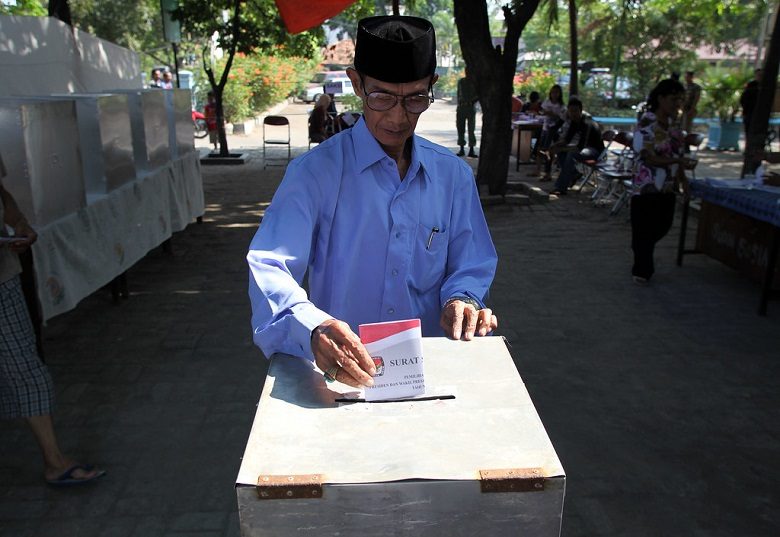
A man casting his ballot in the 2019 Indonesian presidential election (Photo: Department of Foreign Affairs and Trade’s photostream / Flickr [CC BY 2.0])
One takeaway from this analysis is that countries frequently covered in international news tend also to receive more coverage related to Islam. Because Japanese media often watch the U.S. and China closely, there is a tendency for these countries to appear frequently even in Islam-related topics. Western European countries also tend to be relatively well covered; in fact, the U.K. (5.3 articles) and France (4.2) received more coverage than Bangladesh (3.3), even though Bangladesh has a far larger Muslim population. Low-income countries often go unreported—even when they are Muslim-majority—until sensational events such as terrorist attacks occur. For example, Burkina Faso (2 articles) appeared only in connection with a church shooting by armed groups.
Trends by article content
Next, we categorized articles by content. The largest share concerned politics and policy (29%) (※3), largely because, as noted, many pieces focused on U.S. foreign policy—toward Syria, Iran, and the broader Middle East. News was often triggered when President Trump or the Secretary of State made statements, especially about policy toward IS. In other countries as well, elections and politicians’ statements were frequent topics. The next most common category was conflict at 25%, followed by terrorism at 16%, indicating a strong emphasis on violence-related content. Beyond New Zealand and Sri Lanka, terrorism coverage mostly concerned IS attacks or incidents for which IS claimed responsibility.
In the society/life category, topics considered Islamic taboos in specific countries appeared frequently. For example, in Egypt, students (male and female) were expelled from university for the taboo act of hugging in public—a widely reported incident. The oppression category accounted for 4% and included coverage of state repression, notably of the Rohingya and Uyghurs as mentioned earlier. The Asahi Shimbun also runs “correspondent’s notes,” columns about daily life in reporters’ postings; some of these introduced positive Islam-related stories (themes of cooperation, peace, and coexistence), totaling 5.8 articles.
Violence and Islam
We now consider how Islam and violence are linked in reporting. As the category analysis shows, Islam-related coverage often involves violence-evoking topics such as conflict and terrorism. Classifying the 322 articles into those with and without violence (physical harm caused by human actions) shows 45% (146 articles) with violence and 55% (176 articles) without (※4). Here, “violence” includes both destructive acts by extremist groups such as IS and coverage in which Muslims are the victims, such as the New Zealand attack and persecution of the Rohingya and Uyghurs. News surrounding Muslims thus has two sides—Muslims as perpetrators and Muslims as victims.
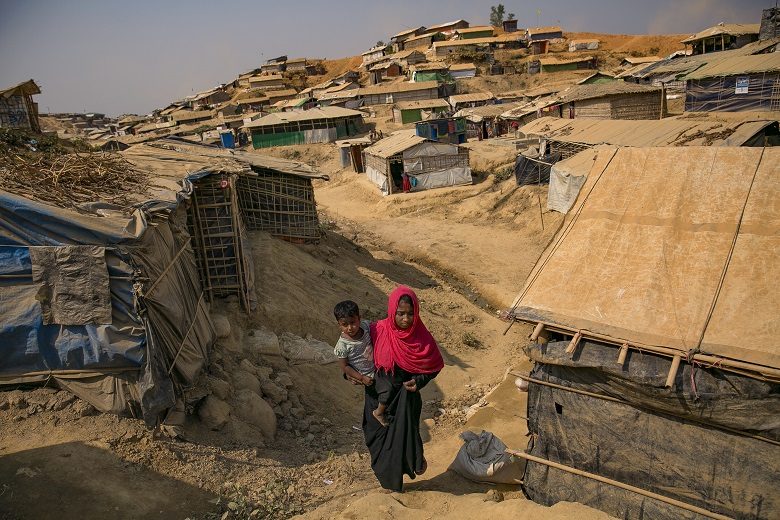
A Rohingya woman and child living in a refugee camp in Bangladesh (Photo: UN Women, Allison Joyce / Flickr [CC BY-NC-ND 2.0])
Moreover, in 167 of the 322 articles (52%), the words Islam or Muslim appeared in contexts that evoke Muslims as violent or perpetrator groups—e.g., “Islamic State,” “Islamist extremists,” or “Islamist armed groups.” Articles mentioning “Islamic State” numbered 110. Although IS has seen its territory shrink year by year, it was still a frequent topic in 2019.
A tendency to view Muslims as suspicious or dangerous has emerged in many countries, and Japan is no exception. According to a 2018 survey by NHK Broadcasting Culture Research Institute, only 7% of respondents said they felt “positive” or “somewhat positive” toward Islam—one quarter of those who felt positive toward Christianity (26%)—while 21% felt “negative” or “somewhat negative” toward Islam—three times the share for Christianity (6%). In addition, a very high 44% answered that they “don’t really understand” Islam, indicating a lack of information. Distrust or lack of understanding toward Islam may significantly hinder our grasp of today’s world.
Aspects of Islam that go unreported
Finally, there are many facets of Islam that receive little coverage. As the survey above indicates—with 44% responding “don’t know” about Islam—information about Islam does not reach people sufficiently. One such underreported area is Islam’s large-scale rites. As noted, the Hajj takes place mainly from the 8th to the 12th days of the final month (12th month) of the Hijri calendar; those with the physical and financial means are obligated to make a pilgrimage to Mecca, Saudi Arabia, once in their lifetime—one of the Five Pillars. Every year, around 2 million Muslims travel to Mecca for Hajj. Despite involving so many people, there were zero articles about Hajj on the Asahi’s international pages during 2019. Likewise, there were no articles about Eid, the festival of great importance to Muslims. Eid is observed twice—after Hajj and after Ramadan (Eid al-Fitr). Practices vary by country, but it is a major celebration for Muslims, often a public holiday with lanterns and floral decorations at home and family gatherings for festive meals. Ramadan (the month of fasting) received more coverage than Hajj or Eid, with a total of 7 articles—perhaps because fasting, which directly affects eating habits, is easier to visualize than pilgrimage.

Muslims gathering at the Kaaba in Mecca during Hajj (Photo: Adli Wahid / Wikimedia [CC BY-SA 4.0])
Islamic banking, which affects many people’s economic activities, also received zero articles during this period. Islamic banking is a financial system based on Islamic teachings—forbidding interest, requiring lenders and borrowers to share profits and losses, and prohibiting gambling. The size of the broader Islamic finance market, including Islamic banking, exceeded $2 trillion as of 2017. It has grown year after year worldwide; in 2019, Malaysia’s Islamic banking sector grew by 10–11%. In the Philippines, legal reforms in 2019 enabled Islamic banks to operate there. Understanding Islamic banking, whose global demand is rapidly expanding, is surely important for grasping the world economy.
There are also influential organizations in the Islamic world that receive limited coverage. The Muslim Brotherhood (※5) is one example: it opposes absolute monarchies and has gathered popular support through social service activities. In many Middle Eastern and North African countries, political parties have links to the Brotherhood. While Egypt, Saudi Arabia, and the UAE have designated it a “terrorist organization,” viewing it as a threat to their political systems, Qatar and Turkey, expecting its strong popular influence, have strengthened their ties with the Brotherhood. How was it covered in our analysis? There were 7 articles containing the term “Muslim Brotherhood,” all of which mentioned it only in the context of being repressed as “terrorists” by Egypt’s current president, Abdel Fattah el-Sisi. This sheds light on only one side of the Brotherhood and does not lead to a fuller understanding. Reporting on organizations like the Muslim Brotherhood—so influential in Muslim societies—would help deepen understanding of Islam and its surrounding dynamics.
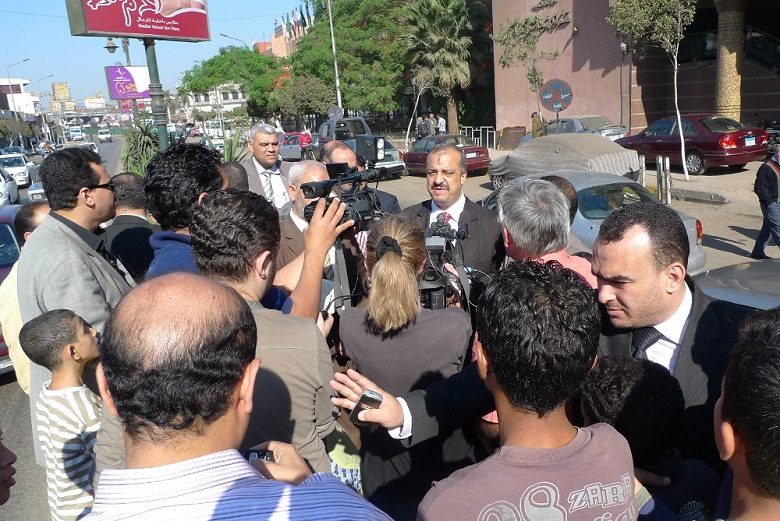
Mohammed el-Beltagy of the Muslim Brotherhood campaigning on a Cairo street (Photo: Al Jazeera English / Flickr [CC BY-SA 2.0])
Reporting on Islam as a step toward understanding world affairs
This analysis highlights several issues in current coverage related to Islam: ① geographic imbalances in reporting, ② the assignment of violent imagery to Islam due to content biases in what gets covered, ③ insufficient reporting on Islam leading to poor understanding and, consequently, heightened distrust of the unfamiliar, and ④ too little explanation of the complex, intertwined relations among politics, society, the economy, and Islam.
Returning to the Turkish example: the reconversion of Hagia Sophia into a mosque was the result of intersecting religious and political dynamics in Turkey. President Erdoğan, who at one time ignored calls for reconversion, later changed course and twice voiced support for making it a mosque—moves seen as attempts to use religion for political purposes. Yet in the entire year of 2019, the Asahi Shimbun ran zero international-page articles reporting on Erdoğan’s statements about reconversion. The mosque decision was by no means sudden; it is understandable only in light of prior context.
Understanding current events requires grasping that context. Given Islam’s far-reaching influence, understanding Islam and its connections is crucial for getting that context right. To understand the world we live in, we need reporting that conveys the narrative without causing misunderstanding.
Correction: We have corrected an error in a place name in the article. (2022/10/12)
※1 Sufism is not a sect of Islam but is positioned as a movement.
※2 For articles mentioning 2 countries, each country was counted as 0.5 of an article; for 3 countries, each as 0.333.
※3 When an article fit 2 categories, each was counted as 0.5 of an article; when 3, each as 0.333.
※4 Only topics featuring violence as the main focus of the article were counted. (Example: in coverage of the New Zealand attack, a story about non-Muslims wearing headscarves in solidarity so that Muslims would not be targeted again is counted as “no” violence, since the topic itself does not involve violence.)
※5 Muslim Brotherhood: an organization active across Middle Eastern and North African countries, promoting an ideological movement based on Sharia.
Writer: Anna Netsu
Graphics: Yumi Ariyoshi, Naru Kanai



イスラム教について、そしてイスラム教の報道についてとても分かりやすく書いてくれてありがとうございました! とても勉強になりました。このような分かりやすい、暴力と関係のないイスラム教に対する報道が増えて欲しいと思っています。
興味深い記事でした。日本ではイスラムに関する事件は取り上げられますがその背景、そしてそもそもイスラムの人々がどういう規範の元に生活しているよかという根本的な情報がほぼ報道されていないと常日頃から思っていたので、とても貴重な問題提起をしてくださってありがとうございます。
とても面白かったです。メディアはイスラムを偏向報道しているというイメージが昔からありましたが、数字で示してもらって実際はそうだよなと思いました。
関連国・内容における偏りについてグラフでも示されており、わかりやすかったです。
他の宗教に関する報道についても着目してみたいと思いました。
これまでも問題意識を抱いていたテーマでした。やはり定量的に見てもそうなのですね。
宗教の価値観や考え方が日本人には馴染みがないというのも一つの要因かもしれません。
日本に比べて宗教的側面が強い国のニュースを読む際には、まず我々読者側が前提知識を身につける必要があると思うので、もっと宗教儀式や生活習慣といった彼らにとって「当たり前」の情報をマスメディアも積極的に報道して欲しいと思いました。
イスラミック・バンキングを初めて知りました。世界に影響を与えているものでもあるので、報道する必要性を感じました。
テロや事件が起これば報道される傾向があると感じていましたが、地域的な偏りが大きいことに驚きました。
イスラム教は比較的報道されていると思っていましたが、実際はそんなことないということに驚きました。中でも、ムスリム同胞団はすごく影響力を持った組織なのに、あまり報道されていないということに特に驚きました。