
In February 2019, a raid by about 1,800 police and military personnel, Operation Mercury, was carried out in the town of La Pampa in Peru’s Madre de Dios Region. More than 6,000 people were expelled from the town, dozens were arrested, and over 50 trafficked women were rescued. La Pampa had grown into a settlement of roughly 25,000 people created for illegal gold mining and had become a hotbed of crime. This article explores why such a town emerged, the damage it caused, how the problem has been addressed, and its links to the wider world.
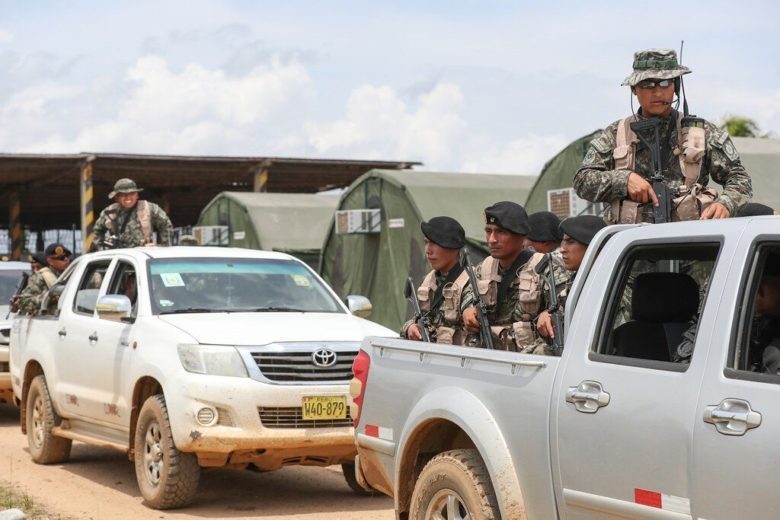
Troops heading to Operation Mercury (Photo: Ministerio de Defensa del Perú/Flickr [CC BY 2.0])
目次
Peru’s Madre de Dios Region
The Amazon rainforest is the world’s largest tropical ecosystem (about 6.7 million square kilometers). Peru’s Madre de Dios Region lies within the Amazon, is rich in nature with vast tropical forests and diverse ecosystems, and is home to around 170,000 people. The region also contains the Tambopata National Reserve, home to rare flora and fauna. There are also longstanding Indigenous communities who have maintained small farms and have fished and hunted in their forests for generations. The area was originally part of the Inca Empire, and they are descendants of its inhabitants. In the late 19th century, Spaniards seeking rubber and gold also settled in the area, and their descendants still live there today.
A serious problem has been growing in this otherwise rich natural environment: illegal gold mining. Large quantities of gold have long been produced in Madre de Dios. In the government-designated mining corridors, legal mining is conducted, and as of 2019 more than 100 mining rights had been granted. However, the region also has a large number of illegal prospectors who mine gold without permits and in areas where the government has not authorized mining. This illegal gold rush accelerated in the 2000s, driven by rising demand in emerging economies such as China and India and a global surge in demand following the 2008 financial crisis.
Former governor Luis Otsuka of Madre de Dios was himself a former prospector and not only allowed illegal mining to grow unchecked, but also hindered the work of forest conservation NGOs. As a result, the settlement of La Pampa, which had formed along the Interoceanic Highway—the main transport artery into Madre de Dios—expanded rapidly and became like a real town with more than 25,000 inhabitants, even though it had begun merely as a mining camp. For prospectors, even a small amount of gold could easily earn tens or hundreds of times their monthly wages. La Pampa became a den for illegal prospectors chasing that dream.
Environmental destruction caused by illegal mining
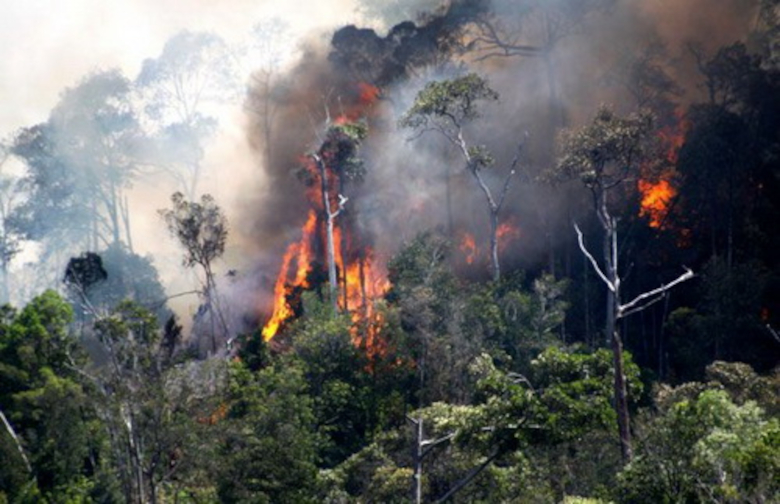
One of the major problems caused by illegal gold mining is environmental destruction. Depending on the method, mining can be highly destructive to forests. In open-pit mining, excavation proceeds directly downward from the surface. This involves large-scale digging and generates massive amounts of mine waste, yet the amount of gold recovered from vast quantities of earth is very small. To separate unwanted material from mined rock using sedimentation, miners clear forests, flood the area with water, and create ponds. Mining uses large amounts of energy and water, drastically affects local environments, and the accumulated mine waste can contaminate rivers and soils. In Madre de Dios, more than 1,000 square kilometers of forest—an area larger than Singapore—has been destroyed since 1985, and about 53.8 square kilometers of forest has been turned into ponds. The destruction has continued to increase: the amount of forest lost from 2017 to 2018 was enough to have absorbed the carbon emissions of about 250,000 cars, showing how severe the environmental impact has been. Naturally, when forests stand in the way of mining, they are first removed.
The biggest culprit, however, is the mercury used in mining. Mercury-based gold extraction starts by collecting rock believed to contain gold, crushing it, placing it in a vessel, and adding mercury. When mixed, any gold bonds with the mercury to form a silver-colored lump called amalgam, which, when heated, leaves the gold behind. This is a very inexpensive method that can be done with a gasoline-powered water pump and a homemade sluice, and about 1,400 tons of mercury are used in mining worldwide each year. Mercury easily vaporizes, travels around the world with the rain, and falls elsewhere. Its effects can persist for decades to centuries.
Mercury is also converted by microorganisms into methylmercury, which adversely affects the human nervous system. This mercury enters ponds created by mining and nearby rivers, harming local residents and others who drink contaminated water or eat contaminated fish by affecting their nervous systems and more. Tests in 97 communities in Madre de Dios found that over 40% of people had absorbed mercury at dangerous levels. Mercury poisoning can cause a range of harm, from chronic headaches to kidney damage, with permanent brain damage in children being the most serious. Where mercury is prevalent, crops can absorb it as they grow, making it impossible to use the land for new commercial cultivation.
Social problems caused by illegal mining
La Pampa, a town that developed essentially to enable illegal gold mining, became a breeding ground for crime. It was not established through formal procedures, and thus had neither police nor courts. A wide range of crimes flourished—organized crime, drug trafficking, human trafficking, and human rights abuses—and control by drug dealers and organized crime groups persisted. There were horrific crimes in which girls were lured with false promises of high wages or restaurant jobs, then charged for food and lodging that had initially been described as free; when they could not pay, they were threatened with attacks on their families and forced into prostitution.
Human rights abuses against Indigenous peoples were also severe. The natural environment that Indigenous peoples relied on for survival was destroyed, and their lands were invaded for mining. Tensions between Indigenous people and illegal miners escalated, leading to threats and even murders of Indigenous residents.
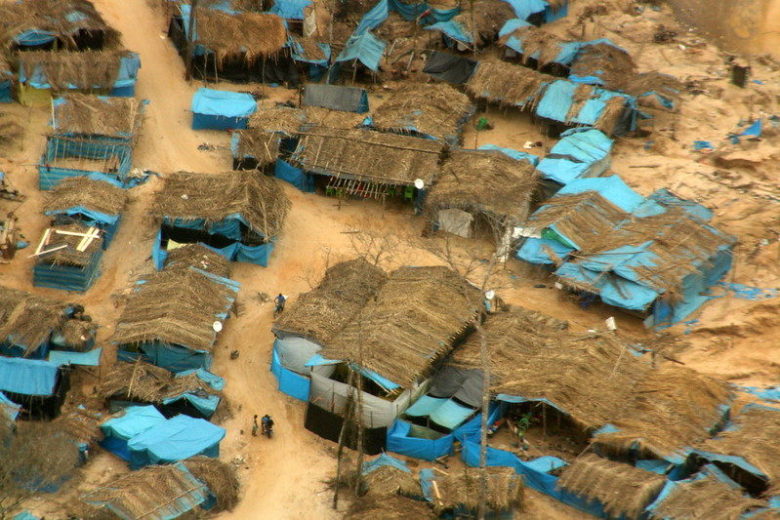
People gathering illegally (Photo: Ministerio del Ambiente/Flickr [CC BY 2.0])
Responses to these problems
After Operation Mercury, miners were expelled, allowing adequate environmental surveys to be conducted and response measures to begin. Much of this was thanks to Governor Luis Hidalgo Okimura, who took office in 2019, replacing the previous governor who had turned a blind eye to illegal mining. He sought to regulate and legalize mining more effectively by integrating it into the tax system to enable sustainable development.
To restore the environment, researchers aim to determine where and to what extent forests have been converted into mercury-contaminated ponds; identify what tree species have survived; and understand the ecosystems now formed by organisms that have adapted to the contamination. By doing so, they seek to identify plant species that can act as pioneers for other vegetation and discover processes for restoration, recovery, and regeneration.
From September to October 2019, researchers working to restore the damaged environment used drones to take very high-resolution images of the ponds and began to focus on the relationship between seasonal changes—rainy and dry seasons—and environmental conditions. They also conducted studies using a new approach to assess forest damage by combining images from nanosatellites (small satellites) in Earth orbit. This made it possible to obtain more detailed aerial imagery of the terrain and to record in detail new flora and fauna and changes in habitats.
In addition to such surveys, efforts have begun since the operation to restore the environment through activities such as improving the quality of degraded soils, enhancing plant cultivation techniques, and reforestation, and these are yielding results. Governor Hidalgo is working with researchers, universities, and NGOs engaged in these activities to build better relationships with miners and to carry out stricter environmental assessments.
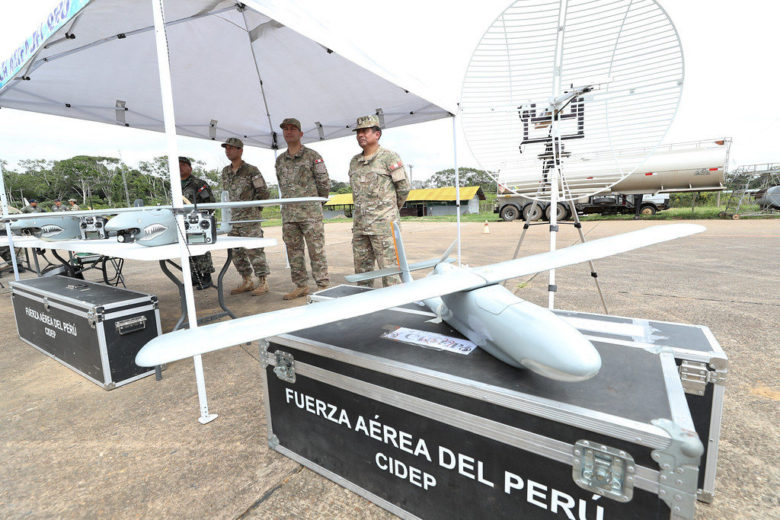
Drones used in Madre de Dios (Photo: Ministerio de Defensa del Perú/Flickr [CC BY 2.0])
Regarding the social issues, the large-scale Operation Mercury conducted by the military and police, as mentioned at the outset, was a major response. Before the operation, illegal miners had been offered legitimate work as miners in areas designated by the region—based on the idea of obtaining gold by digging deeper at existing legal mines rather than destroying the environment through illegal mining—provided they met three conditions: no mercury, no child labor, and no human trafficking. However, many rejected this proposal, seeking the higher profits they could gain by extracting as much gold as they wanted outside the designated areas. After Operation Mercury was carried out, La Pampa remained under military surveillance.
A new concern now is the risk that illegal miners will simply repeat the same activities elsewhere. This is called the balloon effect. Just as squeezing a balloon forces air to bulge out elsewhere, the illegal miners, drug traffickers, and organized criminals expelled from here may move to other regions, potentially turning them into new crime hotbeds. There is particular concern that they will flow into Puerto Maldonado, the regional capital of Madre de Dios with more than 85,000 residents and visiting tourists, and commit crimes. In practice, it is difficult to provide new jobs for everyone who lived in La Pampa. Therefore, to pursue sustainable post-operation mining alternatives, the Peruvian government has promised support of about 14 billion US dollars for agriculture, aquaculture, and the cultivation of coffee and cacao. Ecotourism has already attracted attention as a promising sector, and tens of thousands of tourists visit Peru’s jungle every year.
Even so, clearing out La Pampa does not mean one can let down one’s guard. In addition to the measures described above to tackle illegal mining, it is essential to address the underlying problem of poverty. In Peru today, while the economy is developing in areas closer to cities, elsewhere agriculture remains the mainstay of economic activity. Many people live near the Andes, which run north to south through the country, enduring harsh highland conditions while farming and raising livestock. People seeking work head to cities, but there is not enough employment for all, leading to the formation of slums on the urban periphery.
From such conditions, some people, even if illegally, turn to gold mining in search of better income. Unless Peru’s situation improves, illegal miners will continue to appear. In fact, thanks to positive economic indicators and sound fiscal policy, Peru has achieved significant results in tackling poverty over the past five years. Nevertheless, regional disparities persist.
Measures are also being taken to address Indigenous rights. In Peru, the government has historically prioritized forestry and mining, and obtaining land titles requires heavy bureaucratic procedures, time, and effort for Indigenous peoples. However, if land titles are granted to Indigenous communities that do not engage in or condone illegal mining, enforcement will become more effective and miners will find it harder to operate than when titles were not recognized. Traditional ways of life—living with nature and relying on it—tend to be less harmful to the environment, and this will help preserve forests that are crucial for carbon sequestration. It is therefore important to ensure that Indigenous peoples are promptly granted land titles to the lands where they live.
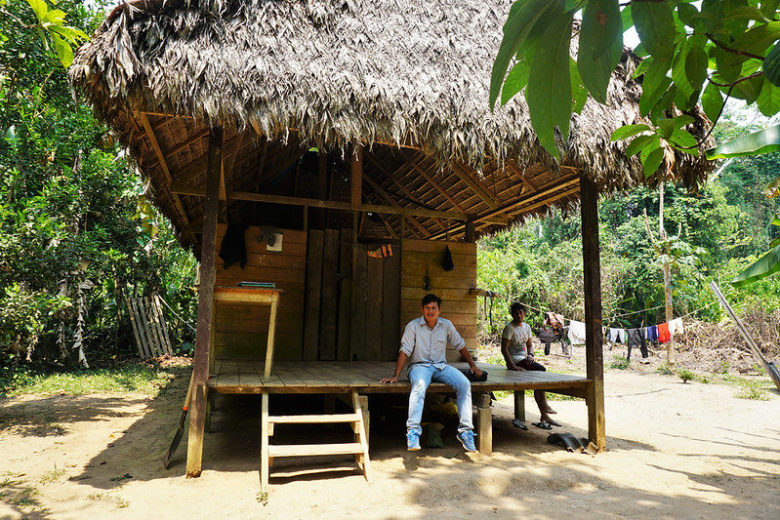
Indigenous people living in Madre de Dios (Photo: Yoly Gutierrez/Flickr [CC BY 2.0])
Illegal mining as a global problem
This problem of illegal gold mining also compels other countries that import gold—including gold mined illegally elsewhere—to respond. In 2019, Peru, the world’s seventh-largest gold producer, exported most of its gold to countries around the world, and illegal gold is among it.
Gold is used in many aspects of daily life. Beyond jewelry, it appears in gold leaf, dental gold, and bullion. Although gold is not the most conductive metal, its malleability and resistance to corrosion are crucial for product longevity and precision, so it is used for gold plating in electronic components and in IC chips that connect cameras and computers. A growing issue in recent years is gold used in smartphones. Each phone contains a very small amount of gold, but smartphones are now ubiquitous. For example, nearly 200 million iPhones were manufactured by Apple in 2019, meaning a vast amount of gold is used overall.
There is also a major problem with importing and using gold: many countries do not know the origin of the gold they import. Most companies cannot tell whether the gold was mined illegally or legally. For example, according to one study, in the United States only 23 out of more than 1,300 companies that import gold have a clear understanding of the resource’s origin. If the source is unknown, any product containing gold could potentially include illegally sourced material, and that gold may have been obtained through activities that harm people and the environment. While some companies are working to trace their supply, they have not been able to fully track it. In the meantime, some manufacturers that use gold are focusing on extracting gold from their own products for recycling, thereby reducing the volume of gold they need to import.

iPhones used by countless people (Photo: Lucy Takakura/Flickr [CC BY 2.0])
Gold is thus something people around the world use in their daily lives. At the same time, in gold-producing countries worldwide, illegal miners seek to extract gold to meet growing demand. Illegal mining similar to that in Peru is occurring in Romania, Russia, Canada, Ghana, China, Papua New Guinea, and the Democratic Republic of the Congo, bringing similar problems. At the Lihir gold mine in Papua New Guinea, for example, more than 5 million tons of mine waste were discharged in 2019. In the Democratic Republic of the Congo, gold mining is controlled by armed groups and fuels conflict. Whether legal or illegal, the environmental damage caused by gold mining is immense. To produce the gold for a single wedding ring, about 200 tons of earth may be sifted, and on average, producing such a gold ring results in about 20 tons of mine waste.
Although Operation Mercury has been carried out in Peru and an immediate obstacle has been removed, the risk of another town like La Pampa forming always remains, and it is no exaggeration to say that environmental and Indigenous issues are only now beginning to move toward resolution. For companies and people in countries without domestic gold, these problems may seem distant and hard to picture. Nevertheless, we should recognize that possessing gold in our daily lives may be playing a part in illegal gold mining.
Writer: Hikaru Kato
Graphics: Saki Takeuchi











タンボパタ国立公園の画像が衝撃的です。一年でそこまで森林が破壊されているなんて、想像もしていませんでした。
貧困で違法採掘をしていた人が貧困のままであればまた別の違法な方法で生計をたてていくかもしれないことを考えると、貧困の解消も同時に進めなければいけない問題だと思います。
before afterの河川の画像がわかりやすかったです。
バルーン効果、知らなかったです。
違法に取られた金と合法的に取られた金とでは質などに違いはあるんですか?
ここやね!
人間の欲望は限りないことがわかる・・・
ラパンパ公園地区
http://www.google.com/maps?daddr=-12.8940237,-69.9985335&z=17