
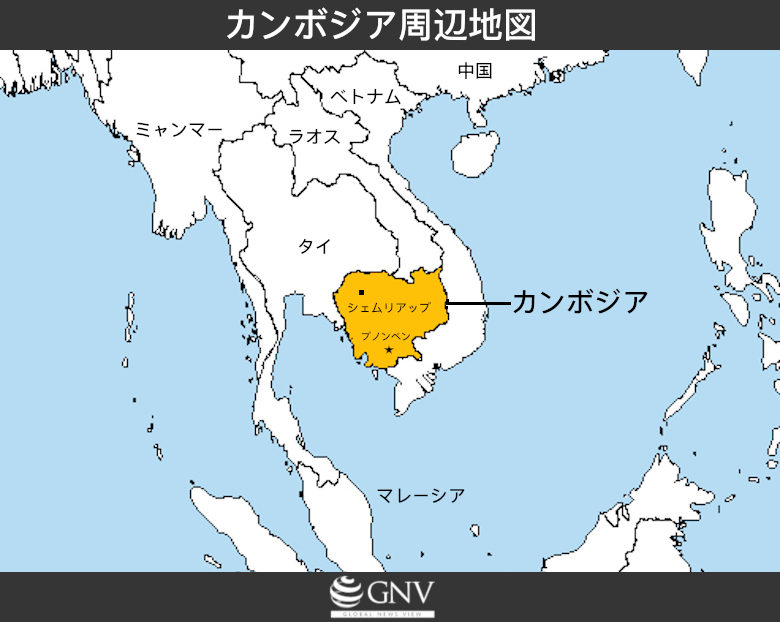
There are 230 licensed casinos in Southeast Asia, 150 of which are in Cambodia. Casinos are not only places for gambling but are also often used as venues for money laundering for illicit transactions. While Cambodia is famous for World Heritage sites such as Angkor Wat, it is also a hotbed of various illegal trades. In December 2019, citing the prevention of money laundering, the Cambodian government issued an online gambling ban. Does this online gambling ban signal the start of a strict crackdown on illegal trade and money laundering?
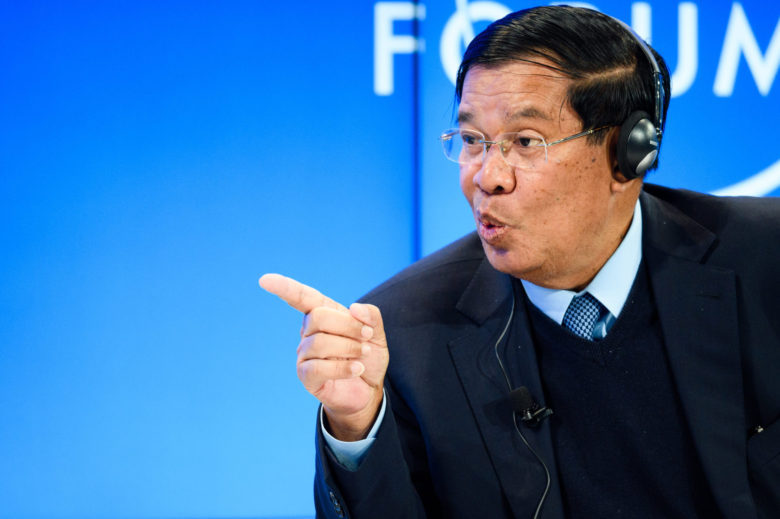
Prime Minister Hun Sen (Photo: World Economic Forum/Flickr [CC BY-NC-SA 2.0])
目次
Background
Although Cambodia gained independence from French colonial rule in 1954, political instability persisted. In 1975, when Khmer Rouge forces led by Pol Pot seized the capital, a devastating “revolution” took place, and 1.2 million people—including intellectuals and scholars as well as ordinary citizens—were killed or died from overwork, malnutrition, or disease. The Pol Pot regime was toppled with Vietnam’s intervention, but conflict continued until the early 1990s. In 1991, Cambodia became a United Nations protectorate, and in 1993 a fair Constituent Assembly election was held under UN supervision. However, in 1997, Hun Sen of the Cambodian People’s Party staged a coup and succeeded in establishing a de facto one-party dictatorship. Since then, the Cambodian People’s Party has consolidated its position as the ruling party, and Hun Sen has remained Cambodia’s prime minister.
Hun Sen is said to have centralized domestic power, and his oppressive governance—including the use of the military and police against opposing politicians—has been documented. The bureaucracy is regarded as non-transparent with nepotism, and corruption is widespread in public procurement, tax administration, and customs management, with frequent bribery also posing problems.
Amid such persistent corruption, illegal trade is prone to occur. Cambodia is rife with various illicit trades such as methamphetamine smuggling, but this article focuses on those surrounding Cambodia that generate particularly large profits: timber trade, wildlife-related trade, tobacco smuggling, and human trafficking.
Illegal timber trade
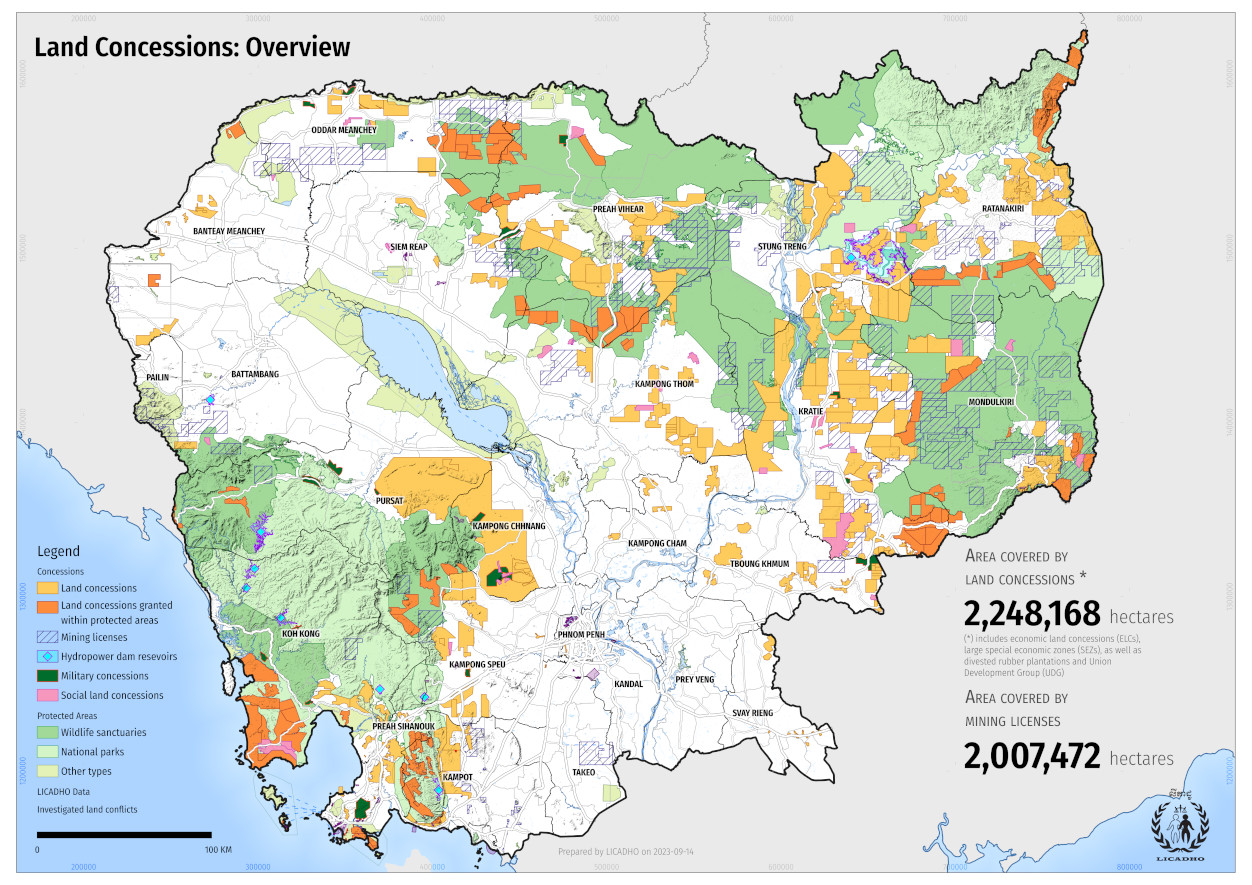
One of Cambodia’s major illegal trade issues is the illegal timber trade, an illicit industry generating profits of several million US dollars annually. It is also said that due to illegal logging, Cambodia’s forest area decreases by 14.4% every year. The Cambodian government grants companies Economic Land Concessions (ELCs) and permits logging only on land with ELCs. Those advancing such logging are not only Cambodian companies; firms from Vietnam, China, Malaysia, Thailand, South Korea, Singapore, and others have also entered.
However, environmental groups claim that some companies conduct logging outside land with ELCs. Moreover, because the government also grants ELCs within protected areas, logging in protected areas is occurring one after another. Continued logging adversely affects the environment and residents, leading to the decline of wildlife such as elephants and tigers, and threatening the livelihoods of nearby residents who make a living from extracting resin from forest trees. It is said that many of those who can obtain ELCs are businessmen who are family members of, or have personal ties to, Prime Minister Hun Sen, and the government does not actively crack down on illegal logging by these companies. Furthermore, companies engaged in illegal logging are said to protect the illegal timber trade industry by paying large bribes to members of the Cambodian People’s Party and provincial governors.
Demand for illegal timber has increased in response to the high prices of antique-style furniture made from high-end woods in China and Vietnam. There has even been a report of a luxury bed made from rosewood, an endangered species, selling for $1 million. In addition, once forests are cleared, the land can be used to grow cash crops such as rubber plantations, resulting in substantial profits for companies.
For example, Oknha Try Pheap, head of the Try Pheap Group, Oknha Try Pheap, conducts logging in various forest and protected areas across Cambodia. He also served as an assistant to Prime Minister Hun Sen from 2010 to 2012, and frequently counts national and provincial military personnel among his collaborators, including the prime minister’s bodyguards. Through such personal ties to the prime minister, the Try Pheap Group can receive support from the government and the military, making the illegal timber trade a systemic problem involving the government.
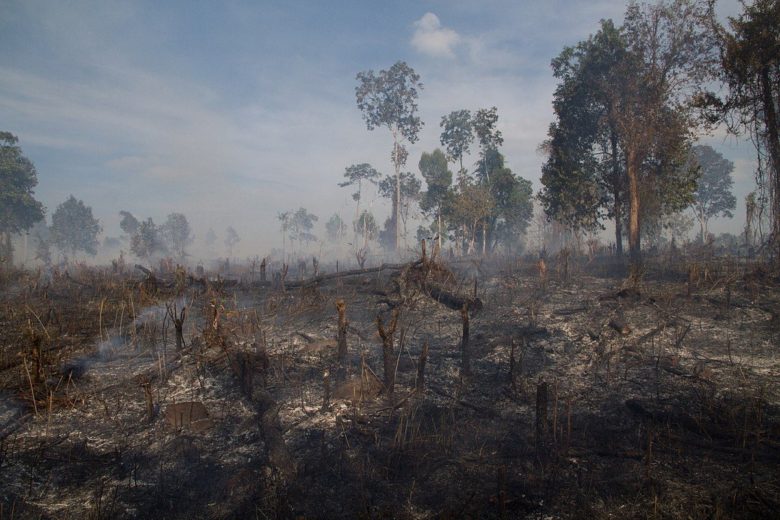
Remains of illegal logging in Mondulkiri Province (Photo: Christian Pirkl/Wikimedia [CC BY-SA 4.0])
Illegal wildlife-related trade
Illegal trade in wildlife and ivory also takes place in Cambodia. This sector generates hundreds of millions of US dollars in profit, and Cambodia serves as a hub where its own wildlife is traded and ivory and rhino horn smuggled from Africa are aggregated. Wildlife are mainly traded from Cambodia to other countries, with a variety of species involved: hedgehogs, monkeys, pangolins, and civets are kept as pets, while others are traded as meat or used in Chinese and traditional medicines. These wild animals are consumed within Cambodia or exported to neighboring Thailand, Laos, China, and Vietnam. Furthermore, as domestic demand for these wild animals has grown in Cambodia, there are also cases of importing them from Thailand and Laos.
In addition, ivory and rhino horn flowing in from Africa are used for furniture and accessories, and rhino horn is sometimes used in traditional medicine. In this international illegal trade, Cambodia and Vietnam are regarded as important transit points from Egypt, Sudan, South Africa, and others to Asian countries such as China. According to Cambodia’s Customs Department, more than 5 tons of ivory were seized in Cambodia between 2016 and 2018. Behind the persistence of illegal trade in wildlife and ivory is the immense profit: 1kilogram of ivory can be traded for 2,000US dollars or more.
Since 2019, the Cambodian government has begun crackdowns targeting ivory and wildlife, and announced that ivory and rhino horn sold in shops in tourist areas would be confiscated by the Ministry of Environment . However, according to environmental groups, although laws exist in Cambodia, politicians sometimes violate them, and as a result law enforcement is not very effective.
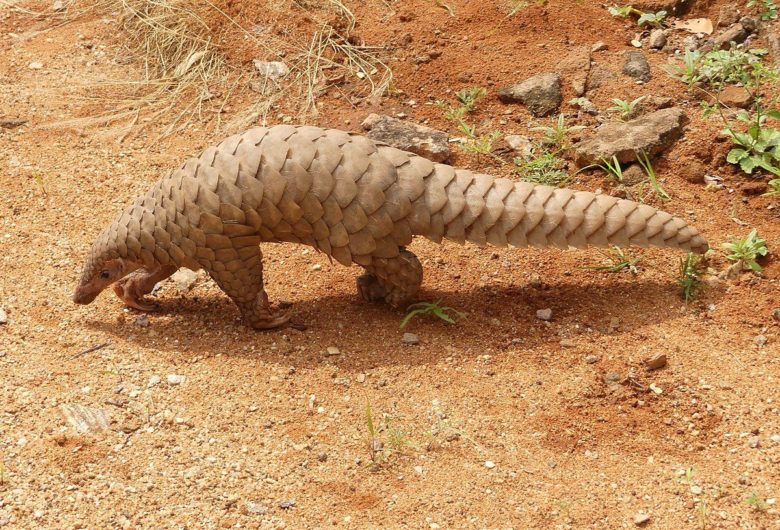
Pangolin. Eaten as food, and its scales are used as ingredients in traditional medicine. (Photo: B kimmel/Wikimedia [CC BY-SA 4.0])
Cigarettes traded on the black market
Cambodia is said to be the fourth cheapest country in the world to buy cigarettes. As a result, the number of smokers in Cambodia is on the rise, and illicit buying and selling of cigarettes on the black market is not uncommon. It is estimated that due to illegal tobacco trade, the government fails to collect more than US$3 million in taxes annually.
Illegal cigarette trading is carried out mainly in two ways. The first is the production of counterfeit cigarettes—imitations of branded products. In 2018, 35 tons of counterfeit cigarettes were seized in Kandal Province, and it was found they were manufactured in Kampong Samna village in Kandal. In the same year, a counterfeit cigarette factory in the capital Phnom Penh was busted by the government and its production halted. While counterfeit cigarettes are consumed in large quantities domestically, they are primarily for export. They are often smuggled to Southeast Asian countries such as Thailand, and sometimes to Europe as well. According to a 2019 EU customs report, about half of the counterfeit cigarettes smuggled into the EU come from Cambodia.
The other illegal cigarette trade is the smuggling of “genuine” branded cigarettes, which is an even more serious problem than counterfeits. Many major tobacco manufacturers in the US and Europe and in Japan are said to be involved in such smuggling in many countries around the world. The background to their involvement is the desire to avoid tariffs. By smuggling rather than selling through legal channels, tobacco companies can avoid high duties and earn greater profits. It is known that 60–70% of smuggled cigarettes worldwide are tobacco companies smuggling their own products.
It can be inferred that large amounts of cigarettes are being smuggled in Cambodia as well. According to a 2011 WHO (World Health Organization) study, about 67% of the demand for cigarettes in Cambodia is neither consumed locally nor officially exported. This “unexplained surplus” is thought to be cigarettes being smuggled from Cambodia to other countries. This calculation arises because cigarettes are officially imported into Cambodia, where there are few tobacco regulations, and are then smuggled into other countries. Major tobacco companies are also said to put pressure on the Cambodian government, penetrate markets they cannot legally enter, and even facilitate the smuggling of cigarettes from Cambodia to Thailand and Vietnam.
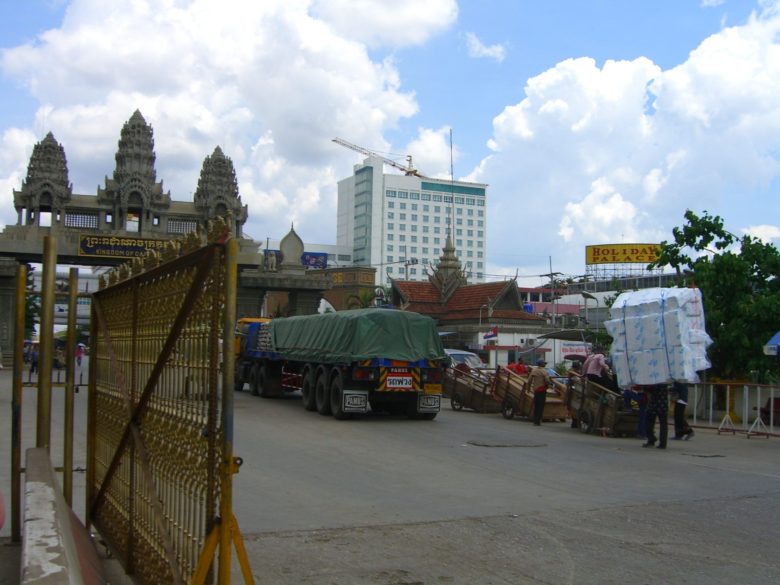
The Thailand–Cambodia border (Photo: eric molina/Flickr [CC BY 2.0])
Human trafficking
Cambodia is considered a source, destination, and transit point for human trafficking. The methods by which trafficking is carried out are diverse, and the actors involved range widely from small businesses to organized crime groups with multiple networks. There are operations targeting local customers as well as those that send trafficking victims overseas.
Sex trafficking is particularly problematic. There are two main reasons for its prevalence. First, due to the limited capacity of law enforcement agencies in Cambodia, traffickers are hard to catch. As a result, Cambodia is known as a hub of sex trafficking. Victims include not only Cambodian women but also Vietnamese women, women from Eastern Europe, and even children. As a transit point, many cases involve victims from Vietnam passing through Cambodia before being taken to Thailand or Malaysia. Moreover, weakness in enforcement agencies has allowed so-called “sex tourism” to flourish. Tourists from China, Japan, Thailand, Australia, and the West often visit Cambodia for sexual services.
The second reason sex trafficking persists is the high poverty rate. Cambodia has a higher poverty rate than neighboring Thailand and Vietnam, and many people go abroad as migrant workers to make a living. Through brokers such as staffing agencies, when they go to Thailand, Vietnam, Malaysia, China, and Saudi Arabia, there are many cases in which they are deceived and end up as sex slaves.
Beyond sex trafficking, in what is called labor trafficking, able-bodied people are forced to work as construction workers or domestic helpers, while the elderly and people with disabilities are made to engage in organized begging. In the fisheries sector, there is also the “sea slavery problem,” in which workers are held in bondage. As with sex trafficking, workers are told by staffing agencies that there are “good jobs” and go to Thailand or Malaysia, but they are often forced to work under inhumane conditions.
The government appears to be trying to address the problem—establishing an anti-sex trafficking committee and holding awareness-raising events and seminars. However, amid severe corruption within the Cambodian government, effective measures are seldom adopted. Some government officials are said to be clients of sex trafficking. Deep ties between the police and politicians or the military, as well as intimidation, sometimes make it impossible for police on the ground to conduct fair investigations.
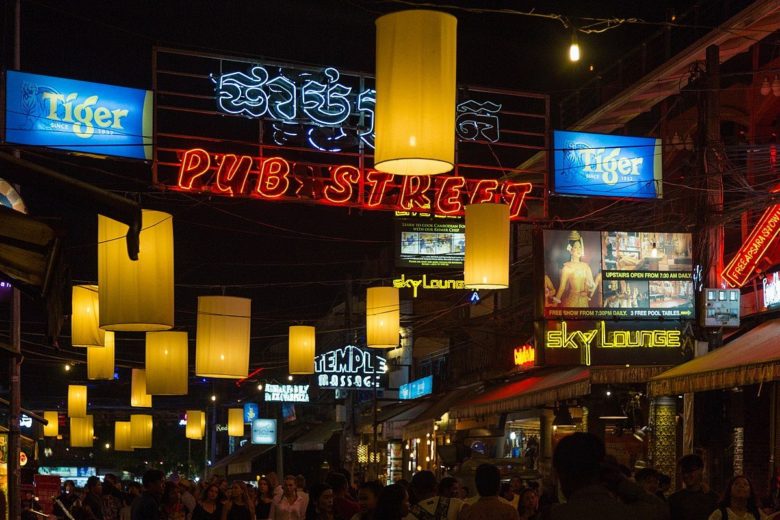
Nightlife area in Siem Reap Province (Photo: Marcin Konsek/Wikimedia [CC BY-SA 4.0])
As we have seen, Cambodia is not only a hotbed of various illegal trades, but each of these problems has deep-rooted causes. Because people at the top of the government and the state are involved in or benefit from these illegal trades, proactive efforts toward solutions have yet to be made. Since Cambodia’s severe poverty underlies these illegal trades, there is an urgent need not only to crack down on illegal trade, but also to address issues such as poverty, inequality, and corruption.
Writer: Namie Wilson
Graphics: Yow Shuning









カンボジアは去年の夏に行きましたが、このような問題が根強く残っているとは知りませんでした。特に動物の密輸や森林破壊は個人的にアフリカのイメージが強かったので、近いアジアでも起こっていることが衝撃でした。こうした色んな問題、日本も関係ないとは言えないですね。
読みやすかったです!
カンボジア、全然知らなかったので、まず、知識として知ったことが多かった。タバコや人身売買もグローバル化の恩恵をうけて波及していることがあり、この記事をきっかけに日本にいながらでも、生活を構成する一場面から、世界のどこかの問題を、深められると知った。今まで以上に、Made in 〇〇に注目したいと思いました。
違法取引の温床となっている原因の根深さは、正に政府国家の上層部が関係している事。悪の連鎖も貧困の連鎖も、断ち切る方法やチャンスを探さねば。それを探し実行に移すのは容易ではないが、貧困に喘ぐ者がさらに苦しむ状況は作ってはならない。
カンボジアにおいてこれほど違法取引があることに驚きました。政府や国家の上層部の人々がこれらの違法取引に関係する以上、恩恵を受けるので、政府に解決策を求めるのは無駄ですね。政府が率いた汚職はほかの国でも見られます。政府は国民のために働くはずですが、権力の濫用で政府本来の存在意義がなくなるのは残念なことです。
様々な問題の中でも人身売買は非常に衝撃的でした。身近な国で人身売買、なかでも性的人身売買が行われているとは思いもしませんでした。
日本などの先進国からの観光客が性的人身売買を利用していることは非常に問題だと思います。人身売買を止める取り組み、規制も必要ですが、人身売買を利用する側を規制することも重要だと痛感しました。
いつの時代でも多くの人たちの飽くなき欲望。そして犠牲になるのは貧しい人、立場の弱い子供、女性たちです。アジア圏をはじめ
世界各国で同じ様な問題がたくさん有りますが、どうすれば少しでも無くしていけるのでしょうね。これからの若い世代に希望を託します。
記事では難しい問題をわかりやすく説明してくれていて読みやすかったです。ありがとうございます。
こんなにも色々な違法取引が横行してるなんて…政府の規制以外に市民社会組織や国際機関などはどのような動きをしてるんでしょうか?ローズウッドや象牙なんかは国際的に取引が規制されてる中で、政府は関係機関とどんな連携をしてるのかが気になりました!
カンボジアの貧困によって違法取引が無くならず、またこの違法取引によって搾取され貧しくなっていく、、という負のスパイラルが見えました。非常に残念です。
特に、先進国の人々や政府関係者が人身売買による性的サービスを利用することは深刻な問題だと感じます。