
As the number of wealthy people grows worldwide and health-conscious diets are promoted, the catching, production, and consumption of seafood have all continued to increase year by year. For example, in China, eating high-end fish has become a kind of status symbol, and there are campaigns encouraging people to obtain low-fat protein from wild seafood. In this context, global per-capita seafood consumption, which was 9.0 kg in 1961, had risen to 20.2 kg by 2015. This is roughly twice the rate of population growth, indicating that demand for seafood is certainly increasing. Furthermore, an estimated 10–12% of the world’s population makes a living in jobs related to fishing and aquaculture, so from the perspective of livelihoods and employment, fisheries play a very large role.
However, at present there are numerous problems worldwide, such as overfishing and the destruction of the marine environment, and some have warned that if things continue as they are, seafood catches will plummet by 2048 and the global fishing industry could collapse. What on earth is happening in the world’s oceans? And is the media properly conveying the current state of fisheries as they head toward such a crisis? After introducing the issues, I will analyze them based on Japanese media data.
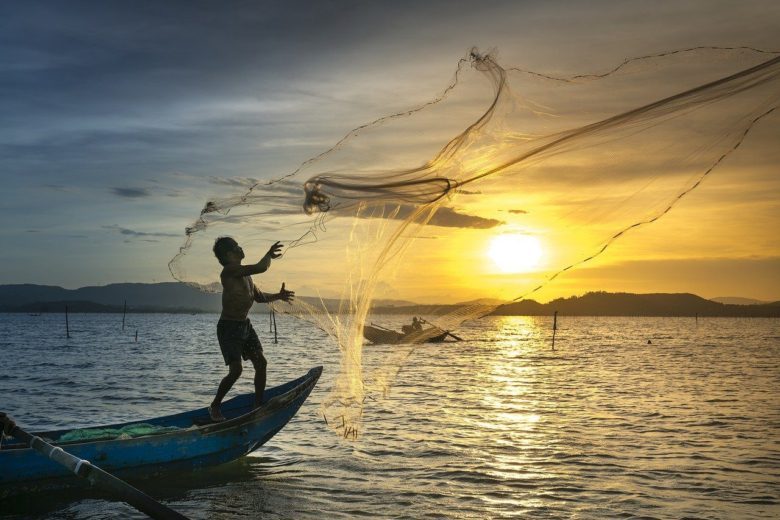
Fisherman catching fish with a cast net (Photo: Quangpraha/Pixabay [CC0])
目次
Overfished and overconsumed seafood
How overfished is seafood today? According to the 2018 State of World Fisheries and Aquaculture, about 33% of global marine fishery resources are overfished, and about 60% are at a level where there is no room to harvest more. In the past, natural reproductive capacity could compensate and keep populations stable, but today seafood is being caught at volumes that exceed natural recovery levels. In 2016, approximately 90.91 million tons of catch were recorded (excluding aquaculture), about 2.7 times the volume in 1960. Although fishery production continues to increase rapidly year after year, 80% of total catches are accounted for by just 23 countries, and in 2017 the largest shares of catch were China, followed by Indonesia and India.
As such large-scale overfishing expands year by year, various problems are already occurring in the oceans. The first issue is the destruction of ecosystem balance due to the decline of carnivorous marine species.
It is said that in just the past 55 years, we humans have wiped out 90% of the large, top-predator fish species in marine ecosystems, such as sharks, bluefin tuna, and marlins. The drastic decline of these large carnivorous fish has led to increases in smaller marine organisms that feed on plankton, and in this century problems such as massive jellyfish blooms have been noted.
One factor that accelerates such overfishing is, above all, overconsumption. For example, Japan is said to account for about 80% of global bluefin tuna consumption. To meet such excessive demand from various countries, advances in science and technology have been pushed forward, profoundly affecting the fishing industry. For example, more fishing vessels are now equipped with fish finders comparable in performance to those used by the military, and some large vessels also have facilities that allow processing and preservation to be carried out simultaneously with catching. Repeatedly improved engines have also reached high levels of performance and horsepower, making it possible to scoop up everything at once using bottom trawling with larger nets. Because this method uses huge nets, the catch volume cannot be controlled, and it also captures juveniles that are not fully grown, which can be said to be a major factor further promoting overfishing.
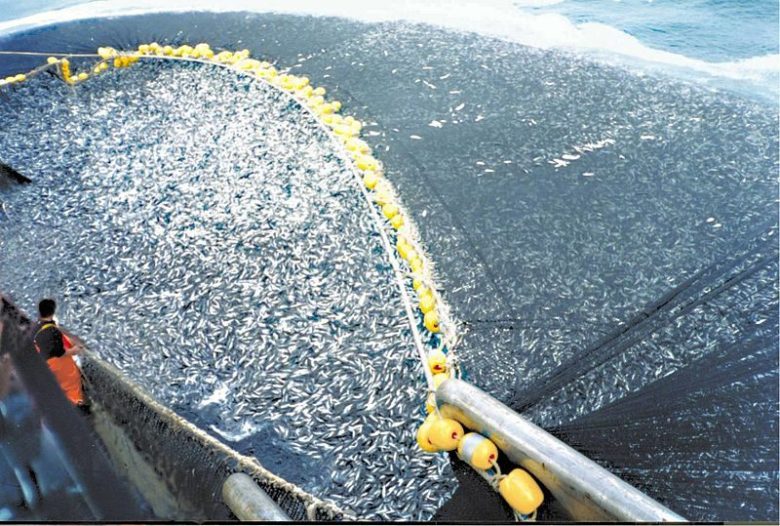
Fish overharvested by bottom trawling (Photo: Asc1733/Wikimedia Commons [CC BY-SA 4.0] )
In addition, government subsidies to the fishing industry are also thought to be one factor accelerating overfishing. According to Oceana, a nonprofit organization working on marine protection around the world, the total amount of subsidies used in fisheries is estimated at US$1.6 billion per year, which is equivalent to about 25% of the global value of fishery production.
In response to the harms of excessive capture of wild marine organisms, aquaculture might be cited as an effective solution. However, there are also many problems here that cannot be overlooked. For example, there are issues such as pollution of the marine environment by waste from farmed fish, and the creation of conditions prone to disease outbreaks when large numbers of fish and shellfish are raised in narrow pens. Moreover, aquaculture requires huge amounts of feed in the process, and if the industry continues to expand, fish used as feed will be overfished and drastically reduced, making it difficult to see aquaculture as a sustainable alternative in the end.
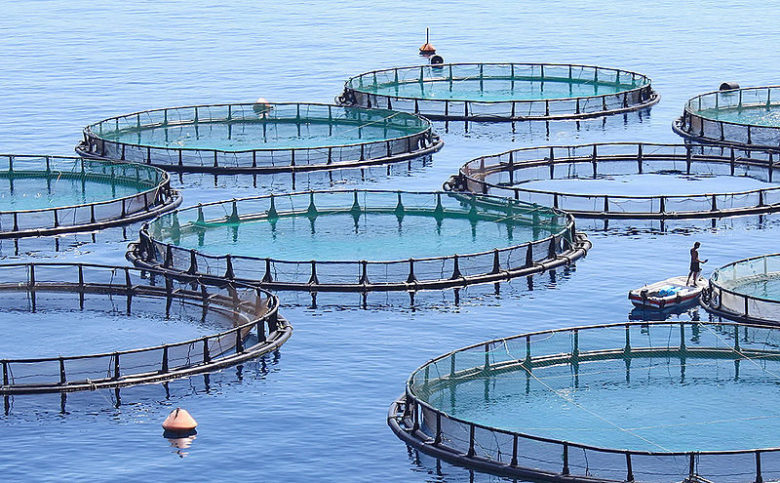
Aquaculture in pens (Photo: Asc1733/Wikipedia [CC BY-SA 4.0] )
The marine environment being destroyed
It is not only overfishing that is destroying the marine environment. Many marine organisms are suffering from disruptions to the marine environment caused by climate change and water pollution. Much of the carbon dioxide increased by human activity is absorbed into seawater, and with rising concentrations of carbon dioxide, a phenomenon of ocean acidification occurs. Because this scientifically changes the very quality of seawater, the damage to marine life is also very great. For example, there is the danger that oxygen can no longer be dissolved in seawater, causing organisms to fall into respiratory distress. In addition, problems arise such as the calcium components of crustaceans’ shells and mollusks’ shells being acidified, making it difficult for them to form sturdy shells.
Ocean warming
Seawater absorbs heat as well as carbon dioxide. Since 1955, more than 90% of the heat generated by the greenhouse effect caused by carbon dioxide emissions has been absorbed by the oceans. According to studies, over the past 100 years the temperature of the upper ocean has increased by an average of 0.13°C per decade, and such increases in ocean temperature have widespread negative impacts on a variety of marine organisms. For example, phytoplankton, which serve as food for many marine organisms, may not withstand rising ocean temperatures and die off or shift their habitats to cooler waters, potentially collapsing the food chain from the bottom up. But that is not the only problem. Rising ocean temperatures also have adverse effects on the ocean’s natural mixing. Originally, surface seawater is relatively dense and heavy, so as it sinks it naturally mixes with deeper waters, helping deliver oxygen near the surface to the deep sea and, conversely, bringing nutrients from the seafloor to the surface. However, as ocean temperatures rise this mechanism is disrupted, creating a dangerous situation that threatens the lives of many organisms. Furthermore, it is said that many marine organisms have been forced to change their habitats due to warming, and there are concerns about the risk of significant disruption to ecosystem balance as species move.
The harm caused by plastic waste
So far we have looked at the harms of rising carbon dioxide concentrations and the associated impacts of climate change, but there is also the problem of plastic waste caused by humans. An alarming report warned the world that by 2050 the weight of plastic waste in the ocean will exceed the weight of all marine fish. Globally, it is said that 8 million tons of plastic flow into the oceans each year—almost the same as a garbage truck dumping into the sea every minute. If no countermeasures are taken and the current situation continues, it is estimated that by 2030 it will be the equivalent of two trucks per minute, and by 2050 three trucks per minute.
As the weight of plastic flowing into the oceans increases in this way, the problem of microplastics is also immense. Marine organisms absorb and accumulate synthetic chemical microfibers and bits of rubber that pass through garbage filtration systems and are discharged into the sea. Most of this debris remains in the stomach, but extremely fine nano-level particles may even become part of the muscle tissue. In other words, these microplastics can very well be ingested by the humans who consume those organisms. In fact, there are startling research findings suggesting that people who like to eat shellfish may ingest as many as 11,000 pieces of plastic per year.
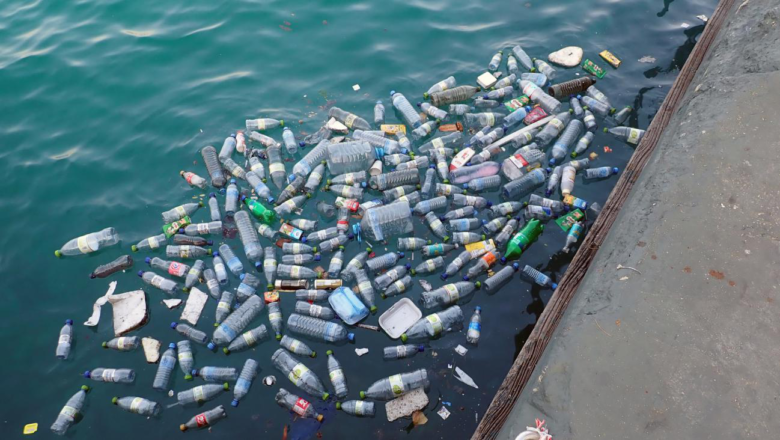
Plastic waste polluting the marine environment (Photo: MonicaVolpin/Pixabay [CC0])
Has the media recognized the severity of the situation?
Up to this point, we have looked at the current reality in which many marine organisms are being put at risk by human activities. From here, I will analyze whether the media has been able to convey this crisis, based on the Yomiuri Shimbun’s reporting over the past three years. The data collected this time were limited to international reports in the Yomiuri Shimbun from 2017 to 2019 that contained the keyword fishing or fish; there were 158 relevant articles. Of these 158, 74 articles dealt with marine environmental issues such as overfishing, water pollution, environmental destruction, plastic problems, and climate change—about 47% of the total—indicating that articles related to the marine environment account for about half of the reporting volume. Most of the remaining 53% of articles were about incursions into Japanese waters by Chinese or North Korean fishing boats, or the effects of North Korean missiles on fishing. In other words, about half of the articles focused only on Japan’s economic and territorial interests.

Loading…
Now, let’s analyze the articles on marine environmental issues in more detail by category. Of the 158 total articles, 56.5 were about overfishing of marine life (※1), accounting for 36% of the total. In other words, this represents 76% of the above marine-environment articles, indicating a very high volume of reporting. However, looking at the content, 46.5 articles concerned catch quotas for Pacific saury and tuna, meaning about 82% of overfishing articles were about just two species. The main content of these pieces concerned issues around catch quotas for saury and bluefin tuna, with many articles skewed toward emphasizing the aspect of Japan’s economic interests.
As mentioned earlier, Japan accounts for 80% of the world’s bluefin tuna consumption, and many articles reported that Japan had proposed increasing its catch quota but failed to win support from other countries at international conferences, conveying Japan’s desire to gain the understanding of the relevant countries. For example, there were articles such as “Bluefin tuna: Proposal to increase catch quota by 15% faces difficulties as international conference opens—Japan to ‘negotiate tenaciously’ (September 5, 2018).” Regarding Pacific saury, the focus was mainly on Japan’s response toward reducing catch quotas due to concerns about overfishing by China and Taiwan, with a tendency to emphasize the narrative that Japan’s interests are being exploited by other countries. In this way, topics closely related to Japan’s economic issues and interests are more likely to be reported. Moreover, the problems related to aquaculture highlighted in this article were not reported at all over the three years (※2). It is hard to say that simply because there are many articles about overfishing, the media has been conveying the actual state and dangers of overfishing occurring around the world.
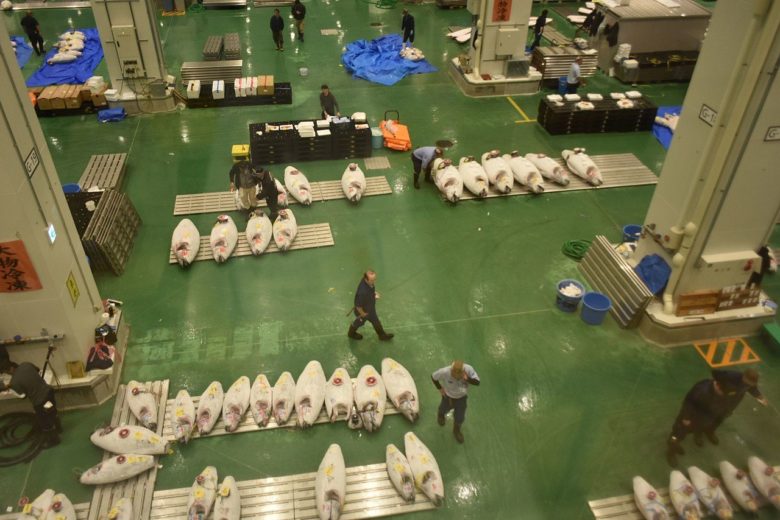
Tuna sold wholesale at Toyosu Market (Photo: Tokuzo aka Edomura no/Tokuzo/Wikipedia [CC BY-SA 4.0] )
Next, what about articles on water pollution and environmental destruction? Here too, the reporting volume was extremely small at just seven articles, far from sufficient to convey the global reality. And despite the fact that climate change is causing immense damage to the marine environment as described above, there were only 1.5 articles on the topic, suggesting that reporting has failed to capture the reality.
Lastly, let’s look at articles on the plastic problem. There were nine articles on plastics over the three years, only about 6% of the total. The number of articles was very small compared to other categories, and there were almost no pieces written from the perspective of the threat posed to marine life. Instead, articles like “Limits to pressure from developed countries: ‘De-plastic’—Southeast Asia’s decision (May 31, 2019)” framed the issue only in terms of the blame game between countries and which countries would bear disadvantages. It appears that the global negative impacts of plastic waste on the marine environment are not being conveyed comprehensively.
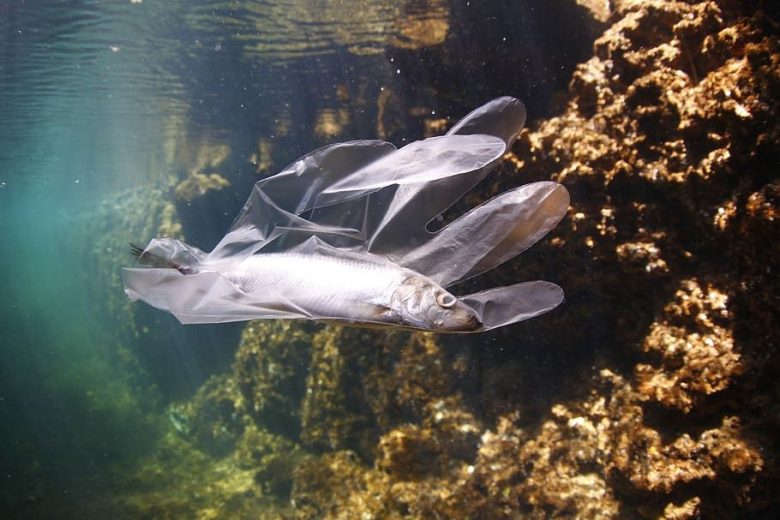
Animals killed by marine plastics (Photo: Hemantraval/Pxfuel [CC0 1.0] )
From the above, with regard to fish and fisheries worldwide, we can see that there is some media response to topics related to Japan’s economic issues and other matters that affect Japan. However, it is hard to deny that Japan is averting its eyes from its responsibility as a “perpetrator”—as a country that consumes large quantities of fish and as a major power contributing to climate change—regarding the extent of harm inflicted on the marine environment. As a result of countries around the world prioritizing their own interests, we must recognize what has happened to the marine environment and take measures; otherwise, it will only continue on a course toward collapse. And it is the role of the media to sound the alarm about this crisis. The collapse of fisheries is almost upon us, and now is the time for people around the world to recognize it. If we wait to respond until the marine environment has completely collapsed, it will be too late to undo the damage. In an ocean that is all connected, it is difficult to grasp the problem comprehensively or move toward solutions if we look only from our own national standpoint. The media must convey the serious state of the seas as it is, and consumers, producers, fishers, and policymakers alike must approach the problem with a sense of ownership and address it from a more global perspective.
※1 To count each article equally, when one article covered two categories, it was counted as 0.5 article for each. For example, if a single article reported both overfishing and environmental destruction, it was counted as 0.5 article for overfishing and 0.5 article for environmental destruction.
※2 Many related articles on aquaculture exist if domestic reporting is included, but when limited to international reporting and only articles containing the keyword fishing or fish, there were none.
Writer: Akane Kusaba
Graphics: Yumi Ariyoshi














海洋環境に被害を与えている加害者としての視点をメディアが報じることで、日本の漁業の現状に警鐘を鳴らす本来の役割のうちの1つを果たすと考える。
現在の日本のメディアは本来果たすべき機能が機能していないことを痛感させられた。
メディアが報じなければ国民は知らないままだ。メディアが変わらなければ、現状は悪化していくだけで、国民や政府の意識は変わらないままだろうと感じた。
2050年に海のプラスチックのゴミの量の重さが魚の量を上回るというのは衝撃でした