
As 2019 draws to a close, it is time for media outlets to look back at the news that defined the year. At GNV, we have also been releasing, since 2018, the annual ranking “10 Hidden Global Stories,” in which the top spot for 2018 went to the reforms in Ethiopia. Looking back at international coverage in Japan in 2019, issues that stood out included the United Kingdom’s exit from the European Union (Brexit), the fire at Notre-Dame Cathedral in France, and the large-scale protests in Hong Kong. However, GNV believes that many major global events did not receive coverage commensurate with their scale. Therefore, as in 2018, we have selected ten important but underreported stories and compiled them into a ranking.
The criteria and method for ranking are the same as in 2018. Please see Note (※1) for detailed criteria and (※2) for how we measured coverage. Let’s start from No. 1.
No. 1 World: “Climate Apartheid”
The impacts of climate change extend beyond the natural environment to human society, and in 2019 the deepening of poverty caused by climate change became particularly clear. The term “climate apartheid,” referenced in a United Nations report on June 25, 2019, symbolizes this. It describes a social phenomenon in which advancing climate change further widens the gap between rich and poor, increasingly threatens the lives of the poor, and creates a form of separation (apartheid) between the wealthy and the poor. The “wealthy,” including developed countries, can in many cases cope with problems that arise as climate change advances. Meanwhile, living standards for the poor—who make up the global majority—steadily deteriorate. Ironically, while the responsibility of high-income countries that caused climate change remains unresolved, the burden is shifted onto low-income countries. Many low-income regions are situated in areas particularly vulnerable to climate change; extreme climate shifts destabilize food supplies and make settlement more difficult, producing large numbers of “climate refugees.” The aforementioned report also states that climate change will push about 120 million people into poverty by 2030. A concrete example is the way global warming and rising temperatures are making many workplaces “deadly.” Prolonged exposure to high temperatures increases workers’ risk of a range of illnesses, beginning with kidney disease, and has already caused many deaths. If temperatures continue to rise, by the end of the 21st century around 80 million people could lose their jobs, and the economic blow could amount to about 2.4 billion US dollars.
Coverage volume
Asahi Shimbun: 0 articles/0 characters
Mainichi Shimbun: 1 article/1,154 characters
Yomiuri Shimbun: 1 article/1,338 characters
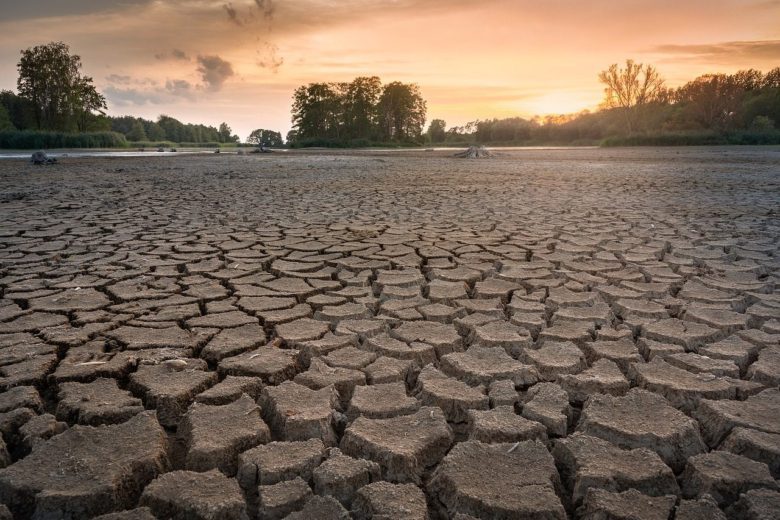
Land cracked by drought (Photo: Seaq68/Pixabay [CC0])
No. 2 Indian Ocean/United Kingdom: Criticized for refusing to return the Chagos Archipelago
The Chagos Archipelago, located in the middle of the Indian Ocean, has been under British control since 1814. Formerly administered as part of British Mauritius, the Chagos Islands were separated in 1965, Mauritius gained independence in 1968, and the Chagos Islands were made part of the British Indian Ocean Territory. The inhabitants were expelled, a U.S. military base was built, and the islands were used as a base for bombing Iraq and Afghanistan. Mauritius, however, claims sovereignty over the Chagos Islands, and in February 2019 the International Court of Justice (ICJ) issued an advisory opinion finding the UK’s continued administration of the Chagos Islands to be unlawful and recommending that the UK return the islands to Mauritius as soon as possible. When the UK failed to comply, it faced criticism from a large majority of countries in a humiliating rebuke at the UN General Assembly in May. The resolution requested that the UK return the Chagos Islands within six months—by November 22, 2019—yet the UK again did not comply and faced further condemnation from the African Union.
Coverage volume
Asahi Shimbun: 1 article/627 characters
Mainichi Shimbun: 1 article/1,017 characters
Yomiuri Shimbun: 0 articles/0 characters

A U.S. Air Force bomber flying near the Chagos Islands (Photo: Sarah E. Shaw/Wikimedia Commons [CC0])
No. 3 East Africa: Large-scale flooding
Since October 2019, East Africa has suffered devastating damage from heavy rains and floods. The heaviest impacts have been in Kenya, Somalia, Sudan, Ethiopia, and Uganda, with 280 deaths reported as of late November. However, the heavy rains affected 2.8 million people; hundreds of thousands were displaced, farmlands were rendered unusable, and 50 million people faced food shortages. Deteriorating sanitation has also led to outbreaks of cholera and dengue, and secondary disasters are expected. This exposes East Africa’s vulnerability to climate change and can be seen as an example of climate apartheid. The flooding was caused by the Indian Ocean Dipole (IOD), a phenomenon similar to El Niño. When sea surface temperatures on the western Indian Ocean—bordering Africa—rise, rainfall increases in surrounding areas; conversely, temperatures fall in the east, making Indonesia and Australia drier. Because this phenomenon was particularly strong in 2019, East Africa saw three times its normal rainfall, while Indonesia and Australia experienced severe fires. As these impacts extend beyond East Africa, the IOD is identified as a climate phenomenon with global reach.
Coverage volume
Asahi Shimbun: 1 article/218 characters
Mainichi Shimbun: 1 article/259 characters
Yomiuri Shimbun: 1 article/187 characters
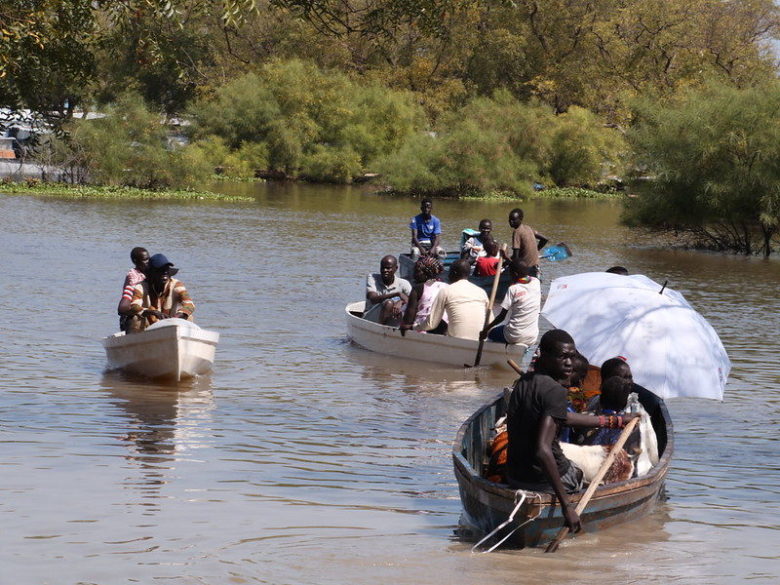
Flooding in South Sudan (Photo: UNMISS/Flickr [CC BY-NC-ND 2.0] )
No. 4 World: Dengue cases surge to the highest on record
2019 saw the most cases of dengue ever recorded. Dengue is a mosquito-borne viral disease, and as global warming expands mosquito habitat, infections have risen to unprecedented levels. In the 1970s dengue was endemic in only nine countries; now it is seen in more than 100. In 2019, multiple countries in Asia saw outbreaks with many deaths. If temperatures continue to rise and the disease range keeps expanding, by 2080 infections could increase by about 2 billion compared with 2015. There are, however, methods that may curb dengue’s spread: in one experiment, releasing mosquitoes infected with the Wolbachia bacterium in several countries reduced dengue infections by 70%–96%. While fundamental action on global warming is urgent, this offers hope as an interim solution.
Coverage volume
Asahi Shimbun: 0 articles/0 characters
Mainichi Shimbun: 0 articles/0 characters
Yomiuri Shimbun: 0 articles/0 characters
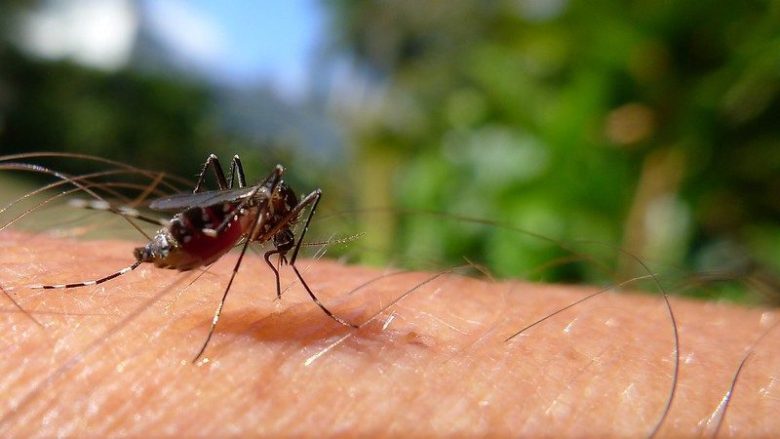
Asian tiger mosquito (Photo: John Tann/Flickr [CC BY 2.0] )
No. 5 Algeria: Becomes a center of a “second Arab Spring”
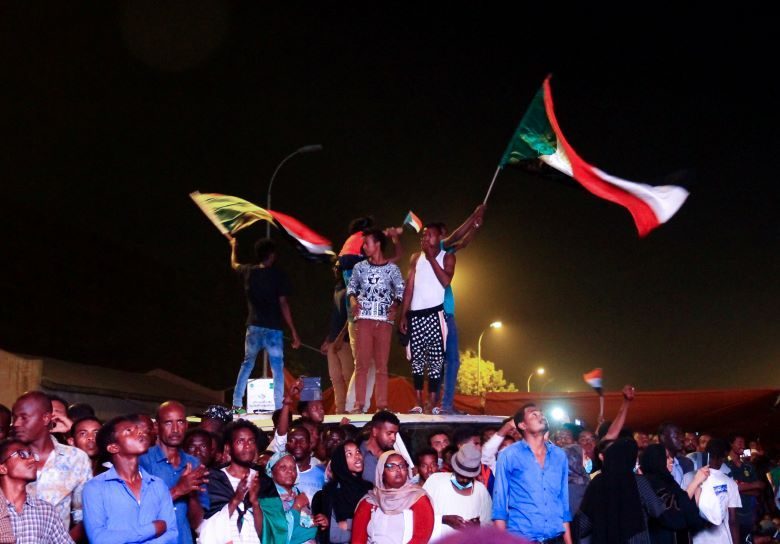
In February 2019, large-scale popular protests erupted in Algeria. They were sparked when longtime president Abdelaziz Bouteflika announced he would run for a fifth term. Bouteflika had risen to power with high popularity as the man who helped bring peace after the violent conflict of the 1990s. However, after suffering a stroke in 2013, he largely disappeared from public view, yet in 2014 secured a fourth term without any real campaigning. Behind the scenes, the military, intelligence services, and the president’s brother ran politics. Under these de facto rulers—known as “le pouvoir” (the power)—government corruption scandals bred public distrust. When a president who had not appeared publicly for six years sought a fifth term, people took to the streets. The protests grew to some 800,000 people; in March, Bouteflika withdrew from the race, and in April he resigned. His brother was arrested, and many other power brokers were questioned. Yet the interim government was composed of figures who had held key posts under the previous regime, so protests continued demanding the removal of the old guard and democratic elections. Amid unrest and arrests of protesters, a presidential election dominated by establishment candidates was pushed through on December 12, 2019, and former prime minister Abdelmadjid Tebboune became president with a low turnout of about 40%. Dissatisfaction with a government seen as lacking legitimacy has not abated, and as of December 19, 2019, protests were still ongoing—ten months after they began. Political discontent is not limited to Algeria; across the Middle East and North Africa, protests have continued—Sudan saw a transition of power, while Iraq and Lebanon saw uprisings against their regimes—leading some to call it a “second Arab Spring.”
Coverage volume
Asahi Shimbun: 11 articles/4,160 characters
Mainichi Shimbun: 10 articles/5,722 characters
Yomiuri Shimbun: 6 articles/2,129 characters

Protests in Algeria (Photo: Adjer/Wikimedia Commons [CC BY-SA 4.0] )
No. 6 Brazil: Escalating human rights violations against Indigenous peoples
In Brazil, human rights abuses against Indigenous peoples living in the Amazon rainforest are occurring with government acquiescence and even praise. Rights and lands that were supposed to be protected are being illegally infringed upon, and Indigenous people and environmental activists are being threatened and killed. Since 2019, far-right President Jair Bolsonaro has argued there is no rational reason to protect Indigenous lands and rights, accelerating the erosion of protections for approximately 900,000 Indigenous people. Industry—especially agriculture—plays a major role. The Amazon covers about half of Brazil’s territory, yet logging, the conversion of land for pasture and mines, and feed production have cleared much of the rainforest; only about 400 protected areas remain. Even those protected areas have been threatened since Bolsonaro took office, and Indigenous people have faced detention and killings—clear human rights violations. Bolsonaro has also suggested allowing farm owners to carry guns. In the 1960s, the military regime committed genocide against Indigenous peoples; after democratization in 1985, the 1988 constitution included protections of Indigenous lands and rights. The rise of the far right and surging international demand for livestock—requiring vast tracts of land—have driven today’s assault on the rainforest and its peoples. Demand for livestock products is also cited as one of the drivers of environmental destruction and climate change.
Coverage volume
Asahi Shimbun: 0 articles/0 characters
Mainichi Shimbun: 1 article/1,252 characters
Yomiuri Shimbun: 0 articles/0 characters
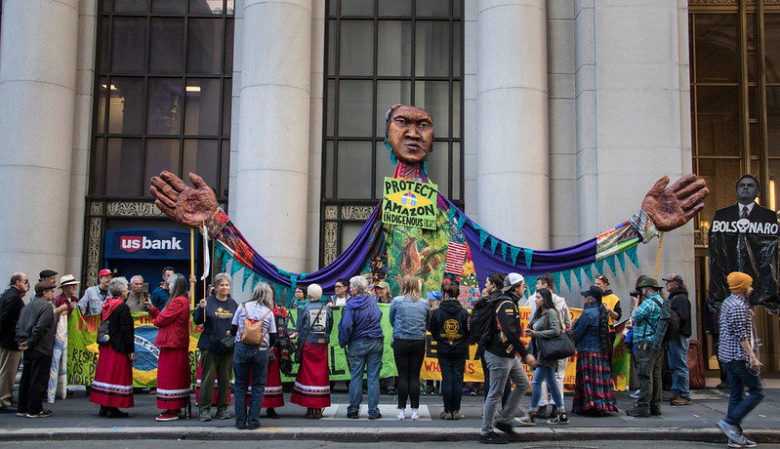
A U.S. protest sending a message to Bolsonaro: “Protect the Amazon” (Photo: Peg Hunter/Flickr [CC BY-NC 2.0] )
No. 7 Southeast Asia: Indonesia’s fires and transboundary air pollution
Indonesia suffered severe fires throughout 2019. While the Amazon’s fires made headlines, even larger fires in Southeast Asia caused widespread disruption. Slash-and-burn agriculture is common in Indonesia, and land is cleared annually for palm oil and pulp production. In 2019, however, reduced rainfall and drought linked to the aforementioned IOD led to the worst disaster since 2015. Across Indonesia, over 2,000 forest fires were recorded; about 1 million people reported respiratory ailments from haze; schools in Indonesia, Malaysia, and Singapore were forced to close; and many airports suffered disruptions. The World Bank estimates total losses at US$5.2 billion, equal to 0.5% of Indonesia’s GDP. The burned area exceeded that of the Amazon fires, and twice as much carbon dioxide was emitted; because habitats of endangered species were among those burned, impacts on ecosystems are also a major concern.
Coverage volume
Asahi Shimbun: 1 article/1,353 characters
Mainichi Shimbun: 0 articles/0 characters
Yomiuri Shimbun: 2 articles/1,690 characters
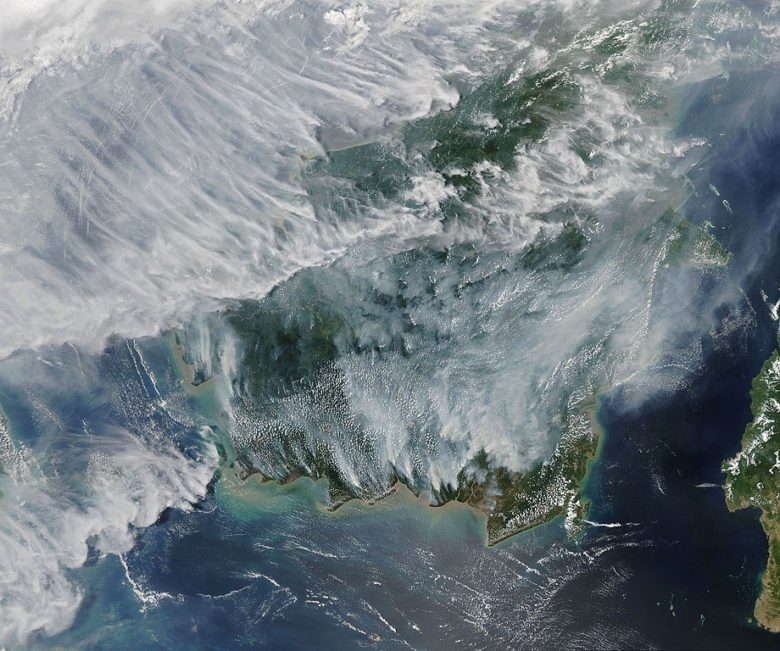
Aerial photo of haze over Borneo (Photo: Joshua Stevens/Wikimedia Commons [CC0])
No. 8 Arctic: Unprecedented wildfires
In 2019, the Arctic saw an extraordinary number of wildfires. The Arctic includes Siberia, Alaska, Canada, and Greenland; lightning-caused wildfires are not unusual there. But in 2019, both the number of fires and the area burned were abnormal: more than 4,700 fires burned 83,000 km², smoke covered an area larger than the European Union, and carbon dioxide emissions exceeded Belgium’s annual total. Called an “unprecedented anomaly,” this phenomenon is again driven by climate change. The Arctic is warming at about twice the global rate, due to a vicious cycle that gives these fires characteristics distinct from other wildfires. As snow and sea ice decline, less sunlight is reflected and more heat is absorbed at the surface, raising temperatures and drying the land—conditions ripe for fire. Dry Arctic peat ignites easily and, once burning, smolders and spreads, fueled by methane stored in the peat. Because Arctic peat is carbon-rich, such peat fires release large amounts of CO₂ and other toxic gases. Warming also increases lightning, further feeding the cycle. These fires significantly affect ecosystems. They are often left to burn because they are large and remote, beyond the reach of firefighting—another major challenge for response.
Coverage volume
Asahi Shimbun: 0 articles/0 characters
Mainichi Shimbun: 1 article/399 characters
Yomiuri Shimbun: 0 articles/0 characters
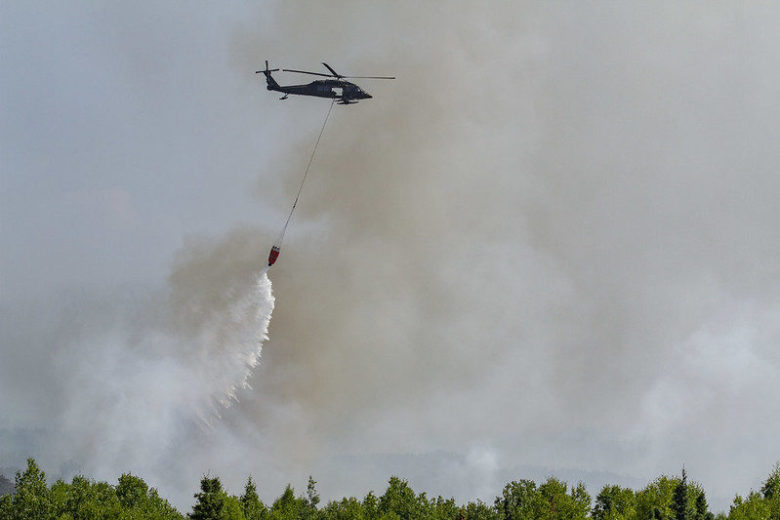
Firefighting in Alaska (Photo: The National Guard/Flickr [CC BY 2.0] )
No. 9 Kuwait: Online human trafficking
In October 2019, a BBC investigation revealed illegal online slave markets in Kuwait and other Gulf countries where domestic workers were being bought and sold. Although human trafficking is banned under the platforms’ guidelines, apps used for such transactions—including “4Sale,” a Kuwait-based marketplace—were available in Google’s and Apple’s app stores, and deals were being conducted on Instagram (owned by Facebook) using hashtags. Those traded were primarily foreign women from countries such as the Philippines and across Africa, sometimes without being told they were being trafficked. In this investigation, sellers openly said “we do not follow the law,” advising buyers to confiscate domestic workers’ passports, restrict their movement, and deny them any days off; a 16-year-old girl was also observed being sold. These transactions exploit the “Kafala” system, under which workers’ visas and passports are controlled by employers, leaving them unable to move or seek recourse (some countries have abolished this system). The problem here is that Apple, Google, and Facebook failed to regulate or crack down on such apps and hashtags, violating not only their own guidelines but also Kuwaiti law and international law. Following the BBC exposé, the online markets appear to have been taken down, but questions remain as to why a quicker response wasn’t possible. This online marketplace is just the tip of the iceberg; human trafficking and slave markets are still widespread in reality. Related labor migration issues have also led to diplomatic tensions between Kuwait and the Philippines. Some 260,000 Filipinos work in Kuwait as domestic workers, and incidents of abuse and killings have sparked bilateral disputes.
Coverage volume
Asahi Shimbun: 0 articles/0 characters
Mainichi Shimbun: 0 articles/0 characters
Yomiuri Shimbun: 0 articles/0 characters

The trading app “4Sale” as shown in the Apple App Store
No. 10 Canada: Acknowledges human rights abuses as “genocide”
In June 2019, the Canadian government acknowledged that it had been involved in genocide. This genocide targeted Indigenous women and girls and sexual minorities (LGBT) over decades, with around 4,000 Indigenous people murdered or missing. As part of assimilation policies, approximately 150,000 Indigenous children were taken from their families and placed in residential schools, a policy that continued into the 1980s. Despite this, there was little official investigation or response by the government, and the issue was largely overlooked. In response to mounting anger and frustration among Indigenous communities, a government inquiry finally began in 2016. It concluded that the violence against Indigenous peoples constituted genocide, leading the government to recognize its own responsibility. Attention now turns to how the government will respond and build systems to protect the rights of Indigenous women and LGBT people.
Coverage volume
Asahi Shimbun: 0 articles/0 characters
Mainichi Shimbun: 0 articles/0 characters
Yomiuri Shimbun: 0 articles/0 characters
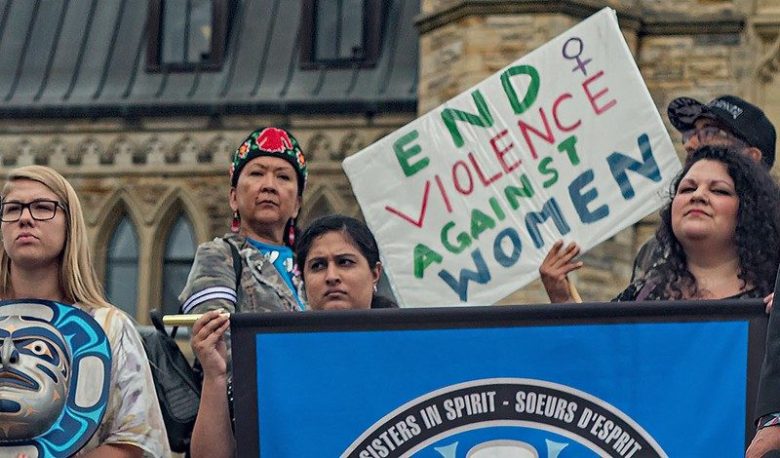
Activists protesting violence against Indigenous women (Photo: Obert Madondo/Flickr [CC BY-NC-SA 2.0] )
Those are the ten selections. Among the many events that occurred, it should be clear that major stories are not always thoroughly reported. In 2019, climate-related topics were especially prominent in both scale and number. Although not included here, many other stories could be considered significant. We cannot cover everything, but GNV will continue in 2020 to focus on what goes unreported and to supplement information missing from mainstream media.
※1 In selecting the ranking, we evaluated multiple criteria, including the volume of coverage of each event/phenomenon, the magnitude of its impact, and how much changed in 2019. Ongoing events and phenomena from before 2019 were included if new aspects became clear in 2019.
The specific method was as follows. We divided the world into six regions (① East/South/Central Asia, ② Southeast Asia/Pacific/Indian Ocean, ③ Middle East/North Africa, ④ Sub-Saharan Africa, ⑤ Europe, ⑥ North and South America) and picked four events/phenomena from each, plus six global events/phenomena not limited to any region, for a total of 30 underreported stories in Japan. For each, we scored five criteria on a three-point scale: ⑴ lack of coverage, ⑵ transboundary nature, ⑶ number of people affected, ⑷ degree of impact on systems such as politics, economy, and security, and ⑸ novelty. Because this ranking emphasizes overlooked issues, criterion ⑴ (lack of coverage) was weighted double. We then selected five stories from the 30 based on the results; for the remaining five, we chose from six tied items through editorial discussion. Where ties remained, final rankings were decided in an editorial meeting. Coverage was tallied from January 1, 2019 to December 17, 2019.
※2 To measure coverage, we used the online databases of Asahi Shimbun, Mainichi Shimbun, and Yomiuri Shimbun (Asahi: KikuzoII, Mainichi: Maisaku, Yomiuri: Yomidas Rekishikan).
Whether an article counted toward coverage was determined by whether the topic was the main theme. In other words, articles that merely mentioned the topic in passing were not counted.
For example, when measuring coverage of “climate apartheid,” no articles using the term itself were found across the three outlets. However, articles whose main thrust was that various problems caused by climate change disproportionately affect the poor and other vulnerable people, widening inequality, were counted as coverage of “climate apartheid.”
As another example, when measuring coverage of “human rights abuses against Indigenous peoples in Brazil,” articles that focused mainly on the Amazon forest fires and mentioned the Indigenous inhabitants only in passing were not counted toward coverage.
Writer: Mina Kosaka
Data: Natsumi Motoura






日本の報道からは知り得ない問題や現象がたくさんあることに改めて気づきました。特に、気候変動に関しては、グレタさんについての報道は多かったものの、気候変動が引き起こす、より深い問題についての報道はほとんどなかったことからも、もっと日本の国際報道が表面的なものばかりではなく、背景も含めた深いニュースが増えていくといいなと思いました。
日本の報道機関を通して得られる情報が、いかに乏しく内容が偏っているかを痛感させられる記事でした。また、全てのニュースがマイナスな内容であり、解決すべき世界の諸問題の多さがよくわかりました。これだけ問題が多いにもかかわらず、報道をしない日本のメディアの責任は大きいと感じました。
エンタメとスポーツのニュースを楽しみながら、世界が少しずつ滅びていきそう
気候変動への政策が不十分だとして環境NGOが政府を訴え、勝訴した。
国民を守る義務を怠っているということで、政府に温室効果ガスの削減を命じることに。
https://www.bbc.com/news/world-europe-50864569
日本では、気候変動の問題の重大さすらまだ見えていないレベルで止まっている・・・
今年火災や気候に関する事件が多いですね。気候変動は人類の課題と見なすべきですが、なぜ日本のメディアは取り上げないでしょう。対いずれ日本にも影響を与えるので、対岸の火事と思わずちゃんと問題視されてほしいです。
jzhqh2
maslez
nqn9id