
In the Republic of Malta, the smallest country in the European Union (EU) consisting of three islands in the Mediterranean, on October 16, 2017 journalist Daphne Caruana Galizia was assassinated by a bomb attached to her car. The prime minister’s chief of staff, Keith Schembri, and tourism minister, Konrad Mizzi—whom this journalist had been investigating—resigned in November 2019 resigned. At the end of that November, Prime Minister Joseph Muscat, under strong pressure from this series of events, announced he would resign in January 2020.
From 2008 until she was assassinated in 2017, this journalist used her own blog to expose corruption in Malta. Her relentless denunciations of politicians, the mafia, and business leaders who profited from misconduct made her an inconvenience to them all; she was sued for defamation and received death threats. The assassination can be seen as emblematic of how corrupt Malta is.
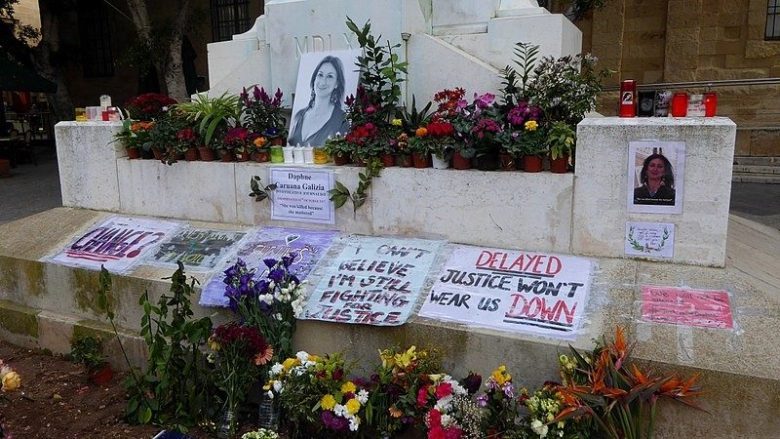
Memorial to Daphne Caruana Galizia’s death (Photo: GRID Ethan Doyle White/Wikimedia [CC BY-NC-ND 2.0])
Beyond the pervasive corruption, Malta also functions as a tax haven that encourages tax avoidance and evasion. Moreover, systems have been built that are easy for domestic and foreign tycoons, corporations, and criminal organizations to exploit, such as the de facto sale of passports and tax reductions for ships and yachts. Below, we explain the realities of the Republic of Malta.
目次
Background
For many centuries, Malta was conquered or ruled by powers such as the Roman Empire, Tunisia, Italy, and France. It came under British control around 1814 and became independent in 1964. Since then, the conservative Nationalist Party and the social-democratic Labour Party have alternated in government. Because both maintained very close ties with powerful tycoons on the island, public and private power often tended to fuse. With little heavy industry and land not well suited to cultivation, Malta worked out ways to sustain itself—linking and warehousing money, whether legal, illegal, or of uncertain legality, inside and outside the EU. Gradually it became a convenient base for such funds and business. At the same time, government became a breeding ground for corruption. After joining the EU in 2004, Malta developed as a center for tax havens and money laundering, coming to be known as the “EU’s pirate base.”
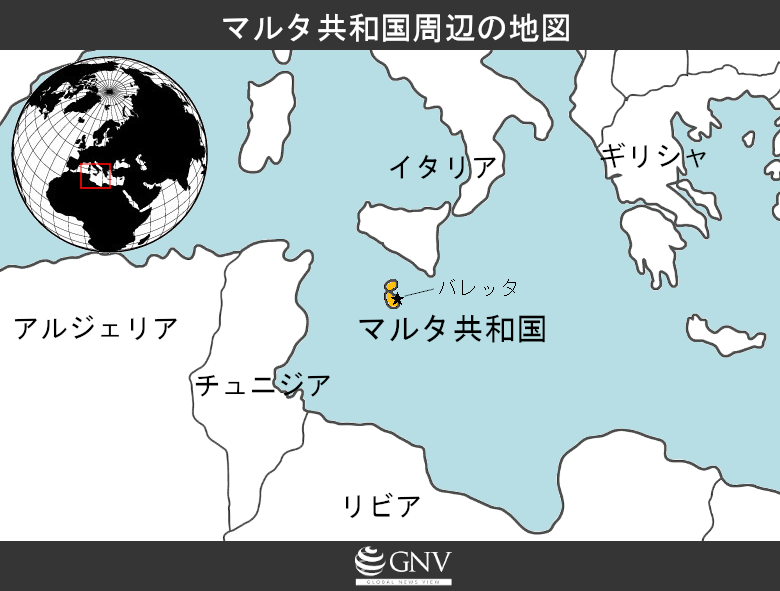
Map of the area around the Republic of Malta
Corruption in Malta
In Malta, backroom collusion between the government and domestic and foreign companies is conspicuous. The massive scale of Malta’s corruption is reflected in its economic impact. A study commissioned by the The European Greens at the end of 2018 found that corruption cost the economy 725 million euros annually. This is equivalent to 8.65% of Malta’s GDP, and to an annual burden of 1,671 euros per Maltese citizen. It shows how severely corruption harms Malta’s economy.
For example, in 2018, the Dubai-registered company 17 Black (17 Black), owned by investor Yorgen Fenech, was alleged to be involved in the construction of a new power plant, with planned payments from that company to firms in Panama owned by Maltese chief of staff Keith Schembri and tourism minister Konrad Mizzi. These payments were suspected to be bribes related to the construction project in return for obtaining government contracts. In November 2019, Fenech was arrested aboard his yacht on suspicion of involvement in Caruana Galizia’s murder.
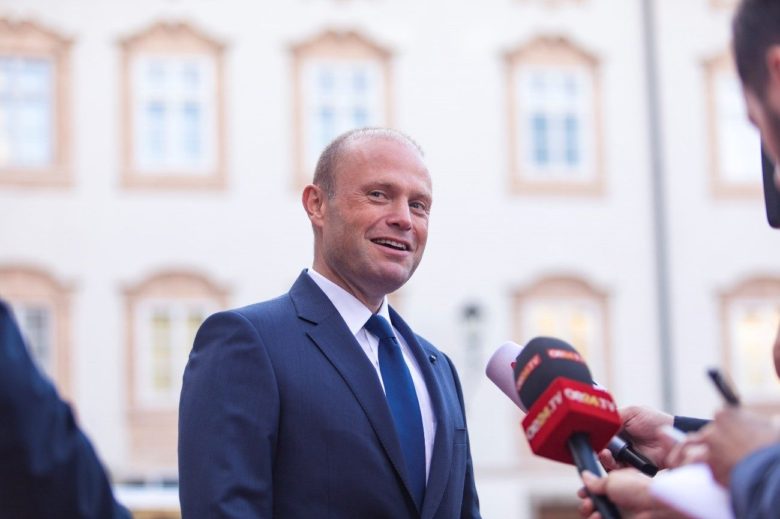
Prime Minister Joseph Muscat of the Republic of Malta (Photo: PES Communications/Flickr [CC BY-NC-ND 2.0])
In addition, according to an Italian police report on the mafia, Malta could serve as a hub for organized crime such as drug trafficking, arms trafficking, oil smuggling, and the smuggling of people through illegal human trafficking. Malta was the most-mentioned foreign country in the report, and its high financial secrecy, ease of money laundering, and geography in the central Mediterranean make it a convenient country for the mafia.
Public perceptions of domestic corruption can be gleaned from Transparency International’s rankings. In 2018, Malta ranked 51st, among the lowest in the EU. Malta’s score fell from 60 out of 100 in 2015 to 54 in 2018, the lowest to date.
Malta as a tax haven
The issues surrounding opaque money are not confined to the domestic sphere. Malta is also known as a tax haven—a country or region that strategically offers tax advantages to offshore companies. On paper, both local and multinational companies in Malta must pay a 35% corporate tax. In many cases, however, multinationals face an effective rate of only about 5%, due to a system under which companies can receive a refund of 6/7 of the tax paid in Malta. By contrast, the average corporate tax rate in the EU is 22%. Malta thus operates the lowest corporate tax regime in the EU. According to the European Greens, between 2012 and 2015 Malta facilitated more than 14 billion euros in multinationals’ tax avoidance in other countries.
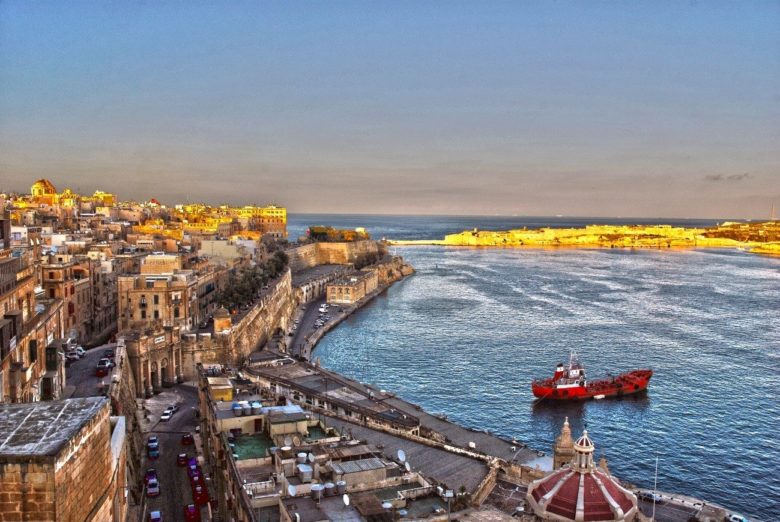
The Republic of Malta seen from the capital, Valletta (Photo: Berit Watkin/Flickr [CC BY 2.0])
Using Malta’s tax-avoidance system, companies also store assets in Malta via shell companies or route transactions through Malta to escape regulations that would otherwise apply in their own or other countries. According to the European Commission, in 2016 assets managed and held with Malta as an offshore market (a jurisdiction other than where the headquarters or actual business activity is located) totaled 5.2 billion euros, estimated at 48% of Malta’s GDP. This figure is roughly double the 2.3 billion euros in 2011, indicating the growth of Malta’s offshore market. While tax havens and offshore markets themselves are not illegal, EU member states criticize the fact that when companies avoid taxes in Malta, taxes that should have been collected in their home countries cannot be levied.
Another characteristic of Malta as a tax haven is its strong secrecy, including the lack of effective information exchange with other countries. In the Tax Justice Network’s 2018 global ranking for financial secrecy, Malta was placed in the top 20, underscoring its high level of secrecy. Consequently, not only arguably legal tax avoidance but also illegal tax evasion is a problem. Offshore structures are also used to conceal crime and corruption, and to hide assets from public authorities, business associates, and even family members.
Additionally, Malta’s high level of secrecy has made money laundering a problem. Money laundering is the process of obscuring the origin of funds obtained through crime and making them appear to be legitimate. In 2018, Ali Sadr, the Iranian founder of Pilatus Bank in Malta, was arrested and indicted on charges of laundering 115 million US dollars from a misappropriated Venezuelan construction contract. He allegedly used shell companies, foreign bank accounts, and a vast network to send illegally obtained funds from Venezuela to Iran while hiding their origin. Pilatus Bank, which he owned, was also implicated in money laundering.
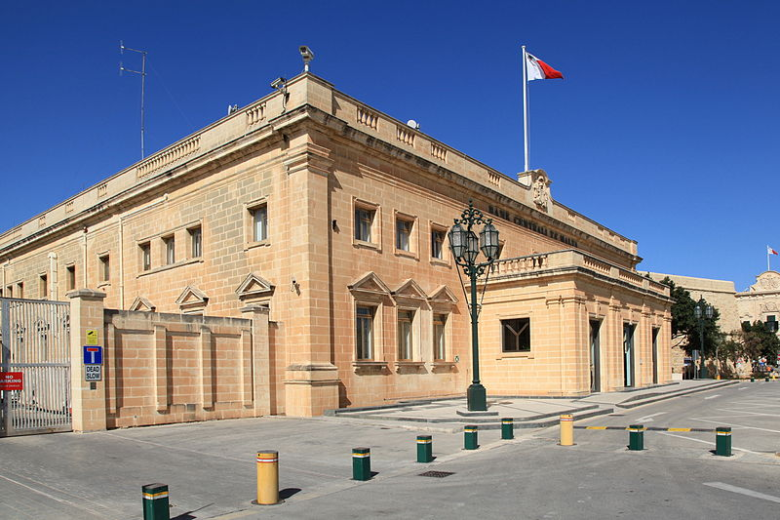
Central Bank of Malta (Photo: Frank Vincentz/Wikimedia [CC BY-SA 3.0])
Malta’s friendliness to tycoons who use tax havens
There is a program for wealthy foreign nationals who wish to use Malta as a tax haven: the Maltese government’s unusual “Golden Passport Program.” By investing about 100,000 euros in Malta, one can obtain a Maltese passport. Obtaining a Maltese passport means acquiring Maltese citizenship—granting visa-free access to about 170 countries as an EU member. This program is estimated to have brought Malta about 1.1 billion euros. It raises concerns that individuals with suspicious or criminal intentions can move freely within the EU.
For businesspeople who use Malta, measures also exist for yacht registration. Malta is the world’s 6th largest jurisdiction for yacht registration. One reason is its geographic advantage as a small island nation in the Mediterranean, but not only that. While all vessels navigating within the EU are subject to value-added tax, Malta applies a system under which the rate can be reduced depending on the vessel’s length and type, to as low as 5.4%. In addition, Malta has agreements with foreign governments that provide favorable treatment regarding port dues and taxes and is regarded as reliable. The procedures for registering vessels in Malta are also simple. In this way, Malta has become a center for yacht registration.
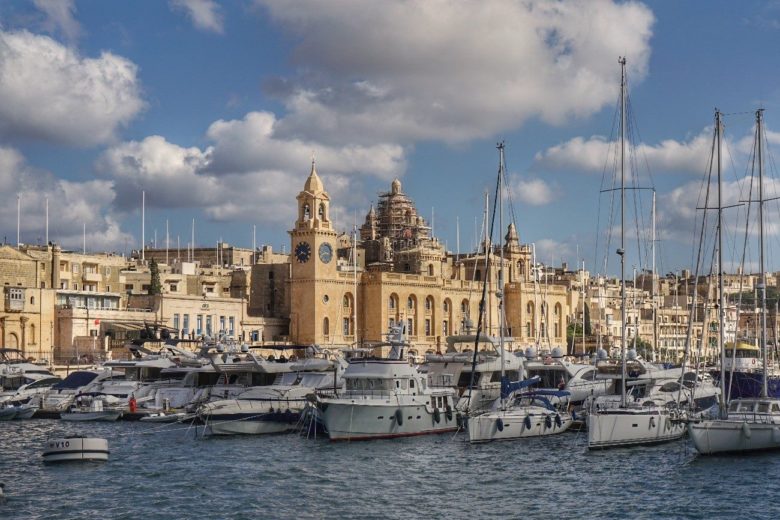
Vessels in the Republic of Malta (Photo: worldaroundtrip/Flickr [CC BY 2.0])
Malta’s future
On a blog, the most widely read platform in Malta, Daphne Caruana Galizia investigated and exposed corruption in Malta. On busy days, her blog attracted 400,000 readers (Malta’s population is 420,000), surpassing the newspapers’ total circulation. Her efforts and her death have become a turning point for Malta. Her assassination, and the resignations of those in power that followed, brought major attention to Malta’s corruption. By staging a dramatic bombing, the perpetrators likely aimed to deter others from exposing Malta’s corruption. However, it backfired, fueling domestic backlash against the government and drawing even greater global attention. The EU’s pirate base, steeped in corruption, is being forced to improve.
Immediately after Ali Sadr’s arrest and indictment, Maltese banking regulators froze all transactions by Pilatus Bank’s clients, managers, and shareholders. At the same time, the Malta Financial Services Authority stripped Sadr of his position as bank director and suspended his voting rights. Thus, measures are being taken against illegal acts such as money laundering. Regarding corruption, the Venice Commission of the Council of Europe issued a report in December 2018 criticizing the concentration of power in the prime minister’s office and recommending reforms to Malta’s corrupt government, including establishing a prosecution service independent of the attorney general, strengthening the role of the president, and ensuring greater judicial independence.
In this way, Malta is being pressed to reform by both the EU and its citizens. The fight against corruption, tax issues with EU countries, and the question of whether Malta is truly a state governed by the rule of law must be resolved. With the resignations of government figures such as the prime minister’s chief of staff and the tourism minister, and the prime minister’s announcement that he will step down, what will become of the problem-ridden “EU’s pirate base”?
Writer: Ikumi Arata
Graphics: Yumi Ariyoshi





以前からマルタは語学留学の場所としても人気ということで、とても興味を持っていましたが、これほどまでに腐敗が広まっているとは全然知りませんでした。
自分も格安で留学ができるということで、マルタへ行くことに興味を持っていた時期があったのですが、
ここまで政治の腐敗や脱税等の問題があるとは全然知りませんでした。
特に、お金を払えばパスポートを得ることができ、EUを自由行き来できるようになるという制度は非常に驚きました。
マルタのような農業や工業が進んでおらず、お金の経由地として発展してきた国は、どのように問題を防ぎ、自立していくべきなのか、考えさせられる記事でした。
ジャーナリストが守られる社会であってほしいなと思います。
世界中にタックスヘイブンやマネーロンダリングがはびこっている状況の下では、マルタだけでなく、EU全体・世界全体での取り組みがなければ根本的な解決にはつながらないのかと思いました。
ただ、マルタで内部から改革に向けた動きが出てきているのは希望なのではないでしょうか。