
November 20, 2019 marked the 30th anniversary of the adoption of the Convention on the Rights of the Child. The Convention is a treaty established to guarantee children’s fundamental human rights internationally, including the rights to life, development, protection, and participation. It recognizes every person under 18 as an individual with rights and affirms their human rights, while also setting out child-specific rights such as special protection and consideration needed during growth. Over the 30 years since its adoption, the environment surrounding children worldwide has improved dramatically. For example, globally the under-five mortality rate has fallen by about 58%, and the number of children with stunting has decreased by about 50 million. The number of children forced into hazardous labor has also decreased, and the gender gap in education has been narrowing. However, many children are still being left behind by these gains. Even today, children around the world face issues such as poverty, armed conflict, education, and discrimination. How are these realities reflected in the media? Let’s look at children’s circumstances and how they are reported.
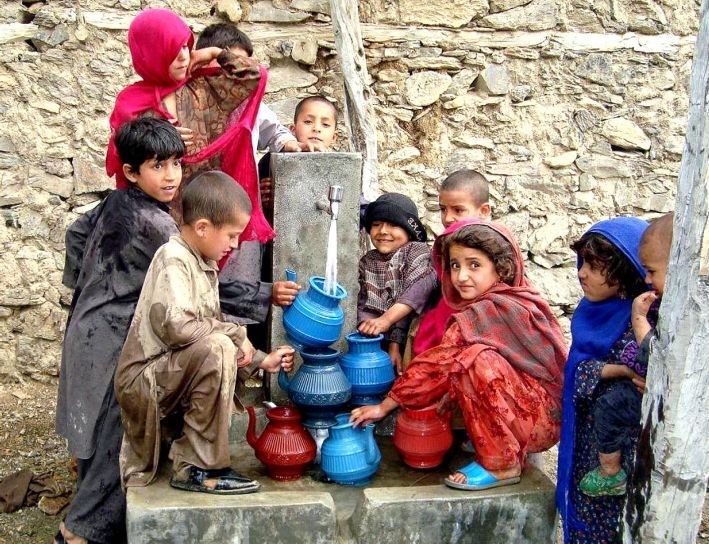
Children in Afghanistan filling containers with clean water (Photo: USAID/PIXNIO [CC 0])
目次
Poverty and children
According to an international NGO working to protect children, the greatest threat to children is poverty. Child poverty brings many harms, including increased risk of death before age five, malnutrition, child labor, loss of educational opportunities, early marriage, and early childbirth. In particular, malnourished children become more susceptible to infections and other illnesses, leading to many child deaths. While the global total of under-five deaths fell sharply from 12.6 million in 1990 to 5.3 million in 2018, many deaths that should be preventable still occur. As for the causes, 45% are infectious diseases, 15% pneumonia and other lower respiratory tract diseases, 12% preterm birth and neonatal disorders, and 10% diarrheal diseases.
Water and sanitation are crucial issues for children’s survival. Contaminated water and unsanitary environments cause infections that can lead to death. According to a UNICEF report, about one in three people globally, including children and adults, lacks access to clean drinking water; about one in two lacks access to safely managed sanitation; and about two in five live without basic handwashing facilities with soap and clean water. Because the adults raising children live in such conditions, the household environment also affects children; efforts must target entire communities, not only children. In addition to water and sanitation, poverty-related malnutrition further increases children’s vulnerability. Globally, one in three children under five does not receive the nutrition needed for adequate growth. Inadequate nutrition heightens health vulnerabilities and also impairs brain development and learning ability, affecting children’s futures. Children living in such environments also bear the brunt of climate change impacts such as floods, droughts, and storms.
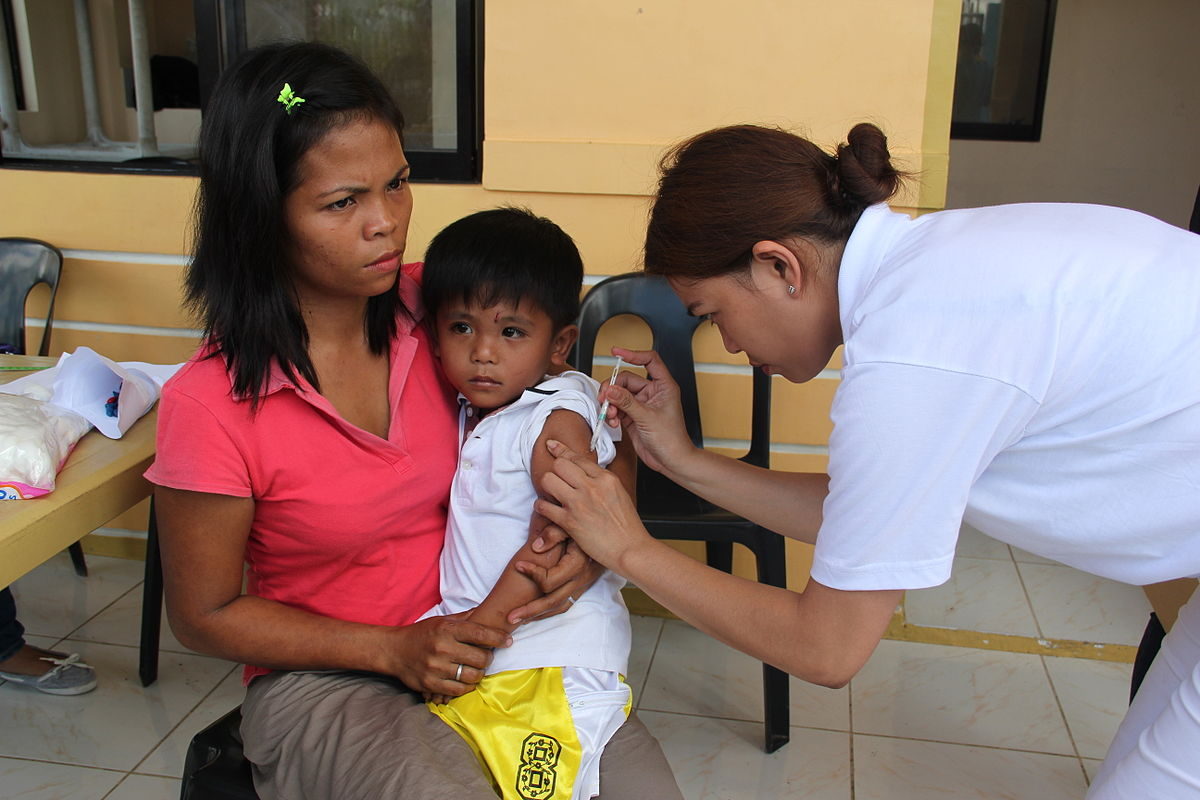
A child receiving a vaccine after a typhoon in the Philippines (Photo: DFID/Wikimedia Commons [CC BY 2.0])
In this context, vaccines play a major role. According to the World Health Organization (WHO), vaccines have contributed to reducing child mortality by 58% since 1990. However, many children who need vaccines are not adequately vaccinated due to limited public understanding of their importance, poor access in fragile states and countries with weak health systems, and the fact that vaccine manufacturing takes years and cannot meet sudden surges in demand. Poverty also prevents access to needed medical care. In countries with underdeveloped health systems, not only medical fees but also transport costs to reach care and informal payments beyond treatment fees can make healthcare prohibitively expensive for the poor. Poverty breeds malnutrition and infection, which in turn fuel further poverty, child labor, and the deprivation of educational opportunities. Currently, the number of children suffering from poverty is estimated at about 1 billion, meaning roughly one in two children worldwide. Although conditions surrounding children have improved, much more action is still needed.
Children affected by armed conflict
So how many children are suffering from conflict? While conditions for children worldwide are said to have improved, one in five children still lives in areas affected by conflict and is harmed by it—some 420 million children.
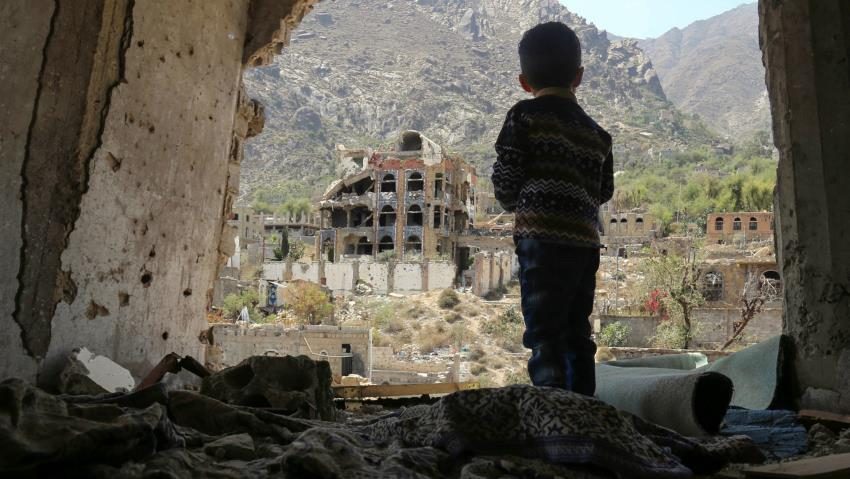
A child standing in a home devastated by conflict in Yemen (Photo: Felton Davis/Flickr [CC BY 2.0])
An NGO analysis estimates that between 2013 and 2017, about 870,000 children under five died in the 10 countries hit hardest by conflict (Afghanistan, Yemen, South Sudan, Central African Republic, Democratic Republic of the Congo, Syria, Iraq, Mali, Nigeria, Somalia), at least 550,000 of whom were infants. By comparison, the number of soldiers killed in these 10 countries was about one-third of that, 175,000. This shows how dangerous everyday life is for children living in conflict zones. While the word “conflict” may evoke images of children dying directly from bombs or weapons, in reality many die from the deterioration in living conditions brought about by conflict—hunger and shortages of healthcare, water, and hygiene supplies. Conflict brings not only direct dangers but also a range of harms, including malnutrition, child labor, child soldiers, sexual violence, displacement as refugees, loss of educational opportunities, and an increase in war orphans. There are said to be three times as many malnourished children in conflict areas as in normal circumstances. We must pay attention to these indirect impacts as well.
The realities of education and discrimination
Education and discrimination have gained prominence in recent years, as reflected in the Sustainable Development Goals (SDGs) adopted at the 2015 UN Summit: Goal 4, “Quality Education,” and Goal 5, “Gender Equality.” Education is a fundamental human right, and it is essential for individual and societal development and well-being. Its impact is powerful: each additional year a child spends in school is said to increase their income as an adult by about 10% and reduce poverty rates by about 9%. Yet 258 million children of primary and lower secondary school age are still out of school. Contributing factors include poverty, child labor, reduced access to schools due to conflict, discrimination against girls and children with disabilities, and shortages of schools, materials, and teachers.
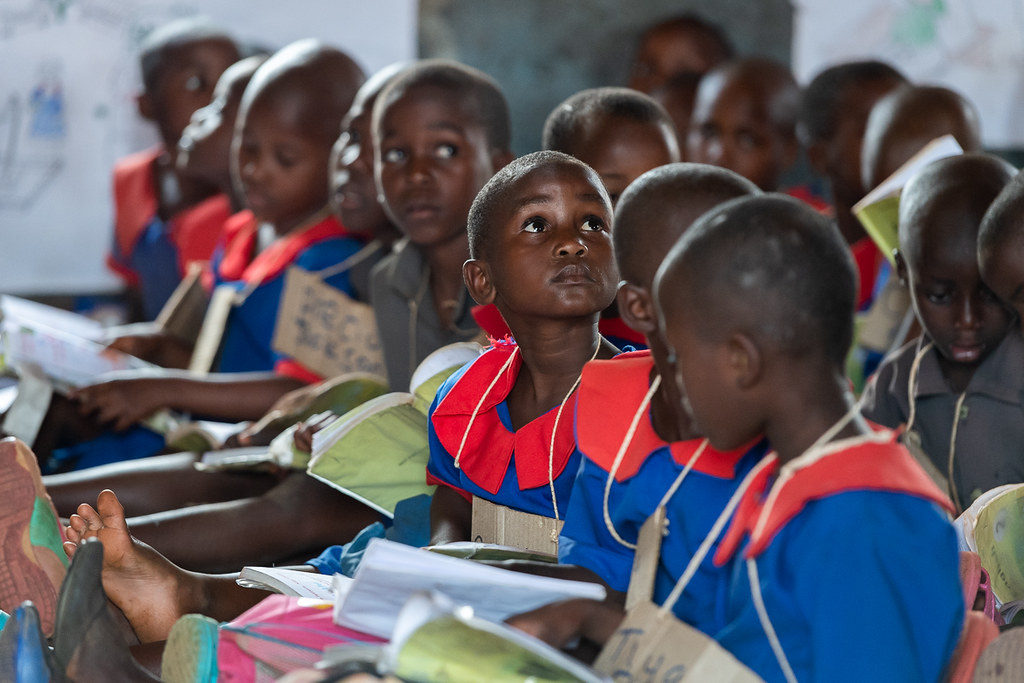
Children in Africa receiving education (Photo: The White House/Flickr [Public Domain Mark 1.0])
Discrimination, one factor that hinders education, is also severe. When children are targets of discrimination, it can deny them education, exclude them from appropriate medical care, and expose them to violence and child labor. Major forms include gender discrimination, discrimination against children with disabilities, and discrimination based on ethnicity or race. Discrimination against girls is especially serious: 575 million girls worldwide face discrimination. As data show that 90% of children engaged in domestic work are girls aged 12–17, they are denied the right to education and are forced into marriage and childbirth that are too early both mentally and physically. Such discrimination also leads to more severe issues such as infanticide, abortion, malnutrition, and neglect, and in some countries where discrimination against girls is particularly acute, girls are known to have higher mortality than boys.
How does Japan report on children around the world?
With these realities in mind, how does the Japanese media report on children around the world? We examined articles on the international pages of the Yomiuri Shimbun from January 1, 2014 to December 31, 2018, extracting those whose headlines contained any of the words “子供,” “子ども,” “児童,” “少年,” or “少女” (child/children/boy/girl) and analyzed their content and regions. While the above has focused on negative aspects such as the problems children face, of course reporting about children also includes positive aspects such as sports and international exchange.
This search yielded 195 articles over five years. In terms of content, categories included sports, conflict-related, incidents, human rights abuses and accidents, exchange, and disasters (Note 1). Sports articles (17%) included pieces tied to the Olympics or focusing on individual athletes; conflict-related articles (16%) were mainly about terrorism in the Middle East or children killed by airstrikes; and articles about incidents (16%) covered a range from murders to abductions—together accounting for half. Articles on human rights abuses (12%) often took a broad view of the global situation, covering child labor and sexual abuse. In articles about exchange (7%), many featured prominent figures such as presidents or athletes meeting children facing hardships. Articles on poverty (about 1%), health/medical care (about 1%), and education (about 3%)—all critical issues for children globally—were few and were categorized as “other.”
A notable feature of Japanese reporting on children worldwide is the emphasis on novelty. For example, many articles reported child deaths caused by conflict-related violence, yet in reality far more children die from poverty caused by conflict, and not a single article addressed this fact. Children killed by events that happened that day, such as airstrikes or terrorist attacks, are covered, but those who die due to existing underlying factors are not. While novelty is important in news, it alone makes it difficult to capture the true state of children worldwide. Moreover, there is no shortage of novelty to convey in areas such as poverty, health/medical care, and education—for example, the introduction of new vaccines or new initiatives that reduce poverty.
Which regions are covered?
We also looked at the regional distribution of the 195 articles. Regions were divided into seven: Asia, the Middle East, Europe, North America, Latin America and the Caribbean, Africa, and Oceania; items categorized as “other” covered the world as a whole.
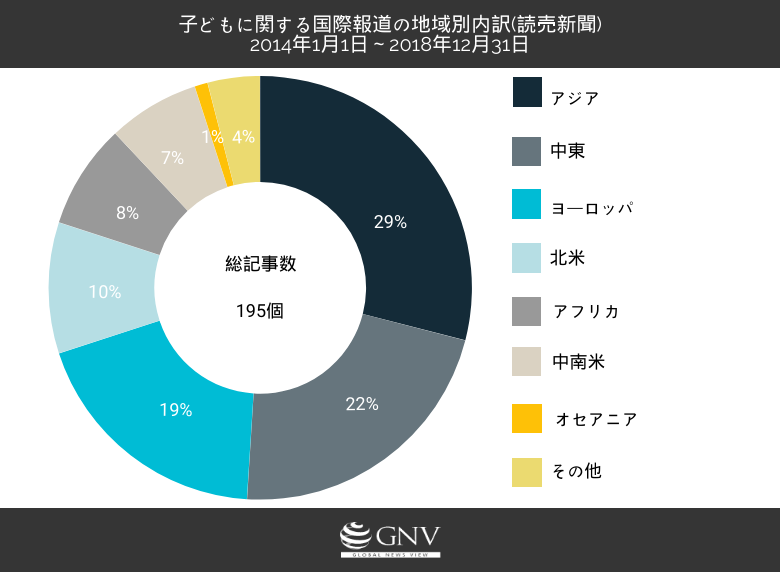
According to the regional distribution graph, Asia, the Middle East, Europe, and North America together account for about 80% of coverage. Articles on Africa—where challenges are many, including about 38% of the world’s infant deaths—make up only 9% of the total. Articles on South Asia, which has the next-highest child mortality and many challenges after Africa, account for about 6%. While regional balance is not everything, without a certain degree of balance, it is difficult to grasp the global reality. Although we limited this to articles on the international pages, some were still Japan-related; about 12% of the 195 articles were connected to Japan. The main content of these tended to be written from a Japanese perspective—such as interactions between Japanese celebrities and children abroad, or Japanese children supporting children around the world in some way. Among articles that included low-income countries, about 10% mentioned Japanese aid, whereas only about 3.5% mentioned aid from developed countries other than Japan. Many of the support stories were limited in scope, led by familiar entities or celebrities, such as Japanese elementary school students harvesting rice to send to Mali in Africa, or Louis Vuitton using bracelet sales proceeds to support children in Syria.
In contrast, not a single article covered larger-scale and more impactful assistance by UN organizations such as UNICEF. This results in coverage that focuses more on the Japanese actors providing aid than on the social impact of the aid itself. While it is important for news organizations to report in ways that connect with people’s everyday lives, if high-impact efforts are not reported similarly, the reality that emerges from the news will be misaligned with the world as it is. Also, articles including low-income countries accounted for about 57% of all articles, and among them about 42% concerned conflict. In contrast, only 2% concerned poverty. Even though poverty harms children far more than conflict, sensational events still receive greater attention here as well.
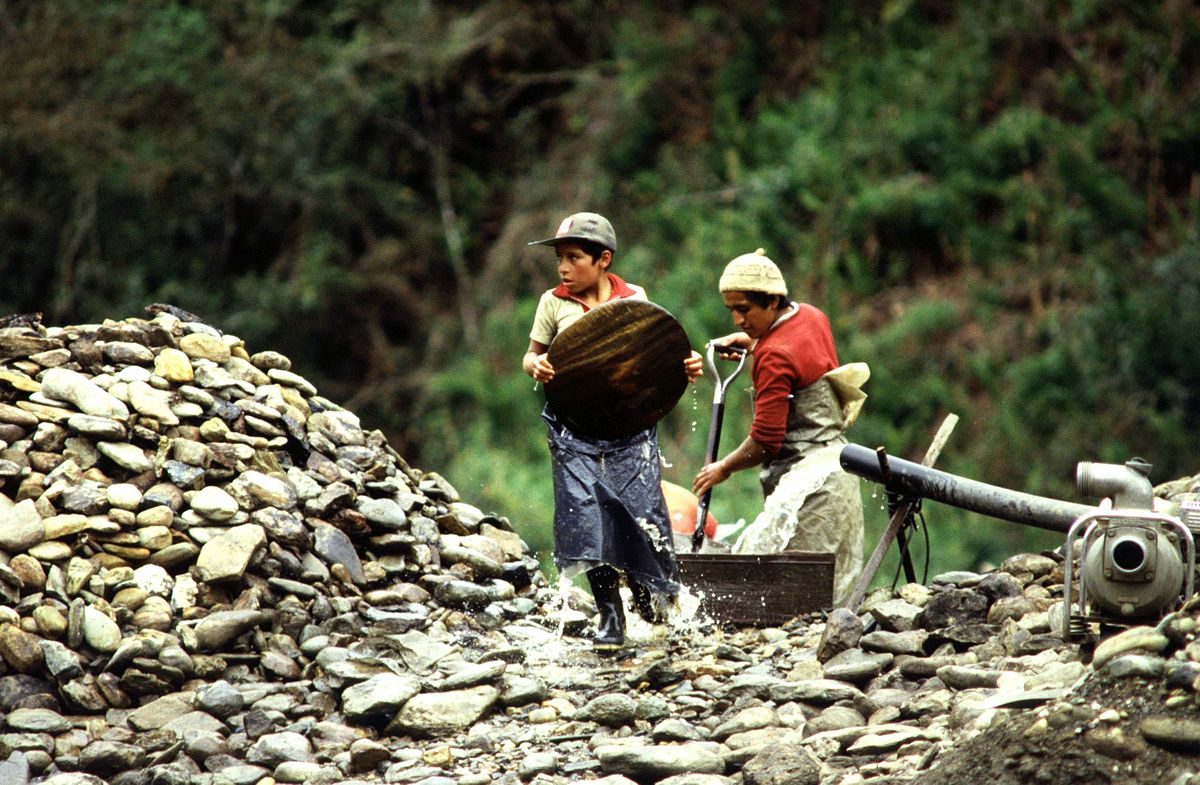
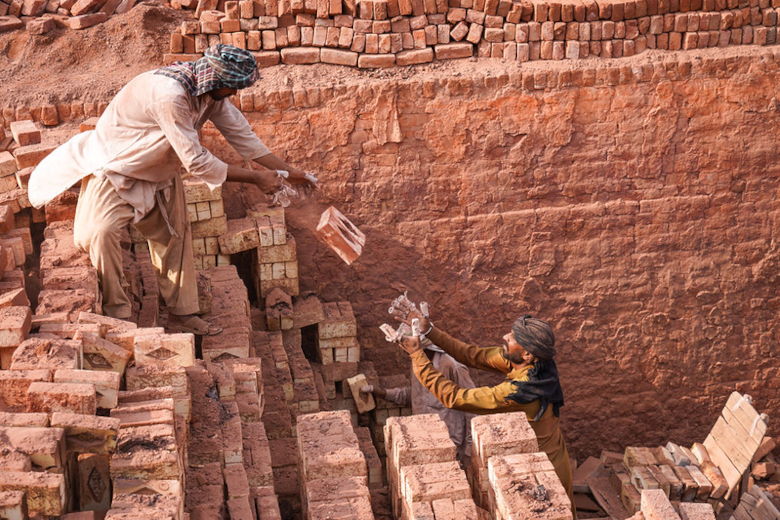
Children in Ecuador engaged in child labor (Photo: Maurizio Costanzo/Flickr [CC BY 2.0])
Along with the realities facing children around the world, we examined how Japan reports on them. Judging from Japanese coverage, it can appear as if the extremely serious and large-scale issues of poverty, health/medical care, and education barely exist. This likely stems from Japanese news organizations’ emphasis on novelty, a tendency also seen broadly in international reporting. However, in poverty, health/medical care, and education, there are many aspects with novelty, such as changes in causes and solutions and worsening or improvement of current conditions. While novelty is an important facet of news, overemphasizing it leads to neglect of existing problems, phenomena, and trends, making it impossible to grasp the situation. This creates a gap between readers’ understanding and reality and hinders an accurate perception of children worldwide. Reporting major ongoing issues alongside new events would allow us to convey the situation of children around the world more accurately and comprehensively.
Note 1 To count each article equally, when a single article covered two themes or countries/regions, each was counted as 0.5. For example, if one article reported on both conflict and human rights abuses, it was counted as 0.5 for conflict-related articles and 0.5 for human rights abuse articles.
Writer: Ayaka Hino
Graphics: Ayaka Hino






新規性がないと新聞に載せるべきニュースとは言えない。勿論それらも載せた方が良いのだろうが、載せるべきものを含めて、様々な制約上載せられないケースがある。一方でそういったものが載るケースもある。それは載せるべきニュースがない時だ。大事件がなかった時と言い換えても良い。そういう時は紙面を埋める為に事前に用意された記事、暇ネタを載せる。「暇」って、貧困や児童労働等は緊急性の高い問題だろと言われるだろうが、とにかく暇ネタと言うのだ。逆に言えば、そうでもないと載らない。
よって、そういう類いを高度に知りたいなら新聞を見ても不十分である可能性が高い。では、何処を見ればいいのか。私には思いつかない。例えば本文にでたユニセフについてはその活動内容が中心だ。ユニセフは支援団体、あるいは表現の自由の規制に関するロビー団体であるとも言えるだろうが、報道機関ではない。結局現地のメディアを見て検索して回るしかないのか。
問題の本質を理解するためにはスロージャーナリズムももっと重視されていってほしいなと感じました。
良記事だと思いました。
大事なこと、知られるべきことも新規性を持たせて報道することができる、と言う着眼点というか、アドバイス、的確だと感じます。
スポーツに関するニュースはやはり多いですね。スポーツについて報道するメリットはあるじゃあるけど、教育の方が重要ではないかと。
武力紛争の影響についてのところで、死因が兵器や爆弾によるものより、貧困によるものの方が多いということに驚きました。