
In Brunei, Southeast Asia, on April 3, 2019, a strict criminal code revision came into force that imposes flogging, imprisonment, or death by stoning for homosexual acts and adultery. Such “anti-LGBT (Note 1) laws” have been the target of international condemnation and have sparked opposition from human rights groups within Brunei. Brunei is an extreme example, and across the 11 countries of Southeast Asia, laws related to LGBT rights vary greatly by country. While some countries are expanding LGBT rights, overall there has been backsliding, and more countries are suppressing those rights. This article introduces the situation of LGBT people in Southeast Asia.
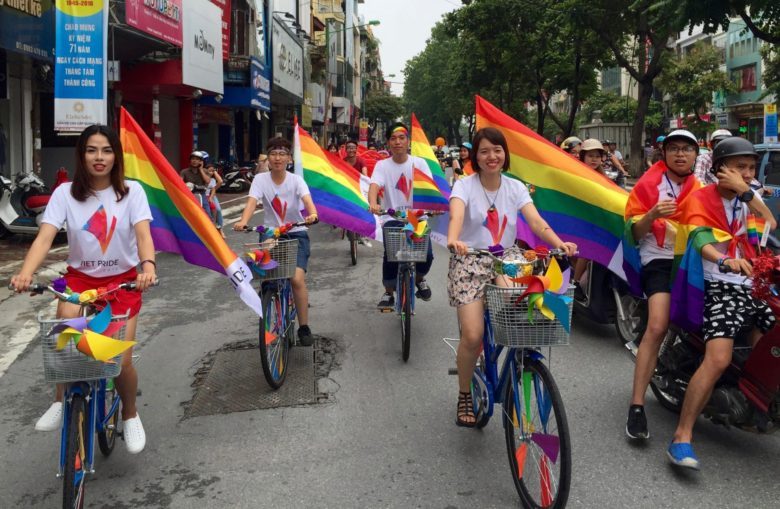
2016 Pride March in Vietnam (Photo: USAID Vietnam/Flickr [CC 0])
目次
Same-sex conduct and the law
Although laws related to LGBT rights differ by government, they span a wide range from same-sex conduct and same-sex marriage to the recognition of gender identity and its expression. First, we introduce laws concerning same-sex conduct.
In Southeast Asia, not a few countries still have laws that criminalize consensual same-sex relations, and some impose imprisonment or even the death penalty. In some countries, even if they do not go as far as the death penalty, the content of the penal code may differ by gender. On the other hand, there are also countries where, although same-sex conduct is nominally illegal, the penal provisions that regulate such conduct are not actually enforced.

Let’s look at examples by country. As mentioned above, Brunei introduced the strictest law in Southeast Asia, imposing death by stoning for homosexuality. In Malaysia and Indonesia, laws differ by state, and in Malaysia in particular these laws have sometimes been used by politicians for power struggles. For example, former Prime Minister Najib Razak, then leader of the ruling party, charged former Deputy Prime Minister and then opposition leader Anwar Ibrahim with forcing same-sex acts in an apparent attempt to oust him. As a result, Anwar received a guilty verdict for same-sex conduct in 2015 and served three years.
In Indonesia’s Aceh Province, it is not uncommon to impose public caning under Islamic law for same-sex conduct. In 2018, in front of a mosque (Note 2) in Banda Aceh, the provincial capital, a same-sex couple was caned more than 80 times during a public caning. By contrast, Bali in Indonesia is so tolerant of same-sex conduct that it is called an “LGBT haven.” In Singapore, same-sex conduct is illegal, but the penal provisions are not actually enforced. In Timor-Leste, Thailand, the Philippines, Laos, Cambodia, and Vietnam, same-sex conduct is not criminally punished, but neither is it explicitly recognized, leaving a gray area.
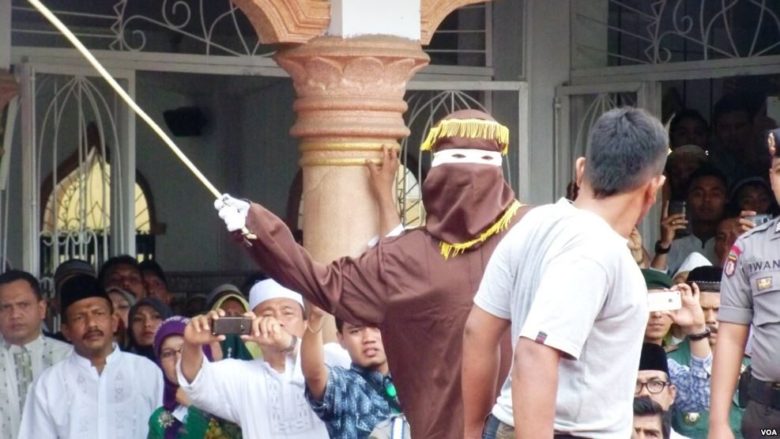
Public caning in Banda Aceh, Indonesia (Photo: Voice of America/Wikimedia Commons [CC 0])
Same-sex marriage
So what is the current legal status of same-sex marriage in Southeast Asia? Same-sex marriage, including civil partnerships (a legal relationship for same-sex couples comparable to opposite-sex marriage), is not legally recognized across Southeast Asia. In the Philippines, Singapore, and Brunei, same-sex marriage is not only unrecognized but is deemed illegal. However, in other Southeast Asian countries, even if same-sex marriage is in principle prohibited, some loopholes exist. For example, in Cambodia, same-sex marriage is strictly prohibited, but in 1995 there was an exceptional case in which a same-sex marriage was legally recognized. Furthermore, in Vietnam, a 2014 revision of the Marriage and Family Law abolished the ban on same-sex marriage. As a result, same-sex marriages in Vietnam are no longer subject to fines, but they are not explicitly recognized by law either.
Gender identity and its expression
Next, we also look at laws in Southeast Asia concerning gender identity and its expression. In this region, gender identity (Note 3) is a major issue for the LGBT community. While some countries legally recognize a gender identity and expression different from that assigned at birth, in countries that do not, such individuals can be prosecuted and face legal sanctions. However, among the countries that do not legally recognize gender identity, there are some that in practice do not punish such conduct. At present, it is not possible for governments to legally recognize the existence of a “third gender” beyond the male–female binary.
Looking at specific examples, in Singapore and Vietnam, it is possible for transgender people to have their desired gender legally recognized. However, in other countries, such as Thailand, changes to administrative records to align legal status with gender identity are not permitted. Although Thailand in 2015 became the first country in Southeast Asia to pass a law protecting freedom of gender expression and plays a central role in gender-affirming surgery, according to the United Nations Development Programme (UNDP), Thailand does not allow changes to administrative records to align legal status with gender identity.

Speech on HIV by a trans woman in Bangkok (Photo: Richard Nyberg/USAID [CC BY-NC 2.0])
Even in countries where transgender people’s gender identity is legally recognized, they face various difficulties. For example, in Singapore and Vietnam, unless one undergoes surgery to remove the gonads and alter the external appearance of the genitals (sex reassignment or gender-affirming surgery), a legal change of gender is not recognized. However, in Vietnam, undergoing gender-affirming surgery and hormone therapy is considered illegal, forcing those seeking transition either to purchase hormones on the black market or to have surgery in neighboring Thailand. It is by no means rare for people to receive illegal services on the black market and put their lives at risk.
Historical and religious background
We have outlined the legal rights of LGBT people in Southeast Asia, but what underlies them? First, we must consider the historical context of Southeast Asia. With the exception of Thailand, Southeast Asian countries were historically under colonial rule. Because of laws enacted during the colonial era that prohibited same-sex relations, homosexuals have long been treated as criminals. In Myanmar, Malaysia, and Singapore, former British colonies, the laws introduced during the colonial period remain in place and have now become a “model for anti-homosexuality laws.” In Indonesia, before it became a Dutch colony, some ethnic groups had concepts that went beyond the male–female binary and did not discriminate against gender diversity. However, after colonization, the Dutch introduced a ban on same-sex relations, and the tradition of gender diversity was weakened.
Next, from a religious perspective. In many Southeast Asian countries, for religious reasons LGBT people are regarded as morally deviant. Today, about 78% of Brunei’s population is Muslim, and under absolute monarchy the country has adopted strict Sharia since 2014. In recent years, in Indonesia (about 90% Muslim) and Malaysia (about 60% Muslim), where Muslims are the majority, the rise of Islamic conservatism has led to increasingly strict laws against LGBT people.
The view that LGBT people are a social threat is not limited to Islamic conservatives but has also spread among the general public. In a 2013 survey by the Pew Research Center, 72% of Indonesian Muslims supported the implementation of Islamic law banning same-sex conduct. In Malaysia, where Muslims make up the vast majority of the population, 86% of respondents chose “should not accept” in response to the question “Should society accept homosexuality?” Meanwhile, unlike other Indonesian provinces, Bali’s population is 83% Hindu. Hinduism is said to be tolerant of sexual diversity, so it is inferred that people in Bali are more tolerant toward LGBT people.
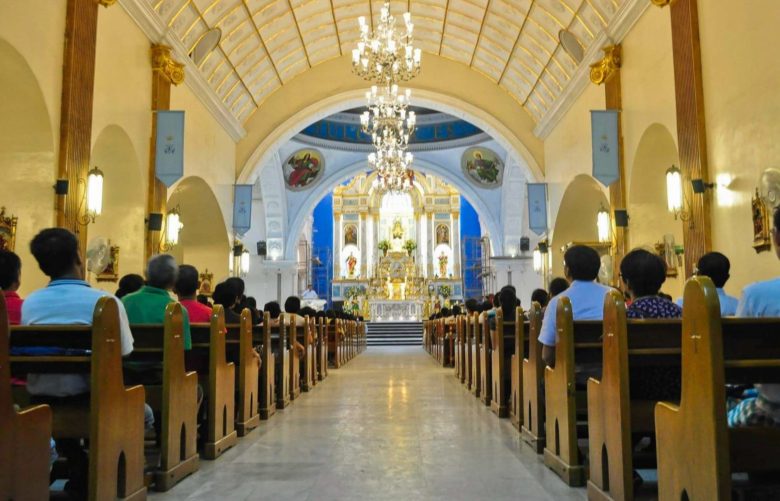
Church in Santa Maria, Bulacan, Philippines (Photo: Secaundis/Wikimedia Commons [CC BY-SA 4.0])
In countries where Christians are the vast majority, such as the Philippines, based on Catholic teachings, divorce, premarital sex, contraception, abortion, and homosexuality are prohibited. Although the Philippine Constitution provides for the separation of church and state, the Church’s strong influence over the populace has in practice given Christianity significant sway over political decision-making as well. As a result, there remain considerable intolerant attitudes toward LGBT people in the Philippines.
Even in Thailand, where Buddhists are many and regulations specific to LGBT people are not stated, LGBT people may be subjected to “correction” through religious activities. In fact, even in Thailand, which outwardly appears tolerant of the LGBT community, about 2.5% of teenagers who identify as LGBT are subjected to such correction. With the aim of changing their sexual orientation or gender identity to fit heterosexual norms, there are cases in so-called conversion therapy (Note 4) where parents force them to enter monkhood.
As these examples show, the historical and religious background in Southeast Asia is strongly reflected in the suppression of LGBT legal rights.
Discrimination against LGBT people and LGBT movements
As discussed above, discrimination and prejudice against LGBT people have permeated society on the basis of religion, morality, or history. Due to the existence of such legal restrictions, LGBT people in Southeast Asian societies face discrimination in all aspects of life. For example, they are subjected to verbal harassment in the workplace and in educational settings, online bullying, exclusion, physical violence, and sexual assault. Access to healthcare and insurance is also an issue.
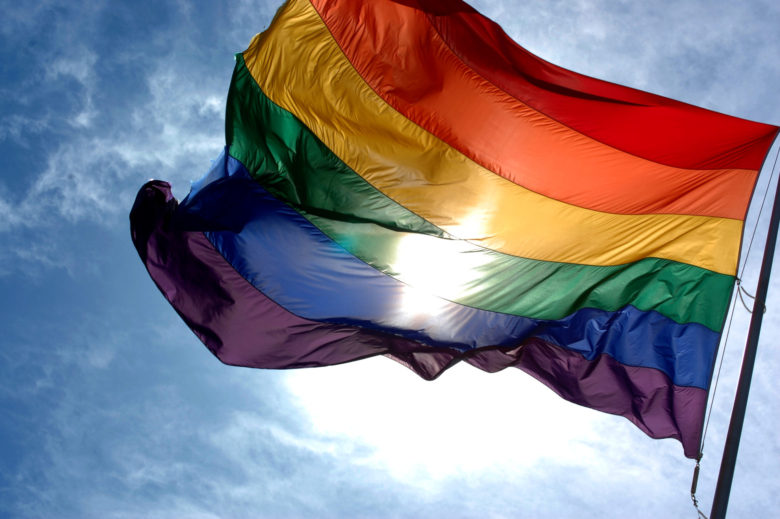
The rainbow flag symbolizing the dignity of LGBT people (Photo: Ludovic Bertron/Flickr [CC BY 2.0])
Despite countless challenges, LGBT movements in Southeast Asia are expanding to eliminate discrimination against LGBT people. For example, to advocate for LGBT rights in the region, LGBT activists from eight Southeast Asian countries established a regional non-governmental cooperative body in the Philippines called the ASEAN SOGIE (Note 5) Caucus (ASC). In December 2018, ASC launched the ASEAN Leadership Week, creating a forum for discussion among Southeast Asian countries about LGBT rights. In addition to interstate cooperation, LGBT movements are expanding within each country. According to a 2014 UNDP report, in Indonesia there are currently 119 organizations supporting LGBT communities with knowledge dissemination on HIV prevention and more. In Singapore, the Pink Dot (PINK DOT) event was launched in 2009 to publicly advocate for LGBT rights and legal measures to eliminate discrimination. While there were about 1,000 participants in 2009, participation grew to 20,000 in 2019.
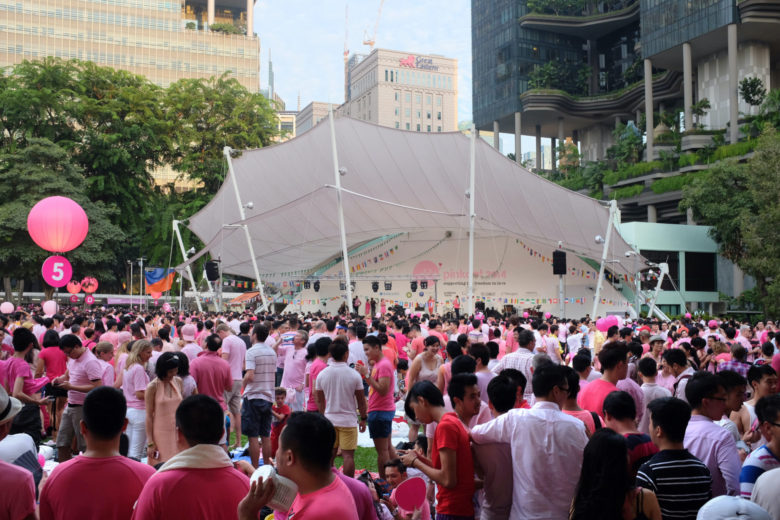
The annual Pink Dot event in Singapore (Photo: Jnzl’s Photos/Flickr [CC BY 2.0])
As an outcome of LGBT movements, efforts like Pink Dot in Singapore suggest that young people are becoming more tolerant toward LGBT people. As a result, in November 2019, Section 377A of the Penal Code, which criminalizes sexual relations between men, was being challenged in court as a violation of fundamental rights guaranteed by the Constitution, according to a Pink Dot spokesperson in an interview with GNV (Note 6). In Thailand, an anti-LGBT discrimination law came into effect in 2015, prohibiting any discriminatory policies, laws, or rules by the government or companies against LGBT people.
LGBT movements in Southeast Asia will likely play a major role in eliminating discrimination against LGBT people in the future. In response, we will be watching closely to see what measures each government takes going forward.
Note 1: LGBT: Lesbian (L), Gay (G), Bisexual (B), and Transgender (T). There are various other identities such as Intersex (I) and Queer (Q), and LGBT is used as a general term for these diverse identities.
Note 2: Mosque: A place of worship in Islam.
Note 3: Gender identity: One’s internal sense of gender.
Note 4: Conversion therapy: In Japanese it is called “tenkō ryōhō.” Conversion therapy refers to attempts to change a person’s sexual orientation through psychological or psychiatric interventions.
Note 5: ASEAN SOGIE: ASEAN stands for the Association of South-East Asian Nations. SOGIE is used as a collective term for Sexual Orientation, Gender Identity, and Gender Expression.
Note 6: Phone interview with the author, November 18, 2019
Writer: Yow Shuning
Graphics: Yow Shuning












とても勉強になりました。日本人は、LGBTについても宗教についても比較的疎いので。台湾などで同性愛が認められたことは知っていたが、逆戻りしてしまっているケースもあるのかと驚いた。性自認も恋愛も自己表現のうちのひとつ。綺麗事かもしれないけれど、すべての人が誰にも邪魔されずに本当の自分を出せる世界になるといいなと思います。
とても興味深い記事でした。宗教的理由でLGBTの人々の権利が奪われているのは聞いていましたが、実際に国民全体としてもあまりLGBTに対して良いイメージを持っていない国もあるということは知らなかったので驚きました。LGBT保護の活動がもっと広がっていくといいなと思います。
「LGBTを矯正する」という表現が印象的でした。私は性的少数者ではないので、全面的にLGBTの方々を理解することはできませんが、誰かを愛することに性別を固定させる必要はあるのだろうか?と感じる場合がしばしばあります。徐々に寛容な世界になることを祈るばかりです。
タイはLGBTに全面的に寛容なのだと思っていました。
これほど世界的にLGBTが認められつつある中でまだまだ課題は山積みですね。
植民地時代に制定された法がその後深く人々の価値観に影響するんだなと思い、その責任は重いなと感じました。
ディズニー VS フロリダ州とか
慰安婦、徴用工、部落(同和は怖いな)
ヘイト法、親日罪、外国人参政権、LGBT、環境活動家、反原発
騒いでいる人はみな同じ……