
“There is a world that goes unreported.” With that awareness, we at Global News View (Global News View:GNV) have been pointing out the scarcity and bias of international reporting and sharing information on global issues and phenomena to fill those gaps. The media is supposed to not only disseminate information about the world, but also play a “watchdog” role: monitoring those in power and organizations where wealth is concentrated, exposing and calling out problems when they arise. But how well is Japan’s media fulfilling that role? From such questions, GNV has aimed to be a “watchdog of the watchdogs”—monitoring the media itself within the field of international reporting and identifying problems. And in 2019–9, we celebrated our third anniversary.
Globalization and climate change are advancing, leaving no region that can be dismissed as someone else’s problem. Technology also continues to progress, creating an environment in which information is easy to obtain. In such a world, what and how should news organizations communicate from among the vast amount of information? What information would enable people to understand the world? Here, we would like to share what concerns us, what we value, and how we reflect that in GNV’s policies and structure.

(Photo: pxhere/[CC 0])
目次
GNV’s concerns
There are three main issues GNV is concerned about. The 1st is that international reporting is scarce. By the numbers, only about 10% of all reporting covers the world. That share is even less than half of sports coverage.
The second is that international reporting captures the world only in fragments. Please see the map below. By country, the most-covered 3 countries—such as the United States, China, and North Korea—can account for nearly half of all international reporting. In contrast, articles on large continents like Africa and Latin America are each only 3.3% and 2% of international coverage overall—extremely low—making low-income countries less likely to be covered.
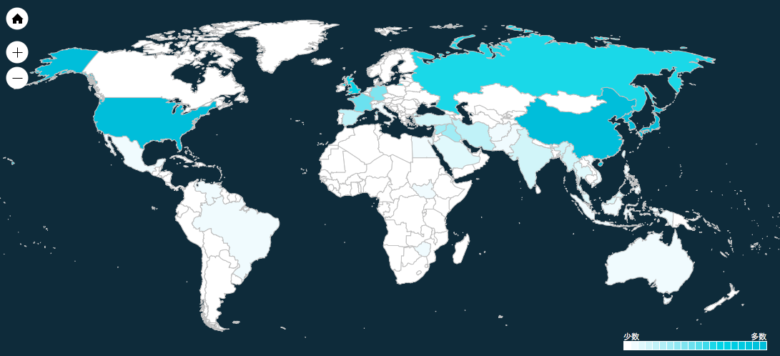
As globalization advances, not only trade and security, but also climate change, poverty, migration, pollution, waste, and infectious diseases are global challenges. Japan is both influenced by the world and exerts influence on it. We are even in an era when the very validity of viewing the world on a nation-by-nation basis is questioned. Nevertheless, Japanese media focuses only on limited parts of the world, turning a blind eye to many other issues, phenomena, and events.
The third is that there is a lot of reporting that only pushes out alerts and events—so-called breaking news (breaking news). Such news rarely fleshes out background and context. With mere events and facts, it is difficult for readers to grasp the situation and its significance. In this situation, people cannot fully understand what is happening in the world, and their interest will not grow.
Therefore, GNV seeks to identify what international reporting fails to capture and to disseminate information that enables people to understand global issues and phenomena more deeply. With that in mind, we would like to explain what we value.
What we value
First, in analyzing international reporting, we focus on biases and trends at multiple levels. We analyze which regions and countries get more articles, what topics are covered, and from what angles. We also examine article length and how long a story stays in the news cycle to analyze overall reporting tendencies. Based on that, we point out how coverage can be improved. Beyond newspapers, we also look at a broad range of media such as television and online media.

Media across various platforms (Photo: Gregor Fischer/Flickr[CC BY-ND 2.0] )
However, merely pointing out problems in current international reporting is not enough to deepen understanding or cultivate interest. So GNV itself reports on under-covered global issues and phenomena in place of conventional outlets. In doing so, there are three things we especially value.
The 1st is comprehensiveness. Given how closely interconnected the world has become, one cannot accurately understand global issues and phenomena without the big picture. We emphasize comprehensiveness not only geographically but also across issues and fields. We strive to cover global challenges that transcend borders as evenly as possible.
The second is objectivity. Rather than conveying issues from the standpoint of a particular country or position, we aim for as multi-perspective an approach as possible. That said, perfect objectivity is only an ideal and practically impossible; inevitably one must take some position. When GNV departs from objectivity, we side with those farther from concentrations of power and wealth—the vulnerable. People living in poverty, who are on the weaker side, are also a global majority. We therefore regard this as an unavoidable “bias” in fulfilling a watchdog role that gives voice to the voiceless.
The third thing we value is writing explanatory articles with a long-term perspective. As noted in the GNV concerns section above, because word counts and airtime are limited, many articles inadequately explain background and context. GNV aims not for readers to consume numerous global issues and phenomena as mere news items, but to delve into and understand each one. To that end, we analyze issues in depth and strive to present them clearly to readers without unduly sacrificing the complexity of the background and context behind them.
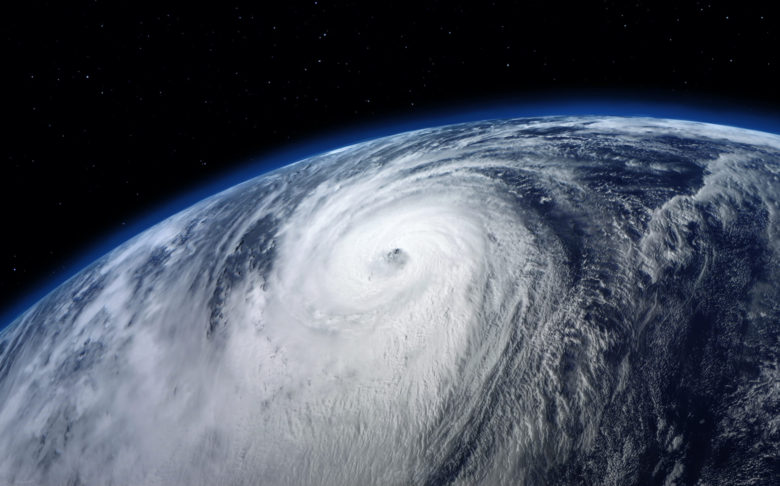
Typhoon (Photo: Photobank gallery/Shutterstock)
Next, we would like to explain how these are reflected in GNV’s structure.
Specific decisions
First, the type of article responsible for analyzing international reporting is called News View (News View:NV). This NV functions as the media watchdog. And the type of article that actually conveys global issues, phenomena, and events is called Global View (Global View:GV). GNV publishes 1 explanatory article each week, currently rotating in the order of NV,GV,GV. We run more GV pieces because, rather than emphasizing the critical aspect of pointing out what the media fails to capture, we want to stress the constructive aspect of actually conveying the unreported world in place of the media.
Here are the concrete rules we follow when writing.
First, on comprehensiveness. In NV, we seek balance by conducting both macro analyses of overall international reporting trends and micro analyses focused on specific places and time periods. In GV, to avoid bias toward particular regions or countries, GNV divides the world into six convenient regional groups (East, South, and Central Asia; Southeast Asia and the Pacific; the Middle East and North Africa; Sub-Saharan Africa; Europe; and North and South America) plus one group focused on issues and phenomena common to the entire world (Global Issues), for a total of 7 groups, and publishes articles in turn.
In doing so, because GNV aims to complement what reporting fails to convey and achieve global comprehensiveness in international coverage, we do not write articles centered on countries or regions—such as the United States, China, the Korean Peninsula, or Western Europe—that the media already covers heavily. We also choose topics so that no region is left behind within each group. Furthermore, we write on as many fields as possible—society, economy, security, environment, and more—while considering overall balance.
Next, objectivity. In NV we focus on the importance of issues and events and on actual coverage trends. GNV believes that, beyond a country’s relationship to Japan, the scale of an issue or phenomenon itself should be reflected in the volume and patterns of coverage. Therefore, we identify large-scale issues and phenomena that go unreported. In GV, to help readers grasp the whole picture as it is, we do not write from Japan’s standpoint. Writing from Japan’s standpoint would mean viewing the situation through the biased lens of its relation to Japan, undermining objectivity. For that reason, we also do not focus on what impact a given topic has on Japan.
Moreover, GNV does not accept advertising revenue or government funding. We therefore do not write with corporate or government opinions in mind. And because we do not sell news as a product, we do not write articles to chase pageviews. In these ways we maintain the objectivity of our articles.
Next, on writing explanatory articles with a long-term perspective. In NV, we sometimes analyze coverage trends spanning more than 30 years. In GV, we write so-called “slow news”—not focused on speed, but deeply analyzing issues and phenomena and explaining them clearly to readers. In contrast to the prevalence of breaking news, we want to serve an archival role with articles that remain readable over time. Wherever possible, we connect to the latest developments, but to probe the background of issues and events, we explain the relevant history and context so that readers can grasp the situation comprehensively.
Also, when writing explanatory articles, we do not neglect careful explanation so that readers can understand. The reality of any global issue, phenomenon, or event is complex. The more one simplifies it into a news item, the harder it becomes to understand the situation. As a result, our articles may be relatively long, but while striving for clarity, we explain in ways that do not sacrifice the complexity of the realities, backgrounds, and contexts.
Challenges ahead and what we aim for
As described above, GNV has analyzed international reporting in Japan and, while fulfilling the role of a watchdog of the watchdogs by pointing out problems, has aimed to help people understand global issues, phenomena, and events comprehensively. To that end, we have prioritized publishing objective, clearly explained articles. A challenge going forward is to increase forums for dialogue with media professionals. Rather than merely broadcasting one-way suggestions on how to improve international reporting, we want to engage in discussion and cooperate.
Looking ahead, international reporting may become a target for cost-cutting in financially strained news organizations and, in opposition to accelerating globalization, may further decline and become more biased. Even so, GNV believes there is value in viewing the world objectively and has emphasized that. We will continue to monitor international reporting, share information about the unreported world, and foster understanding.

Reporting in progress (Photo: wellphoto/Shutterstock)
Writer: Maika Kajigaya










それぞれの記事や活動でどういったことを大事にしているのかがよくわかりました。この活動がさらに広がっていくといいですね!
これからの国際問題に国民がさらに意識を向けるよう、今後も多角的な見方をした報道を期待します。
紙面スペース等の都合上、何か載せると、何かを消さないといけない。どうやら著者はスポーツ報道を毛嫌いしているみたいだから、きちんと主張するべきだ。「スポーツを消して開いた面を国際面にしろ」と。そして叩かれればいいんじゃないか?
娯楽記事など要らないという者は、娯楽こそが収入源であるという側面をきちんと知るべきだ。正直私自身、運動面も囲碁将棋もテレビ欄も全く読まない。しかし、それがあるおかげで金を払う奴がいる。その金で報道がある。国際報道もしかり。著者にとり不都合な真実かも知れないが、扇情報道に文句言うのならまだしも、スポーツ報道の存在が誰かの迷惑になっているのでないのだから黙ってろということ。
また、貧困等が取り上げられないのは新規性が皆無だからでしょう。勿論重要課題には違いないが、ニュースではない。国際報道に限らずニュースにならなければ「とはもの」もない。ましてや紙面スペースの都合も考えれば……。新聞に出来ないからこそ、ニュースサイトでない貴サイトでやる価値があるのだろう。これは役割の違いだ。それと客観性云々言ってるけど左に寄りすぎではないか。
番犬の番犬の番犬っぽくなってしまいましたが、国際情勢を取り扱うメディアとして貴サイトには、GLOBEやフォーサイト、クーリエと並んで貴重な存在に育って欲しい思います。応援しています。
多様性と客観性。
グローバル化が進みボーダーレスな方向に一直線と思いきや、大国の自国偏重主義も増大。
そんな中で、GNVが掲げる精神。最大公約数か、妥協点なのか、最適化が非常に困難に思えるテーマに、真正面から正攻法で取り組んでいく姿勢に好感が持てますし、期待するところも大です。
客観的な報道は必要だが理想的すぎる、という表現に特に感銘を受けました。GNVの方針などが非常にわかりやすく、今後もこちらのサイトでの報道を見ていきたいと思います。
とても分かりやすかったです!
GNVのライターでありながら客観的にGNVについて書くのは難しかっただろうと思いますが、丁寧に描いていただいて読みやすかったです。
広告収入や政府からの資金を受け取らないとのことですが、ではどのようにして資金を調達し、当サイトを運営しているのですか?