
From August 26 to 27, 2019, torrential rains hit southern Mauritania’s Guidimaka region, and the area suffered severe flooding. In particular, the regional capital, Selibaby, received more than 300 mm of rain, causing extensive human and material damage.
According to reports, at least three people were killed and many injured; in addition, about 850 houses were completely destroyed and about 4,200 houses were damaged. Even after the rainclouds passed, much of the city remained inundated, and bridges connecting to western Mauritania were also said to be damaged. The Mauritanian government said it would provide food and tents to the affected areas, but in practice progress was slow, and many said adequate assistance was not reaching people.
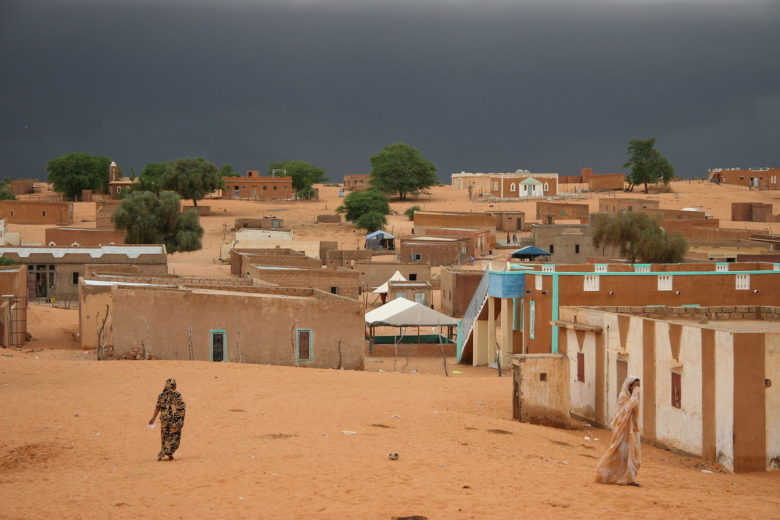
The calm before the storm. Bareina (Photo: Ferdinand Reus/Wikimedia Commons [CC BY-SA 2.0])
These are not the only natural disasters Mauritania faces. Due to the impacts of climate change and the lack of adequate responses to it, Mauritania has come under increasingly severe environmental stress over the past several decades. This article examines the challenges the country faces.
目次
Background
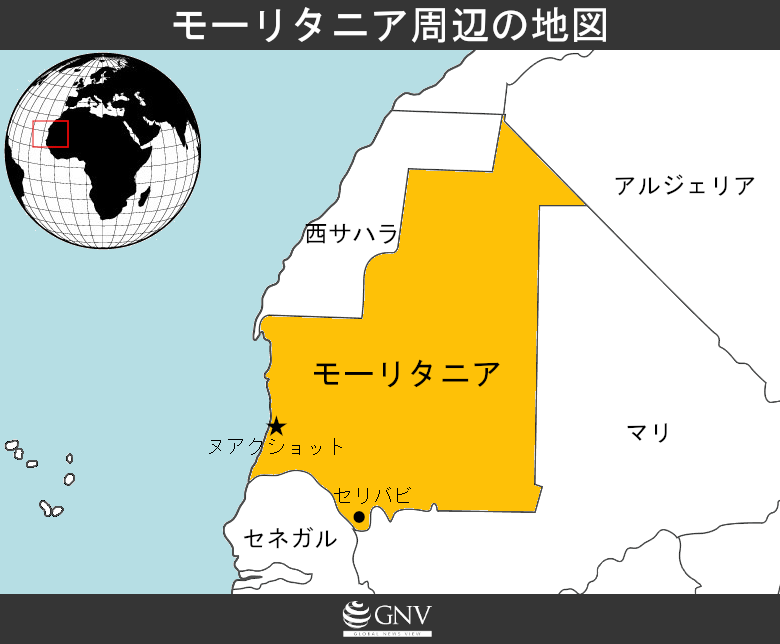
The Islamic Republic of Mauritania, a country on Africa’s west coast. Owing to its geographic characteristics, it is influenced by both North and West Africa, with the two cultures blended in religion, the economy, and politics. Although it has a vast territory of over 1 million km², most of it is covered by the Sahara Desert, and only about 0.5% of the land is suitable for cultivation. Its population is just 4 million, making it the world’s fourth least densely populated country.
Despite low rainfall, much agriculture relies solely on rainwater. As a result, supply cannot keep up with demand for staple grains such as rice and wheat, and the country is forced to rely heavily on imports for most grains and other foods. In industry, iron ore mining and fisheries are the main sources of foreign currency; GDP growth rose from 3% in 2015 to 3.6% in 2018. In urban areas, the development of commerce and services has also boosted GDP. However, Mauritania is increasingly confronted with both environmental problems such as sea-level rise and desertification and human-driven problems such as depletion of marine resources.
A flooded capital
Today, the capital Nouakchott is suffering from flooding. This is not the plot of a disaster movie—the capital of Mauritania is under real threat. Most of Nouakchott lies at sea level and is exposed to encroaching sea-level rise. The situation has worsened over recent decades, and recently flooding has also occurred in Nouakchott, home to about one million people.
Weak infrastructure exacerbates the damage caused by rising sea levels. The capital has no main drainage channels, and many residents dip into their savings to prepare for the rainy season that begins around August. As sea level rises, the groundwater beneath the city becomes more saline and rises, forcing residents to reinforce their homes and raise floor levels. In addition, flooding creates foul-smelling ponds, which has led to the spread of waterborne diseases in the city. Residents can do little but wait for the water to recede, unable to grasp the full extent of the damage until the floods subside.
Flooding in Nouakchott results from both environmental and human factors. Chief among them is the acceleration of climate change. Sea levels continue to rise and are projected to increase by 20–50 cm by the end of the 21st century. Moreover, in Nouakchott, the number of rainy days is increasing and the amount of rain falling in short periods is also increasing. As a result, the elevated groundwater level prevents rainwater from infiltrating the ground, forming ponds and causing floods. On the human side, the capital is shielded by large coastal sand dunes. While this may seem beneficial, as the population grows the city has expanded into the dune belt with incomplete infrastructure, thereby further increase the flood risk.
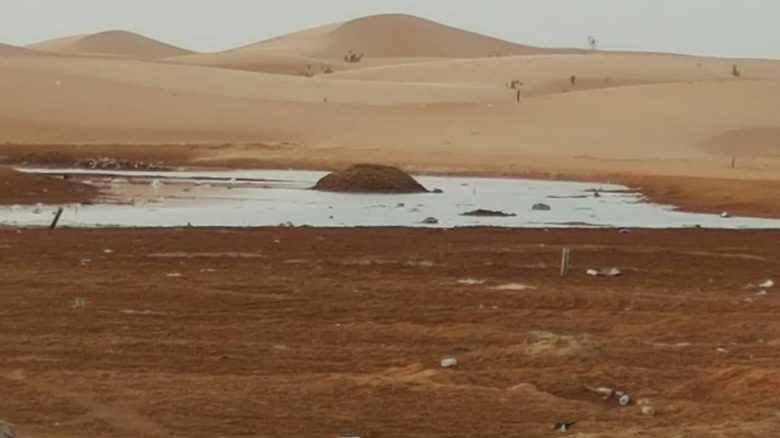
Flooding seen in Sukuk, a suburb of Nouakchott (Photo: Youssef Colibaly)
As measures against the looming threat, the government has invested in repairing the dune defenses and in tree planting, but these efforts remain insufficient and cannot address all the issues facing coastal areas. In 2007, the Mauritania Coastal Master Plan (PDAL) was launched to tackle these challenges, initiating and supporting projects that could lead to solutions. The plan proposed several measures, including establishing observation stations along the coast. However, to this day, little has been done to address flooding, and residents still struggle to prepare for harsher rainy-season downpours and rising water levels. Fundamental alternatives, including relocating the Mauritanian capital to another site, are now being proposed and considered.
Advancing desertification
Given its geography on the west coast of North Africa within the Sahara Desert, Mauritania is highly vulnerable to desertification. In fact, the capital Nouakchott faces threats not only from the sea to the west but also from encroaching dunes from the east. City residents worry daily about this threat. In addition, the southern part of the country, where most livestock and agricultural activities take place, is threatened by soil degradation, and with irregular rainy seasons, the livestock sector has been devastated. Desertification heightens the risk of drought and greatly undermines fertile soils and agricultural productivity. These problems likewise force the country to depend on imported grains and food aid.
Multiple factors underlie the acceleration of desertification, including environmental characteristics and climate change, including global warming. And this desertification is worsening due to sand movement across dunes caused by sandstorms. In addition, poor management of soil and water—exemplified by unsustainable agriculture and other land uses in Nouakchott—has further exacerbated desertification.
There is no doubt that urgent action is needed to curb the damage. The government has taken various measures. One example is the large-scale tree-planting program around the capital, known as the Nouakchott Green Belt, led since 1975 to protect the capital from the advancing desert. However, the capital itself has continued to expand, and so far there have been no visible effects in terms of protecting the city.
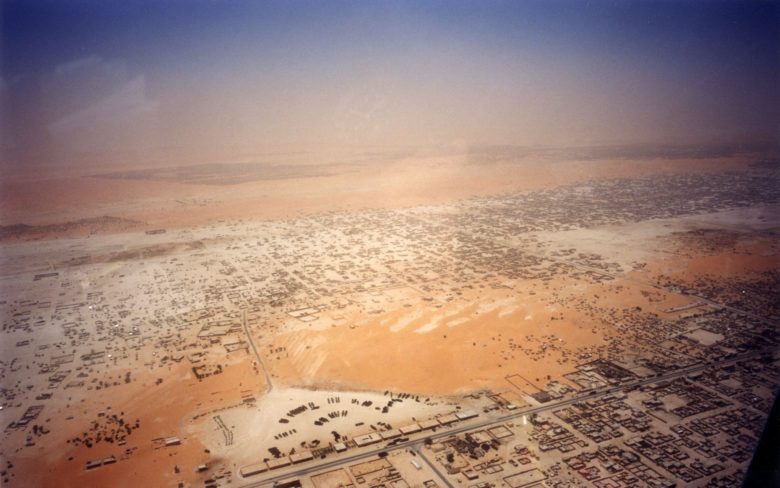
Sand sweeping into Nouakchott (Photo: William Darcy Hall/Wikimedia Commons [CC BY-SA 3.0])
In 1973, to combat drought, pursue the country’s sustainable development, and achieve food self-sufficiency, many countries affected by desertification in the region established the “Permanent Interstate Committee for Drought Control in the Sahel (CILSS).” However, the Mauritanian ministry responsible for environment and sustainable development states that, because the issues were complex, the targets set were ultimately not achieved.
Against this backdrop, the continent-wide, well-funded initiative to grow greenery along 8,000 km known as the Great Green Wall may hold the key to turning the situation around. Mauritania is one of the countries leading this project, which aims to end land degradation and promote forest regeneration. Even so, until breakthrough, efficient ideas emerge to tackle desertification, Mauritanians will have to contend with the harsh conditions they face and prepare for the worst.
Depleting marine resources
Mauritania’s coast is extremely rich in fisheries and is one of the most productive fishing grounds in the world. China, Spain, and Japan are major importers of seafood caught in Mauritania, and fisheries account for about 15% of Mauritania’s budget revenues and 45% of its foreign exchange earnings. Despite this dependence on fisheries, climate change and overexploitation of fishery resources are threatening coastal biodiversity and fish stocks in Mauritania. This directly affects the sustainability of fishing income and the livelihoods of people who depend on fishing.
As marine life worldwide is affected by rising seawater temperatures due to climate change, Mauritania is particularly hard hit. According to data, the waters off Mauritania and Senegal are warming faster than other equatorial regions. The effects of overfishing have also become conspicuous. The amount of fish landed in Mauritania about 46% increased, and as a consequence resources have begun to decline. In fact, the result has shown up in supply: in 2018, exports of octopus from Mauritania to Asian countries fell sharply. It is also estimated that across West Africa, by 2050 half of jobs related to fisheries will disappear due to climate change.
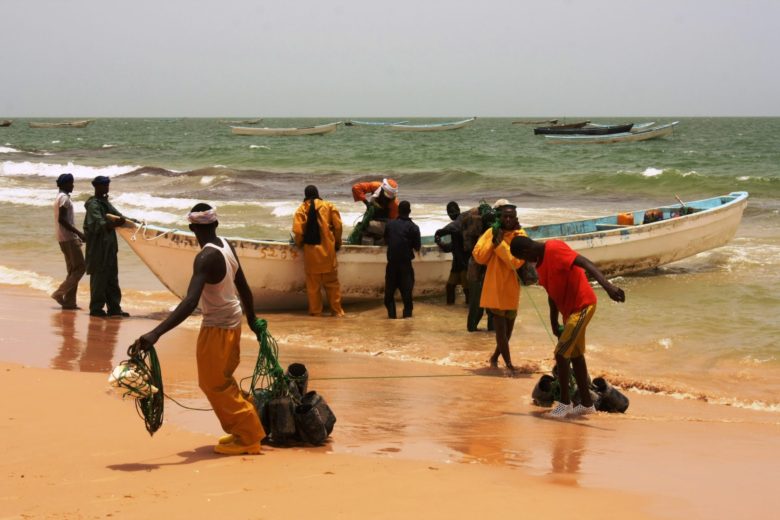
Fishermen returning from octopus fishing (Photo: Uzabiaga/Wikimedia Commons [CC BY-SA 4.0])
It is also said that fishing activities by foreign vessels are one cause of overexploitation. One example is the agreement concluded with the Chinese government in 2010, which sparked controversy after criticism from institutions inside and outside Mauritania. Under this contract, in exchange for building seafood processing plants in Mauritania, China obtained fishing rights in waters under Mauritanian jurisdiction. As a result, profits accrued to Chinese companies rather than within Mauritania. Some past deals with the EU have also been criticized.
Recently, the Mauritanian government has taken several steps to increase transparency in fisheries. For example, in 2018 it became a participant in the Fisheries Transparency Initiative (FiTI), a global effort to provide detailed information on fishing agreements and protect marine ecosystems from overfishing. Still, it is unclear how much such measures will alleviate the problems.
Challenges at home and abroad
Mauritania and its people face an uncertain future. Since the 1960s, they have been seriously affected by droughts, floods, sea-level rise, and desertification; moreover, overexploitation of Mauritania’s natural resources—such as its marine resources—has had a major impact on residents’ lives. Climate change is the cause of many of these problems. Although Mauritania has contributed little to the causes of climate change, it is suffering tremendous damage from it. At the same time, resource abuse and inadequate management and adaptation strategies are further worsening the situation.
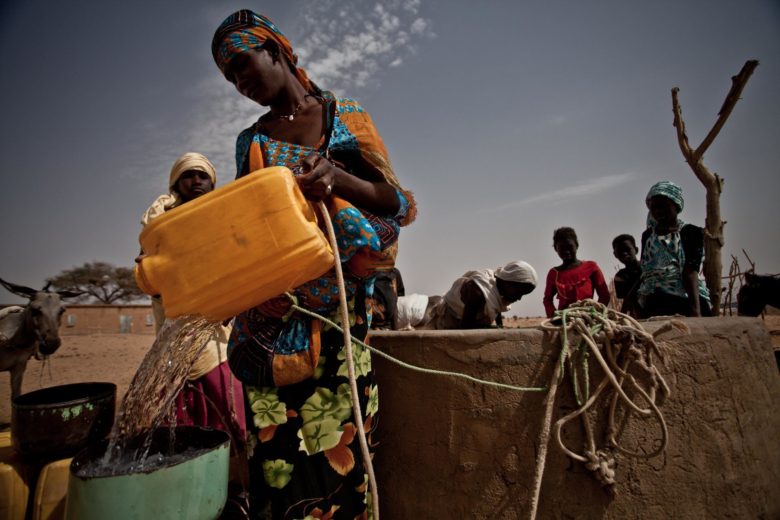
Precious water from a well. Natriguel (Photo: Oxfam International/Flickr [CC BY-NC-ND 2.0])
What is needed now are immediate solutions addressing both environmental change and human activities. Planning and implementation to tackle root causes are required, including afforestation, construction and maintenance of essential infrastructure, and promoting transparency around the development of the country’s natural resources by foreign governments and companies. Most importantly, it will take global cooperation to fight climate change—the great common enemy of humanity.
Writer: Mohamedou Nasser Dine
Translation: Taku Okada
Graphics: Yumi Ariyoshi
We also post on social media!
Follow us here:





日本から離れているように感じる国でも、起こっている問題は日本に関係することが多いですし、やはり環境問題は世界共通の問題と捉えていくべきですね。
気候変動による異常気象などはさまざまな場所で起こっており、巨大な台風なども増えていることから、今一度私たちの生活について見直すべきだと感じました。
環境問題の影響はどこでもみられるが、やっぱりモーリタニアといった発展途上国の方が影響受けやすいですね。あと、日本がモーリタニアで獲れた海産物の主要な輸入国であることは初耳で、勉強になりました。
気候変動が実際に起こっているということがよく分かる状況ですね。
気候変動が嘘だと思っている人、自分には関係ないと思っている人に是非知ってもらいたいです。
気候変動の実害を真正面から被る、責任のない発展途上国の典型例ですね。
先進国に利用され疲弊させられてしまう国があるという現実に辟易してしまいます。
気候変動の影響がより深刻化すると、今のモーリタニアの現状が他の多くの国にも現れてくるかもしれないですよね。
他人事とも思えないことなのに、さらに追い討ちをかけるように他国が海洋資源の搾取をするのは悲しいです。
国土のほとんどが砂漠でびっくりしました…!
台風19号の時にインフラの有無で災害の被害が大きく変わることを実感しました。
インフラが整ってない砂漠の地域にこれからも異常気象が起こると思うと本当に怖いですね。
どうしていったらいいんでしょうか。
気候変動、海洋資源の乱獲などの影響を一気にこれほど受けている国があることに衝撃を受けました。