
Climate change threatens the survival of humankind. It is now a “climate crisis,” an emergency. Yet despite climate change being a global issue, it is clear that the media are not covering it in proportion to its severity. Out of this concern, an international movement called “Cover Climate Now” (Covering Climate Now) was launched. Timed to the UN-hosted Climate Action Summit in September 2019, the initiative aimed to increase the volume and improve the quality of reporting on climate issues, and GNV participated as one of the partner organizations. More than 300 media outlets worldwide took part; from Japan, only the Asahi Shimbun, Newsweek Japan, and GNV initially announced participation, with NHK joining partway through the campaign.
Now that the Climate Action Summit on September 23, 2019, and the “Cover Climate Now” campaign have concluded, I would like to look back at how this series of events was covered in Japan.
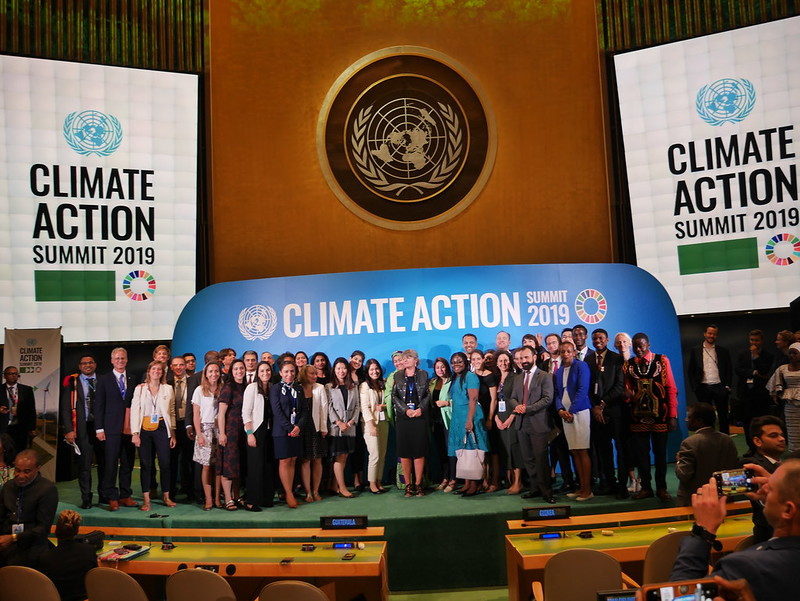
Climate Action Summit 2019 (Photo: UNclimatechange/Flickr [CC BY-NC-SA 2.0])

目次
A variety of story angles on the climate crisis
Behind the UN-convened Climate Action Summit lies the stark reality that efforts to tackle climate change are not advancing. Despite the major emissions cuts pledged under the Paris Agreement in 2015, emissions continue to rise. Alarmed by the lack of substantive progress, UN Secretary-General Antonio Guterres sought to reset the agenda through the summit. He has repeatedly called for fundamental reforms to the way our economies and societies are organized—people’s lifestyles, consumption, food, agriculture, industry, energy—and urged civil society and others to put pressure on governments that are trying to maintain the status quo while neglecting climate action. He also decided that countries without concrete plans to curb climate change would not be allowed to take the podium and speak at the summit.
Since late 2018, numerous studies and reports have been published showing that climate change is progressing faster than previously expected and that the damages are escalating enormously. In response, citizens—especially young people—have risen up, and in numbers previously unseen, in the millions, have continued to press governments and corporations. To promote action at the global level, the UN convened the Climate Action Summit, bringing together national leaders with genuine plans. In other words, there was no shortage of “news” to cover.
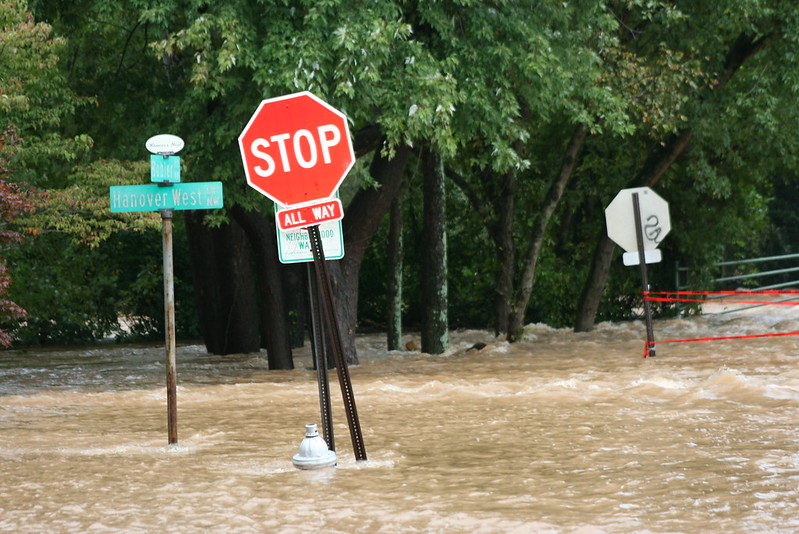
Extreme weather will occur more frequently due to climate change (Photo: WhosThisValGirl/Flickr [CC BY-ND 2.0] )
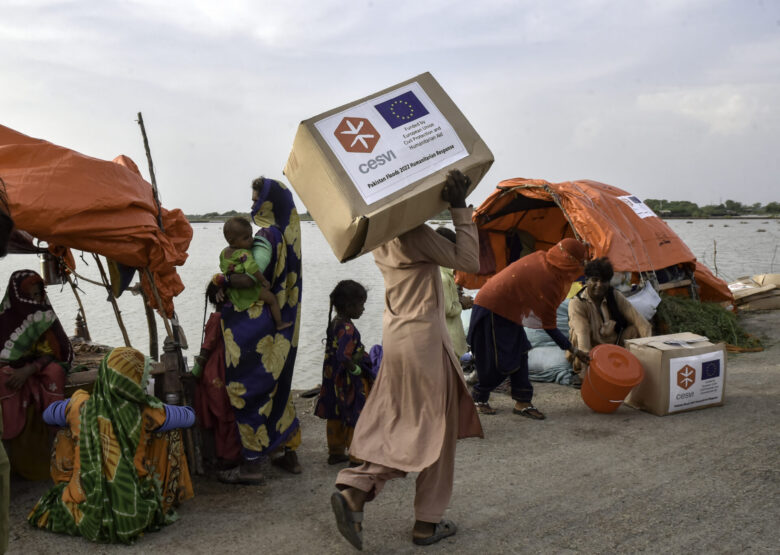
So how should the media report on the current state of climate change and this series of events? There are many angles and themes that could help readers and viewers understand the background and current situation of the climate issue. For example, at the level of readers and viewers themselves, one can connect it to everyday life by examining the relationship between excessive consumption and climate change, and the damages expected from global warming and the increase in extreme weather. To sketch the bigger picture, it is also important to probe the broader background and likely outcomes and show how we need to change our way of life, society, and economy for humanity’s survival. Furthermore, given the severe global wealth gap, it would be desirable to address issues such as “climate apartheid,” in which the harms of climate change are concentrated among low-income groups.
However, in a democracy the role of the media is not only to provide information and report the status quo. The “watchdog” role of monitoring those in power and exposing problems is also extremely important. In Japan, angles that should be emphasized include Japan’s status as a major emitter of carbon dioxide and the government’s reluctance to adopt robust measures. Specifically, these include inadequate emissions reduction targets; generous subsidies for the fossil fuel industry and financing by the Japan Bank for International Cooperation (JBIC). Far from being a leader in climate action, Japan was not even allowed to speak at the summit. Closely tied to government action, the media must also not neglect scrutiny of corporations in relation to climate change—for instance, the construction of coal-fired power plants domestically and their export overseas; the financing of fossil fuel development worldwide by banks such as Mitsubishi UFJ Financial Group, Sumitomo Mitsui Financial Group, and Mizuho Financial Group (link); and emissions across industries.
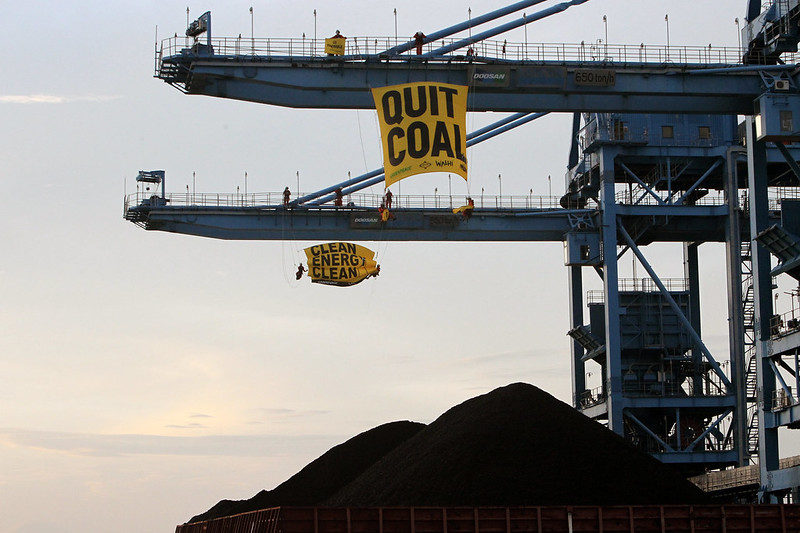
A protest at the Cirebon coal-fired power plant in Indonesia. Built by companies including Marubeni Corporation with financing from the Japan Bank for International Cooperation (JBIC) and other major Japanese private banks (Photo: Break Free/Flickr [CC BY-NC-SA 2.0] )
Worsening climate crisis and lagging countermeasures. So, how much and in what ways has the Japanese media reported on this issue—what themes and angles have they taken?
Coverage of the Climate Action Summit
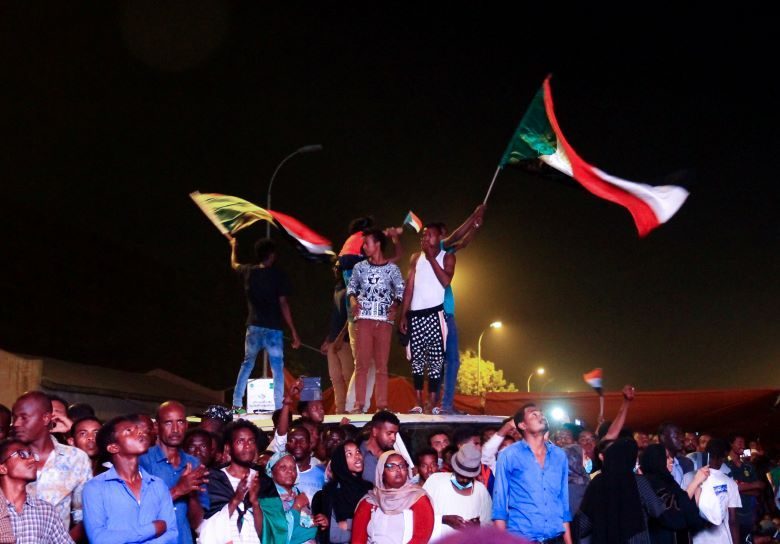
The UN’s Climate Action Summit was held September 21–23, 2019. Coinciding with this major international event, demonstrations calling for action on climate change took place around the world on September 20, involving 4 million people, making it one of the largest protests in history. We therefore examined Japanese coverage of climate issues over the week encompassing these events (September 20–26) (Note 1).
The results: the Asahi Shimbun ran 12 articles (10,575 characters) and the Mainichi Shimbun ran 9 articles (10,303 characters). While not commensurate with the seriousness of the issue, it was covered to some extent. In contrast, the Yomiuri Shimbun published 7 articles (6,329 characters), standing out for its lower volume. On NHK NEWS WEB, there were nine news items. That said, for all outlets, the volume of coverage of these historic climate-related events was no match for coverage of the Rugby World Cup being hosted in Japan. For example, during the same period the World Cup was featured in 58 news items—more than six times the volume of climate-related coverage.
On LINE NEWS, which provides a daily digest of 24 “must-know or trending news items selected by the editorial team,” there was only one climate-related item during the week, about the summit. The massive global protest on September 20 did not make the following day’s digest. Instead, as many as ten entertainment stories were selected that day alone—for example, actor Ryusei Yokohama appearing on the cover of a men’s magazine for the first time, and TV personality Hiroiki Ariyoshi revealing that he doesn’t get along with announcer Minami Tanaka.

Part of the LINE NEWS (Digest) lineup for September 21, 2019
Volume, however, is not the only issue; content also warrants scrutiny. The figures who drew overwhelming attention in this series of events were Greta Thunberg, the 16-year-old Swedish high school student and climate activist, and Shinjiro Koizumi, who had just been appointed Japan’s environment minister. Thunberg attracted attention as a leader of the youth-led international movement, especially with her speech at the UN. Koizumi drew attention as a rookie minister making his “diplomatic debut.” For both, much of the coverage focused on their personas, spotlighting statements, actions, performances, and awards as “celebrities.” Good examples include the brief encounter between Thunberg and U.S. President Trump at the summit venue and news that Koizumi went out for steak in New York.
By contrast, the essence of the problem and the messages they sought to convey (or the lack thereof) were not sufficiently covered. Thunberg delivered an anger-laden speech at the UN directed at major powers that were failing to act and continuing to exacerbate climate change. Her repeated “How dare you?”—uttered four times—was undoubtedly also directed at the Japanese government, which continues to engage in environmental destruction. Yet no coverage made this connection. Instead, quite a few outlets uncritically reported curiosities such as Koizumi saying he was “moved” by Thunberg’s speech (TBS 2019/09/24)—a strange turn in which those being chastised profess to be moved.

Greta Thunberg (Photo: World Economic Forum/Manuel Lopez/Flickr [CC BY-NC-SA 2.0] )
What was most lacking in the coverage, above all, was the issue of the Japanese government’s inadequate response to climate change. Japan was not allowed to take the podium or speak at the summit because it failed to present concrete measures or plans. From one perspective, this was an embarrassing outcome on the international stage. However, most outlets did not attempt to explain this background, instead reporting briefly and euphemistically that “there was no opportunity to speak,” avoiding the core of the problem. The Yomiuri Shimbun reported that “from Japan, Environment Minister Koizumi attended in place of Prime Minister Abe, whose schedule could not be arranged, but there was no opportunity to speak” (2019/09/24), phrasing it in a way that could be read as if it were due to Japan’s own scheduling. Among major papers, only the Asahi Shimbun (2019/09/24) sought to probe the background to Japan being denied a speaking slot.
From a broader perspective, discussions were also largely absent across outlets on how Japan’s policies and actions are concretely contributing to climate change, what policies and actions should be halted, and what should be improved or expanded. Among the many issues, the Asahi Shimbun specifically covered Japan’s inadequate emissions-reduction targets (2019/09/25), and the Mainichi Shimbun covered dependence on coal-fired power in Japan (2019/09/25). Even in these papers, however, the space devoted to Koizumi’s “sexy” remark about climate action (Asahi 2019/09/25) and to Thunberg’s speech (Mainichi 2019/09/25) overwhelmingly exceeded that devoted to domestic problems and measures.
Other outlets, for their part, touched hardly at all on concrete policy issues. NHK (2019/09/24) reported that “major emitters such as the United States, China, and India have not pledged to achieve net-zero emissions, and many countries, including Japan, did not announce concrete measures at the summit,” wording that could be read as excluding Japan from the list of major emitters even though it ranks fifth in the world, thereby downplaying responsibility. Nippon TV’s News 24 reported only that “Japan, considered passive on environmental issues, also came under sharp scrutiny” (2019/09/24). The item was far shorter than a same-day story about EXILE’s TAKAHIRO liking luxury watches.
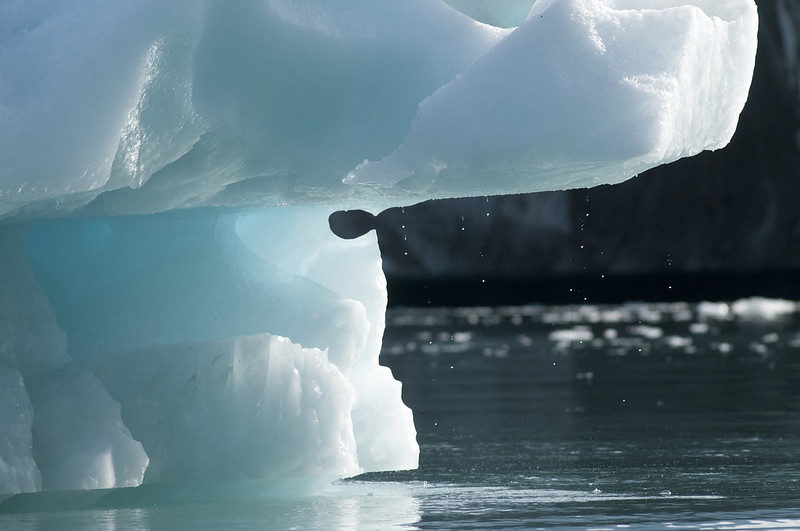
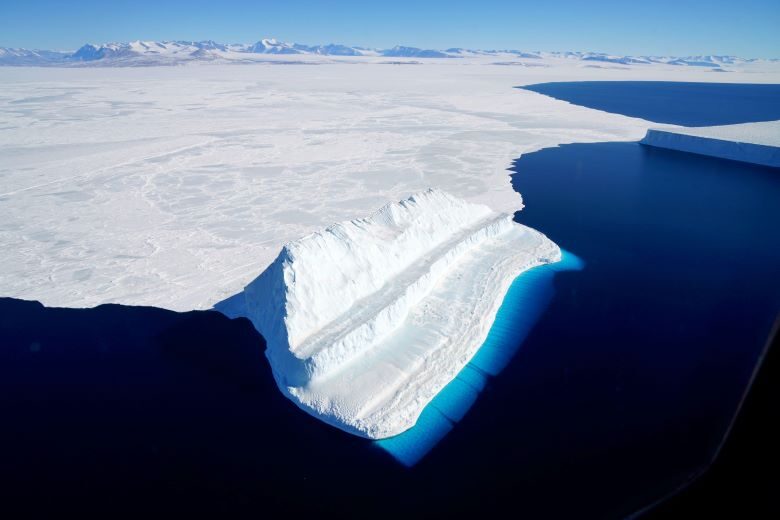
Melting glaciers, Greenland (Photo: GRID Arendal/Flickr [CC BY-NC-SA 2.0] )
The difficulty of covering the climate crisis
While many problems were evident in climate-related reporting, we also need to consider the inherent difficulty of covering this theme. Tatsuyuki Kobori of the Asahi Shimbun Osaka Head Office’s Science and Medical Department, interviewed by the author, pointed out that carbon dioxide is invisible, and the temperature and sea-level rise it causes progress slowly, making such phenomena inherently less newsworthy. Even for newsworthy extreme events like typhoons, floods, and heat waves, he noted, it is scientifically difficult to attribute any single event definitively to climate change, which makes it hard to report them as part of climate change, even when frequent and devastating. He also acknowledged that media attention tends to follow political developments such as summits, meaning coverage can be influenced by whether policies exist.
Kobori further said that although interest in climate change among readers has been rising somewhat in recent years, increasing it further is difficult. Some outlets may try sensational framings that stoke anxiety to attract attention. However, even in an emergency, climate action is not a short-term matter but something that will continue for decades, and there are warnings that such approaches may backfire by increasing fatigue and powerlessness and turning audiences away. It is considered more effective to pursue solutions journalism that focuses on what can be done and paths to improvement. Conveying a sense of urgency to reflect reality is important, but striking the right balance is crucial.
Another obstacle to climate reporting is the chronic paucity of international news in Japan. Climate change is a global problem, but media operate largely on a domestically centered model, and international reporting tends to be fragmented and limited to a small slice of the world. The share of international news is around 10% of all coverage, and within that, reporting on low-income countries is extremely scarce. Since the impacts of climate change are concentrated precisely in these low-income countries, coverage of those damages—and the “climate apartheid” generated by stark global inequality—also tends to be neglected.
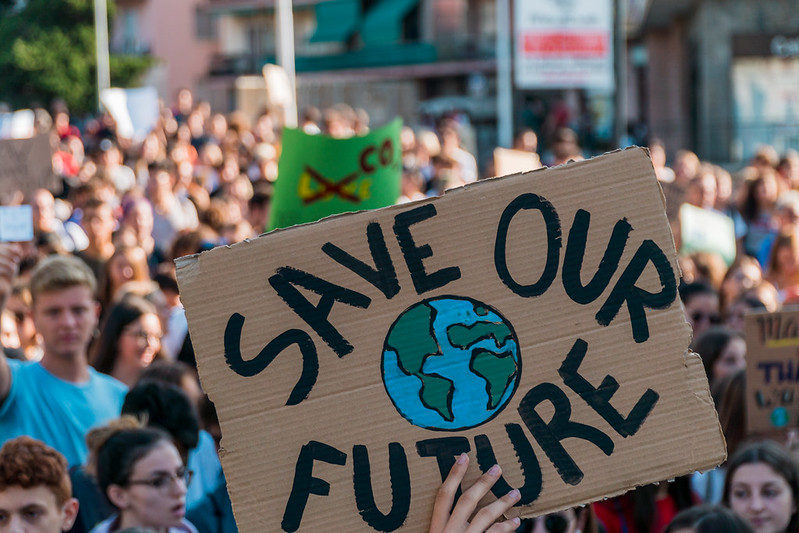
Young people rising up against climate change. In the run-up to the Climate Action Summit, 4 million people were mobilized worldwide (Photo: Tommi Boom/Flickr [CC BY-SA 2.0] )
When will the watchdog bark?
Climate change is bringing profound changes to our lives, society, and economy. In September 2019, massive demonstrations were held around the world, with 4 million people participating—a historic protest. World leaders gathered at the UN for the Climate Action Summit. With public interest heightened, this was a prime opportunity to cover the usually underreported climate issue extensively from multiple angles. Yet far too few outlets seized that opportunity. The media told the “celebrity” dramas of figures like Thunberg and Koizumi, but it is no exaggeration to say they neglected the essence of the problem. Moreover, although Japanese media usually place a heavy emphasis on links to “Japan” in international reporting, in this case their coverage of both the summit and climate action more broadly seemed almost to avoid Japan’s involvement (Note 2).
At that level of reporting, it is impossible to build the public opinion necessary to realize reforms or to apply pressure on government and business. It is clear that climate change demands fundamental reforms at home and abroad. But without reporting, governments and companies have no incentive to act in earnest. And even if Japan is denied a speaking slot at a summit or fails to announce policies, there is no political cost if it goes unreported. The media missed a major chance to fulfill their watchdog role on this vital issue.
Now that the series of climate-related events is over, the topic has once again faded from the media, which are filled with the Rugby World Cup, the usual entertainment, domestic incidents, and political news. But climate change and its impacts continue to advance inexorably.
*1 For newspapers, we searched for the keyword “climate” in each outlet’s online database and removed articles in which climate issues were not the main theme, duplicate pieces across multiple headquarters, and items appearing only in local editions. For TV networks, we searched the news posted on each broadcaster’s website under the same conditions.
*2 When their own government or companies are on the “perpetrator” side, the media’s tendency to downplay that aspect can also be seen in other cases such as Saudi Arabia and Bangladesh.
Writer: Virgil Hawkins











EXILEのTAKAHIRO氏の話題の方が取り上げられていたということを紹介していましたが、とても恥ずかしい気持ちになりました。
この国における報道の程度の低さを思い知らされます。
この記事を読んで、とても悲しい気持ちになりました。記事で紹介していたように、ラインニュースで読んでおくべき厳選記事にエンタメニュースばかりが入っており、それを疑いもせず受け入れている日本国民を想像し、危機を感じました。
instagramでは多くの若者たちが気候変動に対する取り組みを行っているという取り組みをたくさん見ました。
メディアが報道しないなら、私たちがシェアしていくしかないですね!
日本政府が演説できなかった問題についての各社の報道には驚いた。
報道されないだけではなく、あたかも違うことに原因があるかのようなニュアンスを含ませるとはどういうことなのか。
吠えないどころではなく、すり寄る番犬になった報道機関はさらに信頼や存在意義を失うだろう。
報道機関にも変革は必要だが、受け取る私たちも批判的にニュースを受容しなくてはならないと思った。
グレタさんがHow dare you?の熱のこもった演説をしたとき、記事にもあったNHKのニュースではキャスターが、頑張る若者は素晴らしいとほほえみながら、「我々大人は、こんな若者の声に耳を傾けていきたいと思います」と発言していました。そういう他人任せな日和見主義の大人にしびれを切らしたための演説だったと思うので、がっかりしてテレビの前で大きなため息が出ました。
「牛肉や小麦の(緊急時以外の)輸出禁止」の話が出てこないうちは、地球環境系の議論は、「緑の帝国主義」に過ぎないと思います。
石炭火力も、日本の場合は、発電時にLNGの2倍程度しか温室効果ガスを出さない(天然ガスは採掘時に温室効果ガスを排出するし)から、十分に(石油や天然ガスと同程度には)地球環境に優しいとも思いますし。
関連することを以下に書いています。興味が有れば、お読みください。
「鯨イルカ食と牛肉食」
https://kuhuusa-raiden.hatenablog.com/…/2019/09/25/150510