
Climate change is about to fundamentally reshape the planet we live on. In the face of this coming change, those with resources will manage for a while. But those without will fall further into poverty and struggle to survive. Climate change is widening the gap in an already divided world. What this brings about is a new form of “separation,” “climate apartheid.” In particular, the ultra-wealthy have begun diligently preparing for this “struggle for survival,” and are rumored to be making plans that defy imagination.
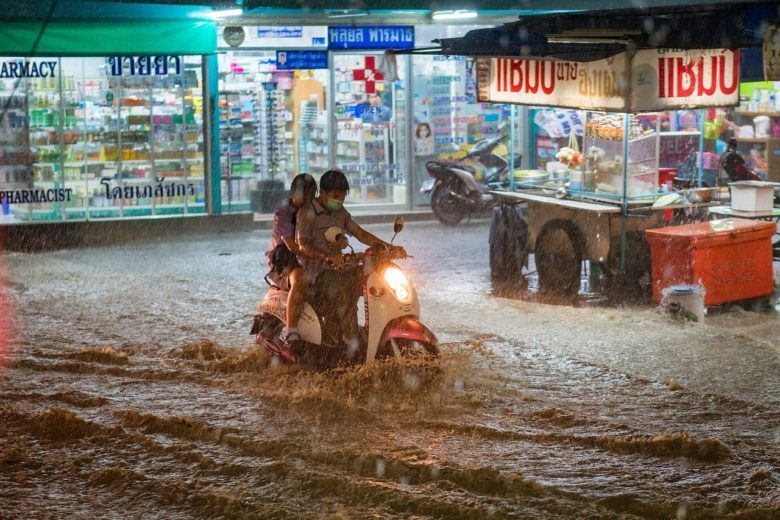
A motorbike riding through floodwaters (qimono/Pixabay)

目次
What is climate apartheid?
The word “apartheid” itself may not be unfamiliar. Apartheid originally comes from Afrikaans (※1), meaning “separation” or “segregation,” and is often used to refer to the racial segregation policies (※2) once carried out in South Africa. However, apartheid in South Africa is fortunately a matter of history, and climate apartheid signifies a different kind of “separation.” Climate apartheid refers to the phenomenon in which the wealthy and the poor have different capacities to cope with the various problems caused by climate change, leading to a form of separation and, as a result, widening the current wealth gap. The term was first used by the United Nations Human Rights Council, whose published report defines it as “a situation where the wealthy pay to avoid the heat, hunger and conflict, while the rest of the world suffers.” It is becoming widely recognized that climate change is an issue we can no longer ignore, and it will drastically alter not only the face of the Earth but also our lives and social structures. Climate apartheid is one such consequence—so how exactly does this problem arise?
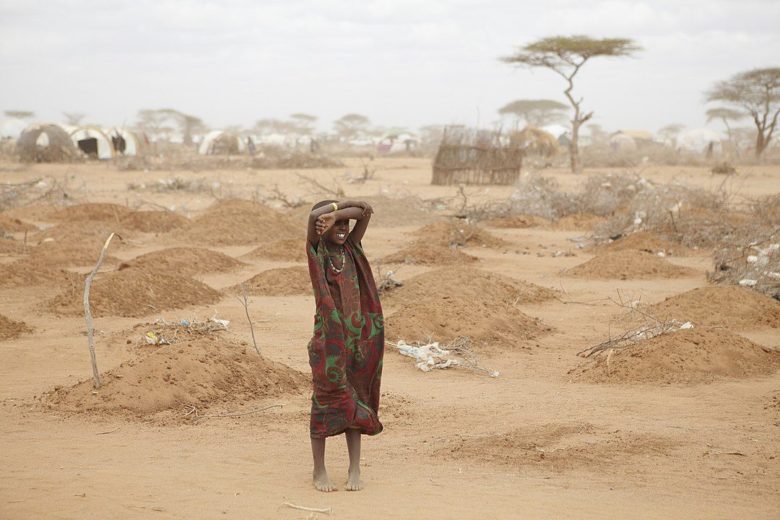
A Kenyan girl standing by the graves of 70 children who were traveling to escape severe drought (Oxfam East Africa/Wikipedia [CC BY 2.0])
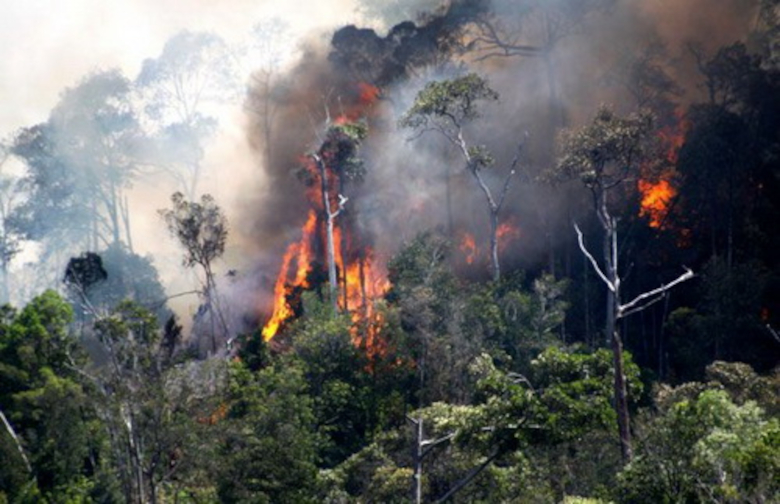
Climate change is rooted in the fact that, due to human activity, the Earth’s average temperature has risen by about 1°C (as of now) since the Industrial Revolution began. This has led to heat waves, extreme weather, sea-level rise, and frequent wildfires, threatening many people’s lives. In extreme heat, living without air conditioning becomes difficult, and health problems such as heatstroke and related illnesses increase. For example, in Central America, rising temperatures have caused many plantation workers to suffer dehydration, which has contributed to an increase in kidney disease. Moreover, extreme downpours and rainfall shortages lead to frequent floods and droughts, destabilizing food supplies and deepening hunger. Sea-level rise inundates coastal and low-lying areas, displacing residents from their homes. Bangladesh is among the most severely affected countries in the world by flooding and sea-level rise; during the major floods of 2019, infectious diseases also spread. People who can no longer live as they are because of climate change are forced to move, becoming “climate refugees,” exacerbating poverty and migration issues.
Let’s look at projected tangible impacts of climate change. Due to sea-level rise, desertification, and extreme weather, by 2050 between 150 and 200 million climate refugees are expected. A UN report also states that as climate apartheid advances, 120 million people could fall into poverty by 2030. Climate change may even roll back progress made over the past 50 years in development, health, and poverty reduction. Philip Alston, a UN special rapporteur and human rights expert, suggested that the UN’s response to climate change is “patently inadequate,” and that at this rate not only human rights but even democracy and the rule of law are at risk.
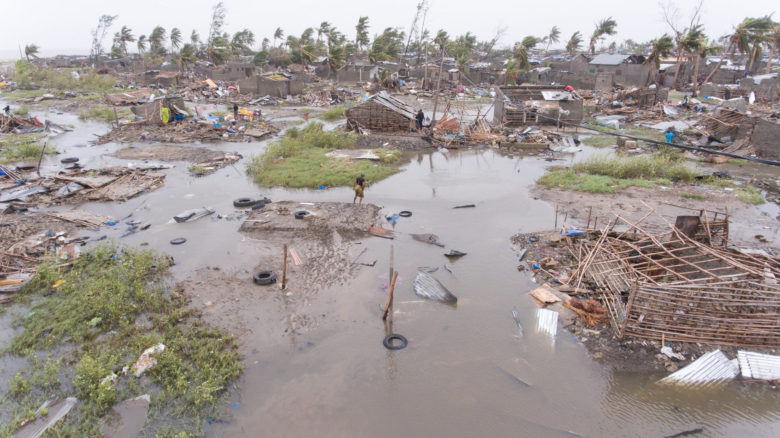
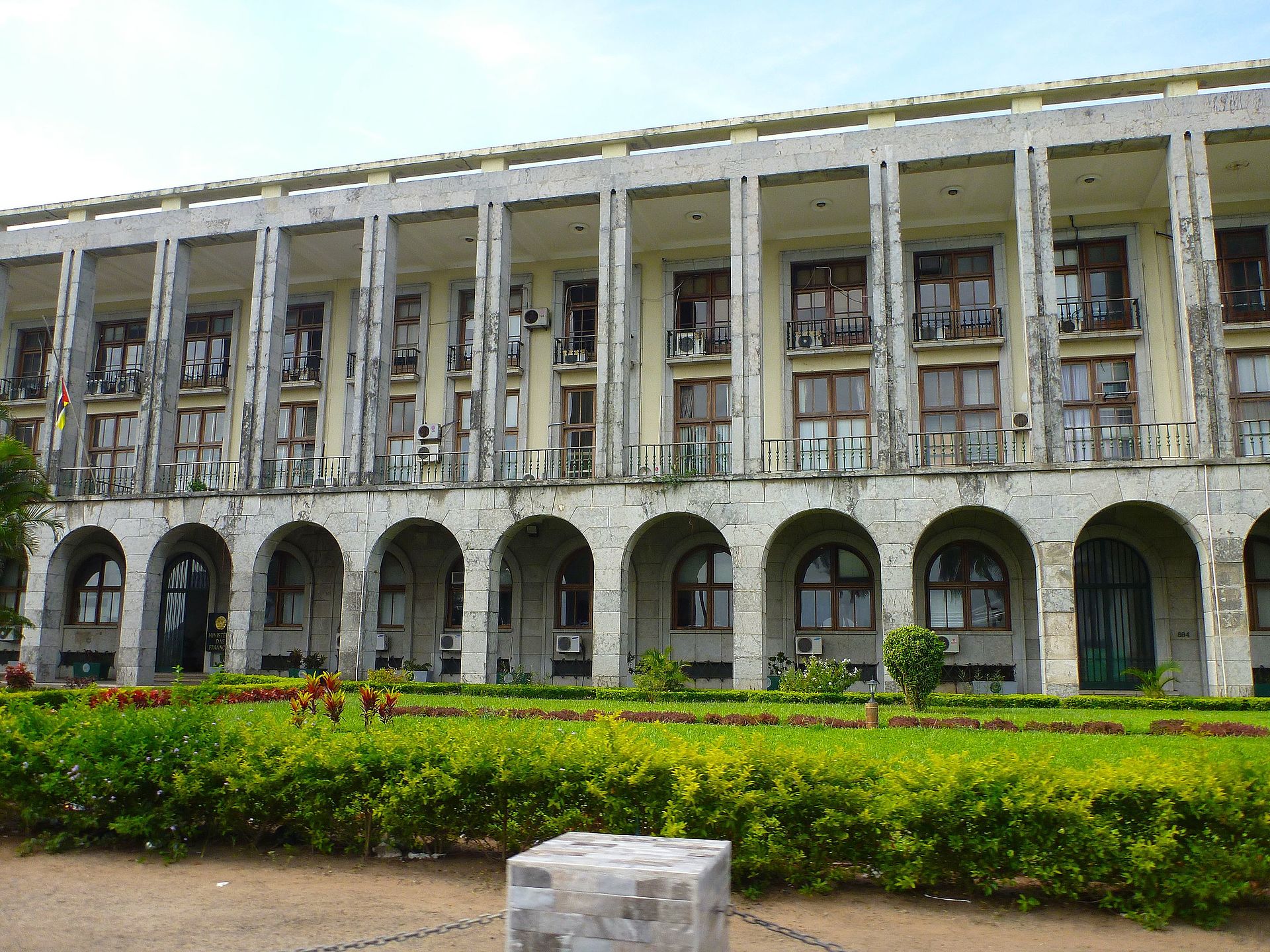
A Mozambican city after a massive cyclone in 2019 (Climate Centre/Flickr [CC BY-NC 2.0])
To evade these conditions, even temporarily, financial means matter. While the poor lose the ability to cope with climate change, the wealthy alone can manage. Compared to the poor, the wealthy have far more options for responding to climate change. Here, the “wealthy” includes not only individuals with substantial assets, but also people living in industrialized countries who consistently have access to air conditioning, sturdy housing, utilities, and food. Unlike the poor, they can afford to rely on technology, purchase food even as prices rise, or relocate to cooler, higher-elevation regions. Those without the means to cover the costs of adapting to climate change, however, are hit head-on by its harms. Thus a new apartheid emerges. The United Nations’ Sustainable Development Goals (SDGs) principle of “leaving no one behind” has already been criticized as likely to end in failure.
There is a striking contradiction here. Half of global greenhouse gas emissions have been produced by the wealthiest 10% of people, while the responsibility borne by the poorest (3.5 billion people) is under 10%. Yet, ironically, the poor suffer 75% of the damage caused by climate change. In other words, those who caused climate change are the ones who survive, while those without responsibility suffer. Moreover, one study finds that the mere existence of climate change has worsened the wealth gap by 25%. Climate shapes human productivity significantly; for instance, in tropical countries like Mauritania and Niger, per capita GDP is estimated to be 40% higher than it is now had temperatures not risen. Meanwhile, in some advanced countries that were relatively cool to begin with, rising temperatures have increased productivity. In such a situation, unless the root causes are addressed, climate change and climate apartheid will only be exacerbated, and developed countries in particular have a responsibility to break this vicious cycle. However, this is not necessarily a threat to the ultra-wealthy at the very top. They appear to have rather grand plans.
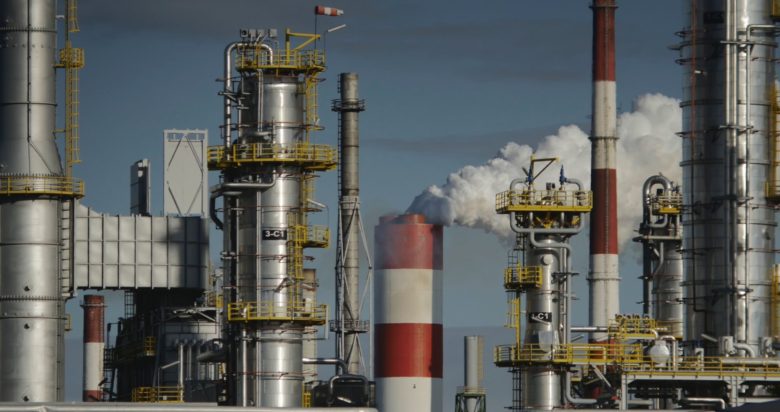
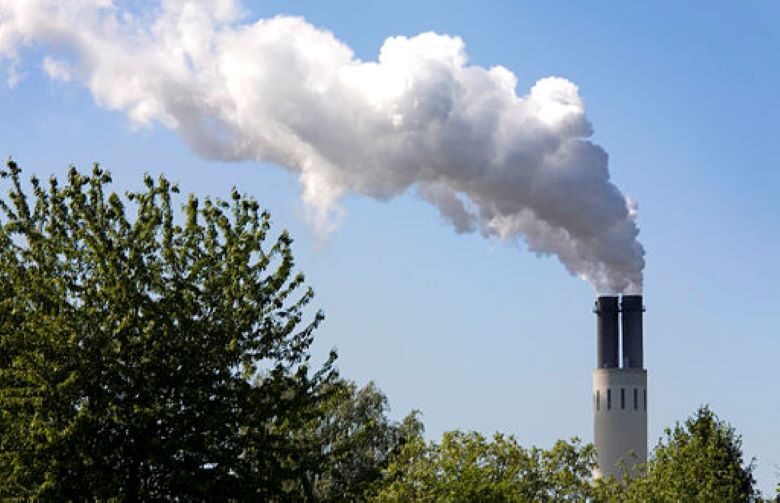
Factory chimneys billowing smoke (Jahoo Clouseau/Pexels)
The upper class of climate apartheid
Among this apartheid, the upper class in particular has already taken measures. The very rich are preparing by establishing new bases in sparsely populated, livable areas, building underground bunkers, and even hiring private firefighting teams. For example, Peter Thiel, founder of the payment services giant PayPal, has secured citizenship and land in New Zealand so he can relocate there in an emergency. In fact, New Zealand—cooler, sparsely populated, and geographically isolated from likely concentrations of climate refugees—has become a popular “escape” for other wealthy individuals as well. It was also reported that Antonio García Martínez, a former product manager at Facebook, bought a portion of U.S. forestland and stockpiled generators and thousands of rounds of ammunition. Here again, climate apartheid becomes evident as the wealthy cluster in regions suited for safe living, while the poor are left behind in less habitable places.
The anxieties of these “preppers” (※3) are boundless. Some are buying precious metals or cryptocurrencies like Bitcoin in case currencies lose their value, and even seeking ways to obtain a second passport. As revealed in an article by U.S. media scholar Douglas Rushkoff, the ultra-wealthy have started meticulously preparing not only for climate change but for an impending “worst-case scenario.” According to him, they are devising unimaginable schemes: placing special locks on food supply chains known only to themselves; hiring labor under conditions akin to slavery in exchange for guaranteed survival; and, if possible to develop, securing security robots to guard their wealth. In the Czech Republic, the world’s largest private bunker, “The Oppidum,” has been built as a shelter exclusively for the ultra-wealthy, designed to protect them even if catastrophe strikes aboveground. Similar shelters have been built in Germany and the United States.
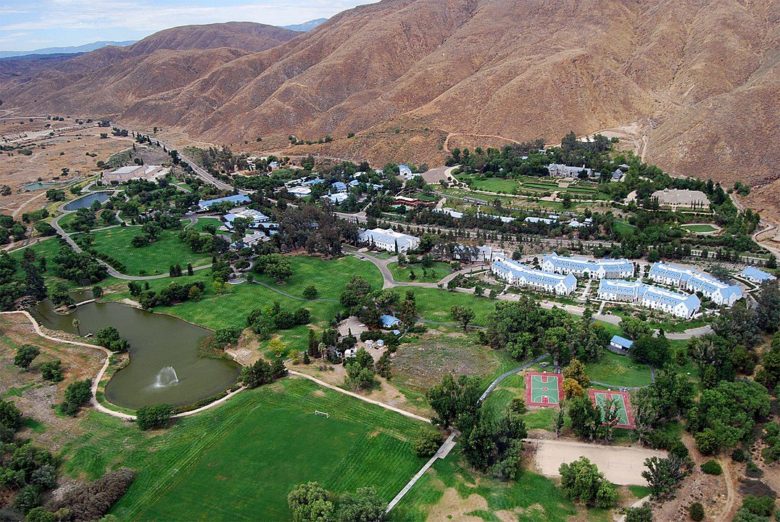
“Gold Base,” the Church of Scientology’s headquarters in California, USA (Sinar Parman/Wikipedia [CC BY-SA 3.0])
There are real examples of disaster preparedness carried out independently by the rich. When a large hurricane struck New York in 2012, many low-income residents lost access to power and medical care, yet the headquarters of the financial giant Goldman Sachs avoided major damage thanks to sandbags and generators they had prepared themselves. In 2018, when massive wildfires broke out in the United States, celebrity Kim Kardashian issued a statement on social media that drew sympathy. But she made no mention of having hired private firefighters to protect her mansion from the blaze. In this way, even when public services cannot keep up, the wealthy can survive disasters by hiring people privately.
Climate change is also influencing national policies. Some have pointed out that U.S. President Donald Trump’s plan to build a “wall” and the United Kingdom’s exit from the European Union (Brexit) are early responses to this nascent climate challenge. When a large hurricane struck the Bahamas in September 2019, leaving many people homeless and without essential services, President Trump showed reluctance and refused to accept the victims.
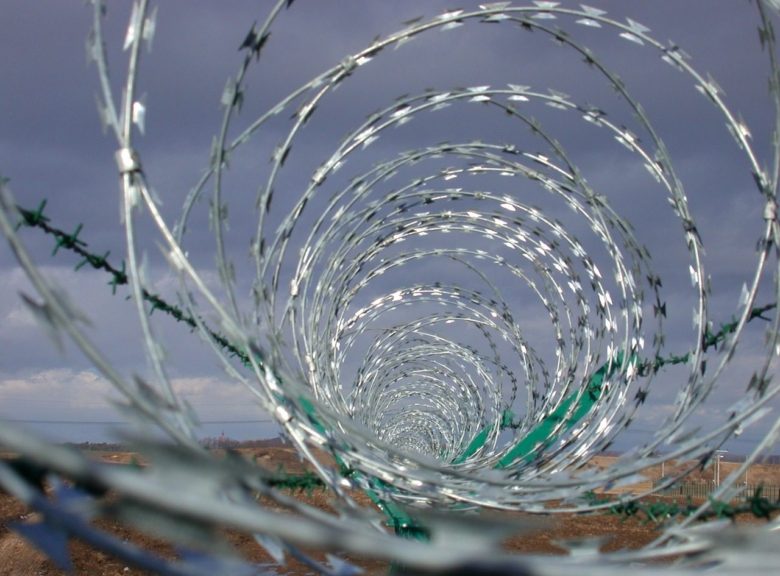
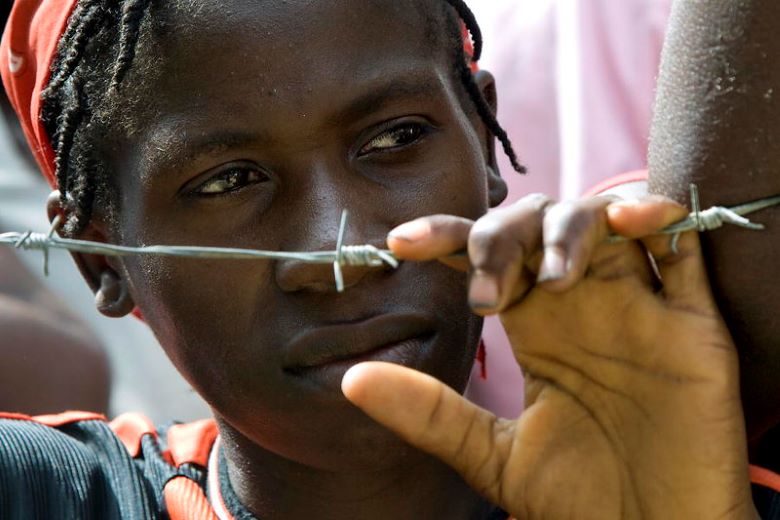
Barbed wire dividing a border (Max Pixel)
Responsibility for climate change
Is there no way to stop the “climate apartheid” we have seen above? According to Philip Alston, solving this problem requires not only a major restructuring of the world’s economic system, but also that governments, the UN, and human rights organizations take the lead and focus exclusively on addressing climate change. A carbon tax is also said to be effective as a concrete measure, aiming to prevent industries from emitting carbon dioxide without paying a price. Moreover, switching to renewable energy is by no means unrealistic; a study at Stanford University shows that, in the long run, it even leads to cost reductions. According to this research, transitioning industry to renewable energy could cut total costs to one quarter of those under the current fossil-fuel-based system.
However, as Rushkoff, who exposed the plans of the wealthy, also points out, the rich presumably possess enough wealth and power to change this dubious future for the better in an instant. Even so, one cannot help but question how readily they are evading responsibility for worsening climate change. The 2015 Paris Agreement (※4) set terms to reduce carbon dioxide emissions by 2030, but emissions are still rising. We must also address the fact that corporations and the ultra-wealthy in developed countries have used tax havens to avoid taxes, contributing to shortfalls in essential public services like firefighting. Ongoing unfair economic relationships such as unfair trade are also among the causes further impoverishing developing countries.
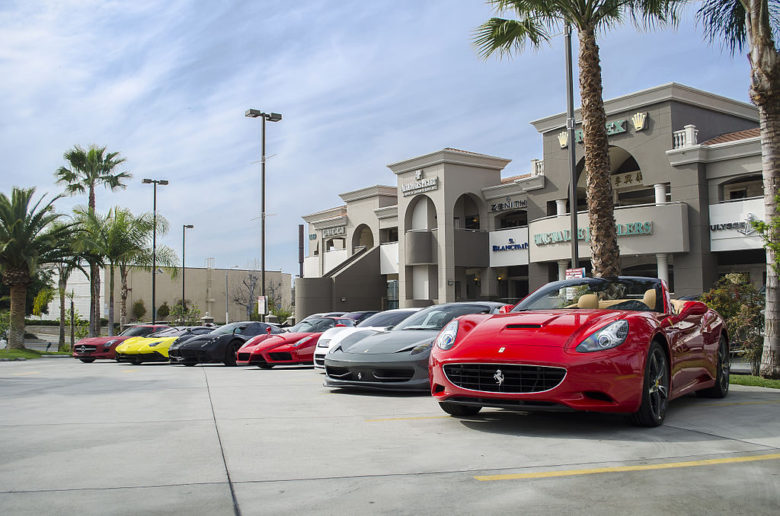
A lineup of supercars (Axion23/Wikimedia Commons [CC BY 2.0])
Rather than simply surviving as “winners,” isn’t it the responsibility of developed countries and the wealthy to work to minimize the harm suffered by the poor under climate apartheid and to bear the costs? We should properly recognize not only that climate change itself is an urgent crisis, but also that the associated climate apartheid will distort the world order, and build momentum in the international community for countermeasures. It is clear that sooner or later even the wealthy will no longer be able to outrun climate change with wealth and power alone. Governments, companies, and international organizations must treat the situation with utmost seriousness, raise its priority, and urgently move beyond recommendations to concrete action.
※1 Afrikaans: One of the official languages of South Africa, derived from Dutch.
※2 Racial segregation policy: A policy that governed by separating white and non-white people and prescribed discrimination and segregation against non-white people. Implemented in South Africa from 1948 to 1994.
※3 Prepper: People who actively prepare for various potential emergencies and political or social unrest. Derived from “prepare.”
※4 Paris Agreement: Adopted in 2015 under specific numerical commitments among multiple countries to curb climate change. It set targets such as limiting temperature rise to below 2°C compared with pre-industrial levels and reducing each country’s carbon dioxide emissions by 2030, but the United States has already declared its withdrawal.
Writer: Mina Kosaka
We’re on social media too!
Follow us here ↓





気候アパルトヘイトは初めて聞きました。とても面白くて読みやすい記事でした。私も金銭的余裕がある人々こそが貧困層の被害を防ぐようしていくべきだと思いました。
先進国が石炭や石油など、化石燃料業界に多大な補助金を出し続けています。
日本はアメリカに続いて、2番目に多い:
https://www.nrdc.org/experts/han-chen/japan-second-worst-g7-reforming-fossil-fuel-subsidies
こんな状況が続いている限り、気候変動対策への貢献はただのパフォーマンスとしか思えません。
なぜ、このような現状は報道されないのだろうか?
早くみんなが気づかないといけないことが目の前に来てるんですよね。
そういうことでしょう。
いつも勉強のためにみなさんの記事を読ませていただいています。ありがとうございます。環境問題について、今のままてまはダメだという認識はあっても、どうすればいいか分からないっていうのが正直な気持ちです。私は所謂、大手企業勤めなのですが、会社では「発展しつづけなければ、安定はなし」と言われます。そういう、誰が作り出したのか分からない、止めらない、見えない大きな渦の中にいます。イチ個人としては、これ以上の発展はいらないだろうと思うのですが、企業人としては世の中の消費活動を促して商売をしないといけません。それが私の中でいつも葛藤を産みます。何か根本的に社会の仕組みを変えないと、解決していかないですよね。私はIT関連の仕事なので、技術先行で何か世の中の仕組み変えられるかもしれない!と前向きに考えてはいるのですが、利益を追求する業務とのバランスが難しいのと、社内の人間も取引先の企業も環境への関心の低く、なかなかハードルが高いです。泣
よくわかります。人間がよりよい生活を求めている以上、どうしようもない部分はあると思います。
しかし、社会経済の方向転換にコミットすれば、ある程度の「発展」を守り、まだ救われるチャンスはあると思います。例えば、気候変動を止めるために、根本的な・本格的なレベルで、化石燃料をベースにした経済から、再生可能エネルギーに切り替えることが必要があります。大きな改革となります。そのプロセスにおいて、大きな経済成長は見込まれるのではないかと考えられています。アメリカの民主党から出てきているGreen New Dealがその例です。例えば、太陽光発電や風力発電などに、大きな資金を流していくことで経済成長が発生するというような考え方です。
このような改革・作業において、IT企業の役割はかなり重要なのではないでしょうか?
皆は地球の危機に気付いているのかな?これからこの危機への対策を求めないと。
もちろん企業や富裕層にも責任はあると思いますが、先進国に住んでいる私たちにも責任があると思います。
私たちも今までの生活も変える必要もあるでしょう。
富裕層の人々がここまで自己を守るためにお金と労力を費やしていることを初めて知りました。課題はたくさんあり、解決は困難だと思いますが、まず、人々がこの事実を知っていくことが必要だと感じました。
気候アパルトヘイトという言葉は初めて知りましたが、とても皮肉ですね。
ドイツをはじめヨーロッパの国では、環境問題を公約の最優先事項として掲げている政党が選挙で躍進しているイメージがありますが、日本でそのような現象が起こらないのはなぜでしょうか。