
In many developed countries, when disposing of clothes you no longer wear, it is common not only to throw them away but also to sell them to recycling shops and the like, or to donate them. In recent years in particular, apps have made it easy to buy and sell from home, making secondhand clothing more familiar than before. In addition, donation initiatives that collect unwanted clothing and send it to people struggling with poverty or disasters around the world have become increasingly active.
In reality, however, only a portion of these items actually reaches people affected by poverty or disasters; much of the secondhand clothing is exported and, not only via donations but also through resale, flows into low-income countries in Asia and Africa. Even items donated with the hope that they will help those in need can, in fact, hinder effective aid efforts or deal a blow to local development. Focusing mainly on Africa, this article takes a closer look at the current state of secondhand clothing donations and how they can put pressure on recipient countries.
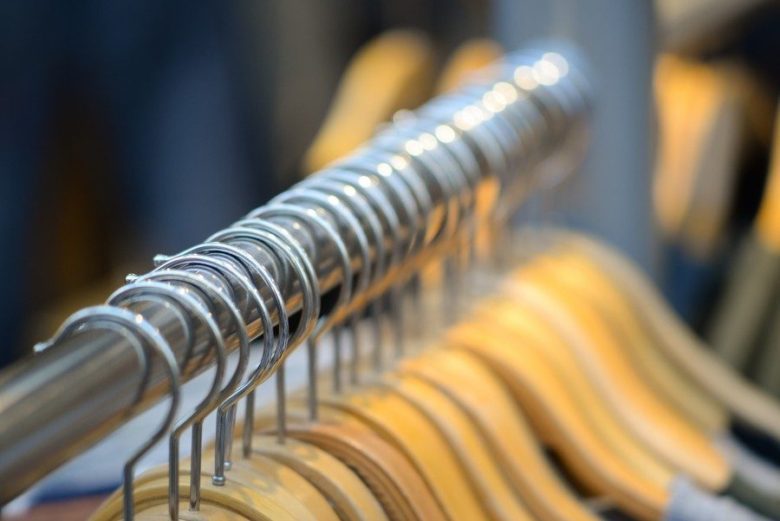
Clothes hanging on hangers (Photo: Peter Heeling / Skitterphoto [CC0])
目次
The current state of the global secondhand clothing industry
Let’s first look at the current state of the industry. Large volumes of secondhand clothing collected mainly in developed countries are sent abroad. In 2016, 750,000 tons from the United States, 500,000 tons from Germany, 350,000 tons from the United Kingdom, and 240,000 tons from Japan were exported. In the UK, 70% of collected secondhand clothing is sent overseas. In value terms, the 2013 export value of secondhand clothing ranked by country was US$687 million for the United States, US$612 million for the United Kingdom, and US$504 million for Germany.
Exports of secondhand clothing are not only for resale; some items are delivered free of charge as donations from developed countries to low-income households domestically and overseas, but this is only a part of the overall industry. These donation activities are largely driven by Western charities. For example, in the United States, Volunteers of America places collection boxes for used clothing and shoes around town to collect items. In some cases they also pick up donations directly from consumers’ homes, saving people the trouble of bringing items to a store and offering an easy way to dispose of clothes they no longer wear. At The Salvation Army, donors receive a receipt for their donated clothing and can claim a tax deduction when filing taxes. In this way, a variety of measures are in place so that donors also benefit.
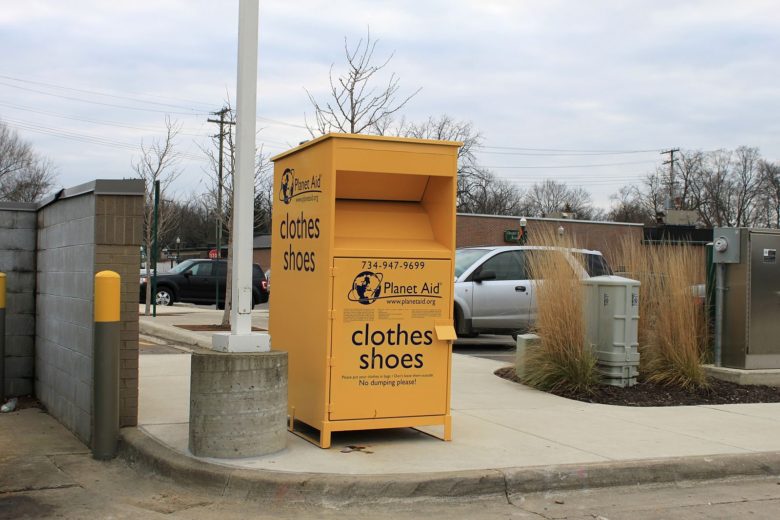
Used-clothing collection box in the United States (Photo: Dwight Burdette/Wikimedia Commons [CC BY 3.0])
In the UK, Oxfam (OXFAM) gives points when secondhand clothing is donated or purchased, and those points can be used, for example, to provide clean drinking water to low-income countries or for teacher training. In this way, a donation can lead to new donations, and donors themselves can choose where to allocate the points.
Beyond charity-led donations, companies also run donation programs. For example, Japanese apparel giants UNIQLO and GU operate the All-Product Recycling Initiative, which collects customers’ unwanted items from their brands in stores and delivers secondhand clothing mainly to refugee camps and for emergency disaster relief in 65 countries and regions around the world. As of the end of August 2018, about 30 million items had been donated.
Problems in the secondhand clothing industry
However, such donations come with various problems. To begin with, the volume of clothing produced in developed countries far exceeds what is needed, and consumers purchase clothing at a fast turnover rate—resulting in a large surplus of garments. In the UK, for example, about US$54 billion is spent every year on clothing purchases, but 30% of those items sit unworn in wardrobes. Although unwanted clothes are collected through various channels, the volume collected exceeds what can be reused, and many donated items are unusable; as a result, many are ultimately incinerated as waste. In fact, in the UK, 1.4 million tons of clothing are landfilled every year. This cycle of mass production and mass consumption in fashion not only poses problems for the secondhand industry but also leads to environmental issues.
There is also the problem that donated clothing does not match local needs. Sometimes the donor’s convenience takes precedence over the recipient’s requirements. As a result, coats are sent to countries that are warm even in winter, and sizes needed locally are not available due to differences in body types, among other issues. In some cases, camouflage-patterned clothing has been sent to refugees, which can make wearers appear to be soldiers at a glance, or trigger trauma in countries that have experienced armed conflict—problems that are difficult for donors to anticipate.
Furthermore, in refugee camps and disaster areas, needs vary by household; clothing may arrive when other necessities are lacking, causing a surplus of items that are not needed. This can lead to bartering or reselling. In such contexts, shipping large containers of clothing as in-kind aid without considering needs is inefficient and can impede smooth aid operations. For this reason, many NGOs have recently shifted from in-kind aid to cash-based assistance, enabling people to obtain what they personally need and helping to stimulate the local economy.

Cash-based assistance in South Sudan (Photo: Courtesy photo/Wikimedia Commons [Public Domain])
Moreover, not all donated clothing is distributed free to those in need; some is resold to local merchants. Clothing donated with the hope of reaching people who need it becomes a “product” for business. Sometimes collected clothing has no takers due to sheer volume and remains unused; it is then discarded or sold to specialized dealers who buy such items. Dealers sort the clothing by type and design in sorting factories, export it overseas, and sell it as a “product”—a model that is common in the industry. Much of this clothing is sent to African countries; in fact, in sub-Saharan Africa, one-third of donated clothing is sold on.
In the East African Community (EAC) countries (Note 1), including both resold and donated items, the import value of secondhand clothing in 2014 exceeded US$300 million, accounting for a quarter of all imports into Africa. It is said that 90% of the clothing people purchase locally is secondhand, making it a major business in Africa.
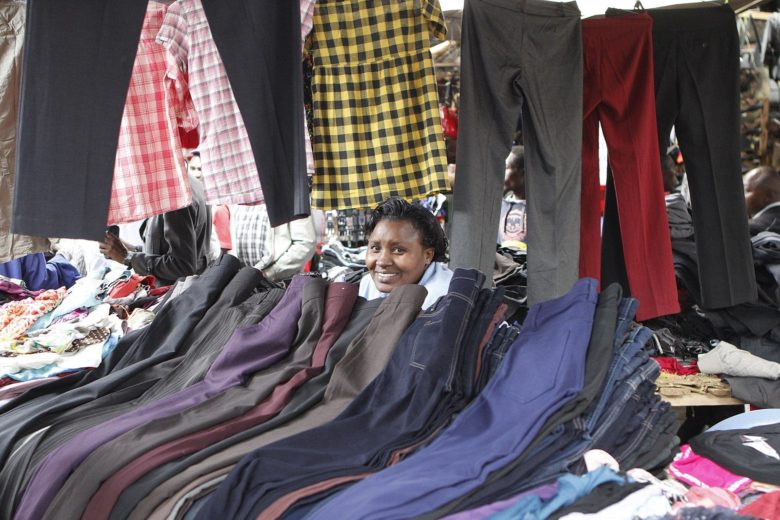
A woman selling secondhand clothing in Kenya (Photo: Biva2017/Wikimedia Commons [CC BY-SA 4.0])
One of the factors behind such rapid growth of the secondhand clothing industry in Africa was the trade liberalization policies expanded in the 1980s and 1990s at the behest of the International Monetary Fund (IMF) and the World Bank. With the removal of import restrictions, secondhand clothing entered African markets more easily. When garments are collected via donations, there are no manufacturing costs; costs are mainly for sorting, export, and sales in the destination market. This allows clothing to be offered to consumers at low prices. In Mozambique, for example, used jeans sell for about US$3.5 and T-shirts for about US$1.8, and are sold accordingly. With an average daily income of about US$1.2 in Mozambique, demand for cheaper secondhand clothing is high, and the industry has grown.
However, the rise of this secondhand business has, in turn, inflicted economic damage on Africa. The entry of major economies and the development of the secondhand industry have deprived local textile industries of growth opportunities, leading to their decline. Imported secondhand clothing is cheaper than locally produced garments, and many items sent from major economies are of high quality, drawing consumers away and forcing local clothing factories to shut down, triggering mass layoffs. As local textile industries decline, those employed in them lose their jobs. In Ghana, employment related to clothing fell by 80% between 1975 and 2000, and in Zambia the number of workers dropped from 25,000 in the 1980s to fewer than 10,000 by 2002, a sharp decline. In this way, the secondhand clothing business harbors various problems.
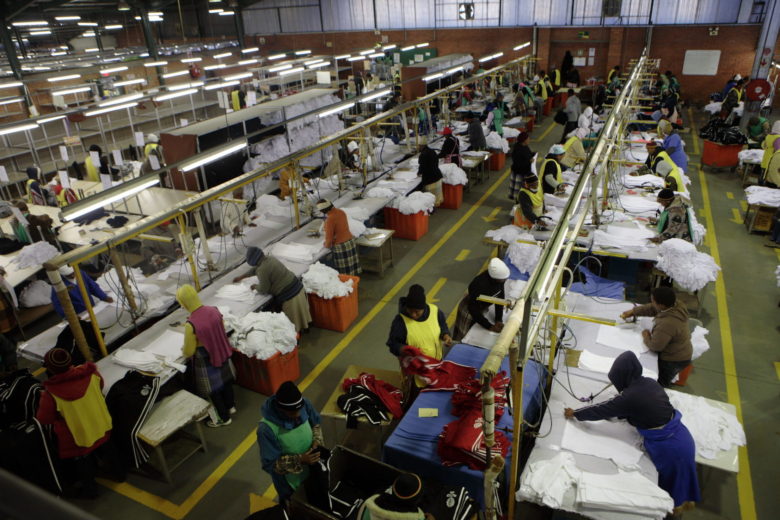
A textile factory in Lesotho (Photo: World Bank Photo Collection/Flickr [CC BY-NC-ND 2.0])
Pushback against the secondhand clothing industry
African countries have not simply tolerated this situation. In the 1980s, former Burkina Faso President Thomas Sankara carried out various reforms aimed at freeing the country from low-income status and dependence on high-income countries, one of which was promoting local production and consumption of cotton. Policies included requiring civil servants to wear traditional clothing made from domestically produced cotton while at work, among other measures, to stimulate Burkina Faso’s economy and industry. However, Sankara was assassinated in 1987, and the policy was discontinued.
At an East African Community (EAC) meeting in 2016, a decision was made to ban imports of secondhand clothing within three years, and Rwanda, Tanzania, and Uganda in particular took an active stance toward such a ban. The aim was to protect and develop domestic textile industries by banning imports. However, the United States has pressured these three countries to lift the ban. Because the US does not want to lose a market where it can earn profits with relatively low costs, it claimed that the import bans violate free trade agreements and, after expanding the list of duty-free imports from African countries to promote growth under the African Growth and Opportunity Act (AGOA), launched a review and suggested the possibility of excluding the three countries from AGOA eligibility. In effect, it has imposed pressure on Africa in the form of quasi trade sanctions. As a result, the ban may be lifted and replaced merely by tariffs on imported secondhand clothing.
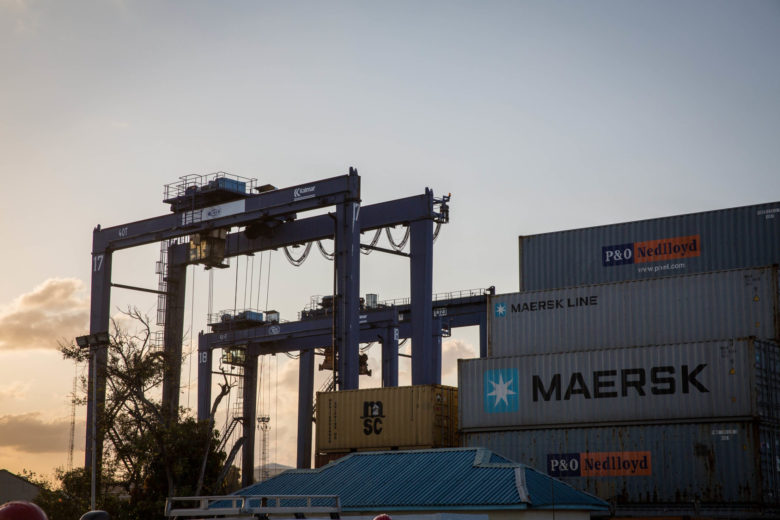
Port of Dar es Salaam, Tanzania (Photo: World Bank Photo Collection/Flickr [CC BY-NC-ND 2.0])
New challenges
Import bans do not necessarily produce good outcomes. Zimbabwe imposed an import ban in 2015 but eased it in 2017. The ban rapidly increased demand for domestically produced clothing, but local textile industries could not meet that demand. This expanded the black market selling illegally imported secondhand clothing, making a complete ban extremely difficult. Without robust local textile industries, banning secondhand clothing can backfire; yet boosting domestic industries is costly and not straightforward. A report estimates that creating or reviving local industries in Africa cost US$500 billion in 2016 and will rise to US$930 billion by 2025. It will likely take considerable time for local textile industries to function sufficiently.
Even if secondhand imports are banned, they may simply be replaced by cheap new clothing manufactured in countries such as China. In 2009, China overtook the United States as Africa’s top trading partner. That would still not protect Africa’s textile industries. It is necessary to reconsider trade with other countries not only for secondhand clothing but for apparel overall.
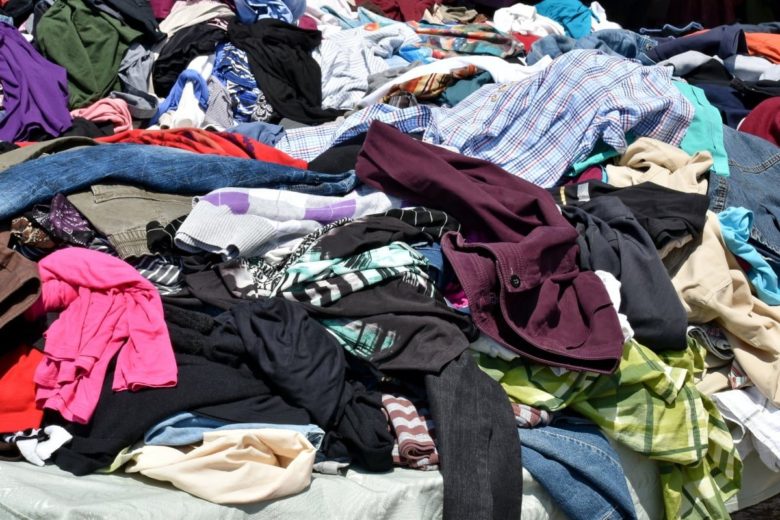
Discarded secondhand clothing (Photo: Bicanski/PIXNIO [CC0])
Thus, donations of secondhand clothing can end up hurting recipient countries and regions in unexpected ways. In the first place, fast fashion is predicated on mass production and mass consumption, and donations of secondhand clothing sometimes serve as a form of atonement. Such a model generates large amounts of waste and burdens the environment, and ultimately can become one of the means by which major economies exploit countries such as those in Africa—perhaps a façade of contributing to the world. To contribute effectively to Africa’s development, it is necessary not to send large volumes of secondhand clothing as before, but to invigorate local textile industries. However, as long as the market offers major profits for powerful countries and provides affordable clothing for African consumers, this situation will not disappear easily. Supporting African industries should lead to development, but in an apparel business where large manufacturers continue to boost efficiency by using extremely cheap labor in low-income countries, will the day come when Africa can reclaim its domestic textile industry?
Note 1: A community formed by the East African countries of Kenya, Tanzania, Uganda, Rwanda, Burundi, and South Sudan.
Writer: Wakana Kishimoto
We are also on social media!
Follow us here ↓






ただ寄付をすればいいわけではないですよね。先進国での消費文化が生み出している問題に気づくことができました。古着にこのような視点で着目したことがなかったのでとても面白かったです。
服を寄付したその先に一度も想いを馳せたことがありませんでした。古着を通じて再度ビジネスとなっているのは驚きです。
古着を輸出、寄付することにプラスのイメージしかありませんでしたが、量が多すぎて逆効果になっている現状を知り、大変勉強になりました。これから個人で出来ることとして、ファストファッションでの購入はなるべく避け、古着屋などで長く使えそうな良い品質や状態のものを買うようにしてみようと思いました。