
Countless events occur around the world every day, and situations change by the day. Amid all this, do you remember events from a year ago, or several years ago? “One year since the XX terror attack,” “One year since the XX disaster.” Don’t such reports and features bring those events back to mind? The media’s role is not only to convey the “now,” but also to convey “back then.” To understand contemporary society, it is necessary to understand not only the present, but also the process that led to it. Learning about events that happened in the past around the world and understanding how they connect to current conditions leads to a deeper understanding of today’s international situation.
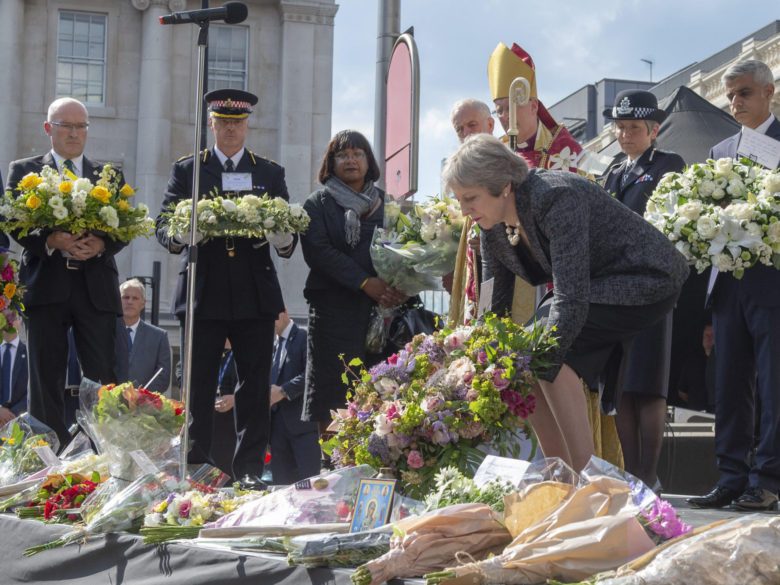
Memorial ceremony marking the first anniversary of the London terror attack (2017) (Photo: Number 10 / Flickr [CC BY-NC-ND 2.0])
One approach to reporting is called anniversary journalism. Anniversary journalism means writing articles timed to the nth anniversary of past events deemed “important.” The fact that articles are written even some time after an event indicates the event is considered more important than others and has been specially selected. By analyzing how anniversary journalism is practiced, we can gain a deeper understanding of news organizations’ worldview and editorial priorities. Reporting becomes a vote to decide what should be preserved in history. In this article, we look at how the media is involved in shaping people’s memories and “history.”
目次
Anniversary journalism in Japan
Let’s look at the current state of anniversary journalism in international coverage in Japanese newspapers. We analyzed the past five years (2014/7/1–2019/6/30) of Japan’s three major dailies (Asahi Shimbun, Mainichi Shimbun, Yomiuri Shimbun) (※1). Among international-section articles (※2), we searched for those whose headlines contained the keywords “1 year” or “first anniversary,” and which could be judged as anniversary journalism. We found that articles written to mark one year since a given event totaled 309: 72 in Asahi, 102 in Mainichi, and 135 in Yomiuri. Let’s explore detailed trends in this coverage. Below, we combine the three papers (Yomiuri, Asahi, Mainichi) and analyze from the perspective of Japan’s international reporting.
First, let’s look at trends in the countries involved. The figure below shows the top 10 countries most frequently appearing as related countries. The chart on the far right graphs the share of articles related to Japan.

Loading…
As the chart shows, coverage related to the United States was the most common at 12.2%. France, China, South Korea, and Russia were also in the top five, which almost matches the usual trends in Japan’s international reporting. For the United States, China, and South Korea, all manner of events were reported again a year later. In second place, France saw extensive coverage of the multiple terror attacks that repeatedly occurred in Paris. Russia, ranked fifth, received more coverage than usual because the Ukraine issue drew attention; this also explains why there were many articles related to Ukraine. For North Korea, ranked sixth, the U.S.–North Korea summit and the agreement with Japan to investigate abductee cases drew attention. Elsewhere, the Philippines was covered across various areas including IS-related fighting and typhoons. In Myanmar, the Rohingya issue and Aung San Suu Kyi were in focus, while in Thailand, the Bangkok terror attack and the coup d’état drew attention. These top 10 countries alone accounted for 52.8%—over half—of the relevant articles.
By region, Asia accounted for more than half at 55.7%, followed by Europe at 23.0% and North America at 12.8%, while Africa and Latin America each had only around 4%. The regional imbalance resembles that of regular international reporting. As the chart above indicates, Japan-related international coverage accounted for 4.9%, a larger share than several countries in the top 10. Within this, the Osprey aircraft accident in Okinawa and the agreement with North Korea to investigate abductee cases were covered. This suggests that Japan-related events are more likely to be picked up, revealing a Japan-centric tendency in reporting.
So far we have looked at regional imbalances in coverage; what topics are being reported? The figure below shows the breakdown by content category as a pie chart.
Loading…
By content, articles involving politics were the most common (41%). Among these, many were written to mark the first year since the inauguration or assumption of office of top national leaders (49 articles), and in particular, 32.7% (16 articles) of these were written to mark one year since the inauguration (2017) of U.S. President Donald Trump. Outside Asia, Europe, and North America, only a single article in Asahi Shimbun marked one year since the inauguration of Egypt’s President Abdel Fattah el-Sisi.
Second most common were articles on terrorism (14.2%). Of these, 63.6% concerned terror attacks in Europe, such as Paris (2015), Belgium (2016), and Berlin (2016). Although articles on conflicts were relatively numerous (8.4%), they did not display much regional diversity. Over 60% of the conflict-related articles involved conflicts in Asian countries such as Myanmar and the Philippines. There were six articles on one year since the Colombia peace agreement (2016), but as these were a series in a single newspaper, it is hard to say the topic drew broad attention across Japanese international reporting.
We also analyzed articles written to mark three years after events occurred and found a total of 42 across the three papers. Here, too, articles marking three years since top national leaders took office stood out (12 articles), and half of these (6 articles) were about three years since the inauguration of North Korea’s Chairman Kim Jong-un. Of the relevant articles, fully 77.4% concerned Asian countries; regarding Africa, there was only one article on the fall of Gaddafi’s regime in Libya, and there were none on Latin America or Oceania. Items still reported three years later tended to have occurred in an even narrower set of regions than those covered one year later.
Thus, even when looking at the topics treated as anniversary journalism, we see that events in East Asia, Europe, and North America are prioritized in reporting.
Major events left out of history?
So far, we have discussed what is featured in anniversary journalism within Japan’s international reporting. What kinds of events, then, are deemed not valuable enough to be recalled through coverage and connected to the “now” in Japan? Using the keywords of terror attacks, tragedies involving buildings, and attacks on journalists, let’s look at events that were large in scale yet saw no coverage one year later.
As a terror attack that went underreported, consider the 2017 attack in Somalia. In October 2017, a truck bomb in Mogadishu, Somalia’s capital, killed 587 people, making it one of the deadliest terror attacks ever. Despite being such a major event, at the time there were only six articles across the three papers in Japan. Notably, there was not a single article about it one year later. For comparison, take the 2015 Paris coordinated attacks, the 2016 Brussels attacks, and the 2016 Berlin attack. Immediately after these, the three papers ran 441, 130, and 58 articles respectively; even one year later, there were 8, 6, and 2 articles, respectively. While these incidents also involved casualties, the combined death toll of the three is only about one third of the death toll in Somalia.
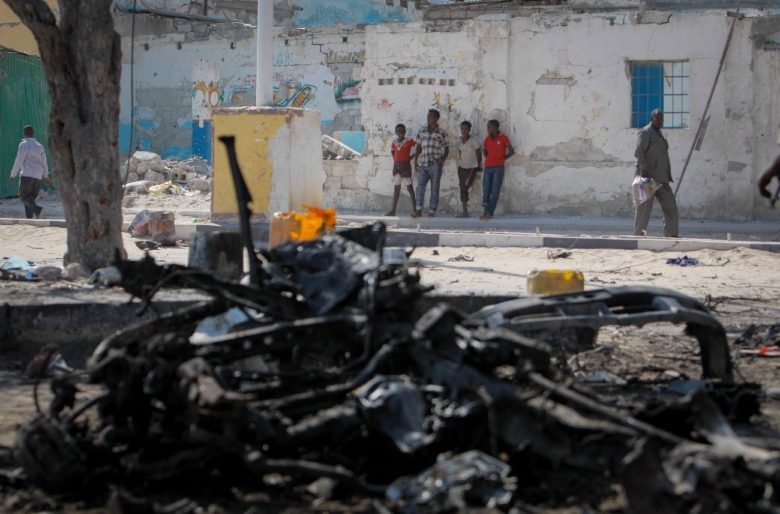
Wreckage of cars left after the terror attack in Somalia (Photo: AMISOM Public Information / Flickr [CC0 1.0])
Next, as a tragedy involving a building that was underreported, consider the 2013 building collapse in Bangladesh. In Dhaka, the capital, the Rana Plaza garment factory collapsed in 2013, killing more than 1,132 people and injuring over 2,500. The accident exposed the fragility of safety standards and regulations, and since then, workers’ safety in the garment industry—especially fast fashion—and issues of unfair trade have been raised. However, Japanese newspaper coverage was scant: at the time, there were only six articles across the three papers, and one year later, only a single article in Yomiuri covered the accident. By contrast, the Grenfell Tower fire (2017) in London, which killed 72 people, received 36 articles across the three papers immediately after the incident and two articles one year later. Despite the Bangladesh disaster being closely related to Japan’s fashion industry, coverage in Japanese newspapers was very limited.
As for attacks on journalists that received little coverage, the massacre of journalists in the Philippines stands out. Amid an election campaign on Mindanao Island in 2009, 34 journalists were massacred. This is the largest number ever of journalists killed in a single incident. At the time, there were only five articles on the incident, and there was no coverage one year later. In another attack on journalists, the Charlie Hebdo attack (2015) in Paris—sparked when the weekly Charlie Hebdo published caricatures of the Islamic prophet Muhammad—left 17 dead. There were 37 articles at the time and five articles one year later. Although both were attacks on press freedom, the Charlie Hebdo attack was treated as a warning about threats to people who play a vital role worldwide—journalists—whereas the Philippine incident was not treated in the same way.
From this, we catch a glimpse that news priorities are determined not by the magnitude of harm or an objective appraisal of global problems, but by the country in which the incident occurred.
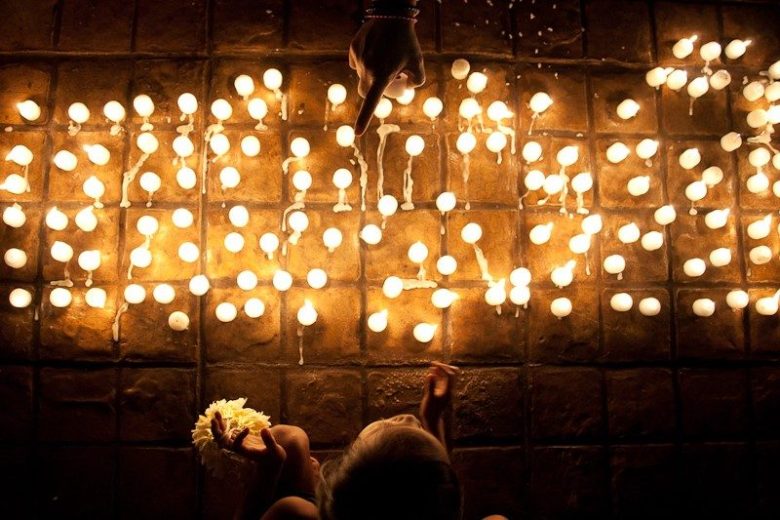
A memorial for journalists killed in the Philippines (Photo: André van der Stouwe / Flickr [CC BY-NC-SA 2.0])
Journalism and history
Thus far, we have examined Japan’s international reporting through the lens of anniversary journalism. We find that for historical pieces—coverage of past events—the national and regional biases resemble the imbalance seen in regular international reporting. For an event to be deemed worthy of being recalled—worthy of being made to be remembered—more than the size of the event, factors such as whether it occurred in a developed country, how closely it is connected to Japan through trade or tourism, and whether reporters are routinely stationed there appear to matter. Reporting what is happening in the world, informing people, and leaving things in people’s memories is one role of the media. Therefore, matters that go unreported—and then go unreported one year or three years later—are less likely to remain in people’s memories or in the record of history.
(Photo: Moe Minamoto)
Conveying facts about the “now” is, of course, a major role of the media. At the same time, however, through anniversary journalism the media also helps connect the past to the present and, in a sense, “build” history. This could prompt changes in how we evaluate what is happening now and how we perceive history. As Japan’s ties with countries around the world deepen, is the current approach to reporting sufficient? Given that the media is an actor that shapes history, perhaps it is necessary to reconsider the balance of coverage—by region and by the scale of events. If the way reporting is done changes, people’s understanding of history—and of today’s world—may deepen.
※1 We consulted each company’s online database. For the definition of international news articles, see “GNV Data Analysis Method [PDF].”
※2 For Yomiuri Shimbun, because “International” was selected under “Category” in the electronic database, international reports published outside the International section are also included.
Writer: Moe Minamoto
Graphics: Moe Minamoto




面白かったです。
事件の発生当時は報道されていないが、1年後や3年後にアニバーサリージャーナリズムとして多く取り上げられるなどの事例はあるのでしょうか。事件当時は注目が集まらなかったのに、数年後に注目されるようになる原因などを推測するのも興味深いと感じました。
とても読みやすい文章でした。日本の報道に偏りがあることは感じていましたが、外国で起きた出来事の報道について、ここまで国ごとに差があるとは…驚きです。
やはり日本の新聞はいつも同じような国ばかりを報道していますね。
先進国は気にするが発展途上国はどうでもいいという、いつものやつですね。
メディアがこれでは、読者の世界に対する包括的な興味なんて生まれるはずもないですね…
しっかりして欲しいです。歴史誤認や、将来の世界史の教育にも影響しそうで怖いです。
もうすでにかなり影響しているでしょうけど。
日本の報道に偏りがあると感じましたが、これほど偏りがあるのは知らなかったです。
アニバーサリージャーナリズムを分析することで、より日本の国際報道の偏りが顕著に表れている気がしました。被害、規模などによる平等な報道がされればいいなと思いました。
報道機関が「歴史」をつくるという役割を果たしているという点では「~から1か月」「~から半年」よりも「~から10年」などのような報道が重要度が高いのではと思いました
そのような役割をもっていることを報道機関自身は意識できているのでしょうか
報道機関は歴史に残す出来事を選択することができる立場、というのは新しい視点でした。
報道機関は、偏りのない報道で、偏りのない歴史認識をつくってほしいと思います。
アニバーサリージャーナリズムに注目することで、日本の報道が何に注目しているのかがよくわかりました。読者が興味を持たないことと報道されない世界があることの悪循環だなと思いました。
日本の多くの新聞では「どれだけ身近な出来事か」がかなり重要視されている。遠い異国のジャーナリストが国家権力によって殺害されるニュースよりも、通り魔によって市民が殺害されるニュースの方が、報道価値があると考えられている。長いスパンで見れば、どちらが注目されるべきニュースかは判断できる。「身近な視点」だけでなく、「広い視点」でニュースを選択していきたいと思う。
筆者の問題意識としては、「国や地域に偏りなく重大な国際ニュースを報道せよ」ということでしょうか。もちろん、それは大事なことですし、ド正論だと思います。でも一体、どれくらいの日本国民が国内でそのようなニュースが日常的に供給されることを望んでいるでしょうか。すなわち、報道機関もビジネスをやっている以上、需要が乏しいニュースを定期的に広範囲にわたって供給するのは難しいのでは?ただでさえ新聞社・通信社の経営は厳しいですし、ニーズが比較的少ないニュースのために大きなコストをかけられないでしょう。もちろん、人々が求めるニュースだけ提供しているのでは報道機関としての責任を果たしているとはいえません。ですが今の日本のジャーナリズムは「報道すべきこと」と「人々が報道してほしいもの」のバランスを取るのがとても難しいと思います。