
When people hear Sweden, many imagine a neutral nation that favors peace. However, contrary to that image, Sweden is one of the world’s leading arms exporters. Why is the arms industry thriving in a country with a peace-loving image? Moreover, it has been pointed out that Swedish weapons exported abroad are being used not only for defense but also in wartime human rights violations. There are also concerns that bribes may be paid to clinch arms deals. What is the current state of these issues? We explore the reality of Sweden that diverges from its image.
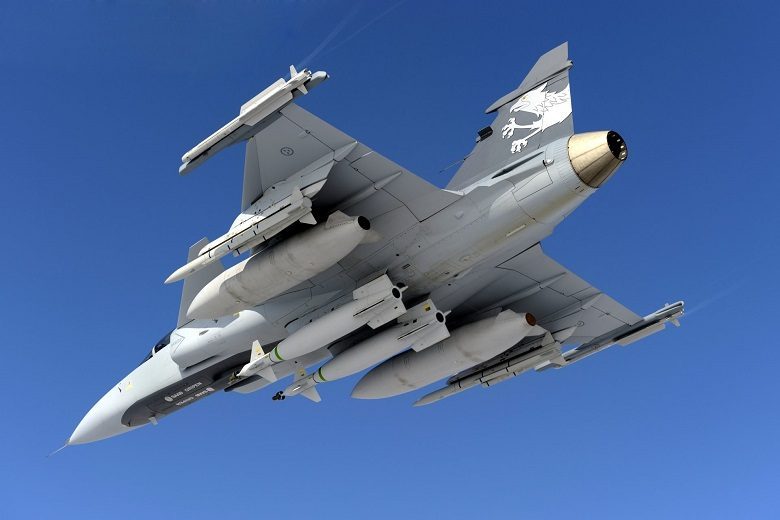
Swedish-made fighter jet (Saab Gripen fighter jet) (Photo: Robert Sullivan/Flickr[public domain])
目次
Sweden’s arms industry
Between 2009 and 2013, Sweden accounted for 1.9% of global arms supplies. It also ranked third in the world in per-capita arms supply at 53.1 USD. However, in recent years Sweden has been losing momentum in the global arms industry. According to the Stockholm International Peace Research Institute (SIPRI), Sweden’s arms supply fell by 62% over the past decade, and for 2014–2018 its share of global arms supply decreased to 0.7%. Behind this are not only a decline in sales of expensive fighter jets but also an overall increase in worldwide arms supply. As of 2018, Sweden’s arms sales totaled 134 million USD.
There is an organization that reflects the scale of Sweden’s military industry: the Swedish Security and Defence Industry Association (SOFF), comprising about 80 weapons manufacturers. It was established to create the best conditions for each company to operate in Sweden, enhance market convenience, and further expand trade volumes. According to 2016 data, 2.08 billion euros—68% of total arms sales by companies that make up SOFF—came from exports. SOFF exports to more than 100 countries; 60% are combat weapons and the remaining 40% are non-combat military equipment. The largest sales are to the Nordic countries, including Sweden, followed by Asia and the Middle East, and then non-Nordic Europe. Total revenue for SOFF as a whole is about 3.06 billion euros, of which 16.1% is allocated to research and development. These facts about SOFF show just how active the arms industry is in Sweden.
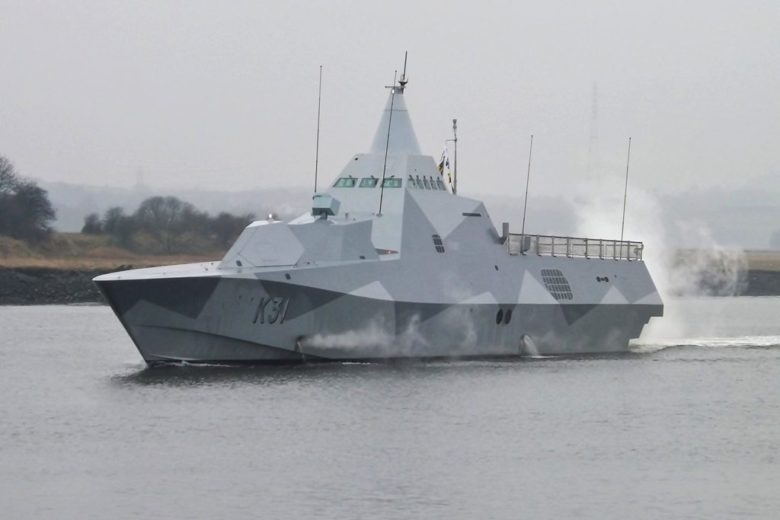
Stealth corvette of Saab’s Visby class (Photo: Mark Harkin/Flickr [CC BY 2.0 ])
Here, we introduce Saab (SAAB), Sweden’s largest arms manufacturer. It was originally an aircraft and defense manufacturer, and its automobile division, Saab Automobile, is what is commonly known as “Saab.” Saab ended car production in 2011 and has since expanded its weapons manufacturing. In the 2000s it acquired major arms makers such as Bofors and Kockums, achieving further expansion. It currently has 16,500 employees. Representative products include the Gripen fighter jet, the Visby-class stealth corvette, the Gotland-class submarine, and the Carl Gustaf recoilless rifle.
Why is the arms industry so active?
Sweden’s arms industry has a long history. Up until the 1500s, weapons manufacturing in Sweden was not very active, and the country often imported arms from other European nations. However, from the early 1600s, at the request of Gustavus Adolphus II, Sweden’s military industry was established in earnest. During the Napoleonic Wars in the early 1800s, Sweden lost Finland and subsequently adopted a policy of neutrality, but in the 1930s, feeling threatened by the rise of Germany, it adopted a policy of “armed neutrality,” sharply increasing defense budgets and weapons production. During the Cold War, while caught between the capitalist-liberal bloc led by the United States and the communist-socialist bloc led by the Soviet Union, Sweden maintained a neutral stance. In 2009 it abandoned strict military neutrality, and in 2011 it even participated in military intervention in the Libyan conflict. Because of this legacy, Sweden can be said to have been in a geopolitically unstable situation. For this reason, some justify the arms industry by arguing that Sweden needed weapons production to defend itself.
However, Swedish weapons are not only for national defense; they are exported in large quantities. Today, Sweden’s arms industry is active as part of its foreign policy. By selling weapons to Latin America, Africa, and parts of Asia, Sweden seeks to strategically strengthen relations with the Global South. To that end, in addition to selling weapons at low prices, it actively carries out technology transfer to buyers. In practice, Sweden has concluded arms deals with Global South countries such as South Africa, India, and Brazil.
The commercial profits from selling weapons are also important to Sweden. As a major industry, the defense sector is seen as contributing to Sweden’s economy. In addition, Sweden prides itself on its technological prowess. The arms industry is the nation’s pride and a way to protect its brand strength. By selling weapons to other countries, Sweden showcases its world-class technology and asserts its pride, while also aiming to expand into other sectors.
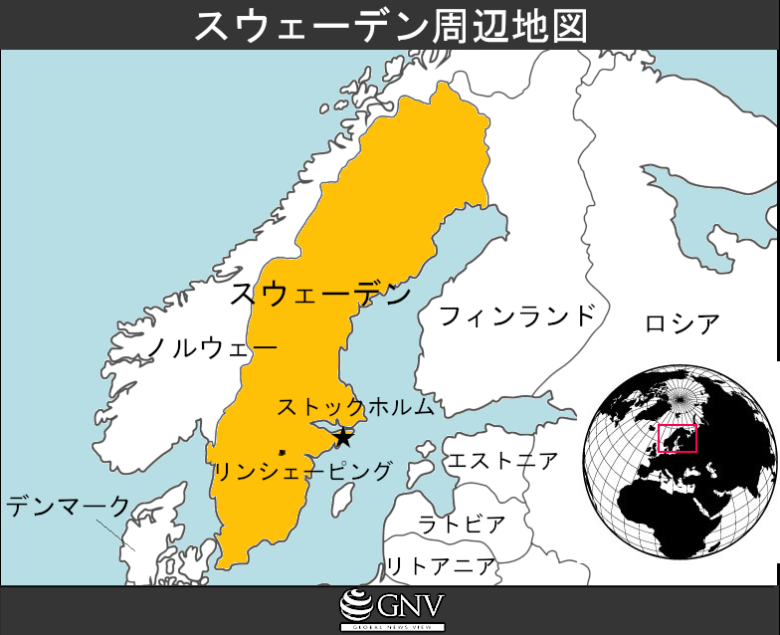
Another reason is that it creates labor demand. Saab has a factory in Linköping, a city of about 150,000 people. In Linköping, Saab employs around 5,000 people, and including the aviation sector, 15,000 are employed—about 10% of the city’s population. The aerial photo below shows the factory. In other words, when Sweden concludes arms deals with other countries, Linköping is invigorated. Having developed alongside Saab, both residents and politicians in Linköping support the company.
The arms industry and human rights abuses
As seen above, the defense industry appears to contribute to Sweden’s economy and national strength, but there are concerns about how Swedish-manufactured weapons are used in recipient countries. For example, Sweden has a history of exporting arms to multiple authoritarian states, including Saudi Arabia, the United Arab Emirates (UAE), Pakistan, Qatar, and Brunei. There is a risk that these weapons could be turned on their own populations, and that they could be used not only for defense but also in overseas armed conflicts to perpetrate human rights violations.
In this context, it has become a problem that Sweden sells weapons to the Yemen conflict belligerents Saudi Arabia and the United Arab Emirates, which continue inhumane attacks. Saudi Arabia has purchased Erieye radar systems and anti-tank guided missiles from Sweden, and continues attacks on Yemen that could be considered war crimes. It is estimated that 91,600 people have been killed in fighting since the conflict began in March 2015. In addition, over the three years from 2015, 85,000 children under the age of five are said to have died of hunger. According to Middle East Eye (MEE), between 2015 and 2016 Sweden sold 1.33 billion USD worth of weapons to the United Arab Emirates and Saudi Arabia.

Loading…
Amid this situation, Sweden has provided aid to Yemen. Between 2015 and 2018, Sweden donated 105 million USD to the UN’s Yemen Humanitarian Response Plan. However, this is only 7.93% of the value of Sweden’s arms sales to Saudi Arabia and the United Arab Emirates.
In 2018, Sweden’s foreign minister at the time expressed concern over the inhumane actions of Middle Eastern countries and stated on Facebook that recent Swedish exports to Saudi Arabia were very limited and that since 2015 no new weapons exports had been authorized. Sweden’s Inspectorate of Strategic Products (ISP) also claims that over the past five years Sweden has not concluded new arms deals with Saudi Arabia, and that weapons currently being exported are under previously signed contracts, mostly spare parts and maintenance-related items. Furthermore, in 2017 Sweden amended its arms export law to restrict exports to non-democratic states, but significant impact on exports is not widely expected. However, the Campaign Against Arms Trade (CAAT) says that even if exports were halted now, the weapons Sweden is currently exporting would continue to be used for about the next 30 years, because the lifespan of weapons is that long. For Yemen, where casualties are mounting and human rights abuses are grave, what is needed is aid, not arms.
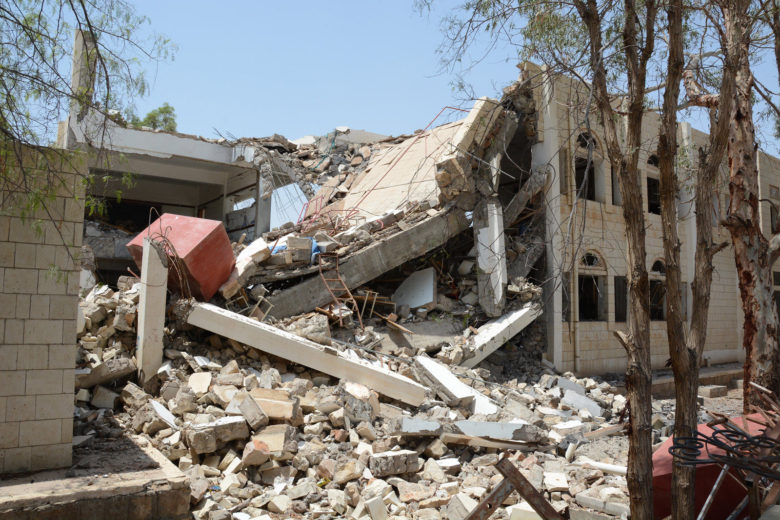
A school in Yemen destroyed by airstrikes (Photo: United Nations OCHA/Flickr [CC BY-NC-ND 2.0])
The arms industry and bribery
Among the issues surrounding Sweden’s arms industry, bribery has also sparked debate in addition to human rights concerns. In Sweden, there have been reports of illegal payments by arms manufacturers, including Saab, to counterparties in order to promote sales and beat rivals. For example, in 1999 Saab concluded a contract with South Africa to sell 28 Gripen fighter jets, later reduced to 26. In this deal, Saab admitted that 24 million rand (about 463.2 million yen) in bribes was paid to government officials. Saab, however, claimed the payments were made by its former joint venture partner, the British arms company BAE, and denied any responsibility. Yet, according to documents cited by the Swedish newspaper Expressen, a BAE representative asserted that Saab had been informed of everything related to the deal with South Africa. In other words, by BAE’s account, Saab was aware of the dealings between South Africa and BAE.
This arms deal and the bribery issues between South Africa and Sweden sparked intense debate. Payments for the purchase from Sweden are said to continue until 2022, but in South Africa there are criticisms that the country faces problems unrelated to weapons—poverty, crime, unemployment—that deserve funding instead. The expensive weapons purchased end up gathering dust because their maintenance costs are enormous. In fact, as of 2019 it emerged that, due to a lack of funds and pilots, only five of the purchased Gripen fighters were operational.
In the early 2000s, Saab and BAE were also alleged to have paid bribes to the Czech Republic and Austria to promote Gripen sales, totaling as much as 150 million USD. These opaque dealings were exposed in a documentary program, but both Saab and BAE denied them. Because the scandal drew international attention, investigations were launched in at least seven countries, including Sweden, and individuals connected to BAE were arrested for bribery and money laundering in relation to the Gripen sales.
More recently, a sales deal between Brazil and Saab has also come under suspicion for opaque transactions. In 2014, 36 Gripen fighters worth 4.68 billion USD were sold by Saab to Brazil. In this deal, Saab was alleged to have paid bribes to a former president to encourage the then president to proceed with the purchase, but whether this is true has not yet been determined and the facts remain unclear. By selling weapons to Brazil, in 2018 Sweden’s arms exports rose by 2% compared to 2017, reaching 1.38 billion USD.
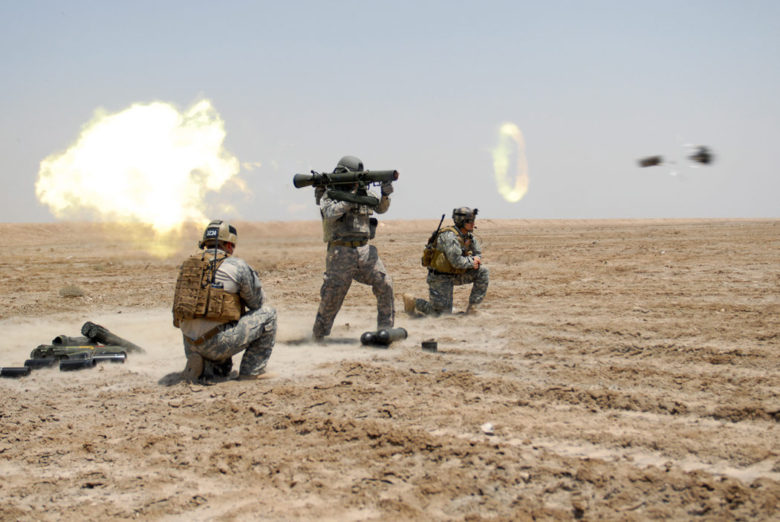
Soldier using Saab’s Carl Gustaf recoilless rifle in Iraq (Photo: William Hatton/Wikimedia [public domain])
Despite its calm and peaceful image, the country’s arms industry has in fact developed, and arms exports have supported its economy and diplomacy. Moreover, sales of weapons to countries that threaten human rights, and the illegal, opaque dealings surrounding arms trades, have become serious problems entangled with other nations. Although Sweden’s arms exports declined in the 2010s, with the new deal to sell expensive fighter jets to Brazil, Sweden’s arms exports may once again grow in the years ahead.
Writer: Ikumi Arata
Graphics: Saki Takeuchi




スウェーデンなどの北欧地域=平和というのはイメージがとても強かったので、驚く事実ばかりで、面白かったです!
スウェーデンの軍需産業、参考になりました。記事の最後の方の「36個のグリペン戦闘機がサーブからブラジルに販売」は「36機」ではないですか。
ご指摘ありがとうございます。訂正しました。
スウェーデンの知られざる事実だった。
ノーベル賞って スウェーデンですが、ノーベルってダイナマイト発明ですよね!?笑
スウェーデンは北欧ではありますが どちらかというと ドイツとほとんど同じな北方ゲルマン って思ってるくらいでいいのかもですね。
スウェーデンについて、全然知らなかったのですが軍事産業が発展してることを初めて知りました。
スウェーデンに限らずいろいろな側面があることを知ることが出来ました。ありがとうございます。
スウェーデンが武器輸出大国であることは、軍事に詳しいあるいは興味のある者の殆どは知っている。また、自衛隊反対、スウェーデンは平和国家と大きな声で主張する、いわゆる”平和主義者”の多くも知っていますよ。知らないふりをしているのではなく、日本が武器に関与することは悪いことをするためであり、スウェーデンが武器に関わるのは平和のためだと本気で思っており、殆ど議論ができません。
忘れていましたが、こういう軍事に関して詳しい記事は非常に良いことだと思います。日本では、軍事=悪い、殺人というイメージが強く、自国を守るためにあるという認識が薄すぎます。防衛はリアリズムに徹するべきで、感情に押し流されては、戦争が起きる可能性が高まると思います。
漠然とスウェーデンは武器輸出大国と知っていましたが、この記事により、その実態を詳しくしることができました。今は、中国が有している空母[遼寧]が、ウクライナから輸入したものであることを知らないかのように、日本人は振る舞っているのが、非常に気にかかります。ロシアによって、恐ろしい目にあっているウクライナ人も、ロシアが自国を侵略する可能性があることを知りながら、過去のどこかの時点で、間違った判断をして、今のような惨状になっている可能性もあり、日本もそのようなことにならないように、この記事のように軍事およびその政治的な役割を、認識できるような報道がなされたらいいなと思っています。