
On April 3, 2016, based on 11.5 million documents leaked from a Panama-based law firm, more than 100 media outlets around the world jointly investigated and published the opaque realities of tax havens. These documents and the subsequent investigations became known as the Panama Papers. The documents were initially leaked to the German newspaper Süddeutsche Zeitung by a whistleblower whose identity remains unknown.
The Panama Papers shed light on the serious injustice whereby wealthy individuals can use tax havens to avoid paying taxes that should properly be paid to the societies in which they live and work. The documents detail the methods through which individuals, companies, and other entities use shell companies and offshore structures to conceal assets and transactions and avoid tax. The investigations led to multiple arrests, the large-scale recovery of unpaid taxes, and the downfall of powerful politicians. They also sparked debate on the broader problems created by the near-absence of regulation for tax havens and secrecy jurisdictions.
Ten years have passed since the Panama Papers investigation was published. What did these investigations accomplish, and how have the problems they highlighted changed since then?

Frederik Obermaier speaking at an event related to the Panama Papers (one of the reporters who received the Panama Papers from the whistleblower) (Photo: Nordiske Mediedager / Wikimedia Commons [CC BY-SA 2.0])
目次
About the Panama Papers
In 2015, the Panama Papers leaked from a single law firm called Mossack Fonseca. The firm was based in Panama but had clients all over the world, connecting them to shell companies and secret accounts in 21 offshore jurisdictions. The documents spanned several decades and contained information on more than 214,000 companies.
The documents were initially leaked to Süddeutsche Zeitung, but due to the sheer volume of information and the involvement of clients and financial transactions across the globe, the paper shared them with the International Consortium of Investigative Journalists (ICIJ). ICIJ reached out to teams of journalists around the world and coordinated the project. It created a system through which reporters could securely access the documents and share information and findings. Participating journalists focused on their own countries or nearby regions, searched the database for individuals and companies, and carried out investigations.
The investigation continued in secret for more than a year. All media outlets agreed to start publishing on the same day, and this agreement was honored. On April 3, 2016, reports began appearing simultaneously around the world on the hidden assets and secret transactions of prominent individuals and corporations.
This was not the first time that a large leak of documents about offshore shell companies and tax havens had prompted a collaborative investigation through ICIJ. The Luxembourg Leaks in 2014 and the Swiss Leaks in 2015 had set precedents. However, the volume of material in the Panama Papers was truly unprecedented.

Location of holders of HSBC bank accounts revealed in the Swiss Leaks. Much of the money has flowed in from other tax havens. (Photo: Martin Grandjean / Wikimedia Commons [CC BY-SA 4.0])
The role of tax havens
Here we explore the issues associated with tax havens.
As the name suggests, tax havens are jurisdictions where individuals and corporations can minimize their tax burden. Tax rates are, of course, a key factor, and personal and corporate tax rates may be set extremely low or even at zero. But that is not all. The legal framework governing income, transactions, and corporate formation is also a crucial feature of tax havens. The laws are designed so that anyone, including non-residents, can move funds and set up corporations easily and at low cost, with little oversight or bureaucratic friction. In many tax havens, most individuals and companies using financial services have no actual physical presence there.
A major characteristic of this regulatory framework is secrecy. Secrecy plays a crucial role in helping hide funds overseas. By making it difficult for authorities in other countries to trace funds that are moved to or routed through them, tax havens enable individuals and corporations to avoid tax. For example, it is easy to set up shell companies and trusts, which are then used in ways that conceal their true beneficial owners.
Using tax havens is not always illegal. Law firms, accounting firms, and other offshore service providers help their clients identify legal loopholes in tax haven legislation so they can avoid tax. However, this does not necessarily mean what they do is lawful. Such loopholes are often in a legal gray area and may be challenged or prosecuted by authorities. At the same time, secrecy can also facilitate clearly illegal tax evasion.
For example, it is common for companies to use shell companies in tax havens to shift profits, making it appear as though profits were generated in the tax haven rather than in the country where the underlying economic activity actually took place and should be taxed. In some cases they exploit superficially legal loopholes, but many companies are believed to shift profits by fraudulently misrepresenting the value of goods and services in transactions. This technique is known as trade misinvoicing.

Container ship (Photo: PickPik [Terms of service])
One common tactic is for a company to “sell” its products at a low price to a shell company it owns in a tax haven, then mark up the price and sell them on to the final buyer. This makes it appear that the profits were earned in the tax haven, where they are not taxed, thereby minimizing taxable income in the country where the original transaction occurred.
The secrecy protected in tax havens also attracts individuals involved in criminal activities such as sanctions evasion, illicit drug and arms trafficking, and human trafficking. By routing funds through tax havens, they can conceal transactions and profits from such activities and launder the proceeds.
In many tax havens, secrecy is strictly protected by law. In Switzerland, for example, there have been cases where whistleblowers who exposed illegal financial activity were criminally prosecuted for violating secrecy laws, while the illegal financial conduct itself was barely punished.
Despite these features, tax havens are not necessarily easy to identify, and there is no agreed definition. Tax rates and the extent of secrecy vary by jurisdiction. Moreover, a tax haven may not be an entire country but just one state or region within a country. In the United States, for example, the state of Delaware is often cited as a tax haven. The United Kingdom itself is not generally considered a tax haven, but several of its overseas territories—remnants of the former British Empire—such as the British Virgin Islands, the Cayman Islands, and Bermuda are regarded as major tax havens.
The direct impact of the Panama Papers
So what did the Panama Papers’ investigative reporting achieve in relation to these problems? Some effects were immediate. Iceland’s then prime minister, Sigmundur Gunnlaugsson, was confronted on the day the investigation was published with the fact that he had failed to declare ownership of an offshore company when he entered parliament, and two days later he announced his resignation from office. Pakistan’s prime minister, Nawaz Sharif, also resigned after the Panama Papers revealed overseas family-owned properties; he was prosecuted for corruption and sentenced to 10 years in prison. Several other heads of state were embroiled in scandals, but only these two were ultimately forced to resign.

Former Pakistani Prime Minister Nawaz Sharif, who was forced to resign over the Panama Papers (Photo: World Economic Forum / Flickr [CC BY-NC-SA 2.0])
Other impacts took longer to materialize, as national authorities conducted investigations and brought cases to court. Jürgen Mossack and Ramón Fonseca, the founders of the law firm at the center of the Panama Papers, were arrested in 2017 on money laundering charges, and their firm was dissolved in 2018. Over the following years, unpaid taxes and fines were recovered around the world. The largest recovered sums were in the United Kingdom, Sweden, France, and Spain, each reportedly recovering about US$200 million. In total, it is estimated that over ten years some US$1.3 billion was recovered as a result of the Panama Papers revelations.
The Panama Papers investigation may also have motivated insiders with access to similar internal information at other firms to leak documents to the media. After the Panama Papers, several more leak-based investigations were carried out through ICIJ. In particular, the Paradise Papers (2017) and the Pandora Papers (2021) were large-scale leaks, each containing a number of documents comparable to the Panama Papers. In the case of the Pandora Papers, the documents came not from a single law firm but from 14 different offshore service providers and law firms.
Systemic problems that remain
The Panama Papers revealed that the use of tax havens by wealthy individuals and corporations to hide assets and avoid taxes they ought to pay is not rare but a widespread practice.
There was nothing especially unique about Mossack Fonseca or its clients. Many law firms around the world perform similar functions. Law firms are just one part of a broad infrastructure—including accounting firms, banks, and other offshore service providers—that facilitates profit shifting, asset concealment, tax avoidance, and tax evasion. It was simply a coincidence that a whistleblower had access to the documents of this particular firm. For that reason, it is important to assess the impact of the Panama Papers in terms of their effects on the broader systemic issues surrounding tax havens.
In its review of the decade since the Panama Papers, ICIJ notes that “many countries have taken action against the facilitators of financial secrecy and advanced transparency reforms to close loopholes in the system.” Many countries have strengthened laws on corporate registration and ownership and on money laundering. Internationally, the Organisation for Economic Co-operation and Development (OECD) has introduced measures to improve the sharing of financial account information among national authorities, particularly the system of Automatic Exchange of Information (AEOI).

Mossack Fonseca’s website (at the time) (Photo: Фотобанк Moscow-Live / Flickr [CC BY-NC-SA 2.0])
However, the scale of untaxed wealth hidden in tax havens remains enormous. According to an analysis released by the international NGO Oxfam to mark the tenth anniversary of the Panama Papers, as of 2023 the world’s richest 0.1% were estimated to be hiding US$2.84 trillion in untaxed wealth in tax havens. This amount exceeds the total wealth of the poorest half of the world’s population—4.1 billion people.
In a 2024 report, the international NGO Tax Justice Network estimated global revenue losses from cross-border tax avoidance and evasion at up to US$492 billion. It also reported that low-income countries are disproportionately affected: they lose 3.7% of their tax revenue to such practices, compared with 2.4% for high-income countries.
Towards a UN tax convention
Even before the Panama Papers, efforts were underway to establish a comprehensive and effective framework for international tax cooperation to address problems like those above. These efforts have been led mainly by low-income countries, which have acutely felt that cross-border tax avoidance and evasion by multinational corporations—most of which are based in high-income countries—have inflicted disproportionate damage on their tax revenues. At the Third International Conference on Financing for Development held in Ethiopia in 2015, attempts were made to establish an international body on taxation, but they failed due to opposition from several high-income countries.
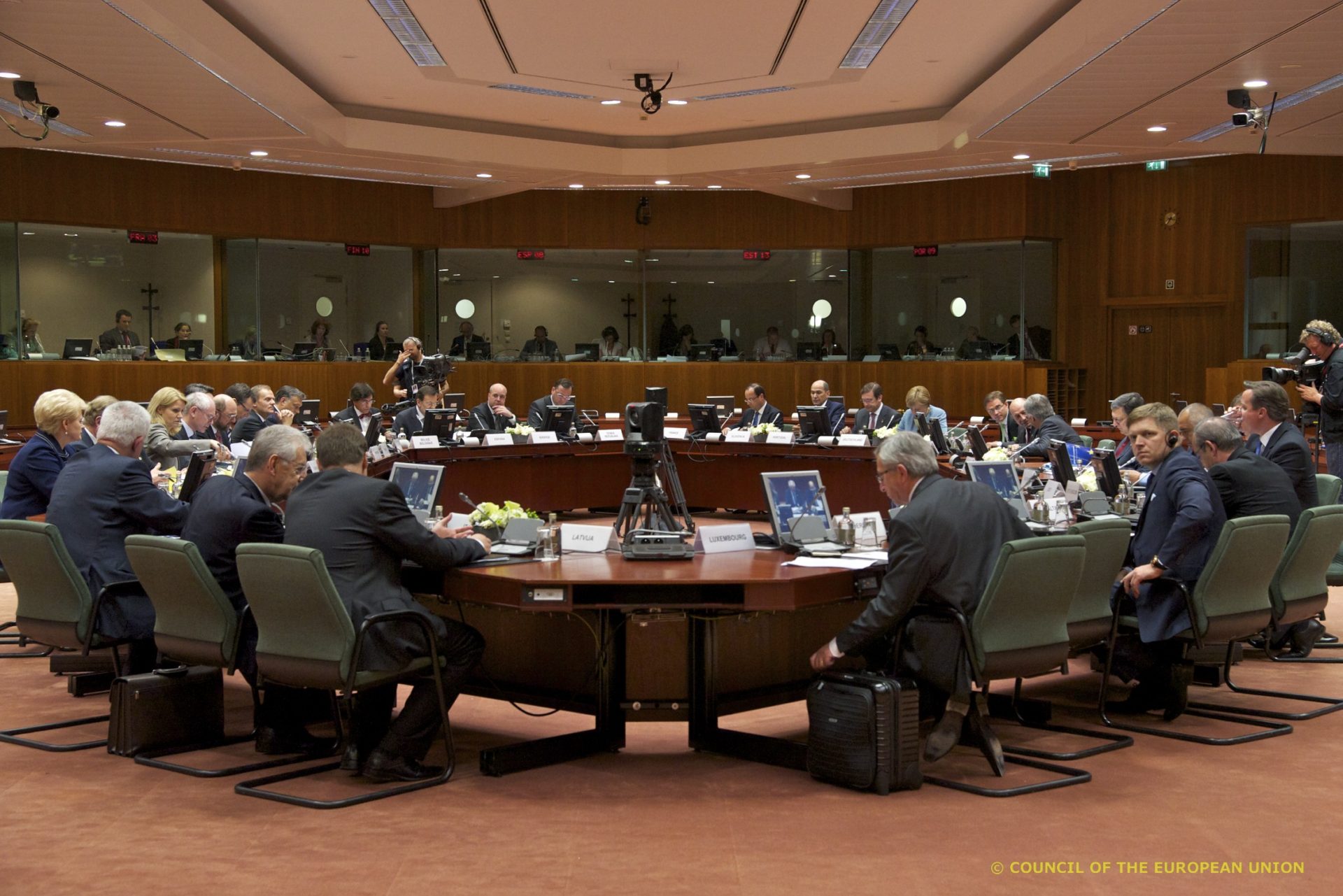
Nevertheless, countries calling for global tax reform persisted. In December 2022, the UN General Assembly adopted a resolution on “Promotion of inclusive and effective international tax cooperation,” committing member states to further discussions on tax cooperation, including “the possibility of developing an international tax cooperation framework or instrument” to be developed and agreed through an intergovernmental process at the UN.
As this process began to take shape, however, several high-income countries again stepped up their opposition. In August 2024, only eight countries—Australia, Canada, Israel, Japan, New Zealand, South Korea, the United Kingdom, and the United States—voted against the terms of reference on tax cooperation in a committee of the General Assembly. The Tax Justice Network estimated that 43% of the world’s lost tax revenue is enabled by these eight countries and dubbed them the “hurtful eight.” Argentina later joined them, and by December of the same year only nine out of 193 countries opposed the General Assembly resolution to launch the process of establishing a tax convention.

UN General Assembly (Photo: U.S. Government Works / Rawpixel [Public domain]
With the exception of Argentina, all of these countries are OECD members. The OECD has so far monopolized the setting of the global agenda on tax policy, and countries opposing tax cooperation reform appear intent on keeping global tax issues under their control. The tax policies advanced by the OECD have benefited multinational corporations headquartered in these member states, but the huge losses of tax revenue occurring worldwide under the current system indicate that these policies have failed.
Concrete reform proposals include strengthening beneficial ownership registration systems for companies and assets, and improving the automatic exchange of information between countries on these companies, assets, and owners. One of the most important proposals, however, is the introduction of unitary taxation to curb profit shifting by multinational corporations. This is a method of “taxing multinationals based on where they actually carry out business activities—that is, where they employ workers, operate factories, and sell goods and services—rather than in the jurisdictions (i.e. tax havens) where they formally book their profits.”
Conclusion
The Panama Papers were a turning point ten years ago, drawing crucial attention to the widespread problems of tax avoidance and tax evasion. Ironically, it is the wealthiest segments of society that can free-ride on public services by using offshore structures and tax havens, while the tax burden falls mainly on low- and middle-income individuals and businesses.
This situation is not only unfair but highly destructive. It deprives governments around the world of the tax revenue needed to maintain public infrastructure, health, education, and other social services. The impact of such tax avoidance and evasion is especially severe in low-income countries, where lost tax revenues often translate directly into lost lives.
Intergovernmental negotiations on tax cooperation at the UN are scheduled to continue until 2027. Despite opposition from several high-income countries, the attempt to pursue global tax reform through the UN offers a historic opportunity to introduce, standardize, and implement such reforms. GNV will continue to follow developments in this process.
Writer: Virgil Hawkins














.jpg)

0 Comments