
GNV News — July 13, 2025
In Bihar in eastern India, on June 24, 2025, the Election Commission of India (ECI) issued a directive requiring approximately 80 million voters to re-register as electors. Targeting those added to the electoral rolls since 2003, it requires submission of documents proving date and place of birth, as well as proof of the citizenship of one or both parents, with a deadline of July 26. Regarding this re-verification of the electoral rolls, on July 10, 2025, India’s Supreme Court told the ECI that while the revision exercise is not illegal and cannot be halted because it is a “constitutional duty,” if the ECI is venturing into citizenship verification that is outside its remit, and it sought a clear explanation as to why this revision is being conducted in Bihar now. In response, the ECI argues that a nationwide roll revision is necessary due to urbanization, internal migration, and duplicate registrations.
In the background are pro-Hindu policies on citizenship pursued in recent years under the Narendra Modi government. In Assam, driven by resentment toward Bengalis and to identify and expel “illegal” immigrants, the National Register of Citizens (NRC) was introduced in 1951 and updated in 2019. Registration requires the submission of documentary proof, and even those who hold citizenship can easily become subject to deportation to neighboring countries or imprisonment if they cannot produce the specified documents. Furthermore, the Citizenship Amendment Act, implemented in 2024, sparked controversy for expediting citizenship for Hindus and some other faiths while having the effect of excluding Muslims. There are also claims that this move is a backdoor attempt to introduce the NRC in Bihar—whose nationwide rollout was shelved amid nationwide protests—in order to strip large numbers of people of citizenship.
In Bihar, 17% of the population—17.6 million people—are Muslims. In addition, the state’s literacy rate is about 74%, among the lower rates in India, and the birth registration rate also remains low, making it difficult for many people to provide the required documents. Many documents are also lost due to natural disasters such as floods, and the fact that common IDs like the national Aadhaar card and ration cards are not included among officially accepted documents has drawn criticism. These communities face many challenges in proving their origins and place of residence. Moreover, many people in the communities affected support the opposition Rashtriya Janata Dal (RJD), raising concerns that the ECI’s measure could work to the advantage of the ruling Bharatiya Janata Party (BJP).
Learn more about the National Register of Citizens → “Four million erased: India’s citizenship problem”
Learn more about issues in India’s Northeast, including Assam → “Instability continues in Northeast India”
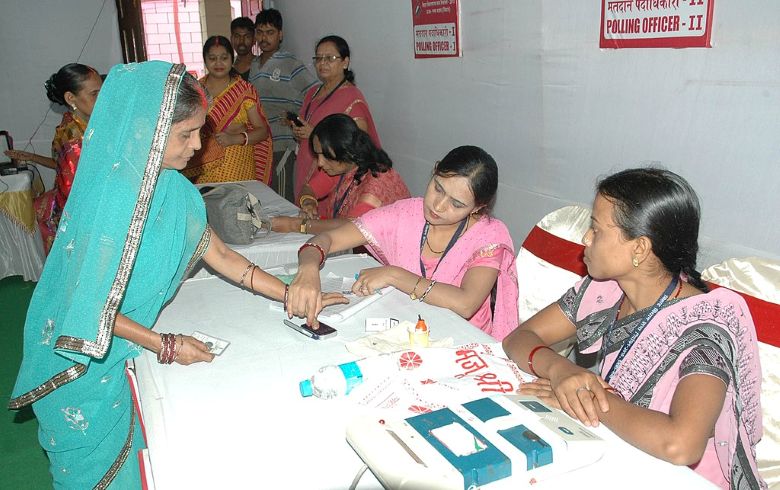
Photo: Elections in Bihar, India (Goverment of India / Wikimedia Commons [Public Domain])

















0 Comments