
In January 2026, the U.S. Department of Justice made publicly available 3.5 million pages of documents and image, audio, and video files related to the case of U.S. financier Jeffrey Epstein (*1). Epstein built an extensive network of connections among wealthy and powerful figures in business, technology, politics, and diplomacy, as well as royalty and celebrities, and amassed a vast fortune.
His network and wealth continued to expand even after he was convicted in the United States in 2008 for procuring a girl under the age of 18 for prostitution. In 2019, Epstein was arrested again on charges of sex trafficking of minors and died in jail that same year. The Epstein case continues to attract intense attention in many countries because it left deep questions about the possible involvement of numerous prominent people in his sex trafficking operations.
Yet this case is not merely about human trafficking and sexual abuse by famous individuals. Nor is it limited to the political, legal, and social consequences for the wealthy and powerful who were connected to Epstein. The release of these documents exposed far broader problems on a global scale. One journalist has observed: “These documents offer an unseemly glimpse into how wealth is amassed and power is traded. As a private individual accountable to neither voters, regulators nor shareholders, Epstein was quietly pulling strings in the worlds of politics and business almost non-stop.”
This article focuses on several of these kinds of “backroom dealings” carried out by Epstein and those who conspired or cooperated with him. Such an examination is crucial for understanding the much wider issue of hidden economic, political, and diplomatic power wielded by what anthropologist Janine Wedel has called the world’s “shadow elite.”

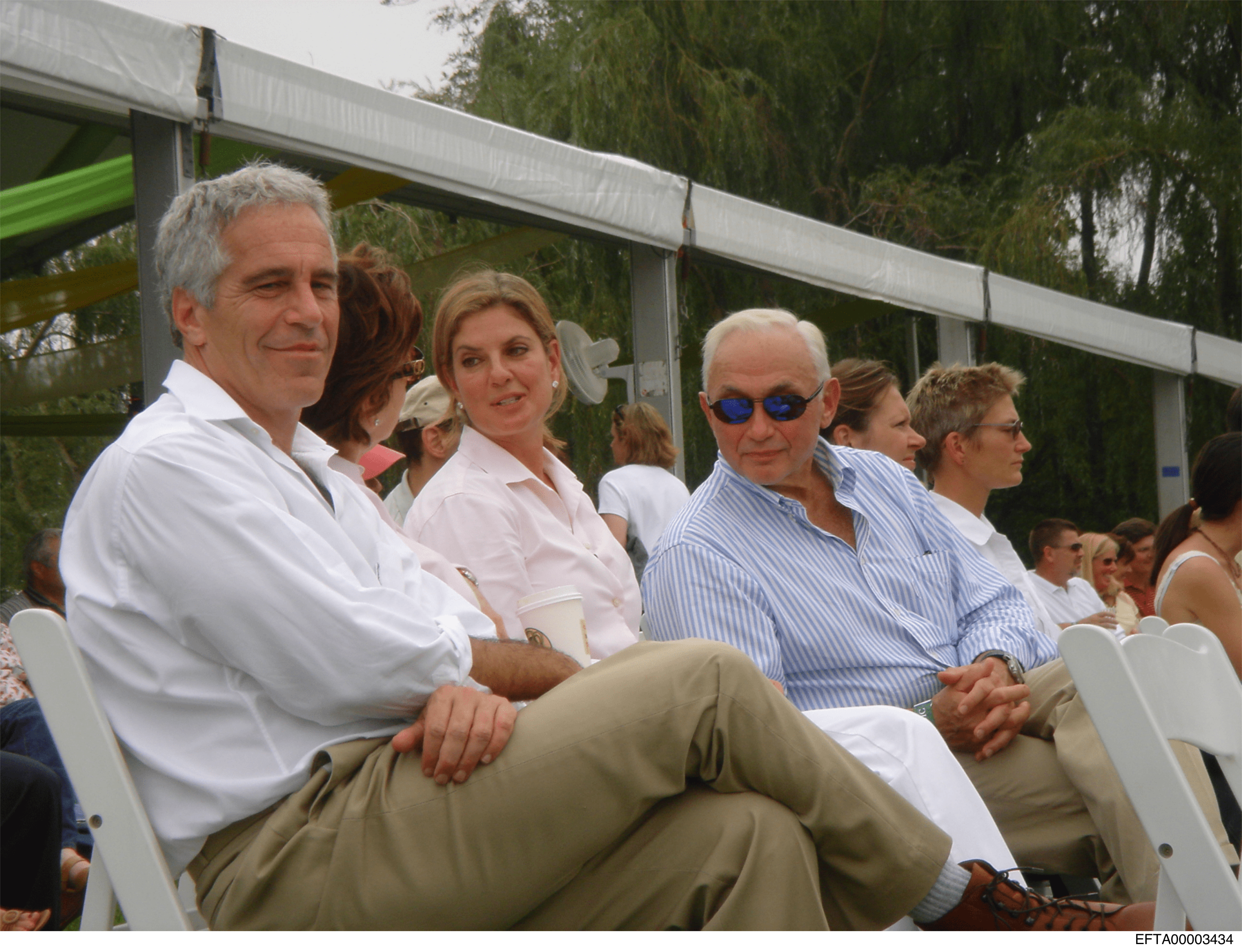
Epstein and the Wexners (DOJ: EFTA00003434)
目次
Epstein’s rise
How Epstein accumulated his wealth from the 1980s through the 1990s is not fully clear, but much of his fortune is believed to have been obtained through dubious activities. There are suspicions that he was involved in laundering money related to arms deals in the Middle East, which are said to have been connected to U.S. and Israeli intelligence agencies. He is also believed to have been involved in a series of fraud schemes that further increased his wealth.
In 1991, he took over the financial management of Leslie Wexner, who owned a retail company that held brands such as Abercrombie & Fitch and Victoria’s Secret. Epstein is believed to have embezzled most of those funds, and this is considered the major factor that dramatically boosted his wealth and social status.
In addition, he appears to have made extensive use of tax havens, and to have earned substantial income by advising others on how to avoid paying taxes. There remain suspicions that this activity served as a way to launder money obtained through other illegal means. He was also deeply involved in the development of cryptocurrencies.
Epstein’s network
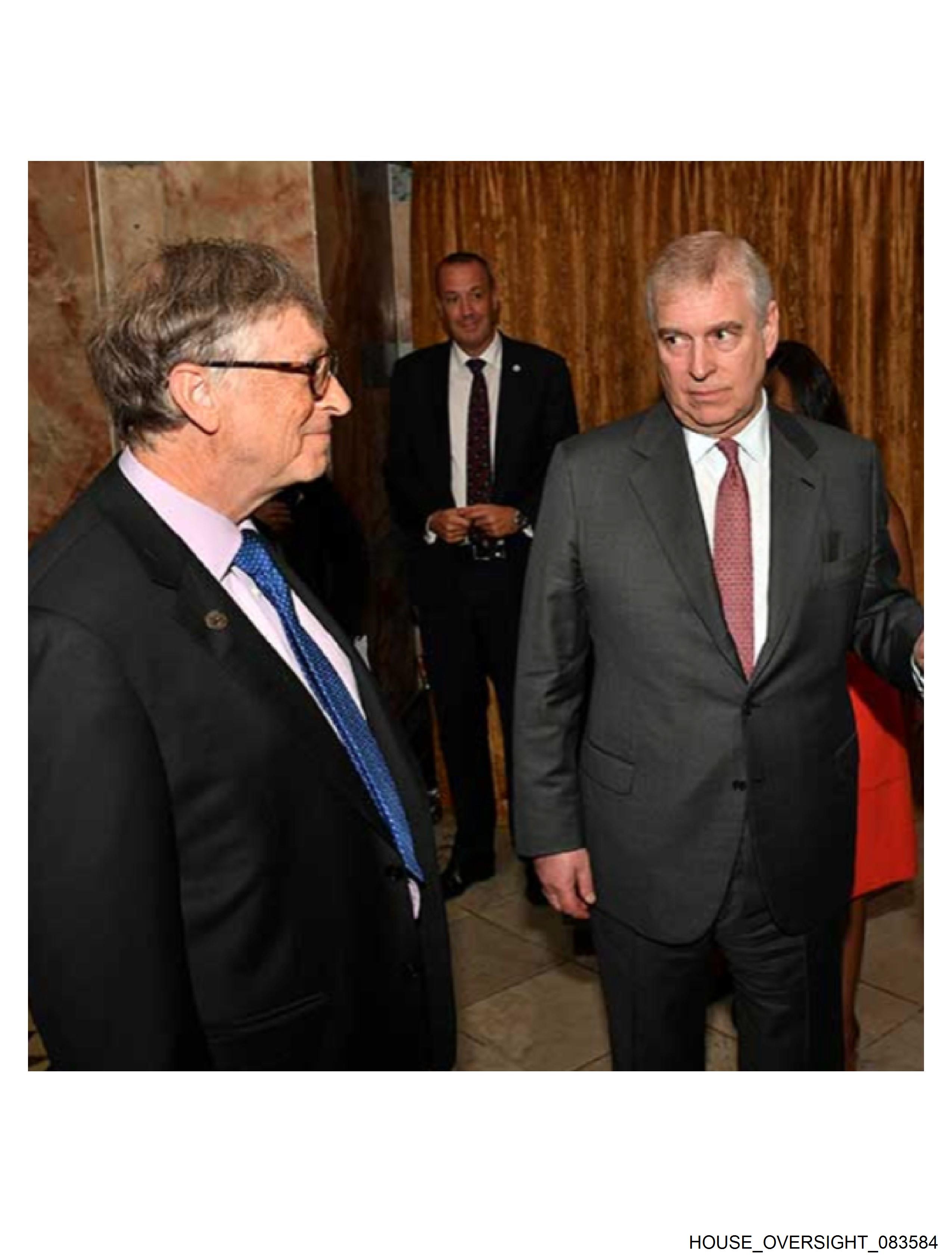
Over many years, Epstein built business and personal relationships with former presidents and prime ministers, including former U.S. President Bill Clinton and former Israeli Prime Minister Ehud Barak. He was also close to figures who later came to power, such as U.S. President Donald Trump. His network included numerous heads of government and cabinet ministers around the world. He likewise forged close ties with key figures in business and finance. The Epstein files contain a massive volume of communications between Epstein and many billionaires. Many of these involve the high-tech sector, and in particular, there is a large amount of material related to Microsoft founder Bill Gates. Epstein also had ties with Andrew Mountbatten-Windsor, brother of the King of the United Kingdom, as well as with figures wielding influence and power in academia.
For the wealthy and powerful, Epstein seems to have been useful in that he could connect them to other wealthy and powerful individuals. Numerous suspicions have also emerged that he brokered access to young women in order to provide sexual services to the rich. To what extent this involved minors or women trafficked against their will remains a subject of ongoing doubt. Epstein’s long-time associate Ghislaine Maxwell was convicted in the United States in 2021 on charges related to sex trafficking of underage girls.

Epstein’s fake Austrian passport, suggesting ties to intelligence agencies (showing residence in Saudi Arabia in the 1980s) (DOJ: EFTA00021627)
These connections with powerful people are considered a major reason why authorities failed for years to conduct any substantive investigation into the allegations of his illegal activities, and why he received an unusually lenient sentence when he was convicted of sex crimes in 2008. In particular, his links to intelligence agencies may have had a significant impact. During the 2008 investigation of Epstein, the U.S. Federal Bureau of Investigation (FBI) received information from a confidential source that “Epstein belonged to U.S. and allied intelligence services” (with “allied” referring to Israel’s Mossad). It has been reported that prosecutors at the time were instructed to “back off” because of these connections. It also appears that no investigations were conducted into the financial crimes he may have committed.
Profits from weapons and war
Detailed reporting by Dropsite News (*2) has revealed that Epstein also had ties to Israel’s security-related agencies. He mediated relations between Israel and other countries in ways that blurred the line between diplomacy and business. Epstein began working closely with Ehud Barak while Barak was still Israel’s defense minister and helped his transition into the business world after Barak stepped down in 2013. Subsequent arrangements allowed Barak to personally profit from positions he had held in government while also apparently benefitting the Israeli state.
For example, in the mid-2010s, Epstein sought to help Barak secure funding for an Israeli startup to develop cyber weapons by leveraging his connections with the CEO of Edmond de Rothschild Group, a major Swiss private bank. Epstein also worked with Barak to build public–private diplomatic agreements to support the overseas expansion of Israeli spy-tech companies. Their collaboration is believed to have played a decisive role in security agreements concluded between Israel and Côte d’Ivoire in 2014 and between Israel and Mongolia in 2017. In another case, conflict in Nigeria became an ideal opportunity for Epstein and Barak to introduce facial recognition products made by an Israeli security firm into Nigeria.

Email from Epstein to Barak: “With civil wars exploding in Ukraine, Syria, Somalia and Libya, and leaders more and more desperate, isn’t this perfect for you?” (DOJ: EFTA01936285)
Epstein and Barak clearly recognized the profits to be made from armed conflict. In a 2014 email to Barak, Epstein wrote, “With civil wars exploding in Ukraine, Syria, Somalia, and Libya, and leaders more and more desperate, isn’t this perfect for you?” Barak replied, “In a way you are right. But it is not easy to translate it into cash flow.”
Epstein’s efforts to capitalize on conflict were not limited to his partnership with Barak. For example, when conflict intensified in Libya in 2011, Epstein discussed business opportunities there with Bill Conner of the investment firm Investcorp. Conner stated that his company was doing business with the Saad Otaiba Group of the United Arab Emirates (UAE) and claimed that this group was “the key financier of the rebellion” against Muammar Gaddafi’s government at the time. He wrote that the group was “interested in acquiring exclusive franchise distribution rights for multiple auto and heavy machinery brands including GM, Caterpillar, Mercedes, Volkswagen Audi, Nissan, etc.”
Records show that a company called Libya Investcorp Limited, which had ties to the UAE, was incorporated in the British Virgin Islands—a tax haven—in September 2011, about one month before the killing of Colonel Muammar Gaddafi. In November of that year, Conner requested a private meeting with Epstein in New York and informed him that “we have full access to any and all business involving the new Libyan government.”

The city of Sirte, Libya, destroyed by conflict (Photo: EU Civil Protection and Humanitarian Aid / Flickr [CC BY-NC-ND 2.0] )
Shadow diplomacy, shadow business
In addition to profiting from conflicts, Epstein frequently engaged in unofficial diplomatic activities. For example, he used his network to help strengthen relations between Israel and the UAE. This was achieved primarily through his long-standing friendship with Sultan Ahmed bin Sulayem, head of the major logistics company Dubai Ports World, and through his relationship with Barak. Sulayem himself wielded enormous power and had close ties to the rulers of Abu Dhabi. This back-channel diplomacy also created major business opportunities for those involved. Epstein also brought together former Israeli Prime Minister Barak and a former Qatari prime minister in a similar meeting where backdoor diplomacy and business overlapped.
Epstein also worked with Indian billionaire industrialist Anil Ambani to create informal diplomatic channels between the United States and India, and between India and Israel. As for the U.S.–India channel, records of their conversations from 2017 reveal that Epstein asked Ambani whether he had any preferences regarding the choice of the next U.S. ambassador to India, suggesting that Epstein was in a position to exert influence over that decision. As for India and Israel, Indian Prime Minister Narendra Modi became the first Indian leader to visit Israel in 2017. In an email to a third party, Epstein boasted about the results of this visit as if they were his own achievement, though the extent of his actual influence remains unclear. Later, Ambani’s Reliance Defence entered into a major joint venture with Israel’s national defense group, which was established subsequently.
Epstein and Barak continued to collaborate on issues in the Middle East, such as Syria and Iran, even after Barak no longer represented the Israeli government. For example, the two pressed the U.S. government to carry out military intervention in Syria and Iran. In 2013, Epstein brokered a meeting between Barak and Russian President Vladimir Putin, seeking to persuade Russia to agree to the overthrow of Bashar al-Assad’s regime. None of these objectives were achieved.

Ehud Barak (Photo: U.S. Air Force Tech. Sgt. Jacob N. Bailey / Wikimedia Commons [Public domain] )
Trading favors
Beyond armed conflict, security, and diplomatic issues, Epstein maintained relationships with prominent figures across many sectors of society, from business and politics to academia and even entertainment. It is clear that these relationships generated mutual benefits for Epstein and the powerful people around him.
For example, Epstein had an especially close relationship with Ariane de Rothschild, CEO of Edmond de Rothschild. As described above, he relied on this private bank to fund ventures in which he was involved. But he was also valuable to the Rothschilds. When, for instance, the bank faced accusations from the U.S. Department of Justice in 2015 that it had helped American citizens conceal assets, Epstein stepped in to help for a fee of 25 million U.S. dollars. He brought in Kathryn Ruemmler, who had just finished serving as White House Counsel under President Barack Obama, and she successfully negotiated a deferred prosecution agreement between the Department of Justice and the bank. Epstein is said to have later showered Ruemmler with lavish gifts.
Peter Mandelson, a powerful British politician, was another long-standing associate of Epstein. Epstein provided financial support to Mandelson and his partner, while Mandelson in turn did Epstein various favors. For example, in 2010 he provided advance information about an upcoming European Union (EU) bailout package for Greece. This information enabled Epstein to engage in insider trading.
Furthermore, in 2009, in an effort to block a move by the British government to raise taxes on bankers’ bonuses following the 2008 financial crisis, Mandelson used Epstein as an intermediary to advise the U.S. bank JP Morgan to “gently threaten” the British government. In this way, while serving as the UK’s Business Secretary, Mandelson appears to have acted not in the interests of the government and citizens he was supposed to serve, but on behalf of powerful colleagues in finance and business.
Meanwhile, in Norway, Thorbjørn Jagland, former Secretary General of the Council of Europe and chair of the Norwegian Nobel Committee, is under investigation on suspicions of corruption. While in office he is said to have received gifts and loans from Epstein in what appear to have been quid pro quo arrangements. Other Norwegian diplomats under investigation for possible corruption in their dealings with Epstein include Terje Rød-Larsen and his wife Mona Juul. Rød-Larsen served as the UN Special Coordinator for the Middle East Peace Process and was head of the International Peace Institute (IPI) in New York when the couple built ties with Epstein. Epstein reportedly left US$5 million to each of their children in his will.

Bill Gates and Andrew Mountbatten-Windsor, who appear repeatedly in the Epstein files (HOUSE_OVERSIGHT_083584)
Emails between Epstein and Miroslav Lajčák—then president of the UN General Assembly and simultaneously Slovakia’s foreign minister—document dinners between the two and how Epstein arranged Las Vegas show tickets for Lajčák’s family. Emails from the following year show that Epstein was planning to lobby the U.S. government to recommend Lajčák for a senior NATO post. It is not clear what Epstein gained in return.
“Changing the world”?
The ambitions of Epstein and many of those who maintained close ties with him were not limited to making money or influencing diplomatic relations.
In an interview recorded with Donald Trump’s former chief strategist Steve Bannon in 2018 or 2019, Epstein recalls a conversation with investment banker David Rockefeller. In 1973, Rockefeller founded the Trilateral Commission to promote cooperation among political and economic leaders in North America, Western Europe, and Japan. In that conversation, according to Epstein, Rockefeller said that, given the limited tenure of political leaders, “the people who are most important in terms of maintaining stability and continuity are business people.” Epstein joined the commission at the age of 32.
The idea of placing wealthy business leaders in positions where they can influence, and in some cases direct, political developments recurs frequently in discussions in which Epstein was involved. For example, Epstein maintained a close relationship with Børge Brende, head of the World Economic Forum (WEF), which organizes the Davos meetings. In an email to Brende, Epstein wrote that “Davos could replace the UN,” to which Brende replied, “Correct. We need a new global architecture. The World Economic Forum (Davos) is uniquely placed in terms of public private partnership.”

Email between Epstein and Brende: “Davos could replace the UN” (DOJ: EFTA02622807)
The Epstein files also revealed a partial list of participants in “Dialogue 2014,” a secretive event hosted by billionaire Peter Thiel, co-founder of PayPal and Palantir Technologies. The two-day event was intended for participants to discuss “how to change the world.” Attendance was limited to 150 leaders “who can help execute the plans we develop.” Epstein’s name does not appear on this participant list. However, the fact that he had access to the invitation list suggests that he was involved in some capacity. It is clear that Epstein shared with Thiel a similar philosophy on how to rule the world; one journalist has described this as a “profound disdain for democracy.”
Beyond “Epstein”
This article only scratches the surface of the ways in which Epstein gained access to various forms of power and attempted to influence diplomacy. The released Epstein-related documents provide important clues to the activities of this “shadow elite,” but many documents remain redacted, and many more have not been released at all. It has also become clear that Epstein avoided discussing many sensitive matters by email. What, then, was discussed over the phone or in direct meetings?
Moreover, the problem extends far beyond Epstein himself and the network around him. How many invisible “Epsteins” are there around the world? Epstein attracted attention because of his involvement in sex crimes rather than because of his financial and political dealings. Without those crimes, we might not even have these limited hints. There are surely many wealthy people, far from public view, who are attempting to seize power using similar methods.
The problem is systemic. As long as those with wealth and power can shape institutions in ways that serve their own interests, the system will not change. If this situation is allowed to continue unchecked, how far will the concentration of power and the erosion of democracy go?
*1 In September 2025, some emails were leaked to Bloomberg. The House Oversight Committee also released a limited selection of documents between September and December 2025. In November 2025, the U.S. Congress passed the “Epstein Files Transparency Act,” which required the Department of Justice to “make available to the public, in a searchable, downloadable format, all files related to the prosecution of Jeffrey Epstein.” After releasing the first batch of documents in December 2025, the Department of Justice released 3.5 million files in January 2026. In February, it announced that no further documents would be released.
*2 The independent media outlet Dropsite News has conducted what is likely the most extensive and detailed reporting on Epstein’s ties to Israel, particularly regarding the activities of Israeli intelligence agencies, in its coverage. This investigative reporting dates back to September 2025. It had long been widely known that there were links between Israel and Epstein, but the public release of hacked emails from Prime Minister Barak and the publication by the U.S. Department of Justice of 3.5 million pages of files have brought the details of this relationship to light.
Writer: Virgil Hawkins



0 Comments